
This morning I had a dream concerning Sanskrit at The Royal Institution. I did research there 1985-88 for my Ph.D.
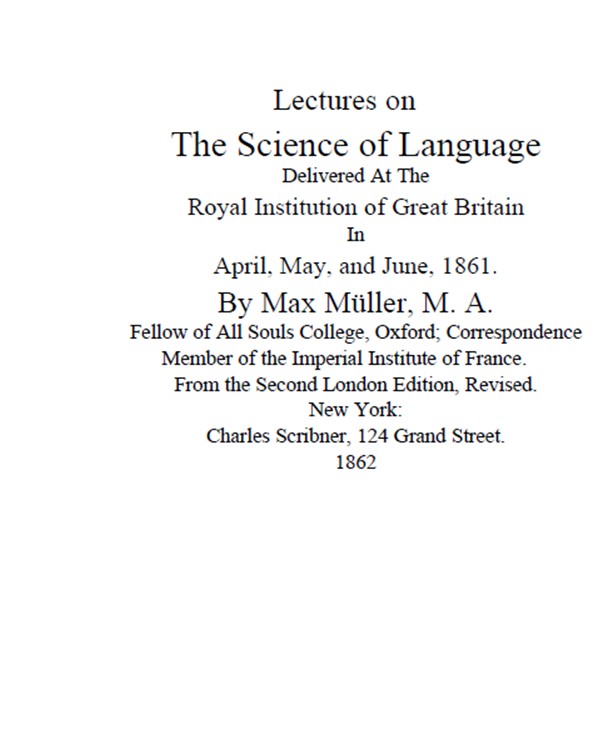
In 1861 and 1863 Friedrich Max Müller gave lectures there whilst Michael Faraday was director on the science of language.
–

–
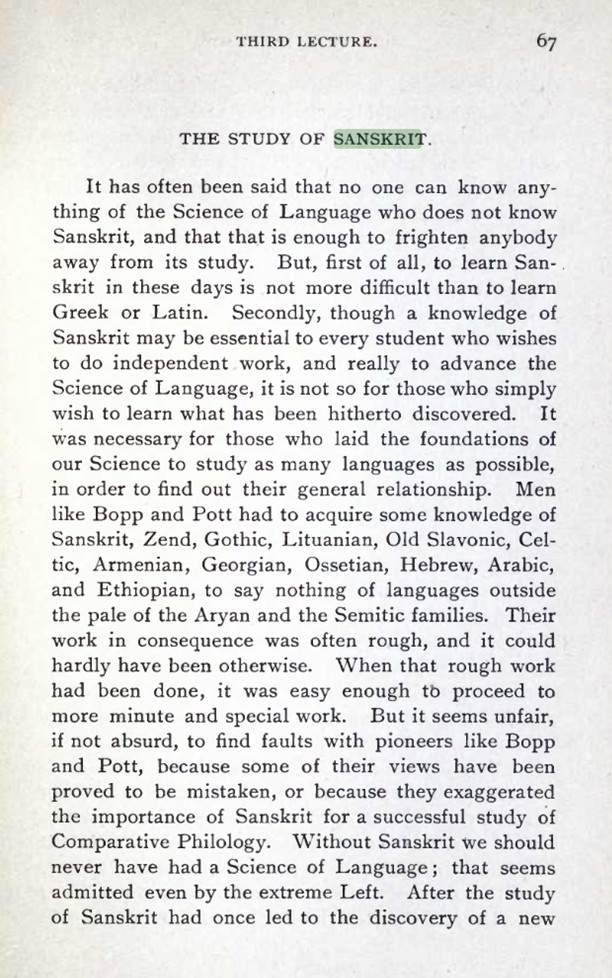
One of these was on Sanskrit the Indo-European mother tongue.
–
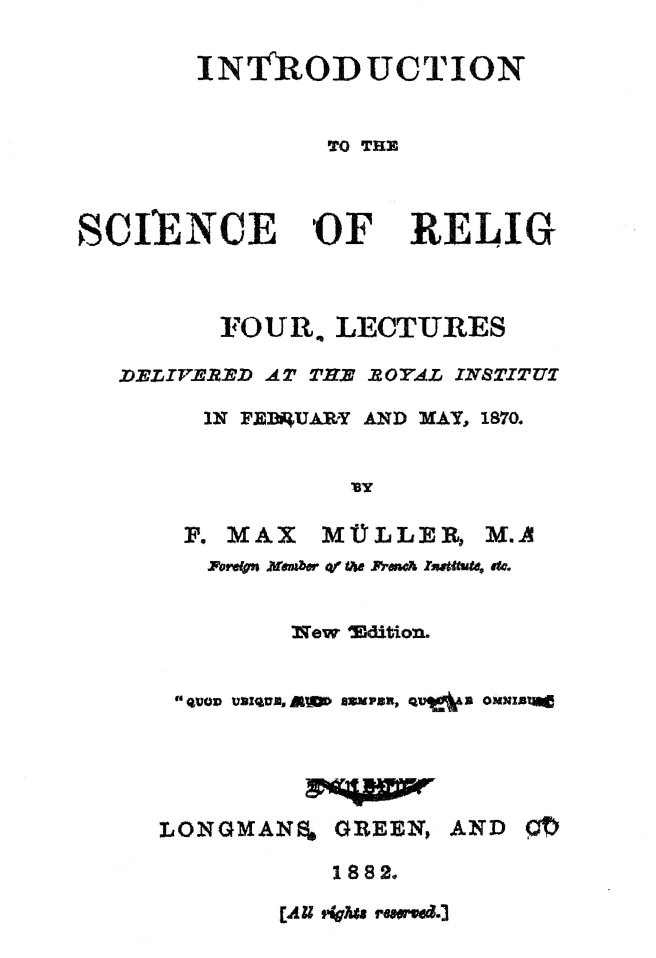
In 1870 he gave a series of lectures on the Science of Religion when John Tyndall was director.
–
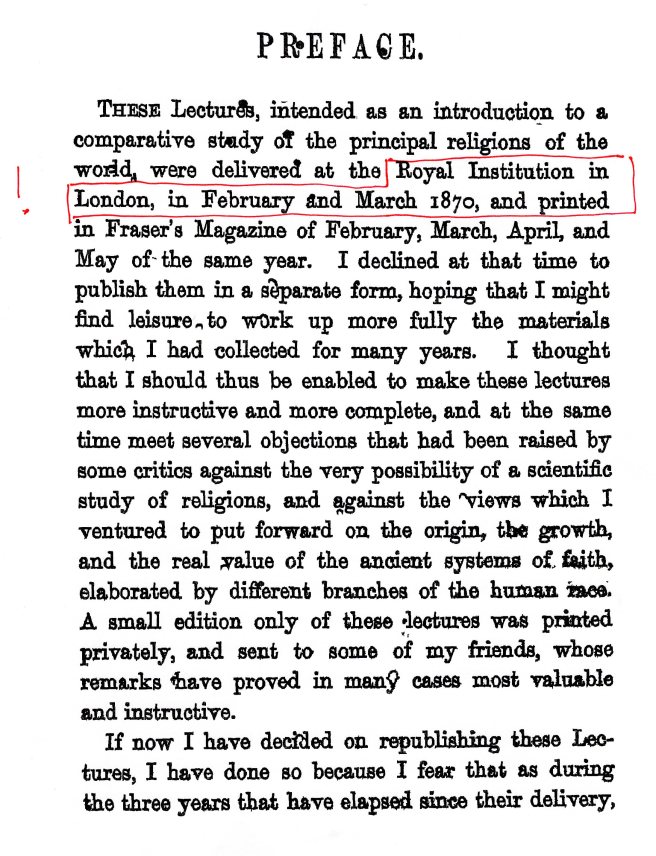
Back then people may have been more open minded and less strictly subject specific in orientation.
Friedrich Max Müller
(6 December 1823 – 28 October 1900) was a British philologist and Orientalist of German origin. He was one of the founders of the Western academic disciplines of Indian studies and religious studies. Müller wrote both scholarly and popular works on the subject of Indology. The Sacred Books of the East, a 50-volume set of English translations, was prepared under his direction. He also promoted the idea of a Turanian family of languages.
Academic career
In 1850 Müller was appointed deputy Taylorian professor of modern European languages at Oxford University. In the following year, at the suggestion of Thomas Gaisford, he was made an honorary M.A. and a member of the college of Christ Church, Oxford. On succeeding to the full professorship in 1854, he received the full degree of M.A. by Decree of Convocation. In 1858 he was elected to a life fellowship at All Souls’ College.
He was defeated in the 1860 election for the position of Boden Professor of Sanskrit, which was a “keen disappointment” to him. Müller was far better qualified for the post than the other candidate (Monier Monier-Williams), but Müller’s broad theological views, Lutheranism, German birth, and lack of practical first-hand knowledge of India spoke against him. After the election he wrote to his mother, “all the best people voted for me, the Professors almost unanimously, but the vulgus profanum made the majority”.
Later in 1868, Müller became Oxford’s first professor of comparative philology, a position founded on his behalf. He held this chair until his death, although he retired from its active duties in 1875.

 Dreamyoga