In various texts Kuthumi is said to have been educated at one of the British Universities. In the mid nineteenth century that meant Oxford, Cambridge, St Andrews, Edinburgh, Glasgow, Aberdeen or maybe Durham. Logic says that if he graduated, he would be on alumni lists, BUT in those days, many attended and never sat the qualifying exams. I have searched provisionally and found some Singhs at Cambridge, Edinburgh and Glasgow. Most of these were to the end of the century but none corresponded to him.
University could be a metaphor.
It could also mean college or private school.
Some say he was a Rajput Prince though others confer this to Morya.
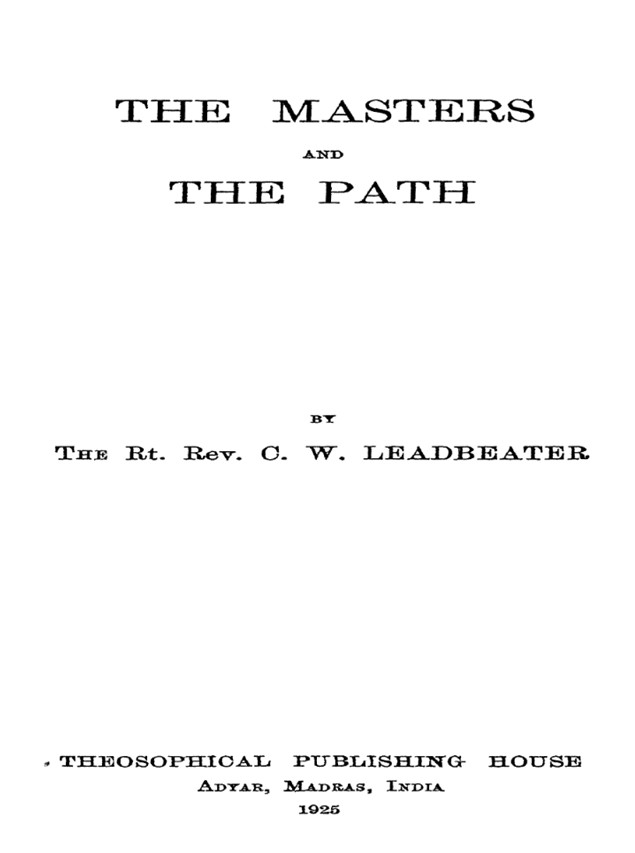
Leadbetter suggests that they together with Djwhal Kuhl lived in a ravine in Tibet. They are placed not far from Shigatze and the Tashi Lhunpo Monastery the seat of the previous Panchen lamas
It is suggested that Kuhl, previously a follower of Kuthumi, became a master in his own right in 1875. He is said to be involved in the running of a certain lamasery.
–
–

–

–
Morya is anecdotally placed in London for the 1851 Great Expedition whilst Faraday was at The Royal Institution of Great Britain. I’ll speculate that anyone travelling from the sub-continent interested in science and knowledge might have swung by Albermarle Street.
In a piece of text, I cannot now find, Blavatsky suggested that she had been to some talks there. She speaks of Müller and other writers on eastern religions. Blavatsky is said to have visited the Masters in Tibet.
Minds were more like blotting paper, once. There was no Netflix so people had to find other things to keep the grey matter ticking over.
—————-
There was a great melting pot of ideas back then. William Crookes was a member of the Society for Psychical Research
“The Society for Psychical Research (SPR) originated from a discussion between journalist Edmund Rogers and the physicist William F. Barrett in autumn 1881. This led to a conference on 5 and 6 January 1882 at the headquarters of the British National Association of Spiritualists, at which the foundation of the Society was proposed. The committee included Barrett, Rogers, Stainton Moses, Charles Massey, Edmund Gurney, Hensleigh Wedgwood and Frederic W. H. Myers. The SPR was formally constituted on 20 February 1882 with philosopher Henry Sidgwick as its first president.
The SPR was the first organisation of its kind in the world, its stated purpose being “to approach these varied problems without prejudice or prepossession of any kind, and in the same spirit of exact and unimpassioned enquiry which has enabled science to solve so many problems, once not less obscure nor less hotly debated.”
In 1882 Mary Everest Boole became the first female member of the SPR; however, she resigned after six months. Some other early members included the author Jane Barlow, the renowned chemist Sir William Crookes, physicist Sir Oliver Lodge, Nobel laureate Charles Richet, artist Lewis Charles Powles and psychologist William James.”
—
Sir William Crookes (17 June 1832 – 4 April 1919) was an English chemist and physicist who attended the Royal College of Chemistry, now part of Imperial College London, and worked on spectroscopy. He was a pioneer of vacuum tubes, inventing the Crookes tube, which was made in 1875. This was a foundational discovery that eventually changed the whole of chemistry and physics.
He is credited with discovering the element thallium, announced in 1861, with the help of spectroscopy. He was also the first to describe the spectrum of terrestrial helium, in 1865. Crookes was the inventor of the Crookes radiometer but did not discern the true explanation of the phenomenon he detected. Crookes also invented a 100% ultraviolet blocking sunglass lens. For a time, he was interested in spiritualism and became president of the Society for Psychical Research.
From Wikipedia
————————————————
Do you think there is some PR in this wiki page trying to discount the whacko spiritualism?
————————————————–
Crookes attended the Royal College of Chemistry
“The Royal College of Chemistry (RCC) was a college originally based on Oxford Street in central London, England. It operated between 1845 and 1872.
The original building was designed by the English architect James Lockyer in 1846 with the foundation stone being laid by Albert, Prince Consort on June 16, 1846.
The College was set up to teach practical chemistry. Many politicians donated funds to establish the college, including Benjamin Disraeli, William Gladstone and Robert Peel. It was also supported by Prince Albert.
The first director was August Wilhelm von Hofmann. Frederick Augustus Abel studied under von Hofmann. Sir William Crookes, Edward Divers and J. A. R. Newlands also attended the college.
The young William Henry Perkin studied and worked at the college under von Hofmann but resigned his position after discovering the first synthetic dye, mauveine, in 1856. Perkin’s discovery was prompted by his work with von Hofmann on the substance aniline, derived from coal tar, and it was this breakthrough which sparked the synthetic dye industry, a boom which some historians have labelled ‘the second chemical revolution’.
The college was merged into the Royal School of Mines in 1853. It was the first constituent college of Imperial College London and eventually became the Imperial College Chemistry Department.”
From Wikipedia
————————–
The description from Leadbetter (extended in the book) is entirely consistent with various images I have had in dreaming and which started with this dream about The Tibetan.
–
–
Logic suggests that things have changed in the last >125 years. The invasion of China is likely to have been more than a slight perturbation.
Where are they now?

 Dreamyoga