
Here is a photo taken by me in Buckinghamshire in 2007..
–

–
Fire spirits – phoenix
Here is a photo taken by me in Buckinghamshire in 2007..
–
–
Fire spirits – phoenix
———
I am my mother’s savage daughter
The one who runs barefoot
Cursing sharp stones
I am my mother’s savage daughter
I will not cut my hair
I will not lower my voice
My mother’s child is a savage
She looks for her omens in the colors of stones
In the faces of cats, in the falling of feathers
In the dancing of fire
In the curve of old bones
Karen Kahan / Wyndreth Berginsdottir
———–
Here is last night’s dreaming it was in some parts accompanied by this song during the dreaming. There is a sense of something broadly shamanic incoming. I was reminded of Snowdon’s Glaslyn and Oeschinensee in the Berner Oberland.
The dream opens in a brightly lit indoor setting. It is like a pharmacy / clinic. Two young nurses, one female and one male, are struggling to calm down and contain a large older man with unruly blonde hair. He is panicking about his test results and upcoming injections. He will not listen to them. The woman turns to me and asks me to explain. I am of a similar age to the man. She explains to him that I am a trained scientist. I start to explain to him and slowly he calms. I show him a test tube in which the red blood cells from his blood have been sedimented out to the bottom. This means that for now he has not been infected which is why he needs to be vaccinated, something the nurse will gladly do for him. He is surprised that his blood liquid is light yellow murky over the small layer of sedimented red blood cells.
The scene changes and I am climbing a mountain track with a leather coracle on my back. I round the bend and go over the last lip into the corrie / cwm where there is a mountain lake of sublime beauty. It has been scoured out by glaciers of days gone by. I place the coracle and oar down on the rocky shore and marvel at the azure blue. I am home. I am back at the source of the river. I marvel at the rocky slopes plunging into the icy waters. I hear an all-encompassing silence. I will in time row out onto the lake because I have an appointment there.
The scene changes and I am in something of an ersatz physics laboratory. An experiment using lasers in being prepared for the school children. The technicians are struggling to get the experiment to work. They call for help and Ian M tips up and together we start to align the outdated clunky optics on a heavy metal rail. They are confident because of our laser expertise the experiment will work.
The scene changes and I am back lakeside. A magnificent mist has come in cloaking the lake and making the atmosphere heightened and mystical. At any time one might imagine the lady of the lake rising with Excalibur in her hand. The mist enshrouds and welcomes. I get into the coracle and row slowly out into the centre of the lake and the centre of the mist. I have a meeting and I have something to retrieve, to find again. I stroke my beard with my left hand. I am enlivened and energised. My palms are tingling with “electricity”. I have come for something and am reminded of the role of all the lakes in this life and beyond.
I am now outside a funeral parlour. There is a mass funeral taking place. Where members of two families are being sent off together following a huge violent brawl at a wedding. The two sides have been at war for generations. Yet they have decided to join together to remember their dead. Coffin after coffin is walked from the hearses into the crematorium. A newspaper photographer is there and goes to take a picture. I stop him and seize his camera. Such a thing would inflame and ignite.
Back out on the lake the mist clears and I can see far in the crisp pristine mountain air. I look down into the hyper-transparent water of the lake and several metres down I can see the rocky bottom with a few arctic fish like char. I remove my heavy fur jacket / long coat. It is bearskin. I am wearing a shirt fastened at the top with a shoelace like fastening. I stand in the coracle and am ready to plunge into the icy depths.
The scene changes to the carriage of a bus which is brightly lit and modern. The bus is only partially full. I am at the back of the bus and there are a few young people there. They are taking the piss out of me because I am not sitting down even though they are seats. I am holding on to a tube train style ceiling handle. They are all chatting and playing on their electronic devices.
The bus is coming to a stop. I have fallen asleep standing up much to the surprise of everyone except me. The bus has morphed into an airplane and we are taxying to the terminal. The doors open and because I am standing I am the first one to leave the plane.
The dreaming ends and as I awake I make a mental note to search my dream archive for dreams with lakes in and in writing I am reminded of the morning when I threw my katana souvenir into a lake in Hertfordshire.
———–
Eyes closed,
In his homeland,
On the spare bed,
He exhaled.
–
Sunk into the depths of his being,
Waiting.
–
The darkness breaks
And…..
–
Old,
Very old,
He saw it.
–
He saw it,
Waiting.
—
Quickening of breath,
Huh, huh, huh,
It began to form.
–
Summoning the dragon to guide him.
–
Those eyes….
They watched him.
–
Patience and waiting.
–
He touched its power,
Felt it absorb him,
His him probed with an awareness.
–
Alien and ancient.
–
Terror, blind terror.
–
Lithe and poised
Those eyes….
–
Wise beyond wisdom
Since the first days of man
And beyond.
–
Amused and laughing,
In smoke.
–
He held it and the fire in his heart
Began to burn.
–
The crows outside called
Their battlefield cry,
Hungering for food
–
Taken on the caw to another time.
——-
Heathered hillside,
In the mist of lore
The dragon breath cloaks
Shimmering in be-coming.
–
Hessian cloth upon his skin
Staff in his hand,
Rain in his beard
And silence in the world.
–
Weary
Proud
Beaten
Defiant
–
Behind him,
They marched,
From their deaths to their deaths,
–
They reached the place
And settled on the rocks.
–
Less faces than before
Heads hung on Castle gates.
–
And those eyes.
–
Why must they stand and die?
–
Doubts, oh the doubts
They plagued him
–
It hangs all on the next few seconds.
–
The dragon’s dice have been rolled
His fate is sealed.
–
What was it that the wizard said?
–
“Re-member, re-member.
Focus on the feelings for that is what you store.
The memory will guide you back
Learn the lessons well….
For next time”
–
He reached into his pack and took it out.
He tied the flag to his staff.
Silently and into the circle he walked.
–
He planted his staff and unfurled the flag.
–
Y Ddraig Goch.
—
Look to the Dragon’s eyes my friends
And see there your courage, your faith and your hope.
Let it conjure in you.
Feel its ancient force.
–
Written in the hillsides and the valleys of your lives,
Washed through your rivers,
Permeating your being-ness with the dragon’s fire.
–
Pure magic.
If we believe, though we are few, we can call the dragon to our aid.
–
We are an ancient race and we have been here long.
We have sung our songs and shared our poems.
We have laughed and we have cried.
We have learned.
–
This is now our last battle.
———-
This from a series of dreams and visions I had around 2002-3…
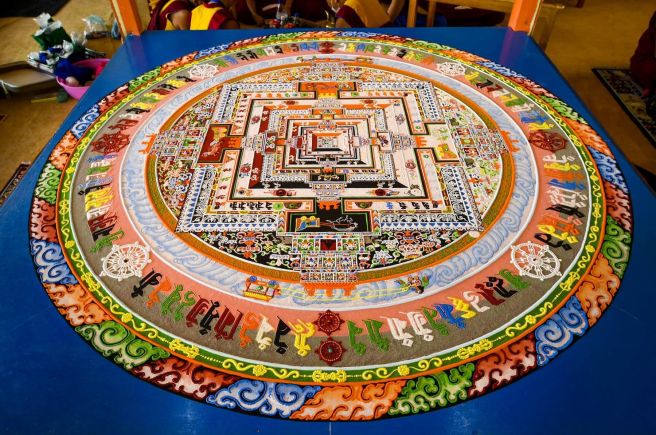
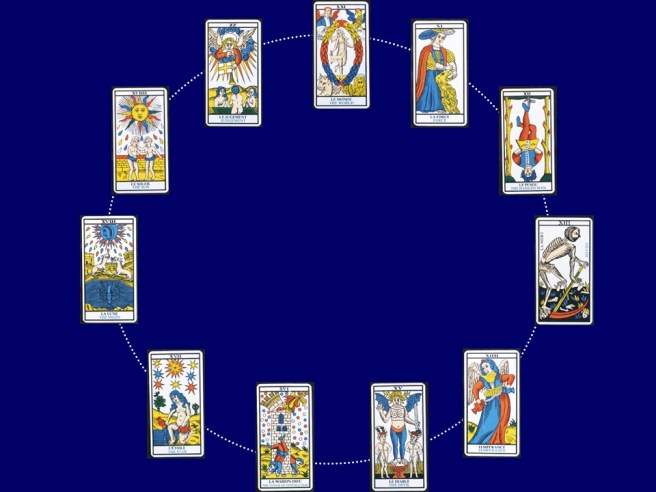
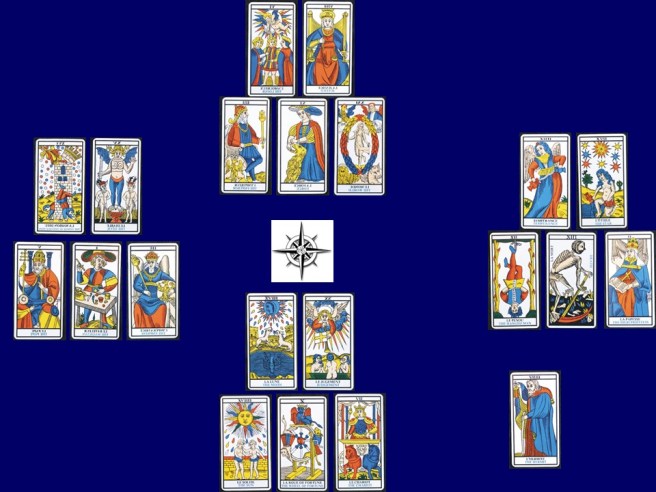
Mandala can be thought of as models or re-presentations of a reality. They are a way of arranging and making partial sense of observed phenomenon. They can be a short-form to a much wider corpus of thought forms and images. Having been a scientist I have used models to convey scientific knowledge to students. I have often wondered if the traditional setting of image collections of mandala is culture specific.
If one was bilingual one might see more commonality than difference.
The Kālacakra mandala is famous in Tibetan buddhism.
–
–
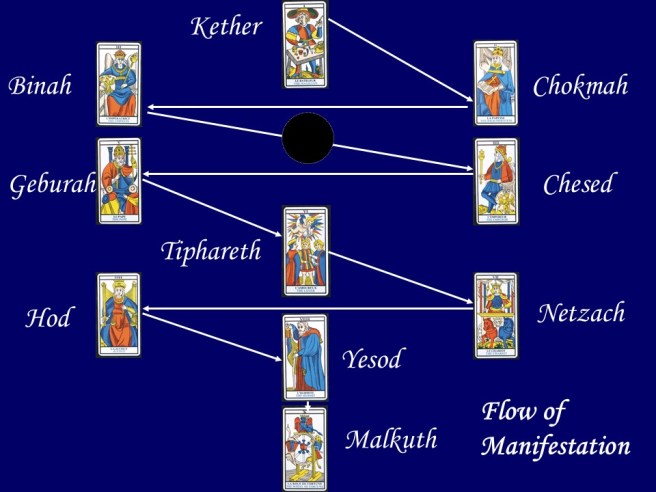
The kabbalists have the tree of life-
–
–
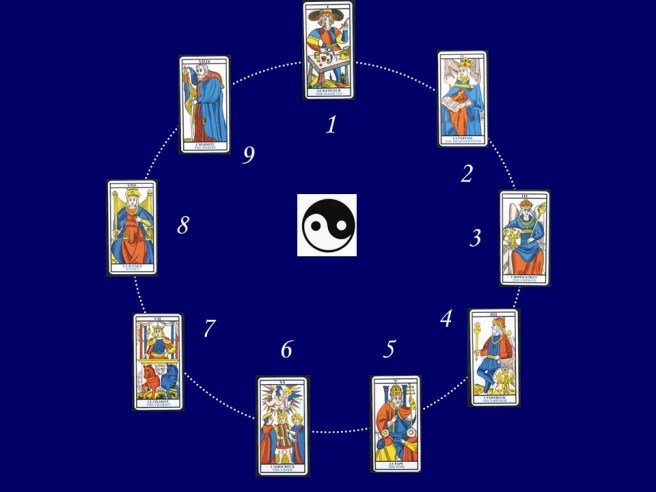
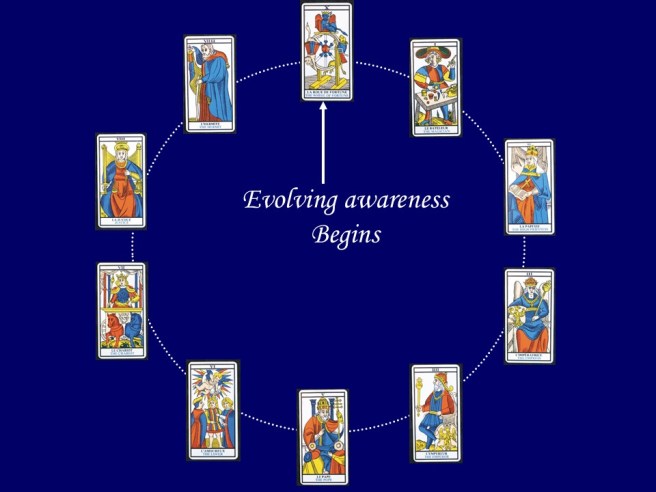
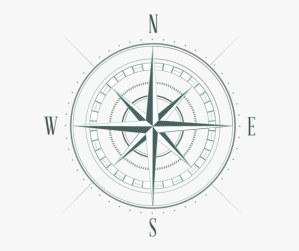
And the Jewels of Awareness or Tarot can be arranged according to a compass of N E S W.
–
–
–
–
–
–
These have a very mandala-like flavour.
–

–
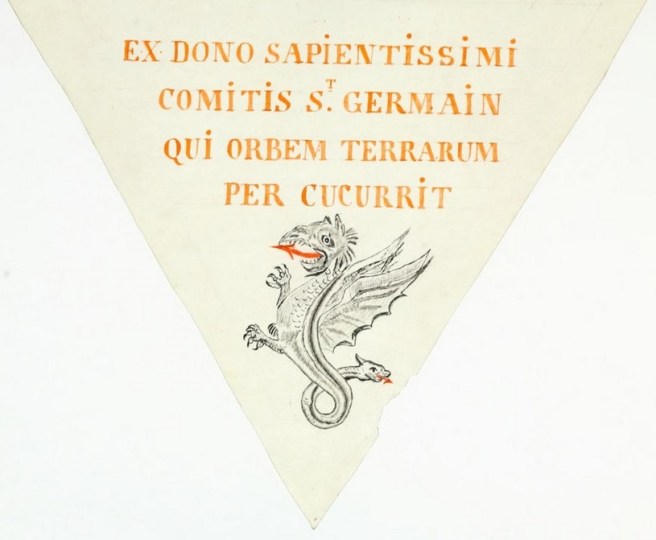
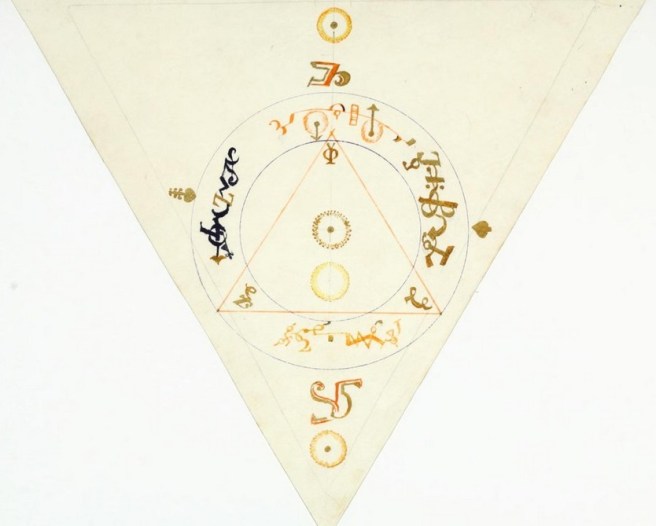
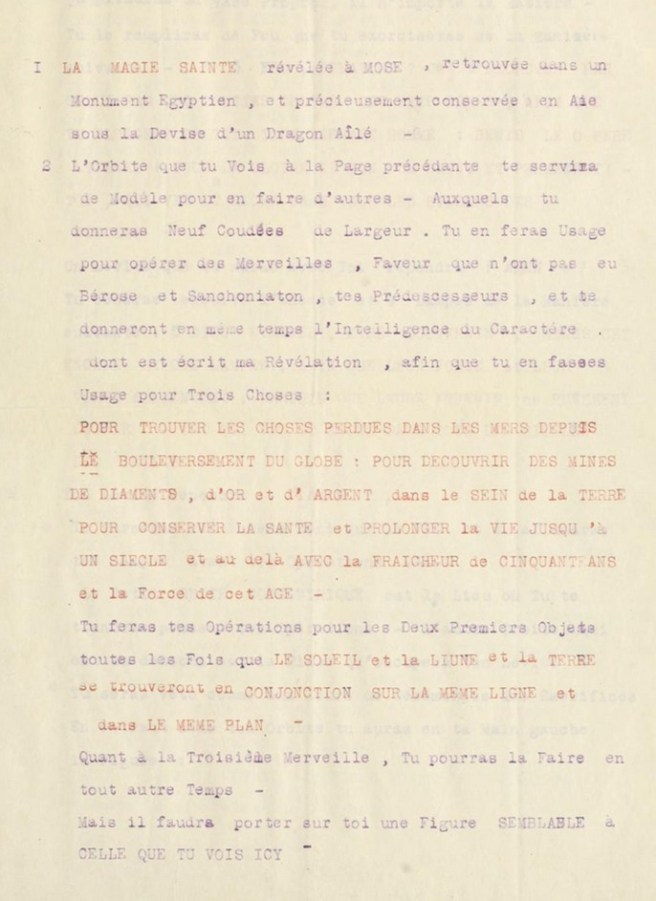
The Triangular Book of St. Germain or The Triangular Manuscript is an untitled 18th-century French text written in code, and attributed to the famous Count of St. Germain. It takes its name from its physical shape: the binding and sheets of vellum that comprise the manuscript are in the shape of an equilateral triangle. The text, once deciphered, details a magical operation through which a person can perform feats of magic, notably the discovery of treasure and extension of life.
History
The two known copies of the Triangular Manuscript exist as Hogart Manuscript 209 and 210 (MS 209 and MS 210). Both currently reside in the Getty Research Institute’s collections, each with its own history.
MS 209, dated 1775, was made for Antoine Louis Moret, a French freemason who immigrated to the United States in 18th century. At one point it resided in the library of Jules C. G. Favre (1809-1880), a French politician. Pliny E. Chase (1820-1886), an American mathematician with an interest in cryptography, makes mention of it in a lecture to the American Philosophical Society on October 3, 1873, stating that the manuscript was “purchased in Amsterdam, about seventy years ago,” i.e. around 1803. It is unclear if he owned the manuscript, examined it, or had simply heard of its existence. French bibliographer, poet, and Rosicrucian Stanislaus de Guaita (1860-1898) had it in his library for some time. From there it passed on to a certain Madame Barbe of Paris, and then to Frank Hollings, a 20th century London writer and antiquary. After 1934, Hollings sold it to Manly P. Hall.
Much less is known about the other manuscript, MS 210. Dated 1750, older of the two copies, it was once in the library of Lionel Hauser, a member of the Theosophical Society in Paris. In 1934, Manly P. Hall purchased it for 40 guineas at an auction of Hauser’s library at Sotheby’s.
————
The Count of St. Germain (French: Comte de Saint Germain; 1691 or 1712 – 27 February 1784) whose real name and origins remain unknown, was a European adventurer who had interests and achievements in science, alchemy, philosophy, and the arts. He rose to prominence in the European high society of the mid-18th century due to his works and interests. He associated himself with some of the top contemporary figures, including Casanova, Voltaire and Mozart.
The count used a variety of names and titles, including the Marquess of Montferrat (Fr. Marquis de Montferrat), Count Bellamarre (Fr. Comte Bellamarre), Knight Schoening (Fr. Chevalier Schoening), Count Weldon, Count Soltikoff (Fr. Comte Soltikoff), Manuel Doria, Graf Tzarogy, and Prince Ragoczy (De. Prinz Ragoczy). He appears to have begun to be known under the title of the Count of St Germain during the early 1740s.
He is said to have made far-fetched claims (such as being 500 years old), leading Voltaire to dub him “the Wonderman”, and that “he is a man who does not die, and who knows everything”. Prince Charles of Hesse-Kassel, called him “one of the greatest philosophers who ever lived”.
—————
In 1892, Helena Blavatsky characterized the Count of St. Germain as “the greatest Oriental Adept Europe has seen during the last centuries.” She said that he was one of her Masters of Wisdom and hinted that he had given her secret documents. The Theosophical Society after Blavatsky’s death considered him to be a Mahatma, Master of the Ancient Wisdom, or Adept.
According to the Theosophical Society, the Seven Rays are seven metaphysical principles that govern both individual souls and the unfolding of each 2,158-year-long Astrological Age. Since, according to Theosophy, the upcoming Age of Aquarius will be governed by the Seventh (Violet) Ray (the Ray of Ceremonial Order), Saint Germain is sometimes called “The Hierarch of the Age of Aquarius”.
Annie Besant said that she met the Count in 1896. C. W. Leadbeater claimed to have met him in Rome. According to Leadbeater, the count had brown eyes, olive colored skin, and a pointed beard, adding “the splendour of his Presence impels men to make obeisance”. Elsewhere, he described the count as wearing “a suit of golden chain-mail which once belonged to a Roman Emperor; over it is thrown a magnificent cloak of crimson, with on its clasp a seven-pointed star in diamond and amethyst, and sometimes he wears a glorious robe of violet.”
Excerpted from Wikipedia
—————————-
The extracts below are from the internet archive of the manuscript from the Manly Palmer Hall collection held at Getty Research Institute
–



–
—
—
I started watching “A Discovery of Witches” whilst in hospital after my total hip replacement. The other night we started series three. The main protagonists “academics” from Oxford University, also a vampire and a witch, had just gotten back from time walking to Elizabethan London in search of an alchemical text. They want to understand the vampire “blood rage” so obviously they go to Imperial College London to do some research. The TV programme had footage of the main entrance on Exhibition Road and drone views of the South Kensington Campus. The wife and I looked at each other.
There is no getting away from the place. It is everywhere like a rash. Like an antibiotic resistant STI it keeps popping up. Since the COVID days it is often in the news.
The story looks at the so-called vampire DNA of the de Clermont blood line and has quite a lot of London footage so-far including mews shots etc.. I do not look back at my interaction with that institution with fond memories. I am sometimes embarrassed to have been associated. And now it is in a bloody TV programme too!! FFS.
I am now four weeks into the time after hip replacement. I can walk around the house unaided, no crutches. Yesterday we walked the hills of Lannion centre and today my muscles ache. The actual joint pain in the hip is markedly reduced from before. There is enhanced flexibility and it seems that the functionality will continue to improve. There remains some problems with early morning-late nocturnal pain in the sacroiliac joints and where the sacral spine joins the lumbar spine. This kicks in around 5 AM. I am down to only one co-codamol a night taken around 2 AM. If I get up and move around, do some back stretches, I can sleep on a bit. I am sleeping through the night. We go to bed about midnight and I am up 6 – 6:30 AM at the moment.
It is not ideal though is tolerable. I could easily take some more dope – some more codeine. But I don’t think that is a good idea. When I am able to lie on my right hip, the operated one, I may be able to sleep better. The pain goes away within minutes of getting up and moving around. The incentive is not to lounge around like a hippie in bed.
The problem is I am not looking forward to going to bed. I am not looking forward to waking up in the morning. A non-ideal situation. Not sure what to do. I may try some back stretches later today. The pain may not go and I might have to resort to my previous medication which worked before the operation. Too early to tell.
There could be an enhanced vigilance at play. The last time I went to sleep, I woke up with an eight inch scar and a lump of Titanium…that is what happens if you doze off..
Luckily I know that many things do indeed pass. The hip progress seems OK. The sleeping and pre-dawn pains could be better.
On the whole the now is a whole lot better than the before….
Here is this morning’s dream had just before 6 AM. I am no longer getting up to watch TV during the night. The sleep is still not profound. I wake several times. After about 3 AM I do not feel tired. But can sleep. After about 6 the lower back pain tends to make me want to get up and move around.
The dream opens on a green field which slopes slightly down to a river. It is like Christchurch Meadow. There can be seen a weeping willow near the river. The dream is certain that this is Oxford. I am walking with two male “fellows” who are a bit younger than me along a path. They are professors. One has dark hair the other more blonde.
The scene changes and we are in some unspecified Oxford college taking the tour. They are showing me a refectory, a library and the kind of rooms that a college fellow has. They say that it has access to university libraries including the Bodleian. It dawns on me that in a round about way they are offering me a position at the college.
I ask them on what criteria they could do such a thing commenting that in no way do I match up to the normal criteria about how these things are offered. They say that because of the private way the college is funded there are many weird and wonderful endowments that could be invoked and used. I do not think they are being serious and it is some kind of cobbled together ersatz. I further comment that I am not able to teach anything vaguely on any university curriculum. They seem unfazed by this.
They want to show me the college farm. We take a short ride out into the country and the dark haired one proudly displays their new eco-farm in which they grow heritage vegetables. He shows me his tutor group in action and shows me a spreadsheet of names arranged in a “portrait” orientation excel spreadsheet. I rearrange the spreadsheet into “landscape”. The names are all very English. One name stands out, Scanlon.
We go back to the college and I am invited to a soirée that evening at which many of the fellows and members of the college will be. The master will also be there. I thank them for the invitation but decline. I explain that I am not fond of such things and generally have difficulty hacking them.
I am near perplexed in the dream as to why they might cobble together some kind of position. It smacks of some political fix; somebody has had a “bright” idea. They have not thought this through.
The dream ends
Wayback even though I was not a top “A” grade student my school wanted me to take the Oxford entrance exams, because the teacher thought I would be better at the slightly off the wall questions. We visited Christchurch. The extra lessons however were interfering with rugby training at lunchtimes so I stopped going. I did not sit the exams.
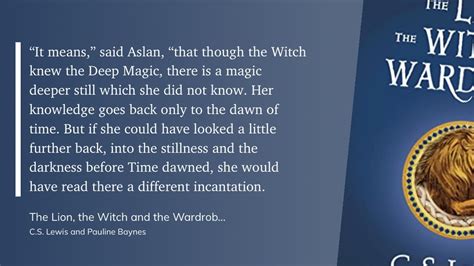
I was taken by the dream to Caer Paravel…and Aslan

Sleep last night came in two segments 12 – 2:30 and after an hour of TV, 4 to 7. In “A Discovery of Witches” season two last night Diana masters the ninth knot, the spell of endings and beginnings, the knot of completion(s). Implicit is inherent in this is also the tenth knot. Diana a weaver and time walker prepares to travel back to modern day.
The first part is in the early sleep and shallow. I am with the ex-wife. She wants to show me what is going on in the village. She insists that I go to see what has become of the village pubs. She is curious and very nosey. She wants all the gossip. Reluctantly I go with her and one of the pubs is under new management. He is trying to make a go of it. The pub is in a state of mess and undergoing renovation. A part of it is open for business. We go in and he asks what I want. I ask for a pint of Guiness and it takes long while to pour and settle. The ex-wife has a half of bitter and proceeds to go around chatting at/with everyone else in the pub. I ask the landlord about his plans.
We move off to the next pub. This is more lively and all the village folk some from out of town and some born are ostentatiously getting pissed up. The air is of forced jollity, almost an anxious jollity. This pub is better lit. The locals all stare at me. Once again the ex-wife works the room talking to everyone and gossiping about life in the village and in general. I do not see the point of it in the dream. The pub is a mess and someone needs to do a glasses round and wipe down tables. There is a hint of Christmas party and the TV in the pub is blaring away in the background. It is harsh to the senses.
I awake for some poor TV, a pill and two lion bars.
Back now in the dream I am upstairs in a retreat centre type house. It is redbrick and old. On the other side of a single track road is a chest height red-brick and flint wall behind which is a substantial weir and mill race. The river is powerful and the water deep and of a green hue due to the weeds. I know the building I am in is aligned to the old water mill. It is a part of the complex. The feel is very similar to Llangollen. The smell is similar too; we are near mountains. I am lying on the bed with the window open. The net curtains are blowing lightly in the breeze and I can hear the deep bass rumble of the water on the weir.
I hear a key in the door downstairs and in walks Paul and Emma. (Walker). They walk through into the kitchen and I can hear the keys being thrown into a small ceramic pot / ashtray. The pot is glazed agate green. I can hear Paul complaining to Emma about me. He complains how things can be messy after I have been and that although the mess is not mine it is in response to me that the chaos and mess ensues. He is not happy about me being there and wants me to go. His unwelcome is widely held among many people. I do not do what they deem I ought to.
I come down stairs and Paul intuits that I have heard what he has been saying. He asks if I have heard. I affirm. He says that there is no point pretending then. I say that I am not in the least bit upset. I have something to show him. In the kitchen are plates and cutlery unwashed. He looks at them with scorn. We all go out into a walled garden and to a stand-up wooden table in a “beer-garden” private to the property and which overlooks the weir.
I say to Paul that I possess a special rare type of magic. This he doubts as otherwise I would have used the magic to clean up. I say that this magic is not of a material kind, the kind for tricks and show. I say that my magic is a special kind of magic known by some as Soul magic. This magic is of a very slow effect. It is a slow Soul magic. He is sceptical.
I hold up my left hand and a brown hen’s egg appears in it. This catches his attention. It cracks and the top comes off. It is now like a soft boiled egg ready for eating in “dippy eggs”. I say to him that my magic, the deeper magic, pertains only to the Soul. It is not mundane. In the dream he understands that the egg is a metaphor for the Souls. I say that yes I can and do work directly with the Soul(s).
The dreaming view looks down at the soft yolky egg from above and then zooms out to a side view. A small amount of yolk has run down from the egg along my fingers and onto my white inner wrist. I say that even Soul magic is of two kinds, the magic of the Souls evolving through lifetimes and that of the spark within. True magic is about the creation and enveloping of the spark within a Soular casing, the egg of lives. The ultimate magic is about liberation in which the ovoid shell, the eggy casing of the Soul is rent and evaporates only to leave the spark within and thence throughout. Soul magic is about encapsulation and liberation. It is beyond the sight of most and not to the everyday taste.
As they watch the egg starts to dissolve shimmering into space with a shimmering of tiny golden insubstantial flecks. Leaving a tiny bright yellow-orange radiant spark or flame. Which is suspended above my fingers. Paul and Emma are temporarily transfixed. They come to with a jolt and all they can see is my upstretched left hand with fingers touching from where the egg once was. They can see a small trickle of bright yellow yolk against the white inner skin of my wrist.
The dream zooms out and looks directly into the depths of the water going over the mill race weir. I know that those prone to the chaos of the West struggle to see the beautiful order and patterns of time.
I come to and feel the stiffness in my hips and lower back…
All of these are extracted from English language Wikipedia. The theme of scripts and angels crops up herein. There are hints thereof in my recent dreams.
————————–
John Dee (13 July 1527 – December 1608 or March 1609) was an English mathematician, astronomer, teacher, astrologer, occultist, and alchemist. He was the court astronomer for, and advisor to, Elizabeth I, and spent much of his time on alchemy, divination, and Hermetic philosophy. As an antiquarian, he had one of the largest libraries in England at the time. As a political advisor, he advocated the foundation of English colonies in the New World to form a “British Empire”, a term he is credited with coining.
Early life
Dee was born in Tower Ward, London, to Rowland Dee, of Welsh descent, and Johanna, daughter of William Wild. His surname “Dee” is an anglicisation of Welsh du (black). His grandfather was Bedo Ddu of Nant-y-groes, Pilleth, Radnorshire; John retained his connection with the locality. His father Roland was a mercer and gentleman courtier to Henry VIII. Dee traced descent from Rhodri the Great, 9th century ruler of Gwynedd, and constructed a pedigree accordingly. His family had arrived in London with Henry Tudor’s coronation as Henry VII.
Dee attended Chelmsford Chantry School (now King Edward VI Grammar School) from 1535 to 1542. He entered St John’s College, Cambridge in November 1542, aged 15, graduating BA in 1545 or early 1546. His abilities recognised, he became an original fellow of Trinity College, Cambridge on its foundation by Henry VIII in 1546. At Trinity, he designed stage effects for a production of Aristophanes’ Peace. Using pulleys and mirrors, Dee was able to create the illusion of “the Scarabeus flying up to Jupiter’s palace” in a mechanical contrivance possibly based on rediscovered classical techniques. Dee would later claim this to be the source of his reputation as a magician. In the late 1540s and early 1550s, he travelled around Europe, studying at Louvain (1548) and Brussels and lecturing in Paris on Euclid.
—————-
Edward Kelley or Kelly, also known as Edward Talbot ( 1 August 1555 – 1597/8), was an English Renaissance occultist and scryer. He is known for working with John Dee in his magical investigations. Besides the professed ability to see spirits or angels in a “shew-stone” or mirror, which John Dee so valued, Kelley also said that he possessed the secret of transmuting base metals into gold, a goal of alchemy, as well as the philosopher’s stone itself.
Legends began to surround Kelley shortly after his death. His flamboyant biography, his relationships with Queen Elizabeth I’s royal magus John Dee and Rudolf II, Holy Roman Emperor, his repute of having great alchemical skill, and his claimed ability to communicate with angels have all led to his relative notoriety among historians.
————–
Angelical, the “Enochian” language
Kelley believed that angels communicated to him in a special language termed ‘Angelical’, subsequently called Enochian, which he then relayed to Dee. Some modern cryptographers argue that Kelley invented it (see for example the introduction to The Complete Enochian Dictionary by Donald Laycock). Some say that this was all a farce, but are not clear whether Dee was a victim or an accomplice. Because of this precedent, and of a dubious connection between the Voynich Manuscript and John Dee (through Roger Bacon), Kelley has been suspected of having fabricated that book too, to swindle Rudolf.
Kelley said that Angelical was dictated by angels who he saw and heard by means scrying in a crystal ball or mirror. He also described the angels as communicating by means of tapping out letters displayed in a rectangular tablet. The first third were tapped out with each Angelical word backwards; the following two-thirds with each word forwards. There are no significant errors or discrepancies in word usage between the first and following parts. The English translations were not tapped out but, according to Kelley, appeared on little strips of paper coming out of the angels’ mouths.
Dee considered the dictation of the Angelical material highly important for three reasons. First, Dee believed Angelical represented a documentable case of true glossolalia, thereby proving Kelley was actually speaking with angels and not from his imagination. Second, the angels communicated that their language was actually the original prototype of Hebrew: the language with which God spoke to Adam, and thus the first human word. Third, the Angelical material takes the form of a set of conjurations which would summon an extremely powerful set of angels who would reveal many secrets to those who sought them, especially the key to the philosopher’s stone, to god-like wisdom, and eternal life.
——————–
Enochian (is an occult constructed language —said by its originators to have been received from angels—recorded in the private journals of John Dee and his colleague Edward Kelley in late 16th-century England. Kelley was a scryer who worked with Dee in his magical investigations. The language is integral to the practice of Enochian magic.
History
According to Tobias Churton in his text The Golden Builders, the concept of an Angelic or antediluvian language was common during Dee’s time. If one could speak the language of angels, it was believed one could directly interact with them.
Seeking contact and reported visions
In 1581, Dee mentioned in his personal journals that God had sent “good angels” to communicate directly with prophets. In 1582, Dee teamed up with the seer Edward Kelley, although Dee had used several other seers previously. With Kelley’s help as a scryer, Dee set out to establish lasting contact with the angels. Their work resulted, among other things, in the reception of Angelical, now more commonly known as Enochian.
The reception started on March 26, 1583, when Kelley reported visions in the crystal of a 21-lettered alphabet. A few days later, Kelley started receiving what became the book Liber Loagaeth (“Book [of] Speech from God”). The book consists of 49 great letter tables, or squares made of 49 by 49 letters. (However, each table has a front and a back side, making 98 tables of 49×49 letters altogether.) Dee and Kelley said the angels never translated the texts in this book.
Receiving the Angelic Keys
About a year later, at the court of King Stephen Báthory in Kraków, where both alchemists stayed for some time, another set of texts was reportedly received through Kelley. These texts comprise 48 poetic verses with English translations, which in Dee’s manuscripts are called Claves Angelicae, or Angelic Keys. Dee was apparently intending to use these Keys to open the “Gates of Understanding” represented by the magic squares in Liber Loagaeth:
I am therefore to instruct and inform you, according to your Doctrine delivered, which is contained in 49 Tables. In 49 voices, or callings: which are the Natural Keys to open those, not 49 but 48 (for one is not to be opened) Gates of Understanding, whereby you shall have knowledge to move every Gate…
— The angel Nalvage
But you shall understand that these 19 Calls are the Calls, or entrances into the knowledge of the mystical Tables. Every Table containing one whole leaf, whereunto you need no other circumstances.
— The angel Illemese
Phonology and writing system
The phonology of Enochian is “thoroughly English”, apart from difficult sequences such as bdrios, excolphabmartbh, longamphlg, lapch, etc.
Alphabet
The language was recorded primarily in Latin script. However, individual words written in Enochian script “appear sporadically throughout the manuscripts”. There are 21 letters in the script; one of those 21 may appear with or without a diacritic dot. Dee mapped these letters of the “Adamical alphabet” onto 22 of the letters of the English alphabet, treating U and V as positional variants (as was common at the time) and omitting the English letters J, K, and W. The Enochian script is written from right to left in John Dee’s diary. Different documents have slightly different forms of the script. The alphabet also shares many graphical similarities to a script, also attributed to the prophet Enoch, that appeared in the Voarchadumia Contra Alchimiam of Johannes Pantheus, a copy of which Dee is known to have owned.
—————————————–
Liber Loagaeth
or
Liber Mysteriorum, Sextus et Sanctus
The Angelic Tables
revealed to John Dee and Edward Kelley
Edited by Joseph H. Peterson
© 1998 by Joseph H. Peterson; updated Feb 2, 2023.
INTRODUCTION
This sixth volume of John Dee’s Libri Mysteriorum consists entirely of a book “in the angelicall language” which was revealed in the scrying stone. Dee is told it is “a Book of Secrets and Key of this World”. Most of the book consists of tables of letters and numbers, each having forty-nine columns and forty-nine rows. Dee is told,
“God shall make clere whan it pleaseth him: & open all the secrets of wisdome whan he unlocketh. Therfore Seke not to know the mysteries of this boke, tyll the very howre that he shall call thee. For then shall his powre be so full amongst you, that the flesh shall not be perceyued, in respect of his great glory.” (April 18, 1583)
“Oute of this, shall be restored the holy bokes, which haue perished euen from the begynning, and from the first that liued And herein shalbe deciphred perfect truth from imperfect falshode, True religion from fals and damnable errors, With all Artes; which are propre to the use of man, the first and sanctified perfection: Which when it hath spred a While, THEN COMMETH THE ENDE.” (May 5, 1583)
I believe that the details of its production reveal a lot about its nature, so I will recap them briefly.
The bulk of the text from this book is taken from Sloane manuscript 3189. However that manuscript does not contain the complete text. The earliest parts of the book are recorded in Sloane manuscript 3188. They were revealed using an elaborate and time consuming method: Kelley read the name of each letter one by one, and Dee wrote them down. Later, they were written out in Roman letters. Kelley was temporarily endowed with a mystical understanding of the book for a time, and was able to give notes on pronunciation and translate some words and phrases. Apparently part of the problem with this method was that Kelley had not memorized the alphabet (for which he and Dee were chided by the angels) and presumably had to refer elsewhere for the names. This method is later abridged, and Kelley simply read the names (or Roman equivalents) and Dee wrote them down in Roman letters, thus omitting the names of each letter. This method was also too cumbersome, and in the end Kelley wrote the rest down himself resulting in Sloane Ms. 3189.
An early copy of this ms. can be found in Sloane Ms. 2599, possibly by Elias Ashmole.
——————————————–
My commentary.
The notion of angelic scripts and language perhaps has a Tibetan cousin in dakini script. The so-called occult language of Senzar or Sensar is said to be ideogrammatic and not letter based. A brief look at a proto-Hebrew today shows a more ideograph like formation. At some stage language evolves(d) from picture or image into scripts. The early occultists like Crowley were fascinated by Hebrew script and Jewish Kabbalah. It always felt a bit cul-de-sac to me. They got all excited by the lack of vowels. The sound of the name of God was a big deal.
The wishful thinking for a Hitchhiker’s guide to life the universe and everything was clearly extant in the late 16th century. I speculate with confidence that the human mind would be unable to fully encompass such knowledge. It would be beyond assimilation. Yet people are always tempted by the promise of secrets, secret advantage. People have to make a living somehow. The “pitch” of talking with angels could not be disproved. Though why any angel would want to talk to geezers like Dee and Kelley is not explained.
Immortality in a puss filled world with life of often short duration seems an attractive notion. The Philosopher’s stone a powerful temptation. Possibly a good scam to put bread and wine on the table. In a world not renown for personal hygiene and Roman plumbing one needs some hope.
My own experience of looking into these things {before} is that they are like a dog chasing its tail. The answer, if there is one, is not intellectual nor will it arise from decoding letters and numbers. No matter how “Bletchley Park” one might be.
My yardstick is boredom. If something has an interesting hint, a whiff of something exciting, I am rarely bored by it. However if it is boring, I rapidly lose interest. The boredom-o-meter is an intuitional thing. It shows that there is no promise, no feeling of promise.
If one is underground a fresh breeze may indicate a way out of a cave.
Complexity is boring, though it may seem clever. It is often a mind-trap. Complexity stokes the embers of ego.
Anyway…I have front loaded some more stuff into waking consciousness. We shall see if there are any more dreams…
 Dreamyoga