For whatever reason I am back with Śāntideva today…
–


—–
For whatever reason I am back with Śāntideva today…
–


—–
IT was night. The prince found no rest on his soft pillow; he arose and went out into the garden. “Alas!” he cried “all the world is full of darkness and ignorance; there is no one who knows how to cure the ills of existence.” And he groaned with pain.
Siddhattha sat down beneath the great jambu-tree and gave himself to thought, pondering on life and death and the evils of decay. Concentrating his mind he became free from confusion. All low desires vanished from his heart and perfect tranquility came over him.
In this state of ecstasy he saw with his mental eye all the misery and sorrow of the world; he saw the pains of pleasure and the inevitable certainty of death that hovers over every being; yet men are not awakened to the truth. And a deep compassion seized his heart.
While the prince was pondering on the problem of evil, he beheld with his mind’s eye under the jambu tree a lofty figure endowed with majesty, calm and dignified. “Whence comest thou, and who mayst thou be asked the prince.
In reply the vision said: “I am a samana. Troubled at the thought of old age, disease, and death I have left my home to seek the path of salvation. All things hasten to decay; only the truth abideth forever. Everything changes, and there is no permanency; yet the words of the Buddhas are immutable. I long for the happiness that does not decay; the treasure that will never perish; the life that knows of no beginning and no end. Therefore, I have destroyed all worldly thought. I have retired into an unfrequented dell to live in solitude; and, begging for food, I devote myself to the one thing needful.
Siddhattha asked: “Can peace be gained in this world of unrest? I am struck with the emptiness of pleasure and have become disgusted with lust. All oppresses me, and existence itself seems intolerable.”
The samana replied: “Where heat is, there is also a possibility of cold; creatures subject to pain possess the faculty of pleasure; the origin of evil indicates that good can be developed. For these things are correlatives. Thus where there is much suffering, there will be much bliss, if thou but open thine eyes to behold it. Just as a man who has fallen into a heap of filth ought to seek the great pond of water covered with lotuses, which is near by: even so seek thou for the great deathless lake of Nirvana to wash off the defilement of wrong. If the lake is not sought, it is not the fault of the lake. Even so when there is a blessed road leading the man held fast by wrong to the salvation of Nirvana, if the road is not walked upon, it is not the fault of the road, but of the person. And when a man who is oppressed with sickness, there being a physician who can heal him, does not avail himself of the physician’s help, that is not the fault of the physician. Even so when a man oppressed by the malady of wrong-doing does not seek the spiritual guide of enlightenment, that is no fault of the evil-destroying guide.”
The prince listened to the noble words of his visitor and said: “Thou bringest good tidings, for now I know that my purpose will be accomplished. My father advises me to enjoy life and to undertake worldly duties, such as will bring honor to me and to our house. He tells me that I am too young still, that my pulse beats too full to lead a religious life.”
The venerable figure shook his head and replied: “Thou shouldst know that for seeking a religious life no time can be inopportune.”
A thrill of joy passed through Siddhattha’s heart. “Now is the time to seek religion,” he said; “now is the time to sever all ties that would prevent me from attaining perfect enlightenment; now is the time to wander into homelessness and, leading a mendicant’s life, to find the path of deliverance.”
The celestial messenger heard the resolution of Siddhattha with approval. “Now, indeed he added, is the time to seek religion. Go, Siddhattha, and accomplish thy purpose. For thou art Bodhisatta, the Buddha-elect; thou art destined to enlighten the world. Thou art the Tathagata, the great master, for thou wilt fulfill all righteousness and be Dharmaraja, the king of truth. Thou art Bhagavat, the Blessed One, for thou art called upon to become the savior and redeemer of the world. Fulfill thou the perfection of truth. Though the thunderbolt descend upon thy head, yield thou never to the allurements that beguile men from the path of truth. As the sun at all seasons pursues his own course, nor ever goes on another, even so if thou forsake not the straight path of righteousness, thou shalt become a Buddha. Persevere in thy quest and thou shalt find what thou seekest. Pursue thy aim unswervingly and thou shalt gain the prize. Struggle earnestly and thou shalt conquer. The benediction of all deities, of all saints of all that seek light is upon thee, and heavenly wisdom guides thy steps. Thou shalt be the Buddha, our Master, and our Lord; thou shalt enlighten the world and save mankind from perdition.
Having thus spoken, the vision vanished, and Siddhattha’s heart was filled with peace. He said to himself: “I have awakened to the truth and I am resolved to accomplish my purpose. I will sever all the ties that bind me to the world, and I will go out from my home to seek the way of salvation. The Buddhas are beings whose words cannot fail: there is no departure from truth in their speech. For as the fall of a stone thrown into the air, as the death of a mortal, as the sunrise at dawn, as the lion’s roar when he leaves his lair, as the delivery of a woman with child, as all these things are sure and certain-even so the word of the Buddhas is sure and cannot fail. Verily I shall become a Buddha.”
The prince returned to the bedroom of his wife to take a last farewell glance at those whom he dearly loved above all the treasures of the earth. He longed to take the infant once more into his arms and kiss him with a parting kiss. But the child lay in the arms of his mother, and the prince could not lift him without awakening both. There Siddhattha stood gazing at his beautiful wife and his beloved son, and his heart grieved. The pain of parting overcame him powerfully. Although his mind was determined, so that nothing, be it good or evil, could shake his resolution, the tears flowed freely from his eyes, and it was beyond his power to check their stream. But the prince tore himself away with a manly heart, suppressing his feelings but not extinguishing his memory.
The Bodhisattva mounted his noble steed Kanthaka, and when he left the palace, Mara stood in the gate and stopped him: “Depart not, O my Lord,” exclaimed Mara. “In seven days from now the wheel of empire will appear, and will make thee sovereign over the four continents and the two thousand adjacent islands. Therefore, stay, my Lord.”
The Bodhisattva replied: “Well do I know that the wheel of empire will appear to me; but it is not sovereignty that I desire. I will become a Buddha and make all the world shout for joy.”
Thus Siddhattha, the prince, renounced power and worldly pleasures, gave up his kingdom, severed all ties, and went into homelessness. He rode out into the silent night, accompanied only by his faithful charioteer Channa. Darkness lay upon the earth, but the stars shone brightly in the heavens.
Excerpted from:
BUDDHA, THE GOSPEL
By Paul Carus
Chicago, The Open Court Publishing Company,
[1894]
At Sacred Texts
This from Britannica on line.
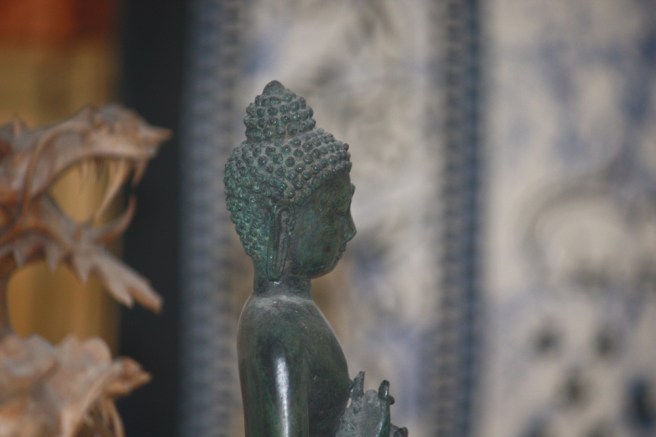
bodhisattva, in Buddhism, one who seeks awakening (bodhi)—hence, an individual on the path to becoming a buddha.
Pali: bodhisatta (“one whose goal is awakening”)
In early Indian Buddhism and in some later traditions—including Theravada, at present the major form of Buddhism in Sri Lanka and other parts of Southeast Asia—the term bodhisattva was used primarily to refer to the Buddha Shakyamuni (as Gautama Siddhartha is known) in his former lives. The stories of his lives, the Jatakas, portray the efforts of the bodhisattva to cultivate the qualities, including morality, self-sacrifice, and wisdom, which will define him as a buddha. Later, and especially in the Mahayana tradition—the major form of Buddhism in Tibet, China, Korea, and Japan—it was thought that anyone who made the aspiration to awakening (bodhicittotpada)—vowing, often in a communal ritual context, to become a buddha—is therefore a bodhisattva. According to Mahayana teachings, throughout the history of the universe, which had no beginning, many have committed themselves to becoming buddhas. As a result, the universe is filled with a broad range of potential buddhas, from those just setting out on the path of buddhahood to those who have spent lifetimes in training and have thereby acquired supernatural powers. These “celestial” bodhisattvas are functionally equivalent to buddhas in their wisdom, compassion, and powers: their compassion motivates them to assist ordinary beings, their wisdom informs them how best to do so, and their accumulated powers enable them to act in miraculous ways.
–
Avalokiteshvara
–

–
Bodhisattvas are common figures in Buddhist literature and art. A striking theme in popular literature is that of the concealed greatness of the bodhisattvas. In numerous stories ordinary or even distinctly humble individuals are revealed to be great bodhisattvas who have assumed common forms to save others. The lesson of these tales is that, because one can never distinguish between paupers and divinities, one must treat all others as the latter. In popular folklore bodhisattvas appear as something like saviour deities, a role they acquired both through the evolution of earlier ideas and through fusion with already existing local gods.
Buddhism: Celestial buddhas and bodhisattvas
A particularly important mythology in East Asia is that of Dharmakara. According to the Pure Land Sutra, Dharmakara was a bodhisattva whose vows were realized when he became the Buddha Amitabha. Pan-Buddhist bodhisattvas include Maitreya, who will succeed Shakyamuni as the next buddha in this world, and Avalokiteshvara, known in Tibet as Spyan ras gzigs (Chenrezi), in China as Guanyin (Kuan-yin), and in Japan as Kannon. Although all bodhisattvas act compassionately, Avalokiteshvara is considered the embodiment of the abstract principle of compassion. Bodhisattvas of more localized importance include Tārā in Tibet and Jizō in Japan.
Here is the dreaming sequence had yesterday and overnight. The purpose of this current visit is to ascertain if a move back to the UK feels right and/or is otherwise on the cards. The previous few dreams have not been auspicious in this context.
Yesterday we were driving back along a valley and “no through road” “road ahead closed” signs became apparent with no further information. It is the only “A” road route. The signage for diversion was late and the following signage poor, to understate. It was done in a shoddy manner. This contributed to us getting lost in a hive of tiny single track country roads.
During the night around 1 AM the fire alarm in the bedroom started bleeping on a regular basis. I opened a window to allow air circulation. At home this often corrects. The bleeping continued. So stark bollock naked I climbed with my spastic body on a chair to investigate. The detector was stuck to the ceiling with dual sided sticky tape and two screws which had not been rawl plugged into the ceiling. The detector came away in my hands. I went to the bathroom the both of us wide awake and light on. I unplugged the battery and the bleeping stopped. The workmanship was quick-fix shoddy rushed.
——————————————-
A little later around 4:30 AM. Dreaming I find myself in the upstairs room of a village / town centre region in France. On the square outside I can see a church spire. The village square is cobbled. I do not know this village. In the waiting room next to the secretary a patient is waiting. He is a man a little younger than me dressed in maroon cords and with a sleeveless puffer jacket. He has unruly curly hair around the circumference of male patterned baldness. He greets me in French with a great deal of warmth. He is a local big cheese. I have taken over as the village doctor, the village general practitioner. {GP}
I usher him into the office, and we discuss what ails him. He is after some more codeine for the pain in his knees. I know that the previous GP had been in the habit of dishing out drugs like sweeties. I ask him to get on the table for an examination. I flex and check his knees. Whilst I can hear some arthritic crunching the mobility is good. I say that we need to wean him of the opiates. He disagrees. I ask him if he remembers having a proper easy bowel movement. No. I say that this time I will prescribe him some codeine but the next time I will reduce the dosage. I open his cardboard covered dossier and look through we discuss in a mixture of French and English his posting to French Indochina and his time in the foreign legion.
Back in the waiting room / secretarial area the room is filling up with people to see the new GP. They are not all ill. It has a social function. The secretary gives me a glass of red wine, and the next patient comes with me for consultation. She too is a local big wig. She sits in my office and asks how much wine I drink. One glass a day I reply. I know in the dream that I do not drink at all. I am saying this because the wine was by way of a welcome. She then thanks me for taking up the position as GP for the village.
The scene changes and I am in a modern squashed in English new build two-bedroom house on the upstairs carpeted landing. A letter comes through the letterbox and lands on the doormat. It is a letter from a solicitor. I open the letter, and it is stating that I have inherited the chairman ship of an unspecified charity in Lerwick. I should travel there to take up post.
I make my way to a ferry port and get on a boat to cross to the islands. First, I have to descend in a lift to the disembarkation point. I get on the boat, and it is very low tide. Out of the window and in the caldera of a fountain which is where the boat is waiting, I can see large eels, ling and conger eels. They are congregating around the central fountain. There is no water. In my mind I note that I could come back here and throw a line should I wish to catch these eels / fish. Though I am unsure that I would wish so to do or why.
On board the boat is a member of the charity committee. He is advising me that there is a power struggle at the charity and as a non-islander there is both a chance that I could sort it out or a chance that I could further precipitate conflict. I am not overly keen on finding out which.
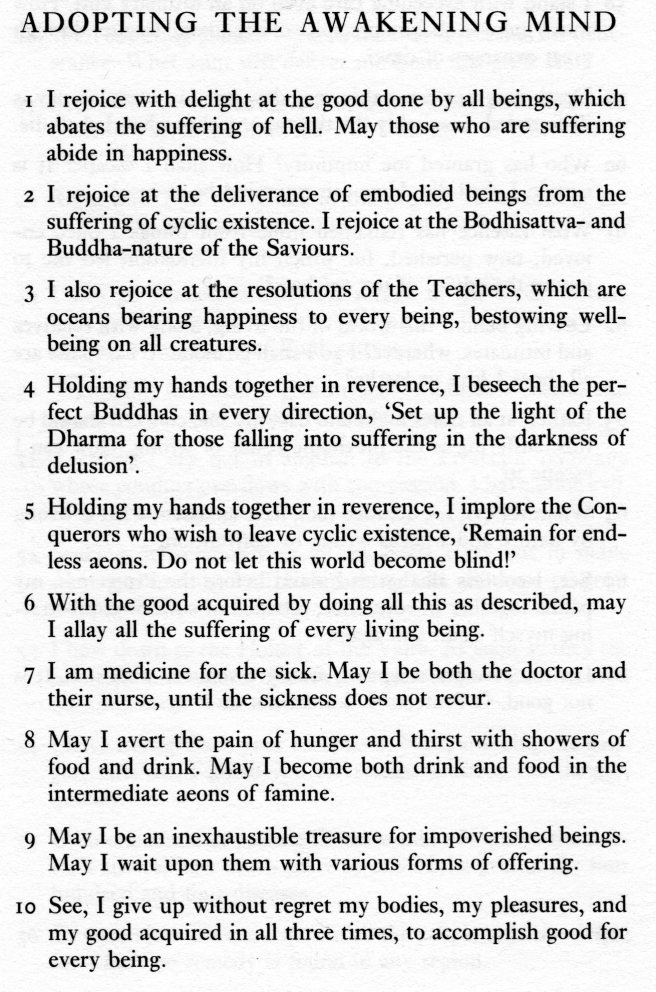
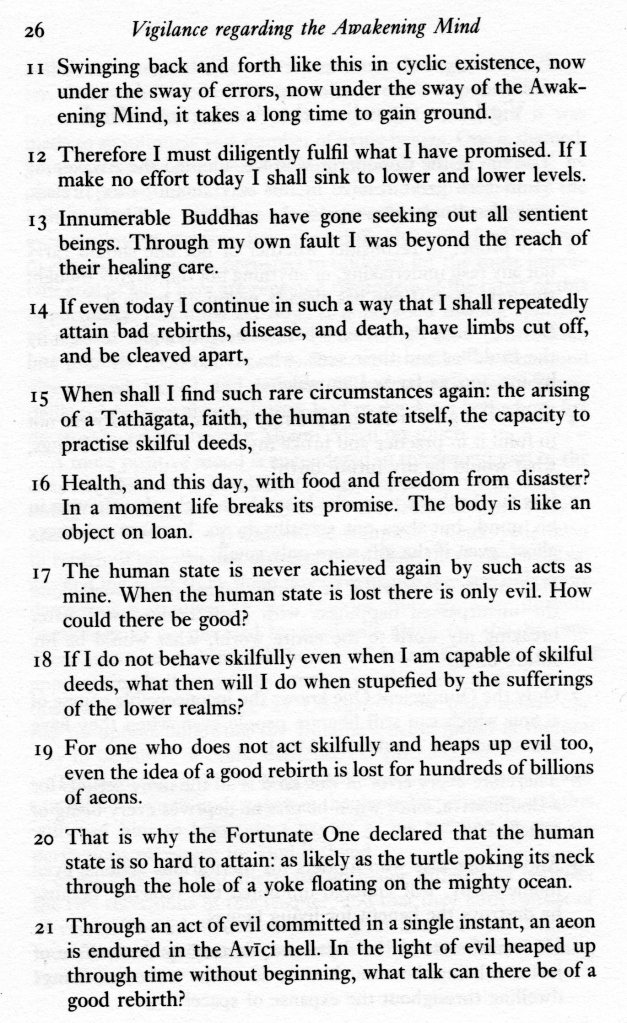
As I start to come to, I am reminded of two phrases, “perfidious Albion” and “may I be the doctor and the nurse”. The latter of which stems from Śāntideva’s so-called bodhisattva vows.
———————————————–
With my palms clasped at my heart,
I urge all buddhas longing for nirvāṇa:
Do not leave us blind and all alone,
But remain with us for countless ages!
Through whatever virtue I have gained
By all these actions now performed,
May the pain of every living being
Be cleared away entirely, never to return.
For all the beings ailing in the world,
Until their sickness has been healed,
May I become the doctor and the cure,
And may I nurse them back to health.
Bodhicaryāvatāra: An Introduction to the Bodhisattva’s Way of Life
by Śāntideva
From Wikipedia
In the oldest texts of Buddhism, dhyāna (Sanskrit) or jhāna (Pāḷi) is the training of the mind, commonly translated as meditation, to withdraw the mind from the automatic responses to sense-impressions, and leading to a “state of perfect equanimity and awareness (upekkhā-sati-parisuddhi).” Dhyāna may have been the core practice of pre-sectarian Buddhism, in combination with several related practices which together lead to perfected mindfulness and detachment and are fully realized with the practice of dhyana.
In the later commentarial tradition, which has survived in present-day Theravāda, dhyāna is equated with “concentration,” a state of one-pointed absorption in which there is a diminished awareness of the surroundings. In the contemporary Theravāda-based Vipassana movement, this absorbed state of mind is regarded as unnecessary and even non-beneficial for awakening, which has to be reached by mindfulness of the body and vipassanā (insight into impermanence). Since the 1980s, scholars and practitioners have started to question this equation, arguing for a more comprehensive and integrated understanding and approach, based on the oldest descriptions of dhyāna in the suttas.
In Chán and Zen, the names of which Buddhist traditions are the Chinese and Japanese pronunciations, respectively, of dhyāna, dhyāna is the central practice, which is ultimately based on Sarvastivāda meditation practices, and has been transmitted since the beginning of the Common Era.
Etymology
Dhyāna, from Proto-Indo-European root *√dheie-, “to see, to look,” “to show.” Developed into Sanskrit root √dhī and n. dhī, which in the earliest layer of text of the Vedas refers to “imaginative vision” and associated with goddess Saraswati with powers of knowledge, wisdom and poetic eloquence. This term developed into the variant √dhyā, “to contemplate, meditate, think”, from which dhyāna is derived.
According to Buddhaghosa (5th century CE Theravāda exegete), the term jhāna (Skt. dhyāna) is derived from the verb jhayati, “to think or meditate,” while the verb jhapeti, “to burn up,” explicates its function, namely burning up opposing states, burning up or destroying “the mental defilements preventing […] the development of serenity and insight.”
Commonly translated as meditation, and often equated with “concentration,” though meditation may refer to a wider scala of exercises for bhāvanā, development. Dhyāna can also mean “attention, thought, reflection.”
The jhānas
The Pāḷi canon describes four progressive states of jhāna called rūpa jhāna (“form jhāna“), and four additional meditative states called arūpa (“without form”).
Preceding practices
Meditation and contemplation are preceded by several practices, which are fully realized with the practice of dhyāna. As described in the Noble Eightfold Path, right view leads to leaving the household life and becoming a wandering monk. Sīla (morality) comprises the rules for right conduct. Right effort, or the four right efforts, aim to prevent the arising of unwholesome states, and to generate wholesome states. This includes indriya samvara (sense restraint), controlling the response to sensual perceptions, not giving in to lust and aversion but simply noticing the objects of perception as they appear. Right effort and mindfulness calm the mind-body complex, releasing unwholesome states and habitual patterns, and encouraging the development of wholesome states and non-automatic responses. By following these cumulative steps and practices, the mind becomes set, almost naturally, for the practice of dhyāna. The practice of dhyāna reinforces the development of wholesome states, leading to upekkhā (equanimity) and mindfulness.
The rūpa jhānas
Qualities of the rūpa jhānas
The practice of dhyāna is aided by ānāpānasati, mindfulness of breathing. The Suttapiṭaka and the Agamas describe four stages of rūpa jhāna. Rūpa refers to the material realm, in a neutral stance, as different from the kāma realm (lust, desire) and the arūpa-realm (non-material realm). Each jhāna is characterised by a set of qualities which are present in that jhāna.
The arūpas
Grouped into the jhāna-scheme are four meditative states referred to in the early texts as arūpas. These are also referred to in commentarial literature as immaterial/formless jhānas (arūpajhānas), also translated as The Formless Dimensions, to be distinguished from the first four jhānas (rūpa jhānas). In the Buddhist canonical texts, the word “jhāna” is never explicitly used to denote them; they are instead referred to as āyatana. However, they are sometimes mentioned in sequence after the first four jhānas (other texts, e.g. MN 121, treat them as a distinct set of attainments) and thus came to be treated by later exegetes as jhānas. The immaterial are related to, or derived from, yogic meditation, while the jhānas proper are related to the cultivation of the mind. The state of complete dwelling in emptiness is reached when the eighth jhāna is transcended.
The four arūpas are:
Although the “Dimension of Nothingness” and the “Dimension of Neither Perception nor Non-Perception” are included in the list of nine jhānas taught by the Buddha they are not included in the Noble Eightfold Path. Noble Truth number eight is sammā samādhi (Right Concentration), and only the first four jhānas are considered “Right Concentration.” If he takes a disciple through all the jhānas, the emphasis is on the “Cessation of Feelings and Perceptions” rather than stopping short at the “Dimension of Neither Perception nor Non-Perception”.
Nirodha-samāpatti
Beyond the dimension of neither perception nor non-perception lies a state called nirodha samāpatti, the “cessation of perception, feelings and consciousness”. Only in commentarial and scholarly literature, this is sometimes called the “ninth jhāna“
—————————————————————————————————
And from Wikipédia
Dhyāna
Dhyāna (sanskrit : ध्यान (devanāgarī) ; pali : झान, romanisation, jhāna ; chinois simplifié : 禅 ; chinois traditionnel : 禪 ; pinyin : chán ; coréen : 선, translit. : seon ; zen (禅) ; vietnamien : thiền ; tibétain : བསམ་གཏན, Wylie : bsam gtan, THL : Samten) est un terme sanskrit qui correspond dans les Yoga Sūtra de Patañjali au septième membre (aṅga) du Yoga. Ce terme désigne des états de concentration cultivés dans l’hindouisme, le bouddhisme, et le jaïnisme. Il est souvent traduit par « absorption », bien qu’étymologiquement il signifie simplement méditation ou contemplation. Le terme méditation est utilisé aujourd’hui comme un mot désignant de nombreuses techniques en occident, il s’apparente à la vigilance en psychologie ou en philosophie. Historiquement et pour le sous-continent indien, dhyana en est le plus proche.
Patañjali, le compilateur des Yoga Sūtra, en fait une étape préliminaire du samādhi. Les deux termes sont interchangés pour désigner ces états de conscience « transcendants ». Par exemple, les traductions Ch’an en chinois, Sŏn en coréeen, Thiền en vietnamien et Zen en japonais sont des noms d’écoles de dhyāna bouddhistes, dérivées les unes des autres, où dhyāna prend ce sens fort de samādhi.
On rencontre plus souvent, en bouddhisme, le terme pāli jhāna, parce que les enseignements qui y sont liés sont plutôt une préoccupation de l’école Theravāda.
Therāvada
Atteindre les jhānas correspond au développement de la tranquillité et de la sagesse (voir Samatha bhavana). On distingue cinq jhānas de la forme ou de la sphère physique pure, et quatre jhanas dans la méditation sur les royaumes immatériels. Anapanasati est la principale technique d’accès aux jhānas, la méditation metta en est une autre. Ces jhānas sont différenciés en fonction des « facteurs » qui les caractérisent :
Pour être atteints, les jhānas nécessitent la suppression de cinq empêchements :
Les cinq jhānas du monde de la forme comportent tous des facteurs différents ; leur nombre est souvent réduit à quatre (en ne tenant pas compte d’un état intermédiaire entre le premier et le deuxième, dépourvu de vitakka, mais avec un reste de vicāra) :
Ces deux facteurs, équanimité et concentration, resteront présents dans les 4 jhānas du sans-forme ou non physiques.
Les quatre royaumes immatériels de la méditation sont :
One day when he was sitting under the Bodhi Tree a question popped into Buddha’s mind.
“Why do people make such a big fuss about everything, why are they overly dramatic and highly emotional about their normal lives and how they think life ought to be? Why are they forever whinging and complaining about their lot?”
And then he had it, the essence.
“Don’t be such a drama queen!”
The Bhagavad, the Tathāgata, the Venerable one, the Blessed, had come up with a simple piece of advice which would help people ease the imagined burdens in their lives. To lighten their imagined loads and to thereby enlighten them.
“Don’t be such a drama queen!”
He had found the precious jewel of wisdom. If people could live life as it is rather than with an overly dramatic soap opera style overlay there would be much less suffering in the world. People would stop flailing about and over-reacting. Calmness, harmlessness and peace might abide.
So, whenever you find yourself reacting to a situation remember and enact the precious jewel of wisdom garnered under the mighty Bodhi Tree.
Buddha says, “don’t be such a ridiculous drama queen about everything!”
Excerpted from The Dharma of the Forest
« Moines, une personne ordinaire a des sensations de plaisir, des sensations de douleur et des sensations qui ne sont ni agréables ni désagréables. Le noble disciple bien entraîné connaît lui aussi des sensations de plaisir, des sensations de douleur et des sensations qui ne sont ni agréables ni désagréables. Alors, quelle différence, quelle distinction, quel signe distinctif y a-t-il entre le noble disciple bien entraîné et la personne ordinaire? »
« Pour nous, Vénérable, les enseignements ont pour origine, pour guide et pour arbitre l’Éveillé, le Bouddha lui-même. Il serait donc bien que vous nous expliquiez le sens de votre question. L’ayant entendu de la bouche de l’Éveillé lui-même, les moines s’en souviendront. »
« Dans ce cas, moines, écoutez attentivement ces paroles. »
« Nous écoutons attentivement, Vénérable. »
Le Bouddha dit alors: « Lorsqu’une personne ordinaire ressent une douleur physique, elle s’inquiète, s’attriste et se lamente; elle se frappe la poitrine, pleure et se désespère. Ainsi, elle ressent deux sortes de douleurs: l’une physique et l’autre mentale. C’est comme si un homme était blessé par une flèche et qu’on lui en lançait une seconde juste après; il sentirait la douleur de chacune des deux flèches reçues. De même, lorsqu’une personne ordinaire ressent une douleur physique, elle s’inquiète, s’attriste et se lamente; elle se frappe la poitrine, pleure et se désespère. Ainsi, elle ressent deux sortes de douleurs: l’une physique et l’autre mentale.
« Ressentant une douleur, la personne y résiste avec amertume. Du fait de cette résistance et de cette amertume, une tendance sous-jacente de résistance à la douleur physique remonte à la surface de son esprit. Sous l’effet de cette douleur, elle se tourne vers la recherche de plaisirs sensoriels. Pourquoi ? Parce qu’une personne ordinaire ne voit aucune échappatoire à la douleur en dehors des plaisirs des sens. Du fait qu’elle recherche le bonheur dans les plaisirs sensoriels, une tendance sous-jacente d’avidité pour les sensations agréables remonte à la surface de son esprit. Elle n’a pas connaissance de la réalité ; elle ne sait pas que toutes les sensations agréables apparaissent puis disparaissent, qu’elles sont aussi attirantes que dangereuses et qu’il est difficile d’y échapper. N’ayant pas cette connaissance, une tendance sous-jacente à l’ignorance des sensations neutres remonte à la surface de son esprit. Qu’elle ressente du plaisir, de la douleur ou une sensation neutre, cette personne est comme enchaînée par ses ressentis, elle s’y identifie complètement. Voilà pourquoi il est dit que c’est une personne ordinaire, quelqu’un qui est piégé par la naissance, le vieillissement et la mort, par le chagrin, les lamentations, la douleur, la tristesse et le désespoir. Quelqu’un qui est enchaîné par la souffrance.
« Par contre, moines, lorsque le noble disciple bien entraîné ressent une douleur physique, il ne s’inquiète pas, ne s’attriste pas, ne se lamente pas; il ne se frappe pas la poitrine, ne pleure pas et ne désespère pas non plus. Il ne ressent qu’une seule sorte de douleur : une douleur physique, pas une douleur mentale. C’est comme si un homme était blessé par une flèche et n’en recevait pas une seconde juste après; il percevrait la sensation causée par une seule flèche. De même, lorsqu’un noble disciple bien entraîné ressent une douleur physique, il ne s’inquiète pas, ne s’attriste pas, ne se lamente pas; il ne se frappe pas la poitrine, ne pleure pas et ne désespère pas non plus. Il ne ressent qu’une seule sorte de douleur: une douleur physique.
« Conscient de cette sensation douloureuse, il n’y résiste avec amertume. De ce fait, aucune tendance sous-jacente de résistance à la douleur physique ne remonte à la surface de son esprit. Sous l’effet de cette douleur, il ne se tourne pas vers la recherche du plaisir sensoriel. Pourquoi? Parce qu’un noble disciple bien entraîné sait que l’on peut échapper à la douleur autrement que par le plaisir des sens. Du fait qu’il ne recherche pas le bonheur dans les plaisirs sensoriels, aucune tendance sous-jacente d’avidité pour les sensations agréables ne remonte à la surface de son esprit. Il a connaissance de la réalité; il sait que toutes les sensations agréables apparaissent puis disparaissent, qu’elles sont aussi attirantes que dangereuses et qu’il est difficile d’y échapper. Ayant cette connaissance, aucune tendance sous-jacente à l’ignorance des sensations neutres ne remonte à la surface de son esprit. En ressentant du plaisir, de la douleur ou une sensation neutre, il n’est aucunement enchaîné par ses ressentis, il ne s’y identifie absolument pas. Voilà pourquoi il est dit que c’est un noble disciple bien entraîné, quelqu’un qui n’est pas piégé par la naissance, le vieillissement et la mort, par le chagrin, les lamentations, la douleur, la tristesse ou le désespoir. Quelqu’un qui n’est pas enchaîné par la souffrance.
« Moines, voilà quelle est la différence, la distinction, le signe distinctif entre le noble disciple bien entraîné et une personne ordinaire. Le sage qui a pleinement réalisé le Dhamma n’est pas charmé par les objets désirables selon les critères du monde et les situations non désirables selon les critères du monde n’éveillent en lui aucune résistance. Désir et aversion n’existent plus en lui. Il a atteint l’autre rive. »
To paraphrase:
Whilst physically incarnated pain is very likely, how you respond to this phenomenon is up to you. You have a choice.
Pain is inevitable, suffering optional.
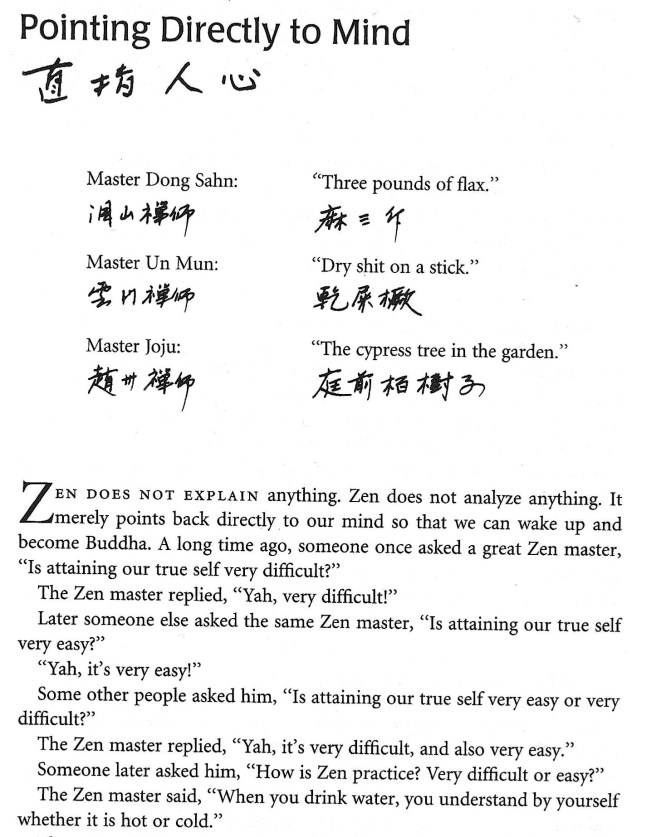
This morning’s Zen.
–

–

–

–

–

–
Plumbers’ rods have the best return on investment I have ever made. {ROI}
I have saved thousands by doing it myself.

If you search for “coaching” you will find many people offering their services as coaches and often a part of this is setting goals or targets for success and advancement. Few notice the similarity of goal and gaol. People can become prisoners of their goal orientation. Society is obsessed with measurable metrics and tick lists of things to do, to the extent that life can be a wearisome endless list of devoirs. It is de rigueur to have goals and ambition it seems.
Siddartha wanted so badly to end suffering for all sentient beings, suffering, or dukka, can be translated as dissatisfaction.
I’ll make a statement: goal orientation is directly causal of dissatisfaction.
If you fail to make a goal you are dissatisfied, if you make a goal, you are temporarily done but the next goal awaits lurking on the horizon. Any “satisfaction” is fleeting. This measurement obsession more often than not suggests some measure of inadequacy, could do better.
People then have massive internal dialogue about whether of not they are meeting their goals. Internal dialogue is nearly always negative and hence the being suffers unnecessarily because of this internal “mental” cacophony.
Goal orientation and rush often skip hand in hand. Focussed only on the goal there is a tendency to finish quick and this can cause poor application to task and lower standards. Goal orientation can prevent impeccability. Eye on goal one does not fully absorb into whatever it is one is doing. There are distractions from other pending goals. Quality suffers on the noose of measurable quantity. Goals hang.
The antithesis of spiritual development is rush. It is impossible to rush it, but many try and seek milestones to prove progress. The hangover of societal obsession with goal orientation is difficult to ease.
Striving is a form of suffering.
Relaxation and complete absorption is the antidote. Complete absorption brings completion but without obsessional suffering. Complete absorption quietens the internal dialogue and therefore reduces dissatisfaction. Everyone knows when they have been impeccable. Impeccability is not an absolute. If you give completely of your current very best that is all you can do, this never brings dissatisfaction. Subsequent comparative internal dialogue can cause the nine headed hydra of dissatisfaction to rise again.
Internal dialogue is a primary cause of dissatisfaction and suffering.
Endless measuring is causal of dissatisfaction and suffering.
Comparison mind is directly causal of dissatisfaction.
Rational thinking causes dissatisfaction. Therefore, rational thinking is an irrational unwise thing to do. It does not make sense.
Of course, under certain circumstances one needs some rationality.
If one is ever goal oriented one never experiences the moment, the eternal now, because the goal is very distracting. Not being fully present causes dissatisfaction. If one lives in the twin worlds of what if and if only, there is rarely now. The past whether melancholic or rose tinted, the future whether idealised or catastrophe is not now, it is mind-stuff often of the nature of internal dialogue. Trash.
Goal orientation causes impatience which is a form of dissatisfaction. Goal orientation when one is driving a car is a cause of road rage.
Letting go of goal orientation is liberating.
Try it, having no goals is harder than it might seem, because societal habituation near worships them.
Hence there is suffering and dissatisfaction, which we might call samsara or saṃsāra, which is another term for endless human folly.