Luxuriously Lost – Dreaming Colour – Vajra Bell – Huge Serpent – Dream 03-09-2025

Here is last night’s dreaming sequence, which on waking seemed very significant.

The dream starts with me arriving at a brand spanking new London Underground station which I exit onto the street in front. The tube station on a standard tube sign is called “DOCTO BEN”. In the plaza outside are a number of food outlets, a news agents and a Timpson’s key place. The buildings are modern and white, a reproduction of period buildings suitable to the area which I know to be due West of the South Kensington campus. The reproduction has been done very well. Although I know roughly where I am, I am lost. I do not recognise any of the streets nor the street names which are on plaques in keeping with the area. In the dream I rationalise that it must be an Elizabeth line, new tube station.

I decide that I need to get a green district line tube home and venture northwards towards the park to look for one. I estimate I may find one there. I am unhurried and thoroughly enjoying my time being luxuriously lost with no fear therefrom. I head north. I cross a main road onto the outskirts of the park and cross the road which I know heads over the Serpentine. I wait for the little green man on the traffic lights. I start to cross. As I am crossing my mind, its visual eye, is filled with the phrase “OXO BEST”. I know this and the previous word are numerology.

The dream changes and I am upstairs in bed. Somehow the cat has gotten onto the upstairs landing and is playing with marbles. I get up to investigate she is chasing a green cat’s eye marble back and forth along the hall. I imagine the door to the upstairs to be open so that she can go back for food and toilet. I close the bedroom door so that she cannot get in.

I wake up and recall the words. I go to the loo and make a note of the words on a cardboard box in the kitchen. It is a little after six AM.

I get back to bed thinking that my dreaming is perhaps over for the night and will generally calm down now after my birthday. I don’t think that I will go back to sleep.

Slowly my visual field fills with my dreaming colour, forming, swirling and forming in its indigo-blue Rorschach blot like way. The colours form among “clouds”. The dreaming colour fills the dream landscape. I note that this is highly unusual, spontaneous dreaming colour. I allow myself to relax fully into it and let the landscape fill and the colour absorb me.

I am in my old university office and the telephone rings. It is a young woman asking if she can get a train to Memphis Tennessee from where she is. I say that I will come down to see her. I ‘phone through to the trainline and a ticket costs £1540. I meet her outside. She is with a friend. I tell her the price and suggest that she would be better off getting a hire car. She has a small day-sack on her back. She is not best pleased. I say that it is an easy drive. She says “ok, then. I will drive” and flounces off. She is a Ph.D. student due to present at conference.

The scene changes and I am sat on a faded red armchair isolated with no room reference point. I can feel the wind whoosh by my hair and the world is whizzing past as if I am travelling through space. I am reminded of the Maxwell tape adds.

—–

——

I feel absolutely rooted to the chair and the world, the universe even, whizzes past. I cannot see myself but can feel the chair and its arms under my hands. The motion is fierce.

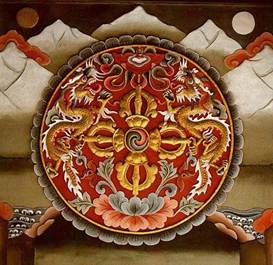
The wind dies down and I can now see myself from the front of the chair. I am sat on the chair wearing a full bright yellow Gelug ceremonial crescent hat. I am in Tibetan style monk’s robes and have a mala on my left wrist. I look like I do now only my hair is freshly buzz-cut. I seem energized. In front of me on a very ceremonial table in its pouch is my Vajra-bell. I know that the chair is in fact a ceremonial throne, my throne. With my mind the pouch around the Vajra-bell disappears. The bell swells in size and takes on a golden radiant hue. The quality of it is vastly enhanced and intricate. The bell starts to radiate light in all directions until it becomes almost blindingly bright. But I know that this light is not normal photons. It is Vajra-tantra. I sit bathed for what seems like a very long time, the light feeling much like the gale-wind from before only vibrant.

The scene changes and I am sat at my old desk from when I lived in Brixton. On the table is an open propped up Microsoft Surface tablet. It is large and expensive. It is not mine. I can’t remember what I did the night before so I press play on the tablet. A video starts to play.

In it I can see a few men, eastern European, query Russian. They are standing in a near circle. One of them has his flies undone and what looks to be a semi-erect penis protruding. On close inspection it is the head of a snake. One of his comrades pulls gently on the snake head and guides it to the floor. Slowly a huge snake reminiscent of a fat Burmese python eases its way out of the trousers. The snake is several metres long and more than  ~30 cm thick. It is massive and powerful. It has a racing-green lush colouration and glistens with a self-moistening sheen. I am now fully in the scene and the snake comes towards me, it welcomes me and I temporarily incorporate it. I become one with it.

The scene changes to the far artic north. I am outside a base with wire mesh fence. I dig a deep square shaped hole deeper that my height. The sides of the hole are perfectly cut squared because I am digging into permafrost. Into the hole I place my Vajra-bell along with several near-spherical objects which have an egg like purpose. They are ancient and sort of sacred. I am the keeper. I then exude the snake into the hole for protection. It nestles down. I go off and cut several chunks of ice slab. These are ~one metre by one metre by thirty centimetres, they are heavy hundreds of kilos. But I manipulate them by hand and mind into the hole as a stopper. I am about to cover with dirt when Max walks by. I ask him if he would like to take a look before I close it. He is unsure but agrees.

The dream ends.

My Rosary – Dream Vision – 26-08-2025

Here is a dream / vision from the early hours last night.

“I am in a room, white wash loose sealed but only partial illuminated by small brass (?) oil lamps. I look down at my arms and they are brown and less hairy than I am used to. I am holding a beaded “rosary” and passing the beads between my fingers.  These are roughly the size of the top of my middle finger. There are not spherical, a sort of rounded cylinder pea shaped. They are made of a stone like “wooden” brown material which is at first cool to the touch. As I run the beads through my fingers I come to an amber bead which is much smoother. I note it. I continue. On the opposite side of the rosary chain / circle is another amber bead. This one is slightly larger.  I hold it up to the light. I can see an entire mosquito-like insect preserved in the amber. It is a thing of marvel. The rosary has two amber beads amongst all the dark brown ones. I am hearing “om mane padme hum”  as I run the beads sequentially through  my fingers.”

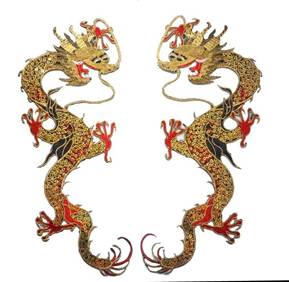
The Future of the Dragon Dream 26-08-2025

Here is this morning’s dream had between 5 and 7 AM. It was sufficiently realistic that I just opened my email expectantly.

The dream opens with me sat on a sofa with a coffee on a glass coffee table in front. The furniture is ratan in build and the room tropical themed. There are batik hangings and a golden Thai style top-knot haired Buddha figurine. The walls are white washed and stone and there is a feel of castle and perhaps Scotland. I am somehow at home in these settings. I go over to a large dark wooden desk with a green “club” leather chair. I boot up the computer. In an email account I rarely use I scan the list of emails. One email stands out from the bunch. It has the subject line, “The Future of the Dragon”. I do not know the sender’s address.

I pause for a moment and then open the email sceptical of spam / phishing. The email opens without problem and it is addressed to me. The person would like to meet up to discuss the future of the dragon. I look to the bottom of the mail for a signature. The address is arranged in the form of a Thai Wat temple and originated from a dojo in the Malay-Singapore-Thai region with a Singapore head office. It has ‘phone numbers, email address and an Instagram account. The protagonist is called Cheng. I am unsure how to respond or when to respond. I look at the Instagram account and see a picture of a young Asian male in his mid-twenties. He is pictured in karate-gi with his pals. There are other pictures of him in the dojo, in nature and it all looks fine and above board. I note his appearance. He has at least a part Chinese to him. I resolve to wait a little before replying.

Next, I am driving South down Regents Street in London, near Hamleys. I am in my white Jeep style SUV. It is around Christmas time because the lights are on. Coming in the opposite direction, North, there is a stream of traffic which comes to a halt in front of me. A young man gets out and walks past me to see what is going on. It is Cheng. I call out his name. He stops and turns looking surprised. I say that he emailed me and that I recognised him from the photos. I say to remind him, “The future of the dragon.” It suddenly clicks. I gesture for him to get into my car which he does. I do a U-turn and gesture for his friends to follow me in their open top Jeep-Moke.

We drive off into one of the large semi-circles of grand housing next to a park. There is a pub nearby. I say that we should talk. He has suddenly gone all shy. I ask him if a beer would help. Yes, perhaps. We make  our way to the pub and are soon joined by his friends which include his tiny sister. Chris turns up and I suggest that he gets us all a drink which he does.

I ask Cheng as an icebreaker about the style of karate he was training in and offer him my shoulder to punch. I ask was it non-contact and play punch him in the head or was it full contact. He says that is was a little heard of martial art specific to region but that is not what the dragon is about. He knows that I know this. I see through my contact with him a small wizened Asian man who is tiny and dressed in a Chinese “Tai Chi” outfit. He is Malay, Burmese or Singaporean. I understand him to be a master and that Cheng is by way of his contact. I have never met the master before but he is somehow familiar. I can feel him now as I type. I can recognise him.

Cheng’s sister calls her mother back home and explains that he has found me.

The dream ends.

Dhyāna

From Wikipedia

In the oldest texts of Buddhism, dhyāna (Sanskrit) or jhāna (Pāḷi) is the training of the mind, commonly translated as meditation, to withdraw the mind from the automatic responses to sense-impressions, and leading to a “state of perfect equanimity and awareness (upekkhā-sati-parisuddhi).” Dhyāna may have been the core practice of pre-sectarian Buddhism, in combination with several related practices which together lead to perfected mindfulness and detachment and are fully realized with the practice of dhyana.

In the later commentarial tradition, which has survived in present-day Theravāda, dhyāna is equated with “concentration,” a state of one-pointed absorption in which there is a diminished awareness of the surroundings. In the contemporary Theravāda-based Vipassana movement, this absorbed state of mind is regarded as unnecessary and even non-beneficial for awakening, which has to be reached by mindfulness of the body and vipassanā (insight into impermanence). Since the 1980s, scholars and practitioners have started to question this equation, arguing for a more comprehensive and integrated understanding and approach, based on the oldest descriptions of dhyāna in the suttas.

In Chán and Zen, the names of which Buddhist traditions are the Chinese and Japanese pronunciations, respectively, of dhyāna, dhyāna is the central practice, which is ultimately based on Sarvastivāda meditation practices, and has been transmitted since the beginning of the Common Era.

Etymology

Dhyāna, from Proto-Indo-European root *√dheie-, “to see, to look,” “to show.” Developed into Sanskrit root √dhī and n. dhī, which in the earliest layer of text of the Vedas refers to “imaginative vision” and associated with goddess Saraswati with powers of knowledge, wisdom and poetic eloquence. This term developed into the variant √dhyā, “to contemplate, meditate, think”, from which dhyāna is derived.

According to Buddhaghosa (5th century CE Theravāda exegete), the term jhāna (Skt. dhyāna) is derived from the verb jhayati, “to think or meditate,” while the verb jhapeti, “to burn up,” explicates its function, namely burning up opposing states, burning up or destroying “the mental defilements preventing […] the development of serenity and insight.”

Commonly translated as meditation, and often equated with “concentration,” though meditation may refer to a wider scala of exercises for bhāvanā, development. Dhyāna can also mean “attention, thought, reflection.”

The jhānas

The Pāḷi canon describes four progressive states of jhāna called rūpa jhāna (“form jhāna“), and four additional meditative states called arūpa (“without form”).

Preceding practices

Meditation and contemplation are preceded by several practices, which are fully realized with the practice of dhyāna. As described in the Noble Eightfold Path, right view leads to leaving the household life and becoming a wandering monk. Sīla (morality) comprises the rules for right conduct. Right effort, or the four right efforts, aim to prevent the arising of unwholesome states, and to generate wholesome states. This includes indriya samvara (sense restraint), controlling the response to sensual perceptions, not giving in to lust and aversion but simply noticing the objects of perception as they appear. Right effort and mindfulness calm the mind-body complex, releasing unwholesome states and habitual patterns, and encouraging the development of wholesome states and non-automatic responses. By following these cumulative steps and practices, the mind becomes set, almost naturally, for the practice of dhyāna. The practice of dhyāna reinforces the development of wholesome states, leading to upekkhā (equanimity) and mindfulness.

The rūpa jhānas

Qualities of the rūpa jhānas

The practice of dhyāna is aided by ānāpānasati, mindfulness of breathing. The Suttapiṭaka and the Agamas describe four stages of rūpa jhāna. Rūpa refers to the material realm, in a neutral stance, as different from the kāma realm (lust, desire) and the arūpa-realm (non-material realm). Each jhāna is characterised by a set of qualities which are present in that jhāna.

  • First dhyāna: the first dhyāna can be entered when one is secluded from sensuality and unskillful qualities, due to withdrawal and right effort. There is pīti (“rapture”) and non-sensual sukha (“pleasure”) as the result of seclusion, while vitarka-vicara (“discursive thought”) continues.
  • Second dhyāna: there is pīti (“rapture”) and non-sensual sukha (“pleasure”) as the result of concentration (samadhi-ji, “born of samadhi”); ekaggata (unification of awareness) free from vitarka-vicara (“discursive thought”); sampasadana (“inner tranquility”).
  • Third dhyāna: upekkhā (equanimous; “affective detachment”), mindful, and alert, and senses pleasure with the body.
  • Fourth dhyāna: upekkhāsatipārisuddhi (purity of equanimity and mindfulness); neither-pleasure-nor-pain. Traditionally, the fourth jhāna is seen as the beginning of attaining psychic powers (abhijñā).

The arūpas

Grouped into the jhāna-scheme are four meditative states referred to in the early texts as arūpas. These are also referred to in commentarial literature as immaterial/formless jhānas (arūpajhānas), also translated as The Formless Dimensions, to be distinguished from the first four jhānas (rūpa jhānas). In the Buddhist canonical texts, the word “jhāna” is never explicitly used to denote them; they are instead referred to as āyatana. However, they are sometimes mentioned in sequence after the first four jhānas (other texts, e.g. MN 121, treat them as a distinct set of attainments) and thus came to be treated by later exegetes as jhānas. The immaterial are related to, or derived from, yogic meditation, while the jhānas proper are related to the cultivation of the mind. The state of complete dwelling in emptiness is reached when the eighth jhāna is transcended.

The four arūpas are:

  • fifth jhāna: infinite space (Pāḷi ākāsānañcāyatana, Skt. ākāśānantyāyatana),
  • sixth jhāna: infinite consciousness (Pāḷi viññāṇañcāyatana, Skt. vijñānānantyāyatana),
  • seventh jhāna: infinite nothingness (Pāḷi ākiñcaññāyatana, Skt. ākiṃcanyāyatana),
  • eighth jhāna: neither perception nor non-perception (Pāḷi nevasaññānāsaññāyatana, Skt. naivasaṃjñānāsaṃjñāyatana).

Although the “Dimension of Nothingness” and the “Dimension of Neither Perception nor Non-Perception” are included in the list of nine jhānas taught by the Buddha they are not included in the Noble Eightfold Path. Noble Truth number eight is sammā samādhi (Right Concentration), and only the first four jhānas are considered “Right Concentration.” If he takes a disciple through all the jhānas, the emphasis is on the “Cessation of Feelings and Perceptions” rather than stopping short at the “Dimension of Neither Perception nor Non-Perception”.

Nirodha-samāpatti

Beyond the dimension of neither perception nor non-perception lies a state called nirodha samāpatti, the “cessation of perception, feelings and consciousness”. Only in commentarial and scholarly literature, this is sometimes called the “ninth jhāna

—————————————————————————————————

And from Wikipédia

Dhyāna

Dhyāna (sanskrit : ध्यान (devanāgarī) ; pali : झान, romanisation, jhāna ; chinois simplifié : 禅 ; chinois traditionnel : 禪 ; pinyin : chán ; coréen : 선, translit. : seon ; zen (禅) ; vietnamien : thiền ; tibétain : བསམ་གཏན, Wylie : bsam gtan, THL : Samten) est un terme sanskrit qui correspond dans les Yoga Sūtra de Patañjali au septième membre (aṅga) du Yoga. Ce terme désigne des états de concentration cultivés dans l’hindouisme, le bouddhisme, et le jaïnisme. Il est souvent traduit par « absorption », bien qu’étymologiquement il signifie simplement méditation ou contemplation. Le terme méditation est utilisé aujourd’hui comme un mot désignant de nombreuses techniques en occident, il s’apparente à la vigilance en psychologie ou en philosophie. Historiquement et pour le sous-continent indien, dhyana en est le plus proche.

Patañjali, le compilateur des Yoga Sūtra, en fait une étape préliminaire du samādhi. Les deux termes sont interchangés pour désigner ces états de conscience « transcendants ». Par exemple, les traductions Ch’an en chinois, Sŏn en coréeen, Thiền en vietnamien et Zen en japonais sont des noms d’écoles de dhyāna bouddhistes, dérivées les unes des autres, où dhyāna prend ce sens fort de samādhi.

On rencontre plus souvent, en bouddhisme, le terme pāli jhāna, parce que les enseignements qui y sont liés sont plutôt une préoccupation de l’école Theravāda.

Therāvada

Atteindre les jhānas correspond au développement de la tranquillité et de la sagesse (voir Samatha bhavana). On distingue cinq jhānas de la forme ou de la sphère physique pure, et quatre jhanas dans la méditation sur les royaumes immatériels. Anapanasati est la principale technique d’accès aux jhānas, la méditation metta en est une autre. Ces jhānas sont différenciés en fonction des « facteurs » qui les caractérisent :

  • Application initiale (mouvement de l’esprit vers l’objet de méditation) : vitakka ;
  • Application soutenue (saisie de l’objet par l’esprit) : vicāra ;
  • Joie, ravissement : piti ;
  • Bonheur : sukha ;
  • Concentration en un point : ekaggata ;
  • Équanimité : upekkha.

Pour être atteints, les jhānas nécessitent la suppression de cinq empêchements :

  • le désir des sens (kāmacchanda) ;
  • la colère ou l’animosité (vyāpāda) ;
  • la paresse ou la torpeur (thīna-middha) ;
  • l’agitation ou le remords (uddhacca-kukkucca) ;
  • le doute (vicikicchā).

Les cinq jhānas du monde de la forme comportent tous des facteurs différents ; leur nombre est souvent réduit à quatre (en ne tenant pas compte d’un état intermédiaire entre le premier et le deuxième, dépourvu de vitakka, mais avec un reste de vicāra) :

  1. premier dhyâna : vitakka, vicāra, piti, sukha et ekaggata (le monde des cinq sens est complètement transcendé) ;
  2. deuxième dhyâna : piti, sukha et ekaggata (il n’y a plus d’action, de mouvement du mental, sont seulement ressentis la joie et le bonheur).
  3. troisième dhyâna : sukha et ekaggata (seul le bonheur demeure).
  4. quatrième dhyâna : upekkha et ekaggata (pure équanimité, il y a arrêt temporaire de la respiration dans cet état).

Ces deux facteurs, équanimité et concentration, resteront présents dans les 4 jhānas du sans-forme ou non physiques.

Les quatre royaumes immatériels de la méditation sont :

  1. la sphère de l’espace infini
  2. la sphère de la conscience infinie
  3. la sphère du néant
  4. la sphère sans perception et sans non-perception

Mental Health Drop-in Centre Dream 15-07-2025

Here is last night’s dream had during a restless night thanks to the pre-colonoscopy preparation.

The dream starts in a town or city with a West country feel. Maybe Bristol or Bath. There are rolling hills. As I walk amongst the sand stone buildings I see first Simon and then Rob. They are both wearing light coloured “journalist” lightweight “Africa” suits and ties. I meet them each in turn, in passing, and wave to them. They wave back. Each of them is younger than they are now yet older than when I last would have met them. The scene is very “English”. I carry on down a side street and see a small building with white wooden slats. I know this to be a medical office of some kind. Their names with dr are on brass plaques by the door. There are letter boxes and doorbells. I know that this is their practice.

{On writing this I think that it must be Bath because of my association with them there}.

I continue my stroll around the backstreets and come upon a centre, a kind of hippie drop in centre. I know this centre to be for wellbeing, alternative health and mental health. It has a café and meet area. It is held up partially on stilts into the hillside and overlooks the river below. There is a steep path off the road to the main door. I take this path and enter the building.

In the atrium someone is holding a  dance / stretching session. She ushers me to join in with the others. Soon it is clear that I cannot do the moves and say so to her. The class finishes and she beckons me to follow her. I go with her into a room where sat at a table “interview” style are a few other young people, in their twenties and thirties. They are trendy and fashionable with dyed hair and some with piercings. She takes up her position as “chair”. They look me up and own. They are therapists, psychotherapists of some school or other. They are on some kind of mission to heal. They smell of trendy group therapy.

The young woman asks me if I am happy. I ask her what she means by happy. She is smiley and profusive and she says, “you know, just very happy.”

I say to her that I do not recognise the term “happy” as it is an intemperate state, an emotional state which is transitory and illusional. At a push I could describe myself as content. I am no longer striving and, generally at equilibrium, is the best description.

She persists, “but are you happy?”

I look at her and ask, “why would anyone want to be happy, to seek out and strive for happiness?”

A young woman comes in from the front desk and whispers to the chair, “he is here again.”

The chair get up and follows her to the atrium when there is a tall young man dressed in black who is very clearly agitated. The chair motions for him to follow her and they head off to a side room. She is agitated and concerned her happy bubble has burst. She ushers him to sit down, she sits opposite.

I ask him if he is ok for me to be there too. Yes. He is.

I too sit down, near him. He is agitated and fidgeting, looking down at the floor. I can see from her file on the table that he has a red flag for suicide attempts.

I catch his attention. I say that my name is Alan and ask him what his is. He says Mark.

I say, “Mark, can you please roll up your sleeves so that I can see your forearms.”

This he does to reveal a patchwork of self-harm scars, some of which are severe, deep  and blueish.

The woman who has not seen these before lets out an involuntary gasp. I am completely unfazed.

I ask Mark, “when did you last cut?”

He says, “it was last Tuesday but only a little scratch, cos I was angry.”

I ask if he would like me to clean and dress the wound. He relaxes and lets me physically guide him by the shoulder to a kitchen area. He is pleased that he has found me, someone who can listen to him without agenda. He trusts me.

The dream ends…

The Old Guard and Toltecs – Speculations

The second instalment of the Old Guard series has recently hit Netflix. It has a shared plotline of sorts with the Highlander movies of ere. In this Old Guard dramatization physical plane immortals exist adjoint humanity and interact to either good or bad effect depending on mood and predilection. In Highlander in the end there can be only one in the battle between good and evil. In the Old Guard series “Andy” the main protagonist has fought to help, aid and otherwise nudge humanity in a “better” direction. Instead of reincarnating she has one contiguous and very long life in which she preserves her super model looks despite getting slashed and shot. A magical and miraculous healing occurs. She loses her regeneration powers and then regains them.

In each the burden of endless longevity / immortality is touched upon. They do not dwell overmuch on the boredom aspect rather the action and power angle. The omnipotence may appeal to the burdened and downtrodden. It may titillate the sociopath and the narcissist.

For dramatic impact pivotal points in global {human} history are referenced. An allied them is to be found in the “Assassins Creed” franchise though in this case reincarnation is invoked and a DNA bloodline is the bearer and propagator of ongoing conflicts.

It has been suggested to me that the so-called Toltecs were incarnated around pivotal times and played a role behind the scenes in the evolution of human and planetary history. Given that the technique of erasing personal history is part and parcel of the training, it is not surprising that little historical refence can be found. In the Old Guard Andy tries to avoid publicity. However in this day and age and thanks to internet monitoring and various intelligence services it is impossible to leave no trace. The times have changed.

In the Toltec tradition there is such a thing as a nagal being. The word Nagual in Spanish American is similar. The word Naga in the Indian tradition does not differ in root. In the hagiography of Buddhism Siddartha is protected by king cobra, a naga-raja, from the rain. These nagas live in the place or world of the nagas, naga-loka. Wisdom can be elicited from nagas and naga-loka. Serpents are the dreaming symbol for wisdom.

This suggests via speculation and extrapolation that a nagal being was a contemporary and perhaps companion of Shakyamuni Buddha.

——————-

“There is unanimous agreement that Nāgārjuna (ca 150–250 CE) is the most important Buddhist philosopher after the historical Buddha himself and one of the most original and influential thinkers in the history of Indian philosophy. His philosophy of the “middle way” (madhyamaka) based around the central notion of “emptiness” (śūnyatā) influenced the Indian philosophical debate for a thousand years after his death; with the spread of Buddhism to Tibet, China, Japan and other Asian countries the writings of Nāgārjuna became an indispensable point of reference for their own philosophical inquiries. A specific reading of Nāgārjuna’s thought, called Prāsaṅgika-Madhyamaka, became the official philosophical position of Tibetan Buddhism which regards it as the pinnacle of philosophical sophistication up to the present day.”

Stanford Encyclopedia of Philosophy

Nāgārjuna (नागार्जुन). – Name of an ancient Buddhist teacher of the rank of बोधिसत्त्व (bodhisattva).

Wisdom Library

The name also appears in the wider Hindu sources predating Shakyamuni Buddha

———————–

Typically a three pronged nagal is said to distribute knowledge widely. Like a stone thrown into a pond.  If Nāgārjuna is a wider term for a nagal teacher in the Indian sub-continent then this suggests that the core Toltec and Vedic / Buddhist teachings are similarly sourced and may differ only in method of expression and verbalisation. The term is a generic and not a specific and personal name.

I personally have not found any huge glaring clashes between these philosophies. There is a marked difference in emphasis and the cultural refence points and metaphors employed.

The entertainment mentioned above is not completely inconsistent with a hierarchy of spiritual “masters” on overwatch of humanity. However in order to make it dramatically appealing they must have meaty bits and interpersonal relations such as love with hints of corporeal hanky-panky.

Too abstract and the film would not sell. The immortals have to be beautiful people if good and have ugliness if bad. One is not allowed a minger of an immortal. They must be L’Oréal advert fresh out of the shower from time to time.

Having a “hot” teacher can badly detract from learning.

It is not difficult to see that the course of human history did indeed pivot around relatively small and local acts. The execution of Jesus ended up being a game changer. The invention of antibiotics added number density to humanity.  An assassination was used as a pretext for the first world war. If there is tension a simple fuse is all that is needed to ignite. A miscalculation in a Bay of Pigs might cause a nuclear winter. The simple protection of a Buddha from the rain enabled the propagation of the teachings for mind.

Humanity is prone to flying off the handle in rage and “self-righteous” indignation. Humanity has a “cob” on and is very prone to fits of angry pique which kill hundreds of thousands.

In the absence of overwatch might the history of humanity have been even more bloody and brutal?

We are heading into unknown territories with AI and Drone-robotics. What are the two biggest markets? War and sex. Thus humanity will expend effort into developing these for profit applications. Since the theoretical abolition of slavery humanity seeks a replacement.  I read yesterday that progress toward in vitro spermatogenesis is advancing, if the same continues for human eggs it may be possible to make a human-like foetus. A synthetic human is unlikely to have an indwelling Soul. This biological dabbling and getting a blind boner for technology represents a Pandora’s box the lid of which humanity will find difficult to resist. What is unleashed now and later in this century may cease to be readily controllable. The temptation of cash and the arrogant appeal of God-like potential may lead humanity down a very dark path indeed. It may regret…

How might Andy and the Highlander come to the rescue?

Challenges – Genetics – Having to Endure – Lama Dorje

A working hypothesis I have is that because I do not strut about, talk a lot and generally bullshit, people feel that I am need of education by them. Somehow, they are kind enough to bestow the benefit of their grandiose and unsolicited opinion on me so that I, a mere lowly pleb, might learn from their magnificence. So many offer me their opinions. Obviously, I am in dire need of education.

It is a catch 22. Do you let them rabbit on {endlessly} or flash intellect and make them feel more insecure than they already are. I don’t have an answer. Neither works well.

You may infer from the above that I am an arrogant arsehole. Your reflection in the mirror which is me may not reveal my essence.

Given all the tests in a medical sense that I am having its sounds a bit like someone meandering around in search of some kind of elusive diagnosis of sorts. That could be the case. Or it could simply be the generosity of the French healthcare system in action. The tendency for prophylaxis here is higher than in the UK.

The “health” finger continues to point at genetics. There is a non-normal make up, perhaps. Maybe I am special, so fucking special, or a creep, or a weirdo.

In my extensive recapitulations there is a recurring theme, “having to endure”. I have had to endure all sorts of things starting with bullying at school(s) and being gossiped about extensively, especially when my back was turned and I was not there. I am not paranoid; I have anecdotal evidence in support of this tendency. People curry favour by gossiping and in the past, they have claimed power by association to me. Those days are long gone.

I have an inkling that the current health drama belongs to the subset of “having to endure” challenges. There is little I can do; I simply have to endure and remain calm.

Śāntideva in the Bodhicaryāvatāra, has a whole chapter on forbearance. Bodhidharma was rumoured to have sat watching a wall for nine years.

Maybe one day instead of enduring I may give both barrels. I doubt many could handle it if I ramped up to 9/10 face to face with them. It would be very intense. Outside of experience.

The other working hypothesis I have is that I am tangentially involved in the drama, schemes and socio-political shenanigans of others. The thing is they are over “there” and I am only truly involved in their illusions. People make shit up; they make a drama out of it and somehow, I am caught up in their imaginations. I am written into their imaginary scripts.

I used to wear black Levi’s 501 jeans for decades. I now wear army surplus combat trousers. This dress makes me look a bit like a pikey prepper. I do not look for one minute like an ex-intellectual or the co-founder of a high technology high power laser company. So people tend, in the first instance, to talk down to me, even worse I do not speak high quality French, God’s only intellectual language. I must therefore be an idiotic stupid moron. They judge a book by their mis-interpretation of the cover. The French are as, if not more, arrogant than the English.

What can you do? Let them rabbit on {endlessly}. There is no point in trying to change their habits or self-opinion.

The wife and I have a joke. If I wore Buddhist robes people would treat me entirely differently. If they saw me thus attired in their dreams, they would find it weird.

“Alan always wore jeans in life!!”

There is a part of me that might order some robes on line and do a TikTok type experiment. Go in jeans to an estate agent one day and in robes the next…

But that would be fucking about…

Is there some as yet unseen diagnoses?

Or am I simply enduring the Gattling gun fire of multiple medical tests and appointments?

The current bet is towards the latter…