Fate or Self-Determination?

Many imagine that they have partial control over their lives, their circumstances and the trajectory of those lives. I have used the plural lives here which might be a moot choice for those who do not believe in reincarnation. Already people might want to debate singular or plural. Their own minds may not be certain, “do I cark it and that is it, or am I reborn?” This is quite fundamental in terms of outlook. They don’t imagine that the entire trajectory of life can pivot on a few tiny things.

If those marking my undergraduate exams in 1985 had given me one more mark and Sue one less. We would have tied for the last remaining SERC Ph.D. quota studentship. The organic section already had a lot of applicants, the inorganic chemistry section less. The decision would have been to grant the supervisor of my third year research project the studentship and I would have done a Ph.D. in the synthesis of Pt and Pd mixed valence compounds with X-ray, FTIR and Raman. I would have become an inorganic chemist of sorts at UCL and not gone to the Royal Institution nor helped moved the group to Imperial College. At some stage down the line the UCL trajectory could have led me to doing coherent Raman spectroscopy of GaAs growth at UMIST. Here the two possible trajectories could have remerged. This could have led me to the Interdisciplinary Centre for Electronic Materials and to Imperial.

But my life would have been markedly different in the meantime. I would not have formed the same “relationships”.

When Sue transferred to UCL part through her degree I helped her catch up on the course. In effect sealing my own fate by an act of kindness. Without my intervention I would have “beaten” her. Of course I could also have smoked fewer spliffs and not gotten so pissed on a regular basis too.

Seemingly innocuous happenstance can nudge life trajectory more than you imagine. Is it down to fate or is it down to the integral over all the decisions we make? I prefer the notion that fate has a considerable hand. Others do not like the idea that some external force has influence and control of their lives.

BUT.

If you choose your incarnation then you have in a way self-determined your fate by the choice of vehicle into which you incarnate. There may be a fate but it was caused by your choice.

At the moment the residual fate in this life looks pretty simple. No big deal, no big external dramas and marginal significance to the world at large. I am very unlikely to have much ongoing wider significance. If it is fated there is no intervention required of me. If it is fated otherwise something might happened outside the compound to change things. I don’t have to be in any way proactive in this respect. If it is fated, it will happen.

Tomorrow, I have a urology appointment to follow up on my elevated prostate specific antigen (PSA) test. I don’t have cancer yet according to the guidelines of how these things are assessed. But the way the PSA numbers are going it will not be long before I fall into the right numerical regime to mean that I have cancer or at least warrant another hour long session in the high resolution MRI machine or an invasive biopsy. I may get a prostate exam. The trajectory of our lives might take another turn, if it is so fated.

There are many who really don’t like this notion of relying on fate. It is core belief and orientation for me. My dreams help me evolve my fate in accordance with what I, the indwelling dreamer, planned at birth. I have made huge life changing decisions based on dream interpretation. Some of which were very hard with difficult consequences. I was fated to dream and fated to use those dreams to guide this life.

Of course I may seem like a complete nut-job to some. But if so, it was always fated thus.

I am open to the fact that there is not much left fated for me to do in this life. Why would one not accept one’s fate? Even were my life entirely governed by self-determination there is precious little that I can do to alter life circumstance as it stands. It looks like fate has me “cornered” so to speak…

Shit happens… you may as well relax into it…take a deep breath… this will only take a few seconds…

Philosophy at the OU?

Yesterday on a whim I looked at the Open University web site thinking about doing some study. I wondered about doing some courses in Philosophy. Because of my relatively poor ability in Maths I think it unlikely that I would pass any degree course in Physics. Though there was a time when I was a jolly good member of the Institute and officially qualified as a chartered physicist. That qualification is lapsed and cannot be resurrected.

I wondered how any tutor might mark / respond to my efforts. Clearly, I would be very undisciplined. When I looked into the possibilities, I foresaw problems.

It occurred to me that the course was not Philosophy per se, rather the history of human ideas dressed up as Philosophy. I never liked the part of science that gave personal names to equations, like the Clausius-Clapeyron equation. That method was a sure way of encouraging me to forget. The hagiography of dead people has never really lit my candle. A little closer look suggested that what passes as Philosophy contains a lot of discussion of socio-political interaction and social conditioning.

I reckoned that were I to proceed there would be disagreement. The strict definitions would not work for me under the umbrella of Buddhist impermanence and non-attachment. Arguing the toss for arguing the toss’s sake seemed to be a core part. Anyway for France the prices are not low, around four grand a module. It suggested to me that what I think I know is not suitable for the normal Venn diagram discussions of traditional ways of thinking. It does not fit to that socio-political framing which seems to be a big part of a philosophy degree.

—————————

“Block 3: Philosophy of Mind
Humans and other animals have minds, whereas sticks and stones do not. But what is it to have a mind? The brain seems to have something to do with it, but is it the whole story? In the distant (or not so distant) future, might there be robots, or other artificial intelligence, capable of thought, emotion and experience? The block explores these questions.

Block 4: Ethics
This block looks at three philosophical answers to the question of what it is for our actions to be right or wrong. Are the right actions simply the ones with the best consequences? Or do we have ‘moral duties’ we should fulfil regardless of the consequences? Or perhaps we should simply focus on being good, virtuous people and then the right actions will follow?

Block 5: Epistemology
Epistemology is the study of knowledge. How do we know about the world? One obvious answer is by using our senses. Do our senses supply all that we know? Even mathematics? Don’t we, in fact, also acquire knowledge from listening to other people and reading what they have written? But how do I decide whether to trust other people? Do we all have equal access to knowledge, or are some groups better ‘knowers’ than others?”

———————————-

The conclusion I came to was that it would be better all round not to apply or try to start a course. I don’t think that the contextual setting would sit well with me. I would become a problem.

Yet I do consider myself to have some kind of a philosophical approach to life.

————————-

Is a mystic different from a philosopher?

What is the difference between wisdom and knowledge?

Blaise Pascal a dit…Citations – Quotations

Blaise Pascal, né le 19 juin 1623 à Clermont (aujourd’hui Clermont-Ferrand) en Auvergne et mort le 19 août 1662 à Paris, est un mathématicien, physicien, inventeur, philosophe, moraliste et théologien français.

Se moquer de la philosophie, c’est vraiment philosopher.

Il est bien plus beau de savoir quelque chose de tout que de savoir tout d’une chose.

Le cœur a ses raisons que la raison ne connaît point.

Personne ne parle en notre présence comme il en parle en notre absence. L’union qui est entre les hommes n’est fondée que sur cette mutuelle tromperie.

Le vrai se conclut souvent du faux.

Le silence éternel de ces espaces infinis m’effraie.

Que sert à l’homme de gagner tout le monde, s’il perd son âme ? Qui veut garder son âme, la perdra.

Dans une grande âme, tout est grand.

Deux excès : exclure la raison, n’admettre que la raison.

La dernière démarche de la raison est de reconnaître qu’il y a une infinité de choses qui la surpasse.

Les hommes sont si nécessairement fous, que ce serait être fou, par un autre tour de folie, de n’être pas fou.

Douter de Dieu, c’est y croire.

Je n’ai fait cette lettre-ci plus longue que parce que je n’ai pas eu le loisir de la faire plus courte.

Les belles actions cachées sont les plus estimables.

Nous souhaitons la vérité, et ne trouvons en nous qu’incertitude.

C’est une maladie naturelle à l’homme de croire qu’il possède la vérité.

Les hommes se gouvernent plus par caprice que par raison.

Aux vrays difciples de Hermes – Immortalité

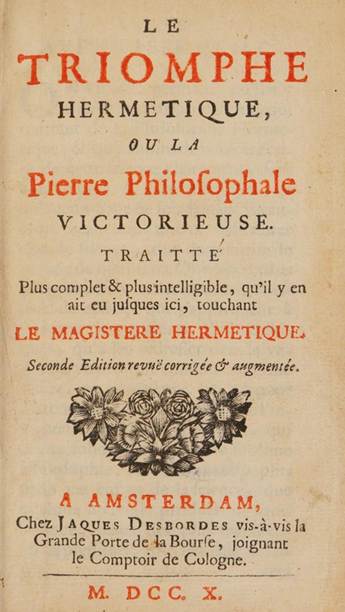
There is a very real likelihood of ancient non mainstream, dare I say it, non-peer reviewed knowledge, being undervalued and forgotten. Some manuscripts have been kept. This one has a publication date of 1710 by Limojon de Saint-Didier, Alexandre-Toussaint {approximately 1630-1689}. These are {inter alia} in the internet archive and at Wellcome Collection library, there are other Alchemical texts.

I have seen a 1699 frontispiece for this.

Peter the Philosopher was made famous by J. K. Rowling. In the Hermetic mercurial tradition, there are references on turning quicksilver into gold. Here silver {quick} is matter and gold is spirit. Transmutation of consciousness is out of gross form to achieve liberation {nirvana} and cease the endless cycle of rebirth and hence death. One never dies again; one ceases to be mortal and hence achieves im-mortality. It does not mean living in meat, incarnate, for ever and ever {or a very long time}. It means not being reborn. No more dying.

Just as in esoteric Vajrayana Buddhism there are Hermetic mandalas:

The symbolism in sketches like this is extensive and cannot be understood entirely rationally. That approach gets nowhere other than intellectual masturbation. The thought form has to be built with care and the consequences of making it, managed in “real” meaty life. It is the battle royal of soul in matter. The Caduceus in not solely two dimensional. People imagine, incorrectly, that the stone, the rock, Pierre is a thing, a talisman, a magic artefact. They may fuck around in a chemistry lab trying to synthesise it.

One can only grasp and attain these mandalas fully when one is ready. Whoever drew this one was no novice….

It is a shame that required orthodoxy often squanders knowledge and burns books. Socio-political position and self-advancement so often overshadows. The powerful often destroy knowledge, wisdom and science if it threatens their power base. Because knowledge is power, in a sense, those in search of mundane power seek to handicap and destroy it. Anything not catholic enough in terms of the papal edicts, whatever shape or form they may be, is ostracised and attacked.

Soon New-speak and The Ministry of Truth rule the roost and all dissidents are punished.

In the kingdom of the blind the one eyed man is king.

This pattern is a historically repeating one.

Sometimes the esoteric can survive in the shadows. Sometimes things are lost for ever. We will never know, by definition, what is lost already.

The orthodoxy always ridicules and talks down, bad mouths, that which does not conform or obey. It has always been thus and it will probably continue to be…

Mawlana Jalal-al-Din Rumi – Quotes

“As you start to walk on the way, the way appears.”

“What you seek is seeking you.”

“Why do you stay in prison, when the door is so wide open?”

“Yesterday I was clever, so I wanted to change the world. Today I am wise, so I am changing myself.”

“If you are irritated by every rub, how will your mirror be polished?”

“Look past your thoughts, so you may drink the pure nectar of This Moment.”

“My soul is from elsewhere, I’m sure of that, and I intend to end up there.”

“Be grateful for whoever comes, because each has been sent as a guide from beyond.”

“You have to keep breaking your heart until it opens.”

“I closed my mouth and spoke to you in a hundred silent ways.”

“God turns you from one feeling to another and teaches by means of opposites so that you will have two wings to fly, not one”

“Why struggle to open a door between us when the whole wall is an illusion?”

“The breeze at dawn has secrets to tell you. Don’t go back to sleep.”

“Somewhere beyond right and wrong, there is a garden. I will meet you there.”

“The quieter you become, the more you are able to hear.”

“When the light returns to its source, it takes nothing of what it has illuminated.”

Squeamish About Death – Place Your Bets

I think it fair to speculate that many are afraid of death and the concept of dying. Opinions differ on the nature of afterlife, if there is one, and although reincarnation is a widely held concept there is no direct physical proof, rather circumstantial evidence. People are curious about what happens when you die. If one is simply extinguished then death is not to be feared whereas loss of life might be.  Time wasted is regretted.

People say “it is tragic that so and so was taken from us” when in fact death is a wholly natural process, at least on our planet. Few say, “it is natural that he passed away.” There is much social conditioning around death.

Humanity has a hang up about death.

I saw my first deaths up close in the Zambezi River aged ~11. One man died by drowning the other by crocodile. I had to write the account for the local police because they, grown men, were unable to write. Somewhere that report of death in my scruffy childish handwriting may still exist.

No matter how strong your faith, what your teachers tell you, nor whatever is written in books, from a philosophical point of view, whatever your opinion about death is, is simply that, opinion. There may be aspiration or wish. In effect you are placing your bets on what may or may not happen. This may be conscious or simple laziness. People can drift sleepwalking towards their death. Some contemplate it up close and personal. I’ll speculate that it is better to be prepared.

To think about death can be seen to be morbid. On the other hand it might be wise to take advice from the inevitability of death and change your actions accordingly. No matter how squeamish you may be about death, dying and the death process, it awaits you. Your allotted time, your length of planetary sejour are finite.

If you are placing your bets on there being no heaven or hell, then you could be in for a surprise when you find “yourself” conscious therein. If you are shit-scared of dying then the process for you will be very uncomfortable. If you are relaxed and ready, then whatever happens will be more facile.

According to religious theory you cannot get away with placing a spread bet, covering all options. You need to choose, decide and commit.

If you are somehow still conscious after death and visit your old “haunts” to see what is transpiring, you could be in for a surprise. If you came to check up on me, to say hi. That might be a surprise for you. What might you say? If I was less surprised than you, would that be surprising for you?

If the light simply goes out there is nothing left to worry about.

At the end of the day, literally, how you approach death depends upon where you have placed your bets in life, what your opinions, points of view and actions have been.

Death although it can be in a public space with people, is largely personal. I don’t believe that you can bullshit death. You may try to be in denial, but death will not care. You are effectively alone on your own when you die. That may not be brain consciousness as we know it. But there is nobody “there” with you on the “inside”.

I don’t think that being squeamish about death and dying is wise.

A Fondness for Thought Experiments

I speculate that many like to “win” an argument and be “right”. Some dread being demonstrably wrong. But the diamond sutra advises against seeking the absolute…

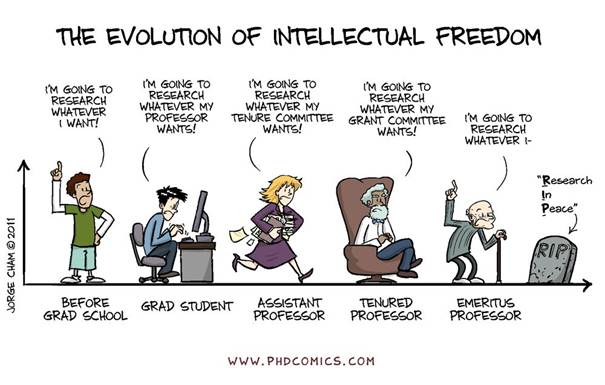
Our schooling demands answers which correspond in alignment to the quasi-consensual mark scheme. I have seen “A” level students marked wrong because, even though their answer was correct and accurate {according to my expert opinion}, it did not comply with the dogmatic mark scheme prepared by the thought police. Straying from the agreed dogma yields a poor grade and can prohibit further education.

There is an ethos to conclude, to be right, and to want to know where one stands. People can seek certitude when in fact there is none. They may misconstrue adamant assertion with accuracy and broad applicability. In fact, over simplification can be very attractive. There is a bit of laziness. Many rely on the imagined omniscience of “they”. If the herd deems it so, then it must be. Individual thinking and the expression thereof can lead to prompt and irrevocable social isolation.

One of things, I like to do is to take some kind of conceptual framework and then apply it to my life, to see if there is any fit. I don’t do this in a quantitative way rather I try it on like a moccasin. If it appears to fit as a thought experiment, I note the fit and then like a child with a sandcastle rub it out. I am really not fussed if I am right or wrong, nor with the quality of fit. I am fluid and don’t need fixed descriptors nor to be corralled by a conceptual framework. I am mindful that were the outcomes of these experiments accurate and those within the framework aware of this, implications might follow. Some of these within the model could be wide ranging.

Some might find this annoying.

“Tell me the answer!!!”

I also like the idea of all or nothing situations in which there is no negotiable middle ground. Herein lies a problem. Whenever I mention that I do not negotiate people immediately see it as a negotiation strategy which it is not. I am not responsible for the perceptions and conclusions of others. If they like to interact transactionally via negotiation, they may transfer their preference onto their interpretation of me. They may see me through their lens, which may have aberration and distortion.

Which model, which thought experiment applies? The answer is quite a few.

It would be very easy to characterise me as a spendthrift quasi-functional alcoholic who threw it all away, and as a result is a socially isolated loser eking out his end of days in self-induced poor health.

This model has only a very local implication and using Occam’s razor, paraphrased:

Entia non sunt multiplicanda praeter necessitatem.

As a model which fits it is the simplest and the best.

Therefore all other models are speculations and by way of embellishment.

People like complexity and may not be satisfied, though it is possible to leave things here with this characterisation. My (our) physical plane life does not impinge beyond a small geographical radius and a set of healthcare professionals. I very rarely travel more than 35km in radius. I have only travelled more than 150km once in six years.

There is no need to invoke any other explanation. I have played with various alternatives.

This then is a nothing situation, a null, a default

There are various other interpretations which may be a tad more grandiose, but although there is a hint of applicability, they are inconsistent with observable circumstance. These interpretations may further be inconvenient. Any model must have use or else it cannot be tested thus a theoretical possibility remains speculation and likely to fade into the mist. There is no point developing a use-less model, when viewed from one angle. Inconvenience is also not a desired property of a model. This can lead to jettison.

Reductionist thinking can limit but it also simplifies.

The thought experiment in the absence of tangible and measurable data often leads back to the null or near null hypothesis, which is the safe conclusion.

We all often unconsciously apply the model or bias which suits us best, which is easiest for us to assimilate and has little inconvenient implication for us.

Are Reality and Significance Subjective?

If one watches US news, Al Jazeera, BBC and France 24 it would he hard to conclude no. Because the narration of reality and its significance to the participants presented therein differ widely. This is a mark of subjectivity as opposed to an objective reality. France 24 today had a debate about Trump’s off the cuff remark about the ethnic cleansing of Gaza. One man’s conquest is another’s brutal ethnic cleansing. One man’s real estate project is another’s exile and abject misery. These realities are not co-realities. A business deal to Trump is less significant than an irreversible life change for another and what is left of their family. Significance is in the context and the eye of the beholder and is not absolute.

The reality of a 9 to 5 job safe and secure in the city where one has kudos and power changes abruptly with a plane crash in the jungle. The hungry leopard does not defer to the fat cat boss over the manual worker. It sees dinner. The boss is easier to eat than the serf. In terms of economy, it selects the most calorific and facile.

Our normal realities are not as secure as we imagine, a mammogram or a prostate exam can flip our worlds in well under an hour. Yet we imagine in our complacency that our “reality” applies and continues to do so.

I am fond of multiple universes or put less dramatically, differing assimilations of “reality”.

My reality today is markedly different than it was 20 years ago. I do not walk in those circles and am not obsessed about the reality-metrics which apply therein for the measurement of success. I do not give a shit about research assessment exercises or student satisfaction feedback surveys. My main concerns are health and the bloody Coypu. My reality is wholly different and significance for me has changed vastly. Which suggests that reality and significance are in a way, time dependent. They are certainly spatially dependent. I no longer occupy that physical plane space; my reality has changed.

A socially acceptable narrative for me is that I was doing OK, then had burn out, and chucked my toys out of the cot. I dabbled a bit with science tutoring and then retired to France. I am now socially isolated and quasi-hermitic. This is largely lacking any wider significance, there are few implications. My impact on the world was short-lived and very local.

Based solely on dream “evidence” and subjective vision alongside this version of reality is that I have partial recall of prior lives inter alia a few as a Buddhist priest/monk. This in itself is not overly significant. It is the sort of thing one might say after a spliff or two.

“Hey man I can remember my life as a Thai Buddhist practising something like Muay Thai.”

“Far out Bro! I always thought you were spiritual.”

Of course this could all be made up hippy-trippy stuff.

People tend to choose the contextual framing of any “reality” to suit that which is most convenient for them to assimilate the world with.

I have been reading Anatole Le Braz today. He has compiled folk stories from the immediate area and they have been fun to read. In one such story a young woman of “friendly” morals had seven children. She dies as does her brood. She is doomed to spend purgatory near her erstwhile home as a sow with seven black piglets. After several interactions that went badly, the locals decided that if they encounter said sow and brood, they should cross the road.

Likewise, the souls of the dead can spend earth bound purgatory as crows.

If you and I were out and about on a misty Breton night and I mentioned the latter “fact”, and even if you were a rational omniscient scientist, a surprise meeting with a pair of crows might unsettle you. If I started to talk with those crows even though you could not hear their reply, you might brick it, a little. You might suspect that I was taking the piss, but you would not be sure despite all your omniscience. I could wind you up or simply laugh at your predicament with the crows. When they laughed back a shiver would go down your spine.

Out of context at your work desk in daylight your encounter with souls trapped in earth corvid purgatory would no longer seem an optional reality. They were just crows.

The assimilated reality is often highly subjective…

Two crows on a misty crossroad at dead of night are more significant than a deskbound recollection whilst dining al-desko.

What you deem significant might only be significant in your little world. This is not a thought which many entertain as they are often self-obsessed and fail to empathise with the wider world. As a consequence, people might miss something with much wider significance after all the fluff in the navel is tantamount.

Just because you don’t understand it or are unfamiliar with it does not mean that other realities are less real than yours. They may be separate but you would be a bigot to deny them if you have not as yet experienced them.

Are Reality and Significance Subjective?

A big fat yes from me…

The Problem of Both And

This “problem” can be found on all sides. It stems from the desire to have both one thing and another. It has a root in idealism but also in an unwillingness to choose or decide.

At the moment relatively wealthy humanity is accustomed to having multiple up to date electronic devices, frequent new cars, foreign holidays involving air travel and conspicuous consumption which is sometimes diarised for show in social media. Yet in the back of the mind there is the spectre of anthropogenic climate change. There is a weak desire to slow this down. People want both their current way of life and to limit the ravages of global warming. Most approaches to planetary heating back “solutions” which do not significantly impinge on current lifestyle.

This is an obvious fallacy.

But it is one that is not addressed because in affect it is taboo and politically very unpopular. In wanting both and decisive action is delayed and put off. The advocates of striving to limit climate change themselves travel by air. People cross their fingers and hope we can limit climate change without changing our behaviours. The fairy godmother of technology will wave its magical AI wand and ta-da we have a solution for global warming. In the meantime, business green washes to keep the greenbacks rolling.

There is an awful lot of kidding and people are willing to be kidded because their conscience is assuaged by flashy on tone public relations. Look the oil manufacturers and producers are transitioning to green alternatives…😉

“Phew, I can have my holiday in the Maldives after all…”

Elsewhere I have predicted that the impact of climate change needs to get catastrophic before humanity wakes up. By which time it will be very late, perhaps too late.

We saw it coming, we did fuck all.

“Complacency is a state of mind that exists only in retrospect; it has to be shattered before ascertained.”

Vladimir Nabokov

Humanity has a monkey with its hand in the cookie jar mentality. Inside the cookie jar are lovely cookies. We put our hand in it to extract the cookie but we cannot pull it out with the whole cookie in hand. The villagers are coming with sticks. We are so tempted by the cookies; we do not want a beating by the villagers. What to do?

This is a catch 22 which stems from greed and desire. In the absence of desire, there is no dilemma. Drop the cookie and get the hell out of Dodge. But it is a lovely cookie with banana and chocolate chips….

I cannot have both the cookie and avoid a beating.

No desire, no greed, no problem. Let go. Do a runner.

Most catch 22s stem from wanting something, some desire or some ambition. They are based on preferred outcome. In the absence of these the dilemma dissolves; it is a figment of mind and emotion.

Humans have a face in a jar problem. Inside the jar is their face, their social self-image, which they are clinging on to. They may want to resolve a relationship or ameliorate it but they are burdened by their face which they hold clenched in their fist. They are unable to shake hands whilst their fist is clenched tight around the mask of face. So, for most of their lives they walk around with their face clenched bare knuckled in fist and never know the freedom of an open palm free of social encumbrance. They may want to save both their face and a relationship. However, this is impossible, humans are stubborn and before long, it is too late.

You can see this human folly all around you.

Life is not a quantum superstition state. Sooner or later the both-and must be measured and collapse into either-or. The coherence of the both-and is finite. Decision is not something people are fond of.

Sometimes nature, the universe, or a planet will make the decision for us…

Wanting both-and is greedy.

LIFE is way bigger than petty human want and desire…

Catch 22

A catch-22 is a paradoxical situation from which an individual cannot escape because of contradictory rules or limitations. The term was coined by Joseph Heller, who used it in his 1961 novel Catch-22.

Catch-22s often result from rules, regulations, or procedures that an individual is subject to, but has no control over, because to fight the rule is to accept it. Another example is a situation in which someone is in need of something that can only be had by not being in need of it (e.g. the only way to qualify for a loan is to prove to the bank that you do not need a loan). One connotation of the term is that the creators of the “catch-22” situation have created arbitrary rules in order to justify and conceal their own abuse of power.

Wikipedia

———————————————————————

catch-22

an impossible situation where you are prevented from doing one thing until you have done another thing that you cannot do until you have done the first thing:

a situation in which there are only two possibilities, and you cannot do either because each depends on having done the other first

a difficult situation in which the solution to a problem is impossible because it is also the cause of the problem:

Cambridge Dictionary

——————————————————————

catch-22

noun

1. a situation in which a person is frustrated by a paradoxical rule or set of circumstances that preclude any attempt to escape from them

2. a situation in which any move that a person can make will lead to trouble

Collins English Dictionary.