Squeamish About Death – Place Your Bets

I think it fair to speculate that many are afraid of death and the concept of dying. Opinions differ on the nature of afterlife, if there is one, and although reincarnation is a widely held concept there is no direct physical proof, rather circumstantial evidence. People are curious about what happens when you die. If one is simply extinguished then death is not to be feared whereas loss of life might be.  Time wasted is regretted.

People say “it is tragic that so and so was taken from us” when in fact death is a wholly natural process, at least on our planet. Few say, “it is natural that he passed away.” There is much social conditioning around death.

Humanity has a hang up about death.

I saw my first deaths up close in the Zambezi River aged ~11. One man died by drowning the other by crocodile. I had to write the account for the local police because they, grown men, were unable to write. Somewhere that report of death in my scruffy childish handwriting may still exist.

No matter how strong your faith, what your teachers tell you, nor whatever is written in books, from a philosophical point of view, whatever your opinion about death is, is simply that, opinion. There may be aspiration or wish. In effect you are placing your bets on what may or may not happen. This may be conscious or simple laziness. People can drift sleepwalking towards their death. Some contemplate it up close and personal. I’ll speculate that it is better to be prepared.

To think about death can be seen to be morbid. On the other hand it might be wise to take advice from the inevitability of death and change your actions accordingly. No matter how squeamish you may be about death, dying and the death process, it awaits you. Your allotted time, your length of planetary sejour are finite.

If you are placing your bets on there being no heaven or hell, then you could be in for a surprise when you find “yourself” conscious therein. If you are shit-scared of dying then the process for you will be very uncomfortable. If you are relaxed and ready, then whatever happens will be more facile.

According to religious theory you cannot get away with placing a spread bet, covering all options. You need to choose, decide and commit.

If you are somehow still conscious after death and visit your old “haunts” to see what is transpiring, you could be in for a surprise. If you came to check up on me, to say hi. That might be a surprise for you. What might you say? If I was less surprised than you, would that be surprising for you?

If the light simply goes out there is nothing left to worry about.

At the end of the day, literally, how you approach death depends upon where you have placed your bets in life, what your opinions, points of view and actions have been.

Death although it can be in a public space with people, is largely personal. I don’t believe that you can bullshit death. You may try to be in denial, but death will not care. You are effectively alone on your own when you die. That may not be brain consciousness as we know it. But there is nobody “there” with you on the “inside”.

I don’t think that being squeamish about death and dying is wise.

A Fondness for Thought Experiments

I speculate that many like to “win” an argument and be “right”. Some dread being demonstrably wrong. But the diamond sutra advises against seeking the absolute…

Our schooling demands answers which correspond in alignment to the quasi-consensual mark scheme. I have seen “A” level students marked wrong because, even though their answer was correct and accurate {according to my expert opinion}, it did not comply with the dogmatic mark scheme prepared by the thought police. Straying from the agreed dogma yields a poor grade and can prohibit further education.

There is an ethos to conclude, to be right, and to want to know where one stands. People can seek certitude when in fact there is none. They may misconstrue adamant assertion with accuracy and broad applicability. In fact, over simplification can be very attractive. There is a bit of laziness. Many rely on the imagined omniscience of “they”. If the herd deems it so, then it must be. Individual thinking and the expression thereof can lead to prompt and irrevocable social isolation.

One of things, I like to do is to take some kind of conceptual framework and then apply it to my life, to see if there is any fit. I don’t do this in a quantitative way rather I try it on like a moccasin. If it appears to fit as a thought experiment, I note the fit and then like a child with a sandcastle rub it out. I am really not fussed if I am right or wrong, nor with the quality of fit. I am fluid and don’t need fixed descriptors nor to be corralled by a conceptual framework. I am mindful that were the outcomes of these experiments accurate and those within the framework aware of this, implications might follow. Some of these within the model could be wide ranging.

Some might find this annoying.

“Tell me the answer!!!”

I also like the idea of all or nothing situations in which there is no negotiable middle ground. Herein lies a problem. Whenever I mention that I do not negotiate people immediately see it as a negotiation strategy which it is not. I am not responsible for the perceptions and conclusions of others. If they like to interact transactionally via negotiation, they may transfer their preference onto their interpretation of me. They may see me through their lens, which may have aberration and distortion.

Which model, which thought experiment applies? The answer is quite a few.

It would be very easy to characterise me as a spendthrift quasi-functional alcoholic who threw it all away, and as a result is a socially isolated loser eking out his end of days in self-induced poor health.

This model has only a very local implication and using Occam’s razor, paraphrased:

Entia non sunt multiplicanda praeter necessitatem.

As a model which fits it is the simplest and the best.

Therefore all other models are speculations and by way of embellishment.

People like complexity and may not be satisfied, though it is possible to leave things here with this characterisation. My (our) physical plane life does not impinge beyond a small geographical radius and a set of healthcare professionals. I very rarely travel more than 35km in radius. I have only travelled more than 150km once in six years.

There is no need to invoke any other explanation. I have played with various alternatives.

This then is a nothing situation, a null, a default

There are various other interpretations which may be a tad more grandiose, but although there is a hint of applicability, they are inconsistent with observable circumstance. These interpretations may further be inconvenient. Any model must have use or else it cannot be tested thus a theoretical possibility remains speculation and likely to fade into the mist. There is no point developing a use-less model, when viewed from one angle. Inconvenience is also not a desired property of a model. This can lead to jettison.

Reductionist thinking can limit but it also simplifies.

The thought experiment in the absence of tangible and measurable data often leads back to the null or near null hypothesis, which is the safe conclusion.

We all often unconsciously apply the model or bias which suits us best, which is easiest for us to assimilate and has little inconvenient implication for us.

Are Reality and Significance Subjective?

If one watches US news, Al Jazeera, BBC and France 24 it would he hard to conclude no. Because the narration of reality and its significance to the participants presented therein differ widely. This is a mark of subjectivity as opposed to an objective reality. France 24 today had a debate about Trump’s off the cuff remark about the ethnic cleansing of Gaza. One man’s conquest is another’s brutal ethnic cleansing. One man’s real estate project is another’s exile and abject misery. These realities are not co-realities. A business deal to Trump is less significant than an irreversible life change for another and what is left of their family. Significance is in the context and the eye of the beholder and is not absolute.

The reality of a 9 to 5 job safe and secure in the city where one has kudos and power changes abruptly with a plane crash in the jungle. The hungry leopard does not defer to the fat cat boss over the manual worker. It sees dinner. The boss is easier to eat than the serf. In terms of economy, it selects the most calorific and facile.

Our normal realities are not as secure as we imagine, a mammogram or a prostate exam can flip our worlds in well under an hour. Yet we imagine in our complacency that our “reality” applies and continues to do so.

I am fond of multiple universes or put less dramatically, differing assimilations of “reality”.

My reality today is markedly different than it was 20 years ago. I do not walk in those circles and am not obsessed about the reality-metrics which apply therein for the measurement of success. I do not give a shit about research assessment exercises or student satisfaction feedback surveys. My main concerns are health and the bloody Coypu. My reality is wholly different and significance for me has changed vastly. Which suggests that reality and significance are in a way, time dependent. They are certainly spatially dependent. I no longer occupy that physical plane space; my reality has changed.

A socially acceptable narrative for me is that I was doing OK, then had burn out, and chucked my toys out of the cot. I dabbled a bit with science tutoring and then retired to France. I am now socially isolated and quasi-hermitic. This is largely lacking any wider significance, there are few implications. My impact on the world was short-lived and very local.

Based solely on dream “evidence” and subjective vision alongside this version of reality is that I have partial recall of prior lives inter alia a few as a Buddhist priest/monk. This in itself is not overly significant. It is the sort of thing one might say after a spliff or two.

“Hey man I can remember my life as a Thai Buddhist practising something like Muay Thai.”

“Far out Bro! I always thought you were spiritual.”

Of course this could all be made up hippy-trippy stuff.

People tend to choose the contextual framing of any “reality” to suit that which is most convenient for them to assimilate the world with.

I have been reading Anatole Le Braz today. He has compiled folk stories from the immediate area and they have been fun to read. In one such story a young woman of “friendly” morals had seven children. She dies as does her brood. She is doomed to spend purgatory near her erstwhile home as a sow with seven black piglets. After several interactions that went badly, the locals decided that if they encounter said sow and brood, they should cross the road.

Likewise, the souls of the dead can spend earth bound purgatory as crows.

If you and I were out and about on a misty Breton night and I mentioned the latter “fact”, and even if you were a rational omniscient scientist, a surprise meeting with a pair of crows might unsettle you. If I started to talk with those crows even though you could not hear their reply, you might brick it, a little. You might suspect that I was taking the piss, but you would not be sure despite all your omniscience. I could wind you up or simply laugh at your predicament with the crows. When they laughed back a shiver would go down your spine.

Out of context at your work desk in daylight your encounter with souls trapped in earth corvid purgatory would no longer seem an optional reality. They were just crows.

The assimilated reality is often highly subjective…

Two crows on a misty crossroad at dead of night are more significant than a deskbound recollection whilst dining al-desko.

What you deem significant might only be significant in your little world. This is not a thought which many entertain as they are often self-obsessed and fail to empathise with the wider world. As a consequence, people might miss something with much wider significance after all the fluff in the navel is tantamount.

Just because you don’t understand it or are unfamiliar with it does not mean that other realities are less real than yours. They may be separate but you would be a bigot to deny them if you have not as yet experienced them.

Are Reality and Significance Subjective?

A big fat yes from me…

The Problem of Both And

This “problem” can be found on all sides. It stems from the desire to have both one thing and another. It has a root in idealism but also in an unwillingness to choose or decide.

At the moment relatively wealthy humanity is accustomed to having multiple up to date electronic devices, frequent new cars, foreign holidays involving air travel and conspicuous consumption which is sometimes diarised for show in social media. Yet in the back of the mind there is the spectre of anthropogenic climate change. There is a weak desire to slow this down. People want both their current way of life and to limit the ravages of global warming. Most approaches to planetary heating back “solutions” which do not significantly impinge on current lifestyle.

This is an obvious fallacy.

But it is one that is not addressed because in affect it is taboo and politically very unpopular. In wanting both and decisive action is delayed and put off. The advocates of striving to limit climate change themselves travel by air. People cross their fingers and hope we can limit climate change without changing our behaviours. The fairy godmother of technology will wave its magical AI wand and ta-da we have a solution for global warming. In the meantime, business green washes to keep the greenbacks rolling.

There is an awful lot of kidding and people are willing to be kidded because their conscience is assuaged by flashy on tone public relations. Look the oil manufacturers and producers are transitioning to green alternatives…😉

“Phew, I can have my holiday in the Maldives after all…”

Elsewhere I have predicted that the impact of climate change needs to get catastrophic before humanity wakes up. By which time it will be very late, perhaps too late.

We saw it coming, we did fuck all.

“Complacency is a state of mind that exists only in retrospect; it has to be shattered before ascertained.”

Vladimir Nabokov

Humanity has a monkey with its hand in the cookie jar mentality. Inside the cookie jar are lovely cookies. We put our hand in it to extract the cookie but we cannot pull it out with the whole cookie in hand. The villagers are coming with sticks. We are so tempted by the cookies; we do not want a beating by the villagers. What to do?

This is a catch 22 which stems from greed and desire. In the absence of desire, there is no dilemma. Drop the cookie and get the hell out of Dodge. But it is a lovely cookie with banana and chocolate chips….

I cannot have both the cookie and avoid a beating.

No desire, no greed, no problem. Let go. Do a runner.

Most catch 22s stem from wanting something, some desire or some ambition. They are based on preferred outcome. In the absence of these the dilemma dissolves; it is a figment of mind and emotion.

Humans have a face in a jar problem. Inside the jar is their face, their social self-image, which they are clinging on to. They may want to resolve a relationship or ameliorate it but they are burdened by their face which they hold clenched in their fist. They are unable to shake hands whilst their fist is clenched tight around the mask of face. So, for most of their lives they walk around with their face clenched bare knuckled in fist and never know the freedom of an open palm free of social encumbrance. They may want to save both their face and a relationship. However, this is impossible, humans are stubborn and before long, it is too late.

You can see this human folly all around you.

Life is not a quantum superstition state. Sooner or later the both-and must be measured and collapse into either-or. The coherence of the both-and is finite. Decision is not something people are fond of.

Sometimes nature, the universe, or a planet will make the decision for us…

Wanting both-and is greedy.

LIFE is way bigger than petty human want and desire…

Catch 22

A catch-22 is a paradoxical situation from which an individual cannot escape because of contradictory rules or limitations. The term was coined by Joseph Heller, who used it in his 1961 novel Catch-22.

Catch-22s often result from rules, regulations, or procedures that an individual is subject to, but has no control over, because to fight the rule is to accept it. Another example is a situation in which someone is in need of something that can only be had by not being in need of it (e.g. the only way to qualify for a loan is to prove to the bank that you do not need a loan). One connotation of the term is that the creators of the “catch-22” situation have created arbitrary rules in order to justify and conceal their own abuse of power.

Wikipedia

———————————————————————

catch-22

an impossible situation where you are prevented from doing one thing until you have done another thing that you cannot do until you have done the first thing:

a situation in which there are only two possibilities, and you cannot do either because each depends on having done the other first

a difficult situation in which the solution to a problem is impossible because it is also the cause of the problem:

Cambridge Dictionary

——————————————————————

catch-22

noun

1. a situation in which a person is frustrated by a paradoxical rule or set of circumstances that preclude any attempt to escape from them

2. a situation in which any move that a person can make will lead to trouble

Collins English Dictionary.

True Intuition and the Soul or Dreamer

There are various types of intuition, one of these is intellectual pattern forming in which the mind maps things and comes up with some arrangement. An example of this is when I prepare a shopping list, I put items in rough order for where they are in the store. The last item is usually butter or fresh bread because these are closest to the checkouts. When I used to play the card game “pairs”. Instead of row and column, I would remember where, pictorially.  Listening to questions on “university challenge” I occasionally intuit an answer with little or no laboured thinking. Of course this is far from 100% accurate.

There is another kind of intuition, which is less rational, we might call it a direct knowing. This maybe when a friend or family is about to ‘phone and we go towards the ‘phone as it rings. It is kind of spooky for some but completely normal for others.

True intuition is when the dreamer or Soul speaks directly to the incarnate being through the veil of personality and ambition.

Pictorially here is a schematic of levels of awareness as per Théun Mares.

In the schematic the dreamer corresponds to the Soul and true inner-tuition arises when the dreamer tries to advise and direct the dreamed. I can say that I have had numerous occasions when I have been busy doing something and all of a sudden, I get an imperative out of nowhere, to cease and desist. Alternatively, if I lack courage, I can get a sudden swelling of bravado and encouragement to go ahead.

Until rapport has been established with the dreamer or soul, until one is technically speaking soul-infused, intuition is largely mental or emotional and hence a property of the dreamed or incarnate personality.

Lifetime after lifetime the dreamer dreams in a dreamed, a vehicle in which it learns and evolves. The dreamer is often frustrated by the wayward dreamed, but that is the challenge of the dreamer to fully manifest its awareness on the physical and meaty plane.

By setting one’s intent to intelligently cooperate with the dreamer one “lifts” awareness onto what is called in some circles the intuitional or buddhic “plane”. I prefer state to plane. Thus, the goal is to expand awareness towards a buddhic or true intuitional level, state or scope. True intuition is never separative rather holistic and inclusive. I use holistic in a much more elevated and expansive sense than it is commonly bandied about, here.

According to the blue books opus, human evolution is headed in the direction of lifting awareness out of the meaty carnal, emotional and mental polarisation towards a true intuitional beingness. That looks nothing like modern soap-opera living, whether Trumpian or otherwise.

The theory goes that humanity is in general not in touch with nor en rapport with its Soul or dreamer. One of the ways contact can be established with the Soul is by dreaming. BUT, in order to do this one has to let go and NOT try to direct the dreams. Otherwise dreaming becomes a mental/emotional/carnal practice. Which does not liberate.

An imperative true intuition is very difficult to ignore, and the consequences of such ignoring can be wide reaching and impactful. The dreamer is persistent and will kneel the dreamed if so required.

True intuition can be very imperative. It can also be light and gentle. The dreamer is the “real” you, so it makes no sense in negating your “self”.

It is said that the greatest act of a warrior is to shift from control to abandon. In that one hands the steering wheel of the mundane vehicle over to the dreamer, the Soul. Life then is Soul influenced, Soul infused and tends to be way less petty and full of gripes and groans and moans.

One learns to dream true…

The Slippery Slope to Totalitarianism

Postulate:

Humanity has a short memory and fails to learn from the past.

————

————-

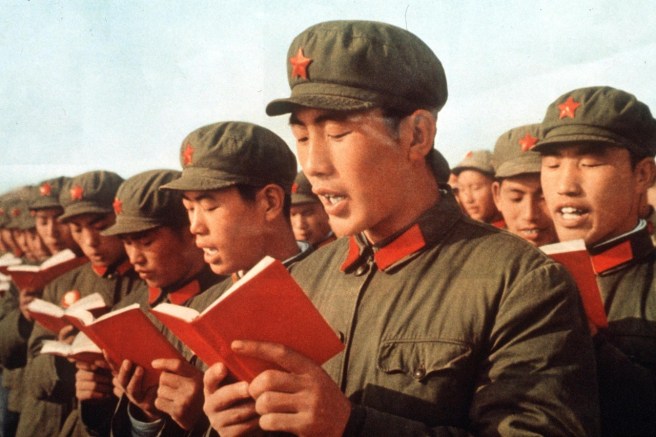
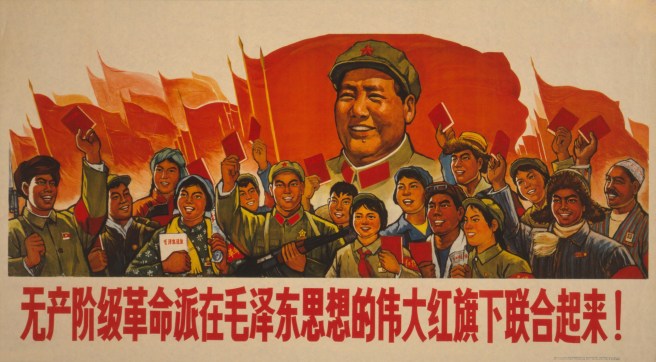
The Cultural Revolution, formally known as the Great Proletarian Cultural Revolution, was a sociopolitical movement in the People’s Republic of China (PRC). It was launched by Mao Zedong in 1966 and lasted until 1976. Its publicly stated goal was to preserve Chinese socialism by purging remnants of capitalist and traditional elements from Chinese society.

In May 1966, with the help of the Cultural Revolution Group, Mao launched the Revolution and said that bourgeois elements had infiltrated the government and society with the aim of restoring capitalism. Mao called on young people to bombard the headquarters and proclaimed that “to rebel is justified”. Mass upheaval began in Beijing with Red August in 1966. Many young people, mainly students, responded by forming cadres of Red Guards throughout the country. Quotations from Chairman Mao Tse-tung became revered within his cult of personality. In 1967, emboldened radicals began seizing power from local governments and party branches, establishing new revolutionary committees in their place while smashing public security, procuratorate and judicial systems. These committees often split into rival factions, precipitating armed clashes among the radicals. After the fall of Lin Biao in 1971, the Gang of Four became influential in 1972, and the Revolution continued until Mao’s death in 1976, soon followed by the arrest of the Gang of Four.

From Wikipedia

———–

The first step towards totalitarianism is to purge those who are against you and promote loyal brown nosers and supporters. Sycophantic yes-men are preferred over anyone who queries even if said queries are wise.

The intelligentsia must be crippled and undermined, democracy called into question and belittled. Propaganda is more important than fact. Short adamant statements hook and are preferred over detail.

Any voice to the contrary must be silenced, preferably in public and painfully so.

———-

———-

Postulate:

The cult of the personality is on the rise in humanity at large.

Substance and ethics are demoted and no longer important. Mini-me types are cloning themselves. We are sleep walking into very retrograde times.

People are easily drawn into group mind which prevents true thinking. Grievance can be exploited to garner support. Give someone an enemy and they will fall in behind you against them. Enemies unite rabbles and crowds.

—–

—-

Postulate:

Humanity has an anathema for inconvenient truths.

Humanity prefers any story or “plan” which means that they do not have to change their ways. If someone says that anthropogenic climate change is exaggerated that is easier to believe, because they want to. There is confirmation bias. People prefer to stick their heads in the sand rather than change. The bringer of messages which go against the inconvenient truths is a hero, a friend, “I told you so!”

Goebbels comments here on the power of mantra, the repetition of which can be black magic.

Postulate:

There is no such thing as a sustainable quick fix, this is an inconvenient truth.

Immediacy does not solve anything, knee jerks are never considered they are at best reactive.

Focused blame cultures and look-at-me attempts to fix “single-issue” problems are misguided if popular. It is easier to blame external factors than to accept responsibility and work hard at root cause.

Postulate:

China and Russia were never communist despite finger pointing to the contrary. They were / are totalitarian or authoritarian at best.

The bogey man of communism is an American invention, it has never been realised. Western quasi-socialism of the last century is the closest humanity has come to that ideal.

Postulate:

The cult of the personality is a very dangerous and a slippery slope. This too is an inconvenient truth.

There are numerous examples of this cult currently active and perhaps growing in the so-called democratic West. People can get easily caught up in the faux-euphoria of group mind and its sense of belonging.

Narcissists however have absolutely zero notion of loyalty and are fickle, motivated only by their own desires. Supporters are not shown the loyalty expected and demanded of them.

Postulate:

Humanity is again on the slippery slope to widespread totalitarianism pretending to be democracy.

Where Did the Singularity Come From?

Following on from this morning’s dream I have been reading around cosmogenesis from an exoteric scientific viewpoint including a few articles on quantum loop gravity. It seems to me there are some whopping great gaps. Many of the schema talk of an initial singularity so dense that space-time as we know it in a corporeal and planetary sense was yet to come into being. But a singularity does have a Cartesian dimension of 1, a point. I am not sure a point, a thing, can exist without a no-thing a void.

So, already at singularity you have thing and no-thing.

Where did that singularity stem from? Was if from multiple quantum fluctuations in the true void. Where creation and annihilation operators act on the vacuum to spark particles in and out of matter. There would have to be a lot of fluctuations to create a massive gravitational singularity.

What is the void?

Does it have edges where stuff begins?

Is the void infinite?

If there is no-thing then finite has no meaning, so yes it could be infinite. Inherent here is a trap of dimension. How does the void where there is no-thing go on for ever. Dimension in absence of thing does not exist. A dimensionless void? Is that simply a human conceptual problem where we cannot conceive scale without matter, without stuff?

Some of the articles suggest that space is greater than the current evolving universe and that the matter of the universe is still expanding into that vacuum. The scale is mooted beyond the manifest, even though there is no matter it has space.

How does one envisage an infinite void, where there is absolutely no-thing?

A singularity arising out of a previously manifest universe seems more probable, the crunch of a prior manifest universe(s) into an ultra-dense singularity.

How many universes have there been? Which was the first?

In Toltec “cosmology” the universal spirit, the Nagal, without form contemplated the utter nothingness of the void. Eternity passed even though there was not as yet time. The Nagal noted that for it the no-thing, the void, was very much the known. It noted that for it the thing was the unknown. The Nagal wanted to better understand the no-thing by comparing it to thing. It wanted to find out and set its intent on so doing. As an effect of this cause the void started to stir, it stirred and the first thing was created out of no-thing. Nascent matter was created. The act of manifesting an entire universe so as to contrast thing against no-thing had begun. The Nagal wanted to separate the known, no-thing, into the unknown, thing, in order to learn.

Such an abbreviated verbalisation is consistent with quantum fluctuations, it stirred.

But how do we as carnate beings contemplate the no-thing of void, how do we touch the void out of which creation be-came.

I have used UHV vacuum equipment and ultra-high vacuum is enclosed by stainless steel. That is easy to get your head around. A complete and truly profound vacuum has never been attained on earth. So, any experiment to test for vacuum behaviours tests the behaviour of space in which there is still some matter and which is constrained by the dimension of vessel. We cannot experimentally probe utter vacuum unconstrained by any boundary conditions.

There is no way we can experiment on an infinite void, because in our universe that no longer exits. We are speculating on physics in a complete absence of any matter or dimension, we may be barking up the wrong tree.

Hmmn…

Messes with your swede a little bit…

The Unknown and The Unknowable

Many do not know with humility where for them the known ends and the unknown begins.

Moreover, their assessment of what is known may be inaccurate in that they imagine they know more than they actually do. Anyone who has taught undergraduate science can testify that there are many students who imagine they know more than they do. They may be confident and exhibit braggadocio concerning their knowledge. They may even pass exams and imagine a mastery over a subject when in fact they have just passed an exam. A qualification is not synonymous with full knowledge. The measured knowledge is qualified to a yard stick. Knowledge begins post exam in its subsequent application. When you have to teach something in public, then you learn. Each time you teach it a new facet, previously un-noted, may be revealed. You could say that teaching is also a process of learning for the so-called teacher.

It stands to reason then, that the scale and scope of the unknown can not even be estimated. Therefore, it cannot be factored in, in a reliable way. There may be some things, concepts and states of awareness which are unknowable, particularly so while in meaty carnate human form.

You do not know what you don’t know and are, by definition, unaware of the gaping hole in your knowledge. Though you may self-diagnose prematurely as omniscient. There are many who imagine themselves smart and with wide, deep and profound knowledge of life, the universe and everything.

42

To give a trite example what it feels like to be dead is unknown when alive, yet because we all die, it is not unknowable because we all get a chance to experience it. The level to which we are conscious in the death state may be variable. We don’t know for sure.

In the new age literature, I encounter many who talk about the buddhic and atmic planes or awarenesses. There is a certainty in language which is not necessarily backed up by personal experience. It is for them a theory, a hypothesis and not an experiential reality. In the blue books opus direct and continued experience of these states, in the model hypothesis, is as a result of initiation and evolution.

Humans like to model in their own image and may draw glowing enlightened figures, perhaps partially because states of awareness and consciousness of highly abstract natures are not easily diagrammatically rendered. In the Ancient Wisdom traditions, the atmic “plane” is sometime referred to as the nirvanic plane, implying it is the awareness of the post nirvanic being lacking a causal vehicle having blown it off. They may fail to imagine awe and the austere nature of universe, perhaps they imagine a soft radiant glow, with comforting pastel shades. Cosmogenesis is not nice and fluffy; it is cosmic and violent beyond comprehension. The scope is far beyond human experience. We can just do our best to observe, model and understand.

For a scientist the use of the two dimensional nomenclature of plane is very unhelpful and distracting. Plane implies matter and physicality {excluding imaginary numbers}. When I have been reading these things, I find that the legacy nomenclature from the Victorian mediums and early twentieth century occultists off putting and something which I need to put to one side to get to the gist. The use of etheric “plane” instead of emotional is old fashioned.

I have seen the word Toltec described as man of knowledge and uttered with a bit of awe. I have yet to meet a so-called Toltec who can solve Schrödinger’s equation for a particle in a three dimensional box. Tens of thousands of undergraduates do this every year. There is a whopping great gap in knowledge of physics, chemistry, biology and engineering, in my opinion. They may have knowledge but it is far from complete.

Similarly, many scientists may profess profound knowledge. They may pooh-pooh magic, chakras, ghosts and exorcism. They may even soap box. I’ll wager that I could spend the wee small hours in a haunted house with them and have significantly less fear. Even though ghosts do not exist, of course. If I started to do a rite of exorcism, they would probably shit their pants.

Both groups have the unknown and the extent of it is also unknown. I could play on words and say that the extent of the unknown is the unknowable for any give life because we can only map out so much unknown in ~ 85 standard earth years.

I’ll make a statement; it is common for human beings to imagine themselves more knowledgeable than they actually are. There is an arrogance which is out of proportion with their tens of kilograms of meat measured against a planetary and cosmic scale. Yet they have trouble not being adamant and assertive about things which they know little or nothing about.

————————————————————–

Do you know where the unknown for you starts?

Have you an inkling of just how vast that unknown is for you?

The Philosophy of Personal Identity

The killer awoke before dawn
He put his boots on
He took a face from the ancient gallery
And he walked on down the hall

“The End” by The Doors


I found by experimentation that if a pub was a little crowded of a Friday night, putting the song “The End” on the Juke box several times was causal of a marked thinning out of people density.

If one were to take too many masks from the ancient gallery one might end up with a split personality or a dissociative identity / multiple personality disorder.

“Dissociative identity disorder (DID), previously known as multiple personality disorder (MPD), is one of multiple dissociative disorders in the DSM-5, ICD-11, and Merck Manual. It has a history of extreme controversy.

Dissociative identity disorder is characterized by the presence of at least two distinct and relatively enduring personality states. The disorder is accompanied by memory gaps more severe than could be explained by ordinary forgetfulness.”

From Wikipedia

I think it is generally held that having a fairly stable sense of personal identity is a sign of mental health, though many can have an identity crisis in which said set of views and processes, the identity, are called into question. After crisis one might arrive at a changed personal identity, that change could be small or large it is unlikely however to be an utterly complete change. The notion of self-plays a big role in modern psychiatry, dissolution of self leads to liberation is Buddhism etc. Self-esteem which we hear these days is under threat partially because of all the imaginary imagery. Petabytes of doctored pictures provide an illusory ideal yardstick by which to measure inadequacy.

The sense of self might have a strong component of profession. There may be qualities and descriptors to which one subscribes. These may change during life. The thing is I don’t think that many people actually know themselves very well, which suggests that their self-image, self-description and personal legend are at best inaccurate. This does not prevent life from going on as an ersatz. Not everyone needs to fathom the depths.

Whilst one is fully engaged in the common currents of life and the angular momentum of the daily hamster wheel there is little time for reflection and discovery. The pace of life is too fast to bother. Crisis can change this.

I have heard it said that many who go on a 30 day silent solo retreat, struggle. This is because without the accoutrements of self and a lifestyle, the notion of self starts to fall away. This can be very scary. Some may get scarred. Others come out the other side less obsessed by notion of self, less attached to this and have little or no urge to defend anything even minorly contradictory to the illusory narrative of self. Other people are not holding you to this self-image which you have spent much time projecting into the world and your relationships. You are not bound by a self-narrative to the same extent.

For a number of years, I was an evangelical vegan. Then my notion of self had veganism as a core part. Others saw me as a vegan, perhaps annoyingly evangelical, to sit down at table with them and eat beef steak was a game changer for them and for me. I was bricking it that they would call me a hypocrite. They had a sudden change of view.

Self and identity refer to similar things. I could say that I identify as a heterosexual male. But I don’t really, it is a side effect of my dangly bits, chromosomes and residual sexual orientation.

The ninth aspect of the stalker’s rule is:

A stalker never reveals his identity, not even to himself.”

The notion of stalking is to stalk perceptions, primarily one’s own perceptions. If you have strong descriptor of self and a fixed identity then you will perceive everything through the possible colouration of that lens. It will provide a perceptual and conceptual bias. If you have no identity or no fixed identity the range and scope of possible perceptions increases.

When I first started stalking my perception, I started with the ninth aspect instead of the first. The implications of this aspect of rule are very wide ranging on the one hand and utter simplicity on the other.

If you don’t say things like, “I am / was a senior lecturer in physical chemistry of Welsh extraction, with left wing leaning politics and profound concern about anthropogenic climate change with a wife and a nice house in the country.” Then people will not know where to place you. But this kind of little sentence forms the basis of many person-person interactions. There is a desire for such a one liner for people to start to feel comfortable about who and what they are dealing with. On one level that one liner is true. But it says nothing about what I am like nor how my world view is configured. I do not identify with that sentence even though it is correct. This kind of statement is a part of ritual sniffing where humans metaphorically sniff each other’s arses, like dogs.

If people ask, I can now say that I am retired. If you say it in a particular way few inquire as to retired from what. Although I am retired from in-world quotidian interactions I am not retired in an absolute sense. I have not carked it yet.

At first glance and upon fleeting interaction I seem pretty much like everyone else. I’ll speculate that once my very different world view was rubbed up against, I would see less normal. If I did not wear my normal society mask and let my true colours emanate, I would differ markedly. Just how markedly is impossible to explain, it would have to be experienced. This is because I have used over two decades erasing self and weakening any identification, especially with the form side of life. At first pass a psychiatrist might be concerned, especially if they were taking notes upon how I see myself, what I like, what I don’t like. They may reach for their bible, the diagnostic manuals, excited.

If I say that I learned at an early age to blend and be a chameleon they might raise an eyebrow. But this is a true if metaphorical statement. I went from an “experimental” late sixties Bristol primary school where I was allowed to play chess instead of do art, to a traditional Mines School deep in the Australian outback. For safety I learned to blend. A sore thumb pom quickly spoke Strine.

If you have a sense of identity, whether strong or otherwise, it is difficult to imagine what it is like to have none. Group and group mind comprise a subset of identity. There are millions of red cap wearing MAGA devotees who might identify as non-woke anti-liberal nonce. Group identity remains identity and it is this which is aback and casual of wars.

Many people identify as Christian but in no way do they practise the teachings of Christ, they might better call themselves old-school Jehovian. Brutal destructive vengeance is not a Christian trait to my understanding.

A big contribution to sense of identity is peer group. In the peer group people share stories about their lives and others keep them beholden, to an extent, to these stories. There may be underlying assumptions and expectations on identity.

If you identify to / as anything it can be used to leverage and manipulate you. You can manipulate others with/by their identity.

Look you are eating steak! I always knew you were a hypocritical self-righteous bastard, shame on you. If you do this for me, I won’t tell the others.