Archaic Deity – Archaic Iconography…

Many depictions of deity are a tad dated. They arose in times when the power of kings and emperors was quasi absolute. The iconography has “radioactive” halos around sainted beings, chariots, swords and thrones. There are arguments about who stands or sits around the throne and on which side various beings are to be found. There are crowns and often a patrilineal succession of power. Humanity obsesses about organisational flow charts of the heavens and in the past who had career advancement amongst the Gods depended upon level of obedience and sycophancy. The celestial “human” resources department had severance packages to negotiate.

Fear of God put bums on seats and pennies on the collection plate.

These days the power of kings is much diminished. We don’t drive roman chariots all that much. The machete has replaced the short sword. The Heckler and Koch automatic has replaced the spear. The ultimate symbol of mundane power is a ginormous nuclear powered aircraft carrier equipped with stealth bombers. Thrones are old hat.

In constructing a deity and a pecking order of them, whether that be of Gods and angels or Buddhas and bodhisattvas, the notions are related to the mundane order of things. The iconography perhaps an aid for the illiterate. In many cases the “clergy” asserted power over flock and encouraged supplication therefrom. The “clergy” encouraged a notion that they were higher, perhaps better and more revered than the lay. The churches and temples extracted wealth and called it meritorious. It might help your journey in the afterlife to fund the claret of a bishop. It was a good pitch. People can read and think now.

I am not sure older notions of Gods and Buddhas wash as well these days. Despite what fragrances Unilever might add. Subscription to religious providers it probably falling all over the world.

There is a glaring difference in iconography between the seated tranquil garden statue Buddha and the tortured crucified Christ bleeding from his crown of thorns. This despite much similarity in their teachings. Man has emphasised the suffering of Jesus over his peaceful message. It prefers to show images of internecine cruelty and suffering rather than brotherly love. In our time there is much need both for tranquillity and for love.

Religious iconography is very often chavvy and overly ornate. It is showy and “look at me”.

“We have shit loads of gold! We the clergy must be powerful! Kneel pleb!”

Modern military power does not lend itself to very personal, even familial iconography. There is no big hearted daddy on the throne. Rather a couple of old men, fingers above a red button, ready to embody Shiva the destroyer aspect of deity. It is not an image of fatherly love. It is one of pendant wrath and nuclear winter.

Notions of deity need updating in a manner more suitable for modern mind, modern living. And no I do not mean a Marvel escapist universe. The sublime needs divorced from the family drama and the incestuous and the Machiavellian.

Spirit and consciousness needs to evolve away from the zoomorphic whilst retaining the feelings and value. A new form of understanding might spring from where we find ourselves now, so very obsessed with corporeal image and public relations spin-bullshit. Petabytes of images are quite a quagmire for the minds of mankind.

Yup…I think the old forms of iconography and depictions of deity are looking rather dated and may no longer be fit for purpose.

We may even need a thorough review of what we imagine deity and/or a God to be.

I wonder how might we imagine and create a God 2.0 ?

The Old Guard and Toltecs – Speculations

The second instalment of the Old Guard series has recently hit Netflix. It has a shared plotline of sorts with the Highlander movies of ere. In this Old Guard dramatization physical plane immortals exist adjoint humanity and interact to either good or bad effect depending on mood and predilection. In Highlander in the end there can be only one in the battle between good and evil. In the Old Guard series “Andy” the main protagonist has fought to help, aid and otherwise nudge humanity in a “better” direction. Instead of reincarnating she has one contiguous and very long life in which she preserves her super model looks despite getting slashed and shot. A magical and miraculous healing occurs. She loses her regeneration powers and then regains them.

In each the burden of endless longevity / immortality is touched upon. They do not dwell overmuch on the boredom aspect rather the action and power angle. The omnipotence may appeal to the burdened and downtrodden. It may titillate the sociopath and the narcissist.

For dramatic impact pivotal points in global {human} history are referenced. An allied them is to be found in the “Assassins Creed” franchise though in this case reincarnation is invoked and a DNA bloodline is the bearer and propagator of ongoing conflicts.

It has been suggested to me that the so-called Toltecs were incarnated around pivotal times and played a role behind the scenes in the evolution of human and planetary history. Given that the technique of erasing personal history is part and parcel of the training, it is not surprising that little historical refence can be found. In the Old Guard Andy tries to avoid publicity. However in this day and age and thanks to internet monitoring and various intelligence services it is impossible to leave no trace. The times have changed.

In the Toltec tradition there is such a thing as a nagal being. The word Nagual in Spanish American is similar. The word Naga in the Indian tradition does not differ in root. In the hagiography of Buddhism Siddartha is protected by king cobra, a naga-raja, from the rain. These nagas live in the place or world of the nagas, naga-loka. Wisdom can be elicited from nagas and naga-loka. Serpents are the dreaming symbol for wisdom.

This suggests via speculation and extrapolation that a nagal being was a contemporary and perhaps companion of Shakyamuni Buddha.

——————-

“There is unanimous agreement that Nāgārjuna (ca 150–250 CE) is the most important Buddhist philosopher after the historical Buddha himself and one of the most original and influential thinkers in the history of Indian philosophy. His philosophy of the “middle way” (madhyamaka) based around the central notion of “emptiness” (śūnyatā) influenced the Indian philosophical debate for a thousand years after his death; with the spread of Buddhism to Tibet, China, Japan and other Asian countries the writings of Nāgārjuna became an indispensable point of reference for their own philosophical inquiries. A specific reading of Nāgārjuna’s thought, called Prāsaṅgika-Madhyamaka, became the official philosophical position of Tibetan Buddhism which regards it as the pinnacle of philosophical sophistication up to the present day.”

Stanford Encyclopedia of Philosophy

Nāgārjuna (नागार्जुन). – Name of an ancient Buddhist teacher of the rank of बोधिसत्त्व (bodhisattva).

Wisdom Library

The name also appears in the wider Hindu sources predating Shakyamuni Buddha

———————–

Typically a three pronged nagal is said to distribute knowledge widely. Like a stone thrown into a pond.  If Nāgārjuna is a wider term for a nagal teacher in the Indian sub-continent then this suggests that the core Toltec and Vedic / Buddhist teachings are similarly sourced and may differ only in method of expression and verbalisation. The term is a generic and not a specific and personal name.

I personally have not found any huge glaring clashes between these philosophies. There is a marked difference in emphasis and the cultural refence points and metaphors employed.

The entertainment mentioned above is not completely inconsistent with a hierarchy of spiritual “masters” on overwatch of humanity. However in order to make it dramatically appealing they must have meaty bits and interpersonal relations such as love with hints of corporeal hanky-panky.

Too abstract and the film would not sell. The immortals have to be beautiful people if good and have ugliness if bad. One is not allowed a minger of an immortal. They must be L’Oréal advert fresh out of the shower from time to time.

Having a “hot” teacher can badly detract from learning.

It is not difficult to see that the course of human history did indeed pivot around relatively small and local acts. The execution of Jesus ended up being a game changer. The invention of antibiotics added number density to humanity.  An assassination was used as a pretext for the first world war. If there is tension a simple fuse is all that is needed to ignite. A miscalculation in a Bay of Pigs might cause a nuclear winter. The simple protection of a Buddha from the rain enabled the propagation of the teachings for mind.

Humanity is prone to flying off the handle in rage and “self-righteous” indignation. Humanity has a “cob” on and is very prone to fits of angry pique which kill hundreds of thousands.

In the absence of overwatch might the history of humanity have been even more bloody and brutal?

We are heading into unknown territories with AI and Drone-robotics. What are the two biggest markets? War and sex. Thus humanity will expend effort into developing these for profit applications. Since the theoretical abolition of slavery humanity seeks a replacement.  I read yesterday that progress toward in vitro spermatogenesis is advancing, if the same continues for human eggs it may be possible to make a human-like foetus. A synthetic human is unlikely to have an indwelling Soul. This biological dabbling and getting a blind boner for technology represents a Pandora’s box the lid of which humanity will find difficult to resist. What is unleashed now and later in this century may cease to be readily controllable. The temptation of cash and the arrogant appeal of God-like potential may lead humanity down a very dark path indeed. It may regret…

How might Andy and the Highlander come to the rescue?

Tadgh Gwen – Geiriadur – Forerunner – Museum Dream 02-04-2025

Here are last night’s dreams the first was between 1.00 and 3:30 AM and the second more extensive though more jumbled dream around 5 AM.

The dream starts in an ill-defined place. There are no buildings or land or people. Somehow it is misty, foggy even. There is a sense of marshland, of primordial, of essence. Though none can be seen. I am having a “conversation” with a disembodied voice, a being of considerable power yet no form as we know it. He says that I am Tegwen Taig-Gwen Tadh-Gwen and Tadgh-Gwen. That I am in the Geiriadur, the dictionary, the tally of words. {Implicit is Geiriadur Prifysgol Cymru.} There are many other names for me.

I know that gwen is white. I am white and of the white.

He says that I am the appetizer, the canapé, the hors d’oeuvre. I am the forerunner, the harbinger. One of only a very few. He says that I have borne the brunt and that there is more to come.

I wake up and take an Ibuprofen at around 3:30 AM to ease the back pain which I know is to follow soon.

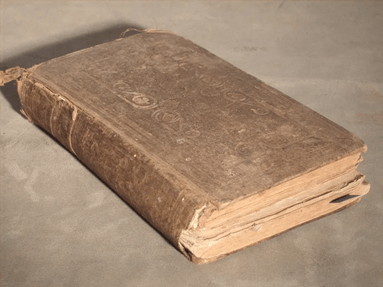
I drift back off. I am now carrying an old cloth bound book which is in a state of disrepair. I can smell the book. I approach a reception desk in a university / museum setting. It is a bit like the V&A and Imperial College rolled into one. I speak with the woman on the desk who is dressed in serving black and whites with white gloves on. I say that I am looking for Dr X {I cannot recall the name}. She says that he has offices on the sub floor one. I can use the lift or the stairs. I know that I also have to visit sub-floors four and then seven.

I take the stairs down. I can see that sub floor one extends over all of the Exhibition Road area, underpinning all the museums and colleges, as well as the Albert Hall. The subterranean levels are vast and very extensive. There are galleries of books and files with dusty museum drawers. I make my way to the office. The door is open but he is not there. There is a lot of messy “horizontal filing”.

I let myself in and on a large Admiralty style table is a yellowed “Victorian” map yellowed about the edges. There is a steel rule and a set of geometry compasses. There is a second book which is companion to mine. I open it carefully with the steel ruler. The book opens on a page with mathematical symbols and matrices. I understand them to be spatial coordinates of places.

I go for a wander along the corridor. I find what looks to be a theatrical store of costumes, of clothing. I go in. The clothes are all for males. They are of a fashion from well over a century ago. There are breeches for riding and social. There is a pair of light red-magenta leather trousers, faded with age with hand shaped back pockets. There is a sudden realisation that these are my favourite trousers for when I used to ride. The wardrobe is in fact mine as is the office / desk / admiralty table.

I continue on down to the fourth sub floor. There is a large open gallery with military equipment. In the centre of the room is a display from which various staffs and pikes point out. There are more than a dozen such items all held like cocktail sticks in a lemon. With the shaft in an ornate metal holder. I select a large white-wood staff around six-feet in length. It has ornamentation on each end with metal inlays. I feel the familiar weight of the staff and find its centre of gravity. I start to twirl the staff and practise a stick form kata. There is a very Japanese vibe. Very quickly it becomes more familiar and faster.

I know in the dream that several people younger and fitter than me are coming to attack me. They have no idea about what I am capable of.

The dream shifts to a modern setting. I am sitting with M in a modern seminar room equipped with computers etc.. We are pouring over the mathematical notes and he is going to try to write some computer code to decipher them. I say to him that we must approach the notes from two angles, one scientific and the other seeing.

The dream ends.

———————

Notes

Geiriadur Prifysgol Cymru – Welsh University Dictionary

Tegwen name – from teg (“fair”) +‎ gwen (“blessed”) in the 19th century.

Gwen – white, blessed, holy

Tadhg in Welsh is Taliesin or poet.

Taliesin is the seer poet initiate of Welsh history /myth. He is often seen as Myrddrin which the English have translated as Merlin and claimed the mythology as their own.

Cultural appropriation!!

Myrddin Wyllt (Welsh: —”Myrddin the Wild”, Cornish: Merdhyn Gwyls, Breton: Marzhin Gouez)

Intricate Pasta – Boris Johnson’s Puzzle – Butterflies Dream 20-02-2025

Here is this morning’s dream

The dream opens with Boris Johnson sitting at a large rustic wooden kitchen table in an ample farmhouse style kitchen with Aga and range. On the table is a pasta making machine. On two wire racks, one elevated and the other just above table level are two circular pieces of pasta. They are around 30cm in diameter and dried. The pasta is whole meal. The pasta is shaped into a kind of intricate relief design in which there are very fine, filagree designs. There is more air than pasta. I know that the designs are very brittle. Carrie is there but not to the fore.

I am sat at the table with Boris. The pasta machine starts up and a third pasta circle comes out in normal flour pasta. It slides onto the metal tray of the pasta machine. Both Boris and I know that the pasta is Boris’ puzzle to solve and that now it is three dimensional. He wants to get started and solve the puzzle. I remind him that the pasta is delicate and that the third piece has not yet set. Under no circumstances should he rush.

I look at his watch, it says 5:35. I know that he has an upcoming meeting. He looks at the watch and says that he must dash. Carrie pipes in and says yes, otherwise they will be late. Implicit is that Boris’ timekeeping is not great. They depart.

Sometime later I am walking in the / my garden. Boris and Carrie are eating a packed lunch with a thermos of tea in a sunny clearing. Boris is unburdened and light, somehow younger. The atmosphere is relaxed. They are the other side of a partial fence to me. On my side there are a multitude of butterflies, all different colours, yellows and purples, reds and blues. All the butterflies are large the size of my hand or bigger. They are partially shaded. Boris asks if the direct sunlight is good for the butterflies. I say that they are happy. At dusk they yield to the moths who come out in force.

I walk to a covered bridge made out of metal. The ceiling of the bridge is around ten feet high, and it is spacious. It starts near where Boris is having the picnic. A very large purple, indigo and red butterfly flies towards me and gives my face, which it envelops a hug with its wings. It is the size of my head. I can see its eyes and antennae. We start to talk in a very high-pitched butterfly language, with the butterfly now flying very close to my face. We are looking at each other as we speak.

Boris is astounded. I explain to him that I can talk to butterflies and moths. If he wants, we can help him with his puzzle.

The dream ends.

Tibetan Phrase Dream Follow up

“I start out on my route and part the way along in or near Mongolia I am given two white plaques of an irregular shape. Phonetically these plates speak in the dream. They say, “Mon yet {yat} Dzong” and “Sprul yet Tsaay” I can see the associated Tibetan script but cannot associate it directly with the phonetics.”

ཡེ (ye, “primordial”)

Ye{t} could have been je or jay

DEFINING THE TERM MON

According  to  Neeru  Nanda  in  her  article,  “Monpas  in  their  borderland-A  historical  review”  she  stated  that  the  Monpas have a local saying that; “We are neither of Gyasar(Tibet) nor of Gyagar(India),we are the Mon”. The Monpa tribe of Arunachal Pradesh represents the dominant ethnic group of the region. The term Monpa meaning someone from Mon, is used either for people living in the region of Mon or for someone who is of Mon, irrespective of region. The term Monpa or Mon are hence used as a blanket terms by Tibetan to designate certain neighbouring region or people situated to the south. In many Tibetan writings, Mon, Monyul, Lho Mon or Shar Mon refers to a region, specifying a location mostly to the south of Central Tibet. According to early Tibetan sources, Monyul is situated in South Tibet, it was also known as Lho Mon, the southern belt of Tibet before the emergence of Kingdom in Bhutan and Sikkim Lho Mon was reffered to the people who lived in south Tibet. According to the historical sources of Bhutan, Sikkim and Tibet Lho-Mon is referred to as the inhabitant of south Tibet  which  includes  Bhutanese  and  Monpa.  Lho means south in Tibetan and Mon means people inhabiting in the region. Old Mon is largely connected to an area, which includes the whole of Sikkim state, Bhutan and the Mon region i.e. the Tawang and West kameng district in the westernmost tribe of Arunachal Pradesh.

Old Mon even included the southernmost counties of Lhoka and Shigatse Prefectures, such as Mon Tsho sna and Mon Gro mo in the TAR, which are adjoining border areas to Sikkim, Bhutan and Tawang district . Besides the description of the Monpa people of the Mon region as a “Scheduled tribes” in the state of Arunachal Pradesh, the term Mon is also widely used in other parts of the Himalayan region. Presently from the eastern Himalaya to the western Himalayas, Mon or Monpa is used as an unspecific meaning of an ethnic group. In the case of the eastern Himalayas, it is used in Bhutan, Sikkim and adjoining district of the west Bengal state. The trend of differentiating these regions as being not referred to Mon prior to the eighteenth century is strong in contemporary writings from the region.

Presently in Bhutan, Mon refers to an ethnic group living in the south-central districts and to a cluster of villages in Monmola  Trashithangyed,  Chiwog  of  Serthi  Gewog  region  in  the  Samdrup  Jongkhar  district.  In Sikkim and  n  the  adjoining district, Mon is referred to the region as well as to the Lepcha tribe and other ethnic group in the region.In the western Himalayas, the region of Ladakh and Kargil of Jammu and Kashmir as well as Lahaul, spiti and Kinnaur areas of Himachal  Pradesh,  Mon  and  sometimes  Mon pa  represent  group  of  sedentary  musicians  who  are  situated  low  in  the  social hierarchy. This lower social status of Mon is further recorded in Baltistan of Pakistan. The usage of term mon is also found in Central Himalayas region, where the upland hill people called or named their southern valley neighbours Mon.

The historical understanding of the different key term Mon, in its ancient and orginal term Man, is applied by the Chinese to several ‘barbarian’  groups  related  to  the  ch’iang  including  the  people  of  rGyal  rong.  The term is found in Tibetan text of the eighth and ninth centuries in the forms of Mon and Mong, and thereafter it is applied to all kinds of groups throughout the Himalaya with whom the Tibetan come in contact. The term lost any specificity it might once have had and came to mean little more than ‘southern or western mountain-dwelling non-Indian non-Tibetan barbarian’. The present range of term must have had its first impetus in a movement from the east to the south-east, and the affinities noted above incline one to look for the main point of secondary diffusion in the centre and east of ‘proto-bhutan’; not only the language but also some of social institution peculiar to the area may have served to link it in Tibetan eyes to the true Mon of rGyal rong.  The old towers  and  fortresses  in  the  Sino-Tibetan  marches,  the  mong-dzong  of  the  Nam  text,  are  parralled by many such building which have disappeared or lie in ruins in central and eastern Bhutan and in Kameng .

Sangey Phurpa, Rajiv Gandhi University

Journal of Visual and Performing Arts June 2024 5(6), 1889–1893

————————

“Sprul yet Tsaay”

At a push yet {yat} tsay could be yantse

—— Sprul {emanation} from (g)yantse

About Gyantse Dzong

Gyantse Dzong is a historic fortress perched majestically on a hill overlooking the charming town of Gyantse in Tibet. Gyantse Dzong, also known as Gyantse Fortress, is a symbol of Tibet’s rich cultural heritage and a testament to its strategic importance in the region’s history. You can trek to the top of Gyantse Dzong and overlook Pelkor Chode Monastery.

Dating back to the 14th century, Gyantse Dzong served as a military stronghold, administrative center, and royal palace, playing a crucial role in the defense of the town and surrounding areas. The fortress’s imposing walls, watchtowers, and strategic location offer a glimpse into Tibet’s past as a land of ancient kingdoms, epic battles, and enduring traditions.

Gyantse is often called the “Hero City” by local people, because of the determined resistance of the Tibetans against far superior forces during the British invasion of Tibet in 1903 and 1904. It was a slow and bloody massacre of hundreds of Tibetan people, who were only equipped with antiquated matchlock guns, swords spears, and slingshots at that time. What they faced were Maxim machine guns and 10-pound cannons.

As you wander through the corridors and chambers of Gyantse Dzong, you will encounter relics of the past, including ancient murals, prayer halls, and artifacts that speak to the fortress’s role as a center of governance and spirituality. The peaceful ambiance of the fortress, coupled with its commanding presence against the backdrop of the Himalayas, creates a sense of awe and reverence for the history and heritage it embodies.

Whether you are a history enthusiast, a cultural explorer, or simply a traveler seeking to immerse yourself in the beauty and legacy of Tibet, a visit to Gyantse Dzong promises a memorable experience filled with insights into the region’s past and the enduring spirit of its people. Join us on a journey to Gyantse Dzong and discover the stories, legends, and architectural marvels that make this fortress a cherished landmark in the heart of Tibet.

—————————–

Gyantse, officially Gyangzê Town (also spelled Gyangtse; Tibetan: རྒྱལ་རྩེ, Wylie: rgyal rtse, ZYPY: Gyangzê; simplified Chinese: 江孜镇; traditional Chinese: 江孜鎮; pinyin: Jiāngzī Zhèn), is a town located in Gyantse County, Shigatse Prefecture, Tibet Autonomous Region, China. It was historically considered the third largest and most prominent town in Tibet (after Lhasa and Shigatse), but there are now at least ten larger Tibetan cities.

Wikipedia

—————-

“Sprul yet Tsaay”

Ye-tsaay

Wisdom of the emanation?

Or emanation of wisdom?

—————–

ɕ is a sshh sound

ཡེ་ཤེས

Tibetan Etymology

From ཡེ (ye, “primordial”) +‎ ཤེས (shes, “to know, understand, realise, cognise”).

Pronunciation

    Old Tibetan: /*je.ɕes/

    Lhasa: /ji˩˨.ɕi˥˨/

Noun

ཡེ་ཤེས • (ye shes)

  • wisdom, awareness, knowledge
  •   (Buddhism) jnana

Proper noun

ཡེ་ཤེས • (ye shes)

    a unisex given name, Yeshe

From Wiktionary

Dice Numerology Mantra and Periodic Table Dream – 20-11-2024

Here is this morning’s dream segment perhaps following on from my Tibetan Dice dream at the beginning of November. I am in a project to carve some dice out of some Apple wood from our “orchard”.

In the dream I am shown a 3d image of a wooden die rotating in space. I note that the pairs of faces are 1 and 6, 3 and 4, 5 and 2. Each opposing pair adds up to 7 which in the dream I know to be the jewel of awareness 7, or need for guidance. I know that the maximum score of two dice is 12.

In the dream I know that 6 represents Carbon and 1 is Hydrogen. They are chemically fond of each other. Carbon plus Hydrogen is 7.

I picture a periodic table of elements and see 1 – Hydrogen, 2 – Helium, 3 – Lithium, 4 – Beryllium, 5 – Boron and 6 – carbon. I know that 7 is Nitrogen.

I understand that the dice represents the Mantra of Manjushri and chant it in the dream.

Om ah ra pa tsa na dhi.  

Wisdom ripens all sentient beings. Om 1 2 3 4 5 6

In the dream I know that Li and Be are highly reactive but I do not know much about Boron. Lithium is the basis of many batteries but it is very flammable in metallic form. Lithium is 3 mixed abundance.

I understand in the dream that I need to complete the manufacture of the dice and work on the Manjushri mantra.

Dream ends.

Note in Mo the numbering goes Om 6 5 4 3 2 1

The Shamballa Thought Form and Nomenclature

There are certain words bandied about by esotericists and new agers which will grate on the ears of someone trained in the physical sciences. Because therein their use is specific and defined. If you talk about a vibration to a physicist, chemist or engineer it has a very contained meaning. If you say the vibration of a new age it sounds like poppycock, yet people will accept informal “only good vibes, man”.

It is common parlance in esoteric circles to talk about the astral plane, the mental plane and the buddhic plane. Plane to a scientist refers most often to a two dimensional surface or cross section, there are planes of symmetry about which reflections can be made. The misuse of language appropriated by science is a real barrier to any acceptance of esoterica in the mainstream scientific mind, a real turn off, a deal breaker and a red line.

If you speak about someone being polarised emotionally that has no defined meaning. If, however, you describe someone as governed to a large part by their emotions and emotional reactions that is more acceptable. Soap operas are popular because many like the emotional drama as it reflects their lives and how they pan out.  In esoteric parlance the majority of humanity is “polarised” on the emotional/astral plane.

Others are preoccupied with body, form and fornication. They are governed by physical sensation, hormonal response, instinctual behaviours and sexual urge.

Those more detached and less dominated by emotion could be said to be governed by mental or thinking process, these can be straightforward or highly abstract.

We might then loosely talk of three moods or modes of consciousness, carnal meaty, emotional and mental. In esoteric speak the physical plane, the astral/emotional plane and the mental plane. There is no plane simply a state, a mood, a flavour of consciousness where the being’s consciousness mostly is. It is possible to move between flavours. A simple act experienced by a detached mental type could cause an upswelling of emotion.

If you are often angry then you are governed by emotions. There is a lot of anger in the middle East just now, a lot of hot angry heads.

In esoteric circles there are the so called buddhic and atmic “planes” which are more “rarefied” and “above” the three “lower” planes. The buddhic state of consciousness is governed by intuitional mind {and heart}.

The aim of rāja yoga is, in one sense, to try to rise above the mundane, emotional and the pettier aspects of mind. The being then “spends” more time free of wild emotional swings and the desire for physical and sexual gluttony. We might speak of individuals who are largely physically governed, largely emotionally governed, largely mentally governed and largely intuitionally governed. {The intuition here differs from mental guesswork.}

This last paragraph does not use nomenclature which belongs to science. Instead of “plane” we are framing a loose description of a state or type of consciousness. No dimensionality is implied. An ordering, perhaps evolutionary is. The consciousness is increasingly expansive and inclusive as effort is applied and mind opened and broadened. One is not dogged by the incessant unwelcome boners of the physically governed and can allow consciousness and awareness to elevate above the belt and emotional storms.

In the blue books opus By Alice Bailey and Djwhal Khul Shamballa is mentioned as a “place” where the so-called spiritual hierarchy hang-out and meet. Human beings who have watched too many Raiders of the Lost Ark and Tomb Raider will be prone to imagine that Shamballa is a place with perhaps secret entrances. They will look for the kingdom of Shambhala referenced in a special scroll of Kālacakra tantra. The insistence on verbatim and dead letter reading causes people to seek out the resting place of Noah’s Ark. Maybe people are unwilling to accept the prevalence of metaphor and allegory in parable. It seems to me Moses parting the sea is more metaphor than physical “plane” reality.

In the works of Kuhl he mentions that the so-called maters can be “found” high up on the mental plane, near the buddhic.

In other words, people who are large mentally and intuitionally governed might be able to “contact” the masters.

Perhaps Shamballa too is a state of awareness, a level of consciousness and a thought form in which these evolved beings congregate from time to time. When one has risen above and expanded consciousness one might be able to build the Shamballa thought form and “go” “there”.

Dream Recall as a Metaphor for Past-life Recall.

—————————————

Phowa is a tantric practice found in both Hinduism and Buddhism. It may be described as “transference of consciousness at the time of death”, “mind-stream transference”, “the practice of conscious dying”, or “enlightenment without meditation”. In Tibetan Buddhism phowa is one of the Six yogas of Naropa and also appears in many other lineages and systems of teaching.

—————————————

Tibetan Vajrayana Bon and Dzogchen inspired Buddhism is highly complex and rooted deep in tradition and lineage. It has an extensive death practice called Phowa in which one transfers consciousness, consciously, at the transition between corporeal and not. Timing is everything. Lamas and priests can enable others with ritual and there are publications like “The Tibetan Book of the Dead”. To an experimentalist like me these could be seen as recipes or syntheses to attempt in my body laboratory. One aspect is to hold a visual of pure white Amitabha Buddha for another being in transition.

A text might stimulate a memory recall of something done before.

It is common parlance to suggest memory from past lives. I’ll speculate that a lot of this is wishful thinking. Anecdotally many claim “famous” named prior incarnations. Ordinary people claim these. I’ll speculate that a non-ordinary or special being will incarnate in an even less ordinary vehicle next time around. There is a bit of dodgy logic with Joe Bloggs claiming Genghis Khan. Evolution is a planetary principle. Most people will have “normal” “humdrum” lives, over and over.

To develop a train of thought.

If the consciousness leaves the body by sudden jolt or force or with the mental incapacity of age it is unlikely to remember the former abode. With jolt comes trauma which might overarch any memory.  To have sufficient control of mind to consciously withdraw requires a considerable degree of realisation and attainment, which is likely to be rare. Such beings able to exit smoothly and under control are more likely to retain memories of previous lives. They are lucid in the act of death, aware of event and conscious therein. They may have practised this across several lifetimes. They practise lucid dying.  So, if they set their intent on remembering a life learning, they do. Just as one learns to remember and recall dreams. Dream recall is a skill which can be developed. Metaphorically life recall may also be a skill which can be honed.

In this train of thought only the more highly skilled and practiced will have any decent recall. It is likely that they may be able to recall many lives. There will be a first time recall of life.

———————————————–

From Wikipedia

Enumerations of special knowledges

In the Pali Canon, the higher knowledges are often enumerated in a group of six or of three types of knowledge.

The six types of higher knowledges (chalabhiññā) are:

  • “Higher powers” (iddhi-vidhā), such as walking on water and through walls.
  • “Divine ear” (dibba-sota), that is, clairaudience.
  • “Mind-penetrating knowledge” (ceto-pariya-ñāṇa), that is, telepathy.
  • “Remember one’s former abodes” (pubbe-nivāsanussati), causal memory, that is, recalling one’s own past lives.
  • “Divine eye” (dibba-cakkhu), that is, knowing others’ karmic destinations; and,
  • “Extinction of mental intoxicants” (āsavakkhaya), upon which arahantship follows.

———————————————————————————

This suggests that past life recall is not a beginner’s skill.

To extend the metaphor just as one learns to remember and recall dreams night after night one starts to recall former abodes. The knowledge from which advises on karmic effort needed. In order to better recall one needs to die lucidly just as one needs to be lucid and aware of the enactment of the dreaming state of consciousness.

Each life is a new dream for the dreamer.

In the logic of reincarnation lucid dream recall is a metaphor for the putative recall of past life memories. It is internally consistent. The degree of lucidity and extent and detail of recall must vary.

If you start to remember your dreams better you might re-member previous lives.

Novel Gaming Concept Dream 01-09-2024

I have not played any computer games since the 1980s and those were on a BBC computer. I have no immersion into gaming culture aside from having watched the film Assassins’ Creed. Here is this morning’s dream. Completely out of the blue.

The dream starts in a wide open boulevard with coconut trees. I understand the location to be California possibly South. I am going into a small nondescript low rise building through some sliding smoked glass doors. Inside the air conditioning is fierce. It is a hive of activity with young men and women in their twenties and thirties. It is full of information technology with multiple wide screens and computers and floor to ceiling television screens. I check in at a round reception desk. I know that I am recruited because of my imagination and the fact that I have no immersion in gaming culture therefore any ideas I have will not be generic and formulaic.

This young company wants to revolutionize gaming and sees those non immersed as a part of the key.

I am taken down into the basement, their development lab. They are working on an immersive virtual reality full chair experience. The young sandy haired American ushers me to sit in the chair. I do this and it re-configures to surround me. Two arms come up under mine and hand controllers on servos adjust themselves into my hands.

As I touch them a full heads up display becomes visible in front of my eyes. It is clear that I am going to need to fly along an alpine valley at considerable speed. I am not a plane. I am a pterodactyl. I fly off down the valley and pull a sharp ascent at the end.

They are delighted that I understood the controls intuitively and without instruction.

I wake up and get an ice pack for the wife from downstairs.

Back in the dream. A young man, one of the founders, knocks on my door. He says for the time being I will need to drive him to work until they figure out the next steps. He ushers me to sit on an open designed bench like structure with four small white walled tyres. As I sit down a small control panel comes up. I touch it and the vehicle surges forward. I now also have bicycle like handles with breaks. I break. He says that I need to disengage the fully automatic clutch which is a red button on the control panel. I do this and the electric engine is now in neutral. He sits next to me on my right hand side and shows me how to activate the heads up display. We set off. He says that we need to go faster. Some bicycle pedals appear and our rate of pedalling controls the speed.

He says that we are not going fast enough. The vehicle splits into two two-wheelers and he rides off into the distance. I follow. He parks his vehicle and goes into the building of the day previous. In the grounds a young man is being exposed to the contents of an English rowing boat house. There are an eight, oars, old-school rowing clothing, a coxes’ bronze megaphone and wet-bob caps. I know he is being trained for a role in a Harry Potter style game.

I go up the steps and to the sliding smoked glass doors. As I do this I am met by a young man with dark hair, an American. He says that they have decided that I will be the croupier in the next game development, the croupier being a very important oversight role who to an extent controls the game.

Dream ends.  

Can Nocturnal Dreams Change Lives?

In the limit if you have a lucid (aware) nocturnal dream and you remember it on waking your life has already changed. You can’t un-have the dream, you may not place much stock or import to the dream but your life has changed a tad. You have had an experience. Some dreams can be dramatically life altering. A persistent nightmare may induce a fear of sleep and cause disturbed sleep patterns.

Religious texts often refer to dreams and world events can pivot because of these dreams. The search for a Tibetan tulku can be aided by dreams. The pharaoh stored grain. We have the ghost of Christmas past.

I have some misgivings concerning some of the things pertaining to dreams and dreaming which I am coming across of late. I guess there is an overlay, in which I am too whacko for mainstream physical sciences and too hardcore meany scientist on the other hand.

I can say truthfully that I have made major life decisions based upon my interpretation of my passive lucid nocturnal dreams. These include getting out of an employment contract for a ~8000 euro a month tax free job. This suggests that I am not messing around. I make serious decisions with real world consequences. There are at least half a dozen instances of significant “real” world impact.

I have had a disquieting dream this morning which perhaps speaks of something in process or yet to come. It concerns some people I know. It may be nothing or it may be heralding, we may get circumstantial evidence post hoc. I have previously been able to correlate a dream of someone dying in a timely fashion with their reported death on the other side of the planet. You can’t prove prediction but you can note a temporal correlation. It could be coincidence I tend to err away from that explanation.

The basic intent behind my dreaming practice is to listen to my dreamer or Soul and to actively, in physical plane mundane day-to-day life, to evolve a fate. This seems different from what I have been reading about of late. Some people seek to play out fantasies in dreaming, which seems to be straying away from any notion of liberation. For me although it may sound weird, dreaming helps me to be real. It does broaden my perceptual horizon but on occasion it provokes a seemingly harsh choice. Which only makes sense subsequently.

In my case my response to my nocturnal dreams has changed my life trajectory. So, in at least one instance, the answer is yes.