
Earlier this year, in February, I put up a three strand electric fence to try to deter the Coypu coming onto the property and eating all the lotuses on the pond. It worked.
–
–
This year we had a magnificent display of flowers and no Coypu turds. The availability of fresh shoots in the wild has dropped as we come further into winter. They managed to find a way in by the bridge in October. Here are four of the blighters I blocked this off with wire mesh at end of October.
–
–
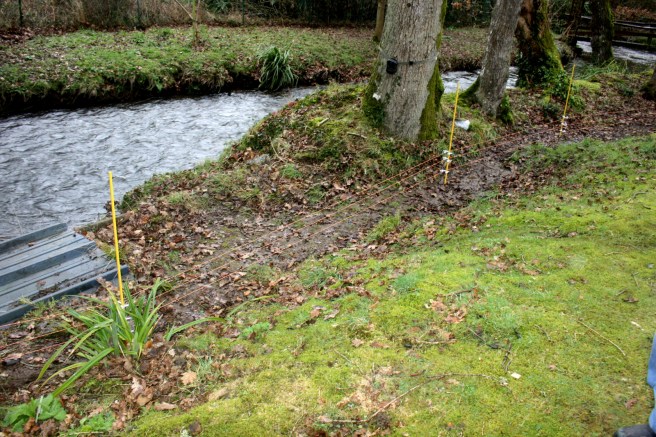
So, we have had no Coypu sign until about a week ago. I found some chewed iris shoots. I set up the trail camera and got one returning to the river hesitantly through the electric fence. I did not see it get shocked but I heard the audible click as 0.25 J earthed at kilo Volts through the Coypu. The animal seemed to be coming from another direction. I set up witness sticks on the river bank and by a hole in the fence. The little bugger was coming through the fence. I blocked it last night with one big and one medium sized pine fire logs. He shifted the smaller log last night. I saw some Coypu sign, damaged iris shoots. There are two fairly hefty fire logs there now.
Yesterday evening when checking the fence I came upon an electrocuted toad. For an animal ~50-100g I guess 0.25 J is too much. I am surprised that it was on the move. We have had an inordinately mild time of it. In general, we get up to 60 toads and frogs at any one time in the pond for mating. I wondered if the annual migration is beginning early.
Today I have put a few more posts up near the old ingress route for the Coypu and lifted the bottom wire so that at no point is it less than 6cm from the ground. That should be enough room for the amphibians but not enough for the Coypu…
We shall soon see if the toad migration proper is beginning early.
Another harbinger of anthropogenic planetary warming?
 Dreamyoga