Cancer Diagnoses – Dead People – Seeing – David Bowie Dream 29-04-2025

Here is this morning’s dream.

The flavour of this dream in entirely UK and specifically England. I am in a small featureless room with D whom I used to know. He is taciturn and concerned. There is a heavy leaden vibe. I know that in the last few days he has received an advanced cancer diagnosis and he has yet come to terms with it. It is in a sense tearing him up and bringing up inner conflicts long avoided. We are in his parents’ house. I leave the room and go for a loud and long “dad piss” in the toilet next door. On the way out I bump into D’s long dead father. He tells me that D is in in denial and would like to express himself but is having trouble pissing, metaphorically speaking.

I go back into the room and already I can see that a part of D is in the in-between and that his time before passing over is not all that long. I say to him in the dream that I am not surprised to see him there given what has occurred in dreaming recently. I know that his Soul is being subjugated by his stubborn personality. There is a part of him which seeks to speak to me and it is not his personality. The inner conflict is making him grey and dank. There is nothing I can do. I know that post death I will get a visit. By then it will be late.

The scene changes to some kind of work’s social event. I am talking with two early middle aged English women, who are expensively dressed. One has a grey bob and the other has longer dyed orange hair. They are both “crystal feeler” new age types and speak posh and clipped. There is some kind of new age book launch going on. The woman with the longer hair asks me if I can “see”. I say to her that I certainly could in the past but that I have not done this for a long time because it tends to freak out any person being seen. They are both excited.

The grey bob asks me if I could “see” her. I warn her that if I Iook she may not like what I see and that she might not like the experience. Intrigued she asks me to go ahead. I stand close to her around one foot away and look into her eyes and more diffusely with unfocused eyes. I see first her form and then her thoughts. Beyond that I can see her Soul. I say to her that she finds me attractive. She comments that such a comment is no big deal nor seeing. I can tell that she is sexually aroused and defiant, refusing to believe that she is being seen. I ask her if she would like a tissue to wipe the moisture from her vulva which I know she has emitted. She turns bright red and moves away aware that she has been fully transparent to me. I know that it is this sensation of transparency which makes people anxious and antagonistic.

The scene changes and we are upstairs in a plush London hotel not too far away from Covent Garden. There is some kind of training or healing event going on with facilitators and a finger buffet. The guests are all very well-heeled except me. There are a few Richmond type women who have “beautiful” homes. There is one woman in peach who is talking to the facilitator stood up in plenary. She says that she is fearful because she has just had a cancer diagnosis and does not know what to do with the rest of her life. I walk over to her and hug her in my arms. She starts to cry.

Later an older woman is talking to the facilitator. She too has a recent diagnosis. I hug her also. She is the mother of the younger woman. In contrast she has accepted her fate and is worried that her daughter is not being real. She asks me how come I am calm. I explain that in our house we have a lot of experience of cancer diagnoses. She asks me if I can help her daughter.

The next to speak is David Bowie. He is taller than in “real” life and dressed in an immaculate pastel blue suit with bleach dyed blond hair. He looks as he did forty plus year ago. He too is diagnosed and I similarly hug him. He towers over me. We both know he is dead. It is our shared joke. I suggest that we all go to a nightclub to dance. Everyone thinks this is a good idea.

Bowie and I are in a bright red low long American style convertible with white walled tyres. He is driving the right hand drive car. The cream leather upholstery is immaculate. He does a handbrake turn into a parking spot on a cobbled square. We get out and head toward the night club. Outside on the pavement are many Bowie statutes representing his various on-stage incarnations. He is very laconic and holds back.

The others all go into the night club. I then marshal them back out onto the square where Bowie is doing a medley of his hits. We start to conga with Bowie at the head and the daughter from before behind him. Behind her the mother and then me. The bouncers from the night club join in. The sense is of a warm summer dawn around 5 AM.

The dream ends.

Atlantis in Critias and Timaeus

CRITIAS

by Plato

~360 BC

translated by Benjamin Jowett

Let me begin by observing first of all, that nine thousand was the sum of years which had elapsed since the war which was said to have taken place between those who dwelt outside the Pillars of Heracles and all who dwelt within them; this war I am going to describe. Of the combatants on the one side, the city of Athens was reported to have been the leader and to have fought out the war; the combatants on the other side were commanded by the kings of Atlantis, which, as I was saying, was an island greater in extent than Libya and Asia, and when afterwards sunk by an earthquake, became an impassable barrier of mud to voyagers sailing from hence to any part of the ocean. The progress of the history will unfold the various nations of barbarians and families of Hellenes which then existed, as they successively appear on the scene; but I must describe first of all Athenians of that day, and their enemies who fought with them, and then the respective powers and governments of the two kingdoms. Let us give the precedence to Athens.

In the days of old the gods had the whole earth distributed among them by allotment. There was no quarrelling; for you cannot rightly suppose that the gods did not know what was proper for each of them to have, or, knowing this, that they would seek to procure for themselves by contention that which more properly belonged to others. They all of them by just apportionment obtained what they wanted, and peopled their own districts; and when they had peopled them they tended us, their nurselings and possessions, as shepherds tend their flocks, excepting only that they did not use blows  or bodily force, as shepherds do, but governed us like pilots from the stern of the vessel, which is an easy way of guiding animals, holding our souls by the rudder of persuasion according to their own pleasure;-thus did they guide all mortal creatures. Now different gods had their allotments in different places which they set in order. Hephaestus and Athene, who were brother and sister, and sprang from the same father, having a common nature, and being united also in the love of philosophy and art, both obtained as their common portion this land, which was naturally adapted for wisdom and virtue; and there they implanted brave children of the soil, and put into their minds the order of government; their names are preserved, but their actions have disappeared by reason of the destruction of those who received the tradition, and the lapse of ages. For when there were any survivors, as I have already said, they were men who dwelt in the mountains; and they were ignorant of the art of writing and had heard only the names of the chiefs of the land, but very little about their actions. The names they were willing enough to give to their children; but the virtues and the laws of their predecessors, they knew only by obscure traditions; and as they themselves and their children lacked for many generations the necessaries of life, they directed their attention to the supply of their wants, and of them they conversed, to the neglect of events that had happened in times long past; for mythology and the enquiry into antiquity are first introduced into cities when they begin to have leisure, and when they see that the necessaries of life have already been provided, but not before. And this is reason why the names of the ancients have been preserved to us and not their actions. This I infer because Solon said that the priests in their narrative of that war mentioned most of the names which are recorded prior to the time of Theseus, such as Cecrops, and Erechtheus, and Erichthonius, and Erysichthon, and the names of the women in like manner. Moreover, since military pursuits were then common to men and women, the men of those days in accordance with the custom of the time set up a figure and image of the goddess in full armour, to be a testimony that all animals which associate together, male as well as female, may, if they please, practise in common the virtue which belongs to them without distinction of sex.

Now the country was inhabited in those days by various classes of citizens;-there were artisans, and there were husbandmen, and there was also a warrior class originally set apart by divine men. The latter dwelt by themselves, and had all things suitable for nurture and education; neither had any of them anything of their own, but they regarded all that they had as common property; nor did they claim to receive of the other citizens anything more than their necessary food. And they practised all the pursuits which we yesterday described as those of our imaginary guardians. Concerning the country the Egyptian priests said what is not only probable but manifestly true, that the boundaries were in those days fixed by the Isthmus, and that in the direction of the continent they extended as far as the heights of Cithaeron and Parnes; the boundary line came down in the direction of the sea, having the district of Oropus on the right, and with the river Asopus as the limit on the left. The land was the best in the world, and was therefore able in those days to support a vast army, raised from the surrounding people. Even the remnant of Attica which now exists may compare with any region in the world for the variety and excellence of its fruits and the suitableness of its pastures to every sort of animal, which proves what I am saying; but in those days the country was fair as now and yielded far more abundant produce. How shall I establish my words? and what part of it can be truly called a remnant of the land that then was? The whole country is only a long promontory extending far into the sea away from the rest of the continent, while the surrounding basin of the sea is everywhere deep in the neighbourhood of the shore. Many great deluges have taken place during the nine thousand years, for that is the number of years which have elapsed since the time of which I am speaking; and during all this time and through so many changes, there has never been any considerable accumulation of the soil coming down from the mountains, as in other places, but the earth has fallen away all round and sunk out of sight. The consequence is, that in comparison of what then was, there are remaining only the bones of the wasted body, as they may be called, as in the case of small islands, all the richer and softer parts of the soil having fallen away, and the mere skeleton of the land being left. But in the primitive state of the country, its mountains were high hills covered with soil, and the plains, as they are termed by us, of Phelleus were full of rich earth, and there was abundance of wood in the mountains. Of this last the traces still remain, for although some of the mountains now only afford sustenance to bees, not so very long ago there were still to be seen roofs of timber cut from trees growing there, which were of a size sufficient to cover the largest houses; and there were many other high trees, cultivated by man and bearing abundance of food for cattle. Moreover, the land reaped the benefit of the annual rainfall, not as now losing the water which flows off the bare earth into the sea, but, having an abundant supply in all places, and receiving it into herself and treasuring it up in the close clay soil, it let off into the hollows the streams which it absorbed from the heights, providing everywhere abundant fountains and rivers, of which there may still be observed sacred memorials in places where fountains once existed; and this proves the truth of what I am saying.

Such was the natural state of the country, which was cultivated, as we may well believe, by true husbandmen, who made husbandry their business, and were lovers of honour, and of a noble nature, and had a soil the best in the world, and abundance of water, and in the heaven above an excellently attempered climate. Now the city in those days was arranged on this wise. In the first place the Acropolis was not as now. For the fact is that a single night of excessive rain washed away the earth and laid bare the rock; at the same time there were earthquakes, and then occurred the extraordinary inundation, which was the third before the great destruction of Deucalion. But in primitive times the hill of the Acropolis extended to the Eridanus and Ilissus, and included the Pnyx on one side, and the Lycabettus as a boundary on the opposite side to the Pnyx, and was all well covered with soil, and level at the top, except in one or two places. Outside the Acropolis and under the sides of the hill there dwelt artisans, and such of the husbandmen as were tilling the ground near; the warrior class dwelt by themselves around the temples of Athene and Hephaestus at the summit, which moreover they had enclosed with a single fence like the garden of a single house. On the north side they had dwellings in common and had erected halls for dining in winter, and had all the buildings which they needed for their common life, besides temples, but there was no adorning of them with gold and silver, for they made no use of these for any purpose; they took a middle course between meanness and ostentation, and built modest houses in which they and their children’s children grew old, and they handed them down to others who were like themselves, always the same. But in summer-time they left their gardens and gymnasia and dining halls, and then the southern side of the hill was made use of by them for the same purpose. Where the Acropolis now is there was a fountain, which was choked by the earthquake, and has left only the few small streams which still exist in the vicinity, but in those days the fountain gave an abundant supply of water for all and of suitable temperature in summer and in winter. This is how they dwelt, being the guardians of their own citizens and the leaders of the Hellenes, who were their willing followers. And they took care to preserve the same number of men and women through all time, being so many as were required for warlike purposes, then as now-that is to say, about twenty thousand. Such were the ancient Athenians, and after this manner they righteously administered their own land and the rest of Hellas; they were renowned all over Europe and Asia for the beauty of their persons and for the many virtues of their souls, and of all men who lived in those days they were the most illustrious. And next, if I have not forgotten what I heard when I was a child, I will impart to you the character and origin of their adversaries. For friends should not keep their stories to themselves, but have them in common.

Yet, before proceeding further in the narrative, I ought to warn you, that you must not be surprised if you should perhaps hear Hellenic names given to foreigners. I will tell you the reason of this: Solon, who was intending to use the tale for his poem, enquired into the meaning of the names, and found that the early Egyptians in writing them down had translated them into their own language, and he recovered the meaning of the several names and when copying them out again translated them into our language. My great-grandfather, Dropides, had the original writing, which is still in my possession, and was carefully studied by me when I was a child. Therefore if you hear names such as are used in this country, you must not be surprised, for I have told how they came to be introduced. The tale, which was of great length, began as follows:-

I have before remarked in speaking of the allotments of the gods, that they distributed the whole earth into portions differing in extent, and made for themselves temples and instituted sacrifices. And Poseidon, receiving for his lot the island of Atlantis, begat children by a mortal woman, and settled them in a part of the island, which I will describe. Looking towards the sea, but in the centre of the whole island, there was a plain which is said to have been the fairest of all plains and very fertile. Near the plain again, and also in the centre of the island at a distance of about fifty stadia, there was a mountain not very high on any side.

In this mountain there dwelt one of the earth born primeval men of that country, whose name was Evenor, and he had a wife named Leucippe, and they had an only daughter who was called Cleito. The maiden had already reached womanhood, when her father and mother died; Poseidon fell in love with her and had intercourse with her, and breaking the ground, inclosed the hill in which she dwelt all round, making alternate zones of sea and land larger and smaller, encircling one another; there were two of land and three of water, which he turned as with a lathe, each having its circumference equidistant every way from the centre, so that no man could get to the island, for ships and voyages were not as yet. He himself, being a god, found no difficulty in making special arrangements for the centre island, bringing up two springs of water from beneath the earth, one of warm water and the other of cold, and making every variety of food to spring up abundantly from the soil. He also begat and brought up five pairs of twin male children; and dividing the island of Atlantis into ten portions, he gave to the first-born of the eldest pair his mother’s dwelling and the surrounding allotment, which was the largest and best, and made him king over the rest; the others he made princes, and gave them rule over many men, and a large territory.

And he named them all; the eldest, who was the first king, he named Atlas, and after him the whole island and the ocean were called Atlantic. To his twin brother, who was born after him, and obtained as his lot the extremity of the island towards the Pillars of Heracles, facing the country which is now called the region of Gades in that part of the world, he gave the name which in the Hellenic language is Eumelus, in the language of the country which is named after him, Gadeirus. Of the second pair of twins he called one Ampheres, and the other Evaemon. To the elder of the third pair of twins he gave the name Mneseus, and Autochthon to the one who followed him. Of the fourth pair of twins he called the elder Elasippus, and the younger Mestor. And of the fifth pair he gave to the elder the name of Azaes, and to the younger that of Diaprepes. All these and their descendants for many generations were the inhabitants and rulers of divers islands in the open sea; and also, as has been already said, they held sway in our direction over the country within the Pillars as far as Egypt and Tyrrhenia.

Now Atlas had a numerous and honourable family, and they retained the kingdom, the eldest son handing it on to his eldest for many generations; and they had such an amount of wealth as was never before possessed by kings and potentates, and is not likely ever to be again, and they were furnished with everything which they needed, both in the city and country. For because of the greatness of their empire many things were brought to them from foreign countries, and the island itself provided most of what was required by them for the uses of life. In the first place, they dug out of the earth whatever was to be found there, solid as well as fusile, and that which is now only a name and was then something more than a name, orichalcum, was dug out of the earth in many parts of the island, being more precious in those days than anything except gold. There was an abundance of wood for carpenter’s work, and sufficient maintenance for tame and wild animals. Moreover, there were a great number of elephants in the island; for as there was provision for all other sorts of animals, both for those which live in lakes and marshes and rivers, and also for those which live in mountains and on plains, so there was for the animal which is the largest and most voracious of all. Also whatever fragrant things there now are in the earth, whether roots, or herbage, or woods, or essences which distil from fruit and flower, grew and thrived in that land; also the fruit which admits of cultivation, both the dry sort, which is given us for nourishment and any other which we use for food-we call them all by the common name pulse, and the fruits having a hard rind, affording drinks and meats and ointments, and good store of chestnuts and the like, which furnish pleasure and amusement, and are fruits which spoil with keeping, and the pleasant kinds of dessert, with which we console ourselves after dinner, when we are tired of eating-all these that sacred island which then beheld the light of the sun, brought forth fair and wondrous and in infinite abundance. With such blessings the earth freely furnished them; meanwhile they went on constructing their temples and palaces and harbours and docks. And they arranged the whole country in the following manner:

First of all they bridged over the zones of sea which surrounded the ancient metropolis, making a road to and from the royal palace. And at the very beginning they built the palace in the habitation of the god and of their ancestors, which they continued to ornament in successive generations, every king surpassing the one who went before him to the utmost of his power, until they made the building a marvel to behold for size and for beauty. And beginning from the sea they bored a canal of three hundred feet in width and one hundred feet in depth and fifty stadia in length, which they carried through to the outermost zone, making a passage from the sea up to this, which became a harbour, and leaving an opening sufficient to enable the largest vessels to find ingress. Moreover, they divided at the bridges the zones of land which parted the zones of sea, leaving room for a single trireme to pass out of one zone into another, and they covered over the channels so as to leave a way underneath for the ships; for the banks were raised considerably above the water. Now the largest of the zones into which a passage was cut from the sea was three stadia in breadth, and the zone of land which came next of equal breadth; but the next two zones, the one of water, the other of land, were two stadia, and the one which surrounded the central island was a stadium only in width. The island in which the palace was situated had a diameter of five stadia. All this including the zones and the bridge, which was the sixth part of a stadium in width, they surrounded by a stone wall on every side, placing towers and gates on the bridges where the sea passed in. The stone which was used in the work they quarried from underneath the centre island, and from underneath the zones, on the outer as well as the inner side. One kind was white, another black, and a third red, and as they quarried, they at the same time hollowed out double docks, having roofs formed out of the native rock. Some of their buildings were simple, but in others they put together different stones, varying the colour to please the eye, and to be a natural source of delight. The entire circuit of the wall, which went round the outermost zone, they covered with a coating of brass, and the circuit of the next wall they coated with tin, and the third, which encompassed the citadel, flashed with the red light of orichalcum.

The palaces in the interior of the citadel were constructed on this wise:-in the centre was a holy temple dedicated to Cleito and Poseidon, which remained inaccessible, and was surrounded by an enclosure of gold; this was the spot where the family of the ten princes first saw the light, and thither the people annually brought the fruits of the earth in their season from all the ten portions, to be an offering to each of the ten. Here was Poseidon’s own temple which was a stadium in length, and half a stadium in width, and of a proportionate height, having a strange barbaric appearance. All the outside of the temple, with the exception of the pinnacles, they covered with silver, and the pinnacles with gold. In the interior of the temple the roof was of ivory, curiously wrought everywhere with gold and silver and orichalcum; and all the other parts, the walls and pillars and floor, they coated with orichalcum. In the temple they placed statues of gold: there was the god himself standing in a chariot-the charioteer of six winged horses-and of such a size that he touched the roof of the building with his head; around him there were a hundred Nereids riding on dolphins, for such was thought to be the number of them by the men of those days. There were also in the interior of the temple other images which had been dedicated by private persons. And around the temple on the outside were placed statues of gold of all the descendants of the ten kings and of their wives, and there were many other great offerings of kings and of private persons, coming both from the city itself and from the foreign cities over which they held sway. There was an altar too, which in size and workmanship corresponded to this magnificence, and the palaces, in like manner, answered to the greatness of the kingdom and the glory of the temple.

In the next place, they had fountains, one of cold and another of hot water, in gracious plenty flowing; and they were wonderfully adapted for use by reason of the pleasantness and excellence of their waters. They constructed buildings about them and planted suitable trees, also they made cisterns, some open to the heavens, others roofed over, to be used in winter as warm baths; there were the kings’ baths, and the baths of private persons, which were kept apart; and there were separate baths for women, and for horses and cattle, and to each of them they gave as much adornment as was suitable. Of the water which ran off they carried some to the grove of Poseidon,

where were growing all manner of trees of wonderful height and beauty, owing to the excellence of the soil, while the remainder was conveyed by aqueducts along the bridges to the outer circles; and there were many temples built and dedicated to many gods; also gardens and places of exercise, some for men, and others for horses in both of the two islands formed by the zones; and in the centre of the larger of the two there was set apart a race-course of a stadium in width, and in length allowed to extend all round the island, for horses to race in. Also there were guardhouses at intervals for the guards, the more trusted of whom were appointed-to keep watch in the lesser zone, which was nearer the Acropolis while the most trusted of all had houses given them within the citadel, near the persons of the kings. The docks were full of triremes and naval stores, and all things were quite ready for use. Enough of the plan of the royal palace.

Leaving the palace and passing out across the three you came to a wall which began at the sea and went all round: this was everywhere distant fifty stadia from the largest zone or harbour, and enclosed the whole, the ends meeting at the mouth of the channel which led to the sea. The entire area was densely crowded with habitations; and the canal and the largest of the harbours were full of vessels and merchants coming from all parts, who, from their numbers, kept up a multitudinous sound of human voices, and din and clatter of all sorts night and day.

I have described the city and the environs of the ancient palace nearly in the words of Solon, and now I must endeavour to represent the nature and arrangement of the rest of the land. The whole country was said by him to be very lofty and precipitous on the side of the sea, but the country immediately about and surrounding the city was a level plain, itself surrounded by mountains which descended towards the sea; it was smooth and even, and of an oblong shape, extending in one direction three thousand stadia, but across the centre inland it was two thousand stadia. This part of the island looked towards the south, and was sheltered from the north. The surrounding mountains were celebrated for their number and size and beauty, far beyond any which still exist, having in them also many wealthy villages of country folk, and rivers, and lakes, and meadows supplying food enough for every animal, wild or tame, and much wood of various sorts, abundant for each and every kind of work.

I will now describe the plain, as it was fashioned by nature and by the labours of many generations of kings through long ages. It was for the most part rectangular and oblong, and where falling out of the straight line followed the circular ditch. The depth, and width, and length of this ditch were incredible, and gave the impression that a work of such extent, in addition to so many others, could never have been artificial. Nevertheless I must say what I was told. It was excavated to the depth of a hundred, feet, and its breadth was a stadium everywhere; it was carried round the whole of the plain, and was ten thousand stadia in length. It received the streams which came down from the mountains, and winding round the plain and meeting at the city, was there let off into the sea. Further inland, likewise, straight canals of a hundred feet in width were cut from it through the plain, and again let off into the ditch leading to the sea: these canals were at intervals of a hundred stadia, and by them they brought down the wood from the mountains to the city, and conveyed the fruits of the earth in ships, cutting transverse passages from one canal into another, and to the city. Twice in the year they gathered the fruits of the earth-in winter having the benefit of the rains of heaven, and in summer the water which the land supplied by introducing streams from the canals.

—————————-

From Wikipedia

Orichalcum or aurichalcum is a metal mentioned in several ancient writings, including the story of Atlantis in the Critias of Plato. Within the dialogue, Critias (460–403 BC) says that orichalcum had been considered second only to gold in value and had been found and mined in many parts of Atlantis in ancient times, but that by Critias’s own time, orichalcum was known only by name.

Orichalcum may have been a noble metal such as platinum, as it was supposed to be mined, or one type of bronze or brass or possibly some other metal alloy.

——————————

TIMAEUS

by Plato

~360 BC

translated by Benjamin Jowett

Many great and wonderful deeds are recorded of your state in our histories. But one of them exceeds all the rest in greatness and valour. For these histories tell of a mighty power which unprovoked made an expedition against the whole of Europe and Asia, and to which your city put an end. This power came forth out of the Atlantic Ocean, for in those days the Atlantic was navigable; and there was an island situated in front of the straits which are by you called the Pillars of Heracles; the island was larger than Libya and Asia put together, and was the way to other islands, and from these you might pass to the whole of the opposite continent which surrounded the true ocean; for this sea which is within the Straits of Heracles is only a harbour, having a narrow entrance, but that other is a real sea, and the surrounding land may be most truly called a boundless continent. Now in this island of Atlantis there was a great and wonderful empire which had rule over the whole island and several others, and over parts of the continent, and, furthermore, the men of Atlantis had subjected the parts of Libya within the columns of Heracles as far as Egypt, and of Europe as far as Tyrrhenia. This vast power, gathered into one, endeavoured to subdue at a blow our country and yours and the whole of the region within the straits; and then, Solon, your country shone forth, in the excellence of her virtue and strength, among all mankind. She was pre-eminent in courage and military skill, and was the leader of the Hellenes. And when the rest fell off from her, being compelled to stand alone, after having undergone the very extremity of danger, she defeated and triumphed over the invaders, and preserved from slavery those who were not yet subjugated, and generously liberated all the rest of us who dwell within the pillars. But afterwards there occurred violent earthquakes and floods; and in a single day and night of misfortune all your warlike men in a body sank into the earth, and the island of Atlantis in like manner disappeared in the depths of the sea. For which reason the sea in those parts is impassable and impenetrable, because there is a shoal of mud in the way; and this was caused by the subsidence of the island.

 I have told you briefly, Socrates, what the aged Critias heard from Solon and related to us. And when you were speaking yesterday about your city and citizens, the tale which I have just been repeating to you came into my mind, and I remarked with astonishment how, by some mysterious coincidence, you agreed in almost every particular with the narrative of Solon; but I did not like to speak at the moment. For a long time had elapsed, and I had forgotten too much; I thought that I must first of all run over the narrative in my own mind, and then I would speak. And so I readily assented to your request yesterday, considering that in all such cases the chief difficulty is to find a tale suitable to our purpose, and that with such a tale we should be fairly well provided.

Sinking Cities – Three Mice – Whales Dream 28-04-2025

Here is this morning’s dream and it is unlike any other I have had.

The dream starts in the green arboreal where I live in far Western Europe. I am getting ready and those around me are making arrangements for my departure. I am going to see, to find out. I move instantaneous South through the air to the/a city on the equator in the middle of the Atlantic Ocean. I pass over the once golden walls and into the square in front of the palace precinct. The shiny gold has tarnished and lost lustre. There is water very slowly seeping through the paving and grass grows a little between the stones.

The city is sinking under the weight of corruption and decadence. Soon it will sink further into the sea. The weight of the corruption is vast, and its duration has been long. It has taken a marked turn for the worse in recent years. I can barely recognise the place I once knew well and held in esteem.

I move to a quiet bench in a park. There are a few residual trees there. I sit down and am joined by three impeccably clean mice all of whom are in rude health and vivacious. They chatter with me and climb into my jacket pockets. One in each of the outer lower pockets on my grey flannel suit jacket. The last into the inner pocket on the left-hand side of my coat in the soft dark lining.

We leave the city and arrive in the ocean. I am stood on the ocean. Around us is a pod of whales of many different kinds. I catch the dorsal fin of a large black and white whale who is not an Orca but of a different large species. He dives into the water and pulls me along the surface at great speed. On all sides the pod follows us. We are heading to the city at the Artic Circle. It is the outpost of the civilisation.

We arrive outside the city and the whale drops us off at the dock. It is clear to see that whatever glory has now substantially faded. The mice now pop their heads out of the pockets looking out from therein. The one from my inner pocket moves to the outer handkerchief pocket on the left-hand side to see better. We pass through the stone city gates and note here too there is a problem with rising water.  There is a stench of cloying decay and opulence faded. Here too is corruption.

We go over to a small walled courtyard. In the corner I can see a dead animal. It is a very large rat. I lift its head with a pencil. I can see a small scruffy bedraggled mouse eating the rat’s head. Both I and the mice I am carrying are totally and utterly shocked that one of their kind has fallen so low that it is eating the brains of a rat.

The dream ends.

Group Control and Decision Making

It is not unusual for groups of people to gather together and try to control what an individual outside of that group is doing. They may even have the illusion that said individual is keen or desperate to join their group as per the famous Garry Glitter song about gangs. Groups by their nature have real difficulty seeing and assimilating perspectives outside of the rarefied air of their Olympian group. We Gods know. The group may even believe that they know what is best for the “lucky” individual. Being quasi-corporate they can only see a quasi-corporate “answer” to whatever the imagined problem may be.

They can get quite complacent if something approaching within-group consensus is found.

The problem is that they can be very mistaken and totally unaware. There is very little one can do when a group has made up its mind. Nietzsche is attributed this quotation.

—-

“In individuals, insanity is rare; but in groups, parties, nations and epochs, it is the rule.”

Friedrich Nietzsche

—-

You can decide for yourself regarding some of the “sanity” currently coming out of the USA.

Groups may consider it sound to offer the lucky person a fait accompli. Having discussed only amidst themselves they may not consider how it might wash with an individual outside. Such a thing happened with the so-called peace efforts expecting Ukraine to suck it up and be grateful. The individual is then blamed and scapegoated for not accepting the divine arrogance of group omniscience.

“That pesky pleb should count his lucky stars!! He should be very grateful!!”

This phenomenon can be found on all sides in academia, industry, business, politics and amongst the righteous “they” down the pub.

Groups do not always make the best and most inclusive decisions because they cannot see outside their own Venn diagram walls. A collection of frogs at the bottom of a well, even though it may agree amongst itself, has not seen a pacific sunset nor has it gone on a silent retreat in the mountains for three years. It might imagine itself more knowledgeable and experienced than it actually is.

Groups with corporate mind always want to deal with other groups in which the socio-political hierarchy is known. They are obsessed with hierarchy and group positions. They struggle with even the notion of a non-affiliated individual. Group to group interaction can be even less inclusive. There are often power struggles and a great deal of negotiation. It is so often about power and preservation of status quo. It is about control.

The object of negotiation can be totally unaware of the blessings, he/she is about to receive.

People are people and the tendency is to do the same shit over and over.

Living Buddha – Life Trajectories

Following the “Tibet” line of inquiry yesterday I looked for various films about finding tulku reincarnations. We have seen, Little Buddha, Kundun about the Dalai Lama and Tulku by Gesar Mukpo. Each of which had tremendous, guttural, impact on me. I found “Living Buddha” by Clemens Kuby about the search for and enthronement of the 17th Gyalwa Karmapa head of the Kagyu lineage inter alia. Here is the trailer.

In this film the 16th leaves clues as to where to find his reincarnation which is supported by a dream of the Dalai Lama. A party is sent to search and after a ~ ten day trek into deepest darkest Eastern Tibet the son of nomadic famer living in fairly primitive conditions embedded deep in nature is located. The lives of that young man and his family are changed forever. The life trajectory of nomadic existence is replaced by a high lama throne, a famous black hat and being thrust onto the stage of global geo-politics.

In principle, the long Karmapa lineage is of quasi-divine reincarnate awakened beings capable of non-human feats such as wide ranging clairvoyance bordering on a mundane omniscience. They return for the benefit of all sentient beings. Padmasambhava, Guru Rinpoche, prophesises that there will be 21 such incarnations. These beings are held in very high esteem in Tibet, among the diaspora and with followers of Tibetan variety Buddhism.

This film is documentary evidence of how a life trajectory can alter radically and suddenly when viewed from the mundane familial life. It also suggests that the intended trajectory did not in fact change, it simply worked out “as planned”. It was just a matter of time.

Over a decade ago I had a number of dreams suggesting that I would meet the 17th one day.

Our current life trajectory is looking like, maybe, a move back to Wales. It includes the purchase of a disabled enabled bungalow in sensible proximity to a major, preferably university, hospital and with a low price tag. I found a bungalow on Right Move yesterday which apart from distance to hospital looked good. Such a place does therefore exist.

Unless something weird is happening whereby this blog is monitored in some way and thereby has a wider audience. What I write here has a very small readership and is a tiny little ripple in a corner of the vast internet. It is therefore unknown and unheard of. Only the wife, the cat(s) and I have experienced its entirety.

Subsequent and during the film last night, I had strong visual images of the 17th and a few of Akong Rinpoche. It is pretty weird and I had not had any weed, nor had a mushroom omelette.

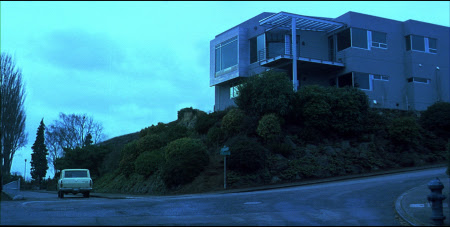
In “Little Buddha” they are searching for the reincarnation of Lama Dorje. One of the crew has a dream of him in jeans standing near to an architect designed house under construction

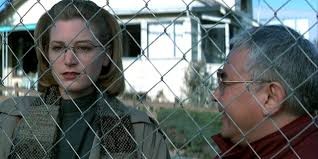
They, the Buddhists, start to stalk the family and impinge on their lives. The maths teacher mother is greeted by the mathematical astrologer at the school fence.

The higher lama looking for his teacher then tips up in Seattle with entourage and takes the boy back to Bhutan for assessing. Along the way they encounter two more emanations of the reincarnated teacher making three.

Three Vajras – Speech, Body and Mind.

Our house is architect designed.

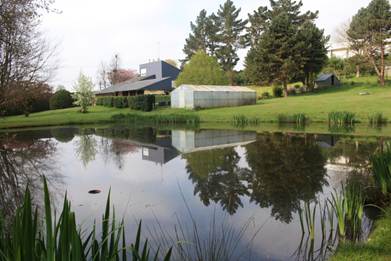
We are currently waiting for our large pond to be filled with pink lotus flowers and our house is characterised by emptiness.

We have no idea if any Tibetans geezers are having dreams or visions about us/me.

If one day a Tibetan monk seeker / stalker tipped up, our lives could change and radically so. The trajectory, viewed from one angle would be knocked for six.

The odds of this happening are probably better than for a EuroMillions win which would also alter life trajectory, but perhaps not so substantially.

If I had to switch jeans / combat trousers for robes, that could freak people who may have met me, out.

The family joke is I was aiming for Bhutan but saw the flag of Wales with the dragon and reincarnated in Cardiff by accident…

Cymru am byth…

ma ’das sprul sku and Taking Dreams Literally

I have found that if you start looking into things Tibetan that complexity soon arrives.

Today I came upon ma ’das sprul sku for the first time.

———————-

Abstract: A ma ’das sprul sku is a non-hereditary reincarnate lama (sprul sku) who assumes his or her predecessor’s status, but who takes birth before his or her predecessor’s death. This paper presents ten oral histories of ma ’das sprul skus and examines what they and their narrators reveal about the logic of transference in establishing the personhood of a ma ’das sprul sku, how ma ’das sprul sku personhood may challenge conventional understandings of sprul sku personhood and temporality, ma ’das sprul sku and their creators as reflective agents, and what the dearth of ma ’das sprul sku hagiographies may imply.

Marcia Calkowski in The Journal of the International Association of Tibetan Studies.

https://www.thlib.org/collections/texts/jiats/#!jiats=/07/calkowski/b1/

———————————-

The notion that a being can have a second incarnation whilst still alive, kind of messes with the idea that one needs to leave the meat before getting some more. She mentions the idea of mandé trülku.

Taken to the limit that could mean that an emanation, similar to that which gave rise to the Dalai Lama, could already be incarnate whilst he lives.

——————————–

Literary Sources for Tulku Lines

Successive systems of reincarnation or tulku (sprul sku) are fascinating sources for the study of the social history of Tibet. The tulku, predicated on Buddhist metaphysics of rebirth, is a phenomena in which a person is recognized as embodying a previous person, in their own current body. This is technically referred to in Tibetan as one who is “recognized as having returned to existence” (yang srid ngos ‘dzin or sprul sku ngos ‘dzin).

There are hundreds of multigenerational tulku lines in Tibet. By looking at when such tulku lines were declared, within which contexts, patterns of interpersonal relations, institutional alliances, and regional practices emerge. We are given new visions of these trans-generational social networks and the weblike worlds in which tulkus function.

From The Buddhist Digital Resource Center.

————————————————————

This suggests that there are so many tulkus that some could be considered common or garden as opposed to the big three.

The naming and interweave is not easily tractable. If I was to start with my recent Tibetan dream, trying to find out who I might have been, there are many pitfalls.

————————————————————-

—————————————————————-

This dream, if taken literally, suggests that I was being escorted out of Tibet in and around the early sixties / late fifties. Clearly that is a big if. It suggests an importance sufficient to warrant an escort and a rank above common or garden

I could search for a person, lama or tulku, who died in and around that time but the list of tulku lines is not easily searchable by date. The dream suggests that I was not going to make it.

https://legacy.tbrc.org/?locale=en#!persons/tulkus

But I may have made it. Which might make me a co-incarnation of a living person. We share an emanatory source. That co-incarnation could have passed on since and could in principle have been born biologically before me, say ~1940s in order to be old enough to march to freedom.

The feeling from the dream was that I was a youth / young man. Which puts a window ~1935 – 1945. My hands in the dream were soft inconsistent with extended heavy manual labour.

——————————————————

My eight Tibetan Houses Dream

—————————————————-

Points at Southeastern Tibet / Shigatse/ Shigatze which might geo-locate an incarnation but does not take me much closer to a named individual in the twentieth century.

My Tibetan Buddhist Search Committee Dream suggests that I might recognise a magically inscribed cabinet. It suggests that I might recognise Tibetan martial arts weapons.

—————————————————–

——————————————————

“The carpet on the floor of the hall has been rolled back to reveal a parquet dance floor of some considerable sheen. Amongst the entourage I can hear gossiping. “It cannot be him; he is too coarse thickset and muscular.”

I hear this and whip off my shirt to reveal my muscular bare chest. I say that I will cooperate with whatever it is they must do. Take a look if you must. I am now wearing saffron yellow trousers, training pants, that are “elasticated” at the ankles. I start to do a forward splits on the floor to warm up. I say that given I am nearly sixty I am surprised that being that old I can still do that.

One of the woman in the entourage says to me that I am much older than that both in this lifetime and stretching way back. I am nearly 73 she says. I do the mental calculation that I must have been “born” in the early 1950s. She says, “we tried to wake you five years ago”. You have been “asleep” and we have been waiting.”

——————————————

So, the dreams suggest an inconsistency of age or timing.

——————————————

The monastery airport dream points at Leh in Ladakh.

——————————

——————————-

There are a number of dreams with Kālacakra or wheel of time mandala.

In another dream “Tibetan soil dream” I am given my piece of Tibet.

——————————

————————————–

There are other dreams with H.H. Karmapa and H.H. Dalai lama in.

———————————-

If dreams are “evidence” then there is quite a bit suggesting some Tibetan connection. If I were a Tibetan having these dreams then the Tibetans would take them more seriously. A hairy arsed sixty-year old Welsh ex-academic spendthrift is not as attractive as perhaps a younger person linked to the sangha.

It is difficult to explain these dreams cropping up from a Freudian or Jungian perspective.

There is circumstantial evidence. It is pretty unlikely that any conscious imaginations / research makes its way fully into dreams. I did not make any of them up. They were recorded as is the morning after.

I have not tried to visualise this putative life as that is more likely to be prone to prejudice / confirmation bias.

It is possible that having looked at this theme there may be more passive dreams on the way….

Is It Me? – Introversion

Over the last few weeks, I have been interacting with the medical profession. It has raised a not uncommon question for me. One which had me investigating an Autism diagnosis a decade ago. The question is:

Is it me? Am I too unfiltered, direct and accurate or are people insecure, precious, pompous and defensive? Am I not full enough with bullshit and braggadocio? Do I fail to play the itchy back dog sniffing arses game well enough? Must I always wear a mask in order not to freak people out?

It seems to me that I unnerve people. I dial back several orders of magnitude already when I interact. It seems the only answer to not causing angst and a feeling of being unsettled is not to interact at all.  To keep my gob shut and wherever possible keep out of public circulation. In general, I have a worse reaction from “men” than from women.

Am I simply not socially viable in the common socio-political illusion / context. Am I just too weird and feral.

Is it me? Am I the problem?

Maybe I Was an Alpaca?

This morning’s dream points {again} to some kind of Tibetan incarnation, perhaps some lama-dude. I have long held this possibility at arm’s length because I have had no waking memory of such a thing. The dream indicates a time stamp roughly of 1960 when things were bad in Tibet and a number of lamas left. We hear about the ones who made it. We don’t hear about the ones who did not.

They may have been vulture food.

I did once go to a dzong in London and had an “empowerment” by Tulku Akong Rinpoche. A lama who along with Chögyam Trungpa escaped from Tibet during the Chinese excess.

I have often wondered why no waking recall. The only answer I came up with is that life as a monk is so very boring that there is little to remember, no outstanding dramatic events. Tedium, day after day routine.

If the dream points at a very recent incarnation, then that hints at something like a tulku incarnation, where one life follows quickly.

That does not really impinge on the current health problems and search for a nanna-flat. In a sense it is little more than a phenomenological possibility when viewed from life circumstance. I do not see nor feel that there is much / anything left for me to do.

I have hypothesised that there have been many failures, way more than “successes”. We only hear of the latter because it is they who have ongoing wider significance. In a way quiet failure fertilizes the ground for success.

I am at something of an impasse on the health front and cannot currently see any further steps. There is nothing urgent and I can tolerate the pain and lack of sleep. We need to move house before even thinking about any operation. It is not a complicated equation, for now.

I am currently where I am not seeing medical intervention as something positive and healing. It seems like a necessary thing and to be endured even. It does not fill me with hope for an easier existence.

Do I have to? Well maybe it is sensible.

Who knows what if any dreams will follow tonight…

Tibetan Plateau, Gold, Lama Dream 1-11-2011

Prompted by this morning’s dream I found this one in the vaults, so to speak.

Dream Diary 1-11

I am outside with Charlie. He and I are loading bricks into the trunk / boot of a car. The bricks have curly writing on them, it is not Sanskrit or Tibetan. They are golden and more like large ingots of gold.

He and I are now on a long journey across the mountains on a plateau which is in Tibet. With us is a smiling lama who is our guide, guard and escort. He is showing us the way. The landscape is very sparse and rocky with scree falls. I look at the lama’s physique and it is very similar to mine only that he is shorter and obviously Tibetan. I say that I didn’t know that they built Tibetans like that…

As we continue on our journey. Charlie and I are now wearing saffron and magenta monk’s robes. This journey is to be extensive. As we move forward Charlie is often out in front exploring the different routes. At one stage we need to pick up speed. The Tibetan monk picks up his companion, also a monk, and carries him piggy-back. I do the same with Charlie. I am not sure that I can walk and climb at this altitude like this. After a few steps I realise that I can and easily so.

A little later the trail becomes tortuous and Charlie is way ahead up the hill. He comes down back to me via a slippery and windy route. I find a more direct route. This is a part of a long journey together.  

Back now in London, we are at a Tibetan Dzong as guests of honour. Sat waiting are Charlie , the wife and I. We are offered some western food. I turn to her and say that she had better tuck in before they come out with the yak’s butter….

Dream ends

Tibetan Food Tibetan Caravan Aberfan – Reincarnation – Dream 24-04-2025

Here is this morning’s dream

The dream starts in an airy metropolitan indoor market. The roofs are high and glass. There is a hubbub and the mood is light. There are many trendy food pop-ups. The area is opulent. I am outside a Tibetan food pop-up stall with some upper middle class English people. They are going on about how wonderful the stall is and that it is good to support the exiles, the diaspora. We order some food and sit at a “pub” table. It comprises a semi-leavened bread a bit smaller than a naan, some sausages tied with string and a spicey vegetable side relish with dark green overtones. The sausage is served on a wooden board with a very sharp wooden handled knife to share amongst us. They, in their safe luxury, do not understand hardship.

The scene changes to a harsh barren mountainous landscape. It is cold and we are navigating the sides of a valley. From time to time scree has fallen which makes the path difficult to navigate. We are fleeing, escaping. I am wearing a heavy fleece lined animal skin jacket and pointy hat with ear flaps. My skin is darker and dry. I am Tibetan. I feel windblown and hungry. There are around twenty of us in the caravan which is mostly on foot with some donkey like animals carrying supplies. We have been traveling for days. We cannot light a fire until night fall, because the smoke will be seen. I am armed with a pistol in a holster on my waist. Others in the party are more heavily armed with old-style rifles.

A couple of men who have gone ahead join us. They have found a spot to camp for the night. We round a bend into a flattish area in the valley wall next to a small stream. The men start to make camp, it is heavy work. As has become the custom they set me down on a rock and give me a bag of flour and some bowls. There are some other powders. Before it gets dark, I start making several batches of dough. They joke my soft hands make the best bread. I set the dough aside covered with cloths.

I prepare some wood for a fire and as soon as it is dark, set it alight. When it is hot enough, I get out a wok-like pan and start to cook the breads having greased the pan first. The smell is great and I make batch after batch. The other men are similarly dressed but have a military bearing. They are protecting me. We all gather round and someone gets out some relish which he adds to a bowl. He then gives each of us a length of string-tied sausage which we cut with our own knives, kept in a hip scabbard. There is water to drink from the steam. All of us a weary. There is a sense in the dream that I will die soon and not make it.

The scene changes to black and white. It is a newsreel of early 1960s London. With buses at Picadilly circus and people in suits. It talks of fashion and life in the city.

Next, I am sat with my sister. We are very young less than three years old. We are in my nan’s house in the Rhondda valley. I can hear a vast rumbling from the mountainside. Instinctively I know that it is the coal tip sliding down the mountain. I grab my sister and we go to sit crouched outside close against the wall by the back door. The landslide continues and the house is knocked down but by the door frame remains intact. Coal waste pours past us and we get covered in dust. The slide stops and the coal starts to burn glowing red in the heat. I know that we must sit tight and that it will be fine. I can lift us both up out of the area to fly to a nearby grassy part. In the dream I hear the words Aberfan and sense that it has not yet happened.

I know beyond doubt that this dream is about reincarnation.

The dream ends

Notes

I was born in Cardiff in 1964. My sister was born March 1966.

The Aberfan disaster (Welsh: Trychineb Aberfan) was the catastrophic collapse of a colliery spoil tip on 21 October 1966. The tip had been created on a mountain slope above the Welsh village of Aberfan, near Merthyr Tydfil, and overlaid a natural spring. Heavy rain led to a build-up of water within the tip which caused it to suddenly slide downhill as a slurry, killing 116 children and 28 adults as it engulfed Pantglas Junior School and a row of houses.