
More Tibetan Phrase Dream Follow Up

“I start out on my route and part the way along in or near Mongolia I am given two white plaques of an irregular shape. Phonetically these plates speak in the dream. They say, “Mon yet {yat} Dzong” and “Sprul yet Tsaay” I can see the associated Tibetan script but cannot associate it directly with the phonetics.”

—————————————————————————-

The name “Khyentse,” often equated with the Rimé movement, is the union of two Tibetan words, khyen (མཁྱེན་པ་,“ken,” or sometimes “chen”) and tsé (བརྩེ་བ་, “tsay”), meaning “wisdom” and “compassion.”

From web site of Dzongsar Jamyang Khyentse Rinpoche

————————————————————————————–

“Sprul yet Tsaay”

ཡེ – primordial – ye or je

བརྩེ་བ – compassion – tsay

—————

ཡེ

waldo1) first, primordial, beginning, original, eternal[ly] fundamental; 2) always, constant
valbyfrom the beginning, from eternity, utterly, perfectly, highly, quite, from the very beginning, principle of light & being, basic
barrontimeless; atemporal

བརྩེ་བ

rangjungbenevolent, affection, compassion, love, merciful, care for. love; to love (v); loving kindness; to love/ feel affection; to love, love, kindness, to count up, mercy, affection, playing with; {brtse ba, brtse ba, brtse ba} intr. v.; ft. of {rtse ba}
waldo1) will play [f rtse ba]; 2) (Tha mi dad pa,, 1 be unbearable; 2) affection, compassionate, pity, [p brtses],, love, have concern/ compassion, merci[ful], kind[ness], benevolent affection, compassion, love, care for, count up, play w
valbyresponsive, kindness, tenderness, benevolent, affection, compassion, love, merciful, mercy, fervent love

སྤྲུལ་

Sprul

Hopkins 2015send forth an emanation; emanate; emanation
Rangjung Yeshecreated, ཡིད་ mentally. emanated, “incarnated”, apparitional, magical, emanating, emanation, nirmanakaya, miraculous, transformed [into], manifested. vi. to change / transform [miraculously]; imp. of སྤྲུལ་བ་
Hackett Defi­nitions 2015(PH) snake
James Valbyjuggle, make phantoms appear, transform creation, emanating, recasting oneself, snake, 1 of ‘jigs pa rnam par brgyad, abbr for sprul sku
Ives Waldo1) mentally created/ emanated [as]; 2) incarnated; 3) apparitional, magical, miraculous, transformed [~into] emanated[ing][tion]; 4) nirmanakaya; 5) manifest, change/ transform [miraculously]

སྤྲུལ་ ཡེ བརྩེ་བ

Sprul ye tsay

Emanation of primordial compassion

————————————————

Avalokiteshvara or  Avalokiteśvara

In Buddhism, Avalokiteśvara (meaning “the lord who looks down”, also known as Lokeśvara (“Lord of the World”) and Chenrezig (in Tibetan), is a tenth-level bodhisattva associated with great compassion (mahakaruṇā). He is often associated with Amitabha Buddha.

Wikipedia

Avalokiteshvara (Skt. Avalokiteśvara; Tib. སྤྱན་རས་གཟིགས་ or སྤྱན་རས་གཟིགས་དབང་ཕྱུག, Chenrezik or chenrezig wangchuk, Wyl. spyan ras gzigs or spyan ras gzigs dbang phyug) is said to be the essence of the speech of all the buddhas and the incarnation of their compassion.

As one of the Eight Great Close Sons, he is usually depicted as white in colour and holding a lotus.

He is of special importance to Tibetans, so much so that he is sometimes described as the patron deity of Tibet. Among his emanations are King Songtsen Gampo—who is credited with authoring the Mani Kabum, a cycle of teachings and practices dedicated to the deity—as well as the lineages of Dalai Lamas and Karmapas.

Rigpa Wiki
Hokkaido – Golden Pins – Tibetan Phrases – Road Trip – Dream 07-02-2025

Here is this morning’s dream had between 4 and 8 AM.

The dream opens in Japan specifically Hokkaido. I am indoors in a hectic setting, a kind of big event hall. I am competing in a game which is part physical plane sprint racing and part abstract computer intelligence game. Each round is set off by a buzzer and the contestants have to make their way to the finish line within the context of the duality. In the booth next to me is a tall slim Japanese man. The buzzer sounds and the race begins. In both scenarios he just beats me. I come second in the race.

We both go over the left of the finish line in the computer world and in the thing which holds up the finish flag are the positional pins. We each select a tiny golden micro-pin which has the positional letter. My pin ends in a golden 2, his a golden 1. I place the pin in my shirt pocket on the left hand side of my chest. The race repeats several times and each time the result is the same. I soon have quite a collection of golden two pins in my shirt pocket. The “competition” finishes.

I am then walking through a busy brightly lit mall. I am in a food court in which various Japanese food outlets are selling street food. The atmosphere is pungent and very lively. The food on offer is highly coloured and from around the globe. I cannot decide. I walk over to a burger joint and a Japanese woman asks me what I would like. It is her job to serve me and be of assistance. She is very friendly, lively and with excellent English {UK}. I say that I would like a small burger and fries and for her to surprise me. She brings my food over together with a large bottle of top-end Japanese spring water. She sits next to me and helps me to eat.

I go back to my rooms; they are executive and above parr. I am unsure as to what to do next. I have no return flight. So, I start to look up flights from Sapporo to Queensland Australia. The Idea being that I land in Townsville or Brisbane and buy a second hand car to drive to the Isa {Mt Isa}.

I pause and take a stroll. Outside in the car park is my ex-wife. She is in a beat up camper van and I can hear her snoring. The van is a mess. I go back inside. She knocks on the door. I open it. She asks how I am coping with the water. Just fine. She says that she had problems getting served at the food court and did not like the tap water. I say that she probably had problems communicating. With the Japanese it is very important to listen. If you don’t listen carefully to what they say they consider you rude and vulgar. I say that listening was never one of her skills. I point to the bottle of top-end spring water on the side and say that she can take it back to her camper van, her brumby. This she does…

I hear the song from Men at Work, I come from the land down under, “travelling in a beat up brumby”.

I decide against going to Queensland.

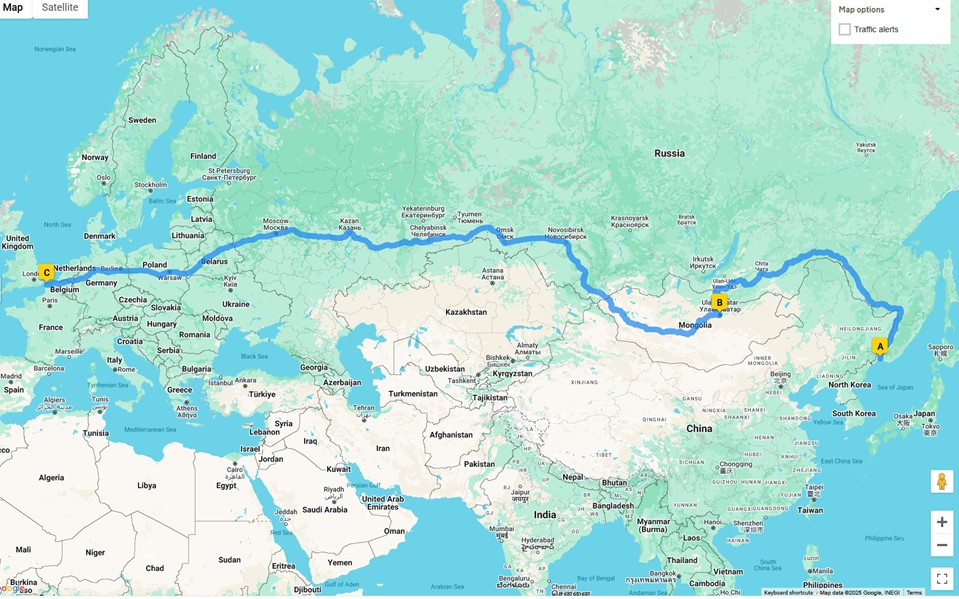
Instead, I must take a road trip. I see in my minds eye a map showing Hokkaido and Sapporo with mainland Asia and Vladivostok. I know that I can easily get a boat to Vladivostok and that I could drive from there to Wiltshire. I resolve in the dream to look up a route on AA route planner when I get up. I know that I must go via Mongolia and that it will be a long trip.


Here is AA Router planner route Vladivostok to Calais. Distance ~ 8000 miles.


I start out on my route and part the way along in or near Mongolia I am given two white plaques of an irregular shape. Phonetically these plates speak in the dream. They say, “Mon yet {yat} Dzong” and “Sprul yet Tsaay” I can see the associated Tibetan script but cannot associate it directly with the phonetics.

The dream ends

————————————–

Sprul

The concept of tulpas has origins in the Buddhist nirmāṇakāya, translated in Tibetan as sprul-pa (སྤྲུལ་པ་): the earthly bodies that a buddha manifests in order to teach those who have not attained nirvana. The western understanding of tulpas was developed by twentieth-century European mystical explorers, who interpreted the idea independently of Buddhahood

——-

1) Trulku (in Tibetan: sprul sku) — Literally the “emanation body” of a buddha. In a Tibetan context, a trulku (often given the epithet rinpoché, “precious one”) denotes the chosen reincarnation of a lama of high spiritual stature. A trulku usually inherits his (or her) predecessor’s prestige, wealth, and institutional seat. Important trulku lineages include the Dalai and Panchen Lamas and the Karmapas, who originated the tradition in the thirteenth century

2) sprul sku (སྤྲུལ་སྐུ) (Tibetan; in Sanskrit: nirmāṇakāya) — (lit. “Emanation body”) — Within the compass of the formbody, the aspect of a buddha that appears for the sake of ordinary sentient beings. A single buddha may manifest multiple emanation bodies, which may be in human, animal, or inanimate form. The “historical Buddha” Śākyamuni is generally regarded as an emanation body. The Tibetan term for emanation body, trulku, is used to designate a deliberately reincarnated lama

Sprul

སྤྲུལ་ send forth an emanation; emanate; emanation

————————–

Mon

མོན་

Bhutan; Mon, a district in Tibet

Mön

Mon. Name for lands to the south and southwest of Tibet

Dzong

Dzong (Tib. རྫོང་, Wyl. rdzong) — literally a ‘fortress’, the equivalent of a monastery in Bhutan.

—————————————————————-

Le dzong du Bhoutan est un monastère-forteresse bouddhiste caractéristique du Bhoutan.

Les premiers dzongs furent construits dans le pays dès le XIIe siècle, mais leur âge d’or fut la première moitié du XVIIe siècle qui vit le renforcement défensif du pays par le shabdrung ou grand lama Ngawang Namgyal (1594-1651), l’unificateur du Bhoutan moderne.