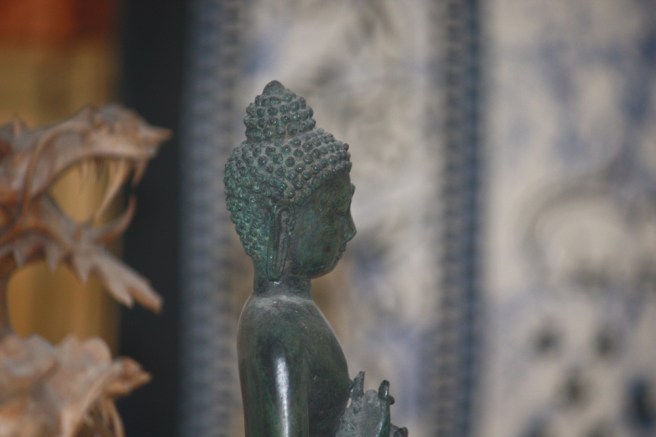
Regional Nepotism in Buddhist Narratives ?

Although my mother, when  sun tanned could negotiate discounts from the Indian traders in the market in Gravesend, I am not of Indian nor Asian genetics. If she wore a sari and a bindi she could pass as Sikh. Yes one could say the Celtic migration had a terminus in a valley to the South East of Snowdown. I was however born a ginge…

As an outsider I note how many so-called previous lives of Buddha are in the general geo-location of Northern India – Himalayas- Afghanistan. He is often a prince and sometimes Brahmin. I note that the vast majority of Tulku rebirths are in Tibet – Nepal – North India – Bhutan area. If not there then there must be some familial nepotism.  Tulku begets tulku out of some follower or nun. I have never heard of a Viking incarnation. Once Buddhism spread East we did not get a sudden burst of Icelandic Bodhisattvas. The streets of Rio were not awash with them dancing at carnival.

My scientific mind notes this discrepancy. It seems unbalanced.

Surely a Bodhisattva reincarnating for the benefit of all sentient beings would not restrict themselves geographically or demographically?  Global impact in isolated countries high up in the mountains is not likely to be high. Skilful means suggests ploughing other wider fields.

There is a kind of perhaps spiritual snobbery. After all the Vedas and Buddhism predate Christianity and Islam. Only the pilgrim skilled in meditation, asceticism and vegetarianism can get enlightened. Beer and twice cooked chips are verboten, interdit. Turmeric is a must.

It is illogical that someone should only be born in the same geolocation if they are to garner a wider experience. If you have not tried rollmop and aquavit…you have missed something.

This for me seems slightly problematic in the around the camp fire tales of Buddha. The other problem I have is with the notion of many Buddhas stretching back millennia. The human vehicle was according to archaeology not as intellectually advanced and capable. All those millennia ago it did not look human.

How could a Buddha be Neanderthal?

There is an evidenced based narrative chronology which errs from the verbatim understanding of canon and Mahayana canon more so. If these are meant to be metaphor and parable, there is less problem.

Nevertheless is seems strange that Buddha only hung out there or thereabouts…

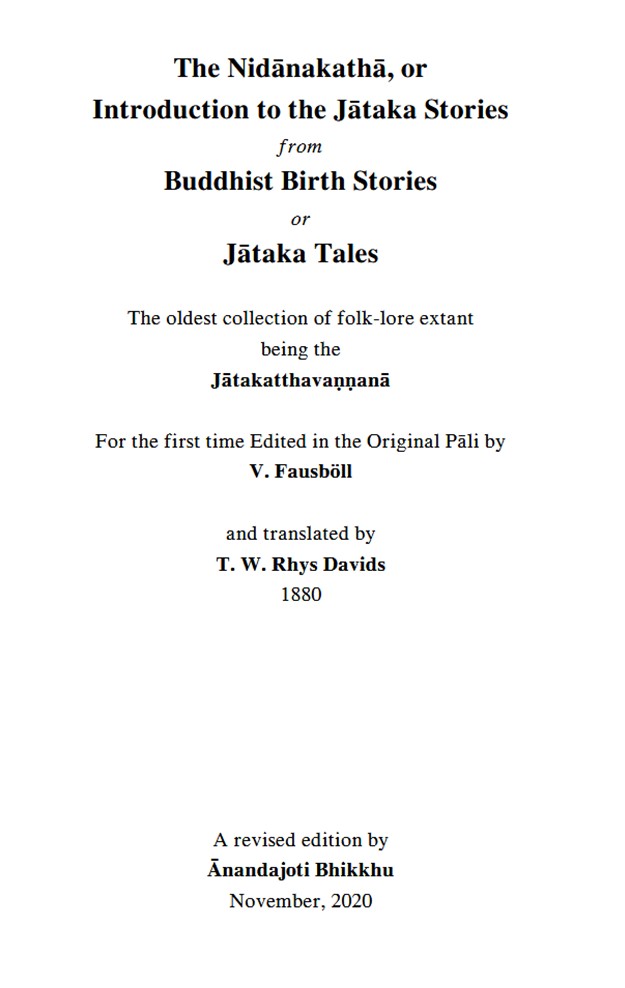
The Nidānakathā – it is not the fault…

The Nidānakathā

or

The Three Epochs

—-


Inasmuch as this comment on the Jātaka, if it be expounded after setting forth the three Epochs, the distant, the middle, and proximate, will be clearly understood by those who hear it by being understood from the beginning, therefore I will expound it after setting forth the three Epochs. Accordingly from the very outset it will be well to determine the limits of these Epochs. Now the narrative of the Bodhisatta’s existence, from the time that, at the feet of Dīpaṅkara, he formed a resolution to become a Buddha to his rebirth in the Tusita heaven after leaving the Vessantara existence, is called the Distant Epoch. From his leaving the Tusita heaven to his attainment of omniscience on the throne of Knowledge, the narrative is called the Intermediate Epoch. And the Proximate Epoch is to be found in the various places in which he sojourned {during his ministry on earth}.

The Distant Epoch

Tradition tells us that four asankheyyas and a hundred thousand cycles ago there was a city called Amaravatī. In this city there dwelt a brahmin named Sumedha, of good family on both sides, on the father’s and the mother’s side, of pure conception for seven generations back, by birth unreproached and respected, a man comely, well-favoured and amiable, and endowed with remarkable beauty. He followed his brahminical studies without engaging in any other pursuit. His parents died while he was still young. A minister of state, who acted as steward of his property, bringing forth the roll-book of his estate, threw open the stores filled with gold and silver, gems and pearls, and other valuables, and said, “So much, young man, belonged to your mother, so much to your father, so much to your grandparents and great-grandparents,” and pointing out to him the property inherited through seven generations, he bade him guard it carefully. The wise Sumedha thought to himself, “After amassing all this wealth my parents and ancestors when they went to another world took not a farthing with them, can it be right that I should make it an object to take my wealth with me when I go?” And informing the king of his intention, he caused proclamation to be made in the city, gave largess to the people, and embraced the ascetic life of a hermit.

The Distant Epoch

Now one day the wise Sumedha, having retired to the splendid upper apartmentof his house, seated himself cross-legged, and fell a thinking. “Oh! wise man, grievous is rebirth in a new existence, and the dissolution of the body in each successive place where we are reborn. I am subject to birth, to decay, to disease, to death, – it is right, being such, that I should strive to attain the great deathless Nirvāṇa, which is tranquil, and free from birth, and decay, and sickness, and grief and joy; surely there must be a road that leads to Nirvāṇa and releases man from existence.

Accordingly it is said,

17. Seated in seclusion, I then thought as follows:

Grievous is rebirth and the breaking up of the body.

18. I am subject to birth, to decay, to disease,

Therefore will I seek Nirvāṇa, free from decay and death, and secure.

19. Let me leave this perishable body, this pestilent congregation of vapours,

And depart without desires and without wants.

20. There is, there must be a road, it cannot but be:

I will seek this road, that I may obtain release from existence.

—-

Further he reasoned thus, “For as in this world there is pleasure as the correlative of pain, so where there is existence there must be its opposite the cessation of existence; and as where there is heat there is also cold which neutralizes it, so there must be a Nirvāṇa that extinguishes (the fires of) lust and the other passions; and as in opposition to a bad and evil condition there is a good and blameless one, so where there is evil Birth there must also be Nirvāṇa, called the Birthless, because it puts an end to all rebirth.”

Therefore it is said,

—-

21. As where there is suffering there is also bliss,

So where there is existence we must look for non-existence.

22. And as where there is heat there is also cold,

So where there is the threefold fire of passion extinction must be sought.

23. And as coexistent with evil there is also good,

Even so where there is birth the cessation of birth should be sought.

Again he reasoned thus, “Just as a man who has fallen into a heap of filth, if he beholds afar off a great pond covered with lotuses of five colours, ought to seek that pond, saying, ‘By what way shall I arrive there?’ but if he does not seek it the fault is not that of the pond; even so where there is the lake of the great deathless Nirvāṇa for the washing of the defilement of sin, if it is not sought it is not the fault of the lake. And just as a man who is surrounded by robbers, if when there is a way of escape he does not fly it is not the fault of the way but of the man; even so when there is a blessed road loading to Nirvāṇa for the man who is encompassed and held fast by sin, its not being sought is not the fault of the road but of the person. And as a man who is oppressed with sickness, there being a physician who can heal his disease, if he does not get cured by going to the physician that is no fault of the physician; even so if a man who is oppressed by the disease of sin seeks not a spiritual guide who is at hand and knows the road which puts an end to sin, the fault lies with him and not with the sin-destroying teacher.”

Therefore it is said,

—-

24. As a man fallen among filth, beholding a brimming lake,

If he seek not that lake, the fault is not in the lake;

25. So when there exists a lake of Nirvāṇa that washes the stains of sin,

If a man seek not that lake, the fault is not in the lake of Nirvāṇa.

26. As a man beset with foes, there being a way of escape,

If he flee not away, the fault is not with the road;

27. So when there is a way of bliss, if a man beset with sin

Seek not that road, the fault is not in the way of bliss.

28. And as one who is diseased, there being a physician at hand,

If he bid him not heal the disease, the fault is not in the healer:

29. So if a man who is sick and oppressed with the disease of sin

Seek not the spiritual teacher, the fault is not in the teacher.

—-

Archaic Deity – Archaic Iconography…

Many depictions of deity are a tad dated. They arose in times when the power of kings and emperors was quasi absolute. The iconography has “radioactive” halos around sainted beings, chariots, swords and thrones. There are arguments about who stands or sits around the throne and on which side various beings are to be found. There are crowns and often a patrilineal succession of power. Humanity obsesses about organisational flow charts of the heavens and in the past who had career advancement amongst the Gods depended upon level of obedience and sycophancy. The celestial “human” resources department had severance packages to negotiate.

Fear of God put bums on seats and pennies on the collection plate.

These days the power of kings is much diminished. We don’t drive roman chariots all that much. The machete has replaced the short sword. The Heckler and Koch automatic has replaced the spear. The ultimate symbol of mundane power is a ginormous nuclear powered aircraft carrier equipped with stealth bombers. Thrones are old hat.

In constructing a deity and a pecking order of them, whether that be of Gods and angels or Buddhas and bodhisattvas, the notions are related to the mundane order of things. The iconography perhaps an aid for the illiterate. In many cases the “clergy” asserted power over flock and encouraged supplication therefrom. The “clergy” encouraged a notion that they were higher, perhaps better and more revered than the lay. The churches and temples extracted wealth and called it meritorious. It might help your journey in the afterlife to fund the claret of a bishop. It was a good pitch. People can read and think now.

I am not sure older notions of Gods and Buddhas wash as well these days. Despite what fragrances Unilever might add. Subscription to religious providers it probably falling all over the world.

There is a glaring difference in iconography between the seated tranquil garden statue Buddha and the tortured crucified Christ bleeding from his crown of thorns. This despite much similarity in their teachings. Man has emphasised the suffering of Jesus over his peaceful message. It prefers to show images of internecine cruelty and suffering rather than brotherly love. In our time there is much need both for tranquillity and for love.

Religious iconography is very often chavvy and overly ornate. It is showy and “look at me”.

“We have shit loads of gold! We the clergy must be powerful! Kneel pleb!”

Modern military power does not lend itself to very personal, even familial iconography. There is no big hearted daddy on the throne. Rather a couple of old men, fingers above a red button, ready to embody Shiva the destroyer aspect of deity. It is not an image of fatherly love. It is one of pendant wrath and nuclear winter.

Notions of deity need updating in a manner more suitable for modern mind, modern living. And no I do not mean a Marvel escapist universe. The sublime needs divorced from the family drama and the incestuous and the Machiavellian.

Spirit and consciousness needs to evolve away from the zoomorphic whilst retaining the feelings and value. A new form of understanding might spring from where we find ourselves now, so very obsessed with corporeal image and public relations spin-bullshit. Petabytes of images are quite a quagmire for the minds of mankind.

Yup…I think the old forms of iconography and depictions of deity are looking rather dated and may no longer be fit for purpose.

We may even need a thorough review of what we imagine deity and/or a God to be.

I wonder how might we imagine and create a God 2.0 ?

The Bodhisattva’s Renunciation

IT was night. The prince found no rest on his soft pillow; he arose and went out into the garden. “Alas!” he cried “all the world is full of darkness and ignorance; there is no one who knows how to cure the ills of existence.” And he groaned with pain.

Siddhattha sat down beneath the great jambu-tree and gave himself to thought, pondering on life and death and the evils of decay. Concentrating his mind he became free from confusion. All low desires vanished from his heart and perfect tranquility came over him.

In this state of ecstasy he saw with his mental eye all the misery and sorrow of the world; he saw the pains of pleasure and the inevitable certainty of death that hovers over every being; yet men are not awakened to the truth. And a deep compassion seized his heart.

While the prince was pondering on the problem of evil, he beheld with his mind’s eye under the jambu tree a lofty figure endowed with majesty, calm and dignified. “Whence comest thou, and who mayst thou be asked the prince.

In reply the vision said: “I am a samana. Troubled at the thought of old age, disease, and death I have left my home to seek the path of salvation. All things hasten to decay; only the truth abideth forever. Everything changes, and there is no permanency; yet the words of the Buddhas are immutable. I long for the happiness that does not decay; the treasure that will never perish; the life that knows of no beginning and no end. Therefore, I have destroyed all worldly thought. I have retired into an unfrequented dell to live in solitude; and, begging for food, I devote myself to the one thing needful.

Siddhattha asked: “Can peace be gained in this world of unrest? I am struck with the emptiness of pleasure and have become disgusted with lust. All oppresses me, and existence itself seems intolerable.”

The samana replied: “Where heat is, there is also a possibility of cold; creatures subject to pain possess the faculty of pleasure; the origin of evil indicates that good can be developed. For these things are correlatives. Thus where there is much suffering, there will be much bliss, if thou but open thine eyes to behold it. Just as a man who has fallen into a heap of filth ought to seek the great pond of water covered with lotuses, which is near by: even so seek thou for the great deathless lake of Nirvana to wash off the defilement of wrong. If the lake is not sought, it is not the fault of the lake. Even so when there is a blessed road leading the man held fast by wrong to the salvation of Nirvana, if the road is not walked upon, it is not the fault of the road, but of the person. And when a man who is oppressed with sickness, there being a physician who can heal him, does not avail himself of the physician’s help, that is not the fault of the physician. Even so when a man oppressed by the malady of wrong-doing does not seek the spiritual guide of enlightenment, that is no fault of the evil-destroying guide.”

The prince listened to the noble words of his visitor and said: “Thou bringest good tidings, for now I know that my purpose will be accomplished. My father advises me to enjoy life and to undertake worldly duties, such as will bring honor to me and to our house. He tells me that I am too young still, that my pulse beats too full to lead a religious life.”

The venerable figure shook his head and replied: “Thou shouldst know that for seeking a religious life no time can be inopportune.”

A thrill of joy passed through Siddhattha’s heart. “Now is the time to seek religion,” he said; “now is the time to sever all ties that would prevent me from attaining perfect enlightenment; now is the time to wander into homelessness and, leading a mendicant’s life, to find the path of deliverance.”

The celestial messenger heard the resolution of Siddhattha with approval. “Now, indeed he added, is the time to seek religion. Go, Siddhattha, and accomplish thy purpose. For thou art Bodhisatta, the Buddha-elect; thou art destined to enlighten the world. Thou art the Tathagata, the great master, for thou wilt fulfill all righteousness and be Dharmaraja, the king of truth. Thou art Bhagavat, the Blessed One, for thou art called upon to become the savior and redeemer of the world. Fulfill thou the perfection of truth. Though the thunderbolt descend upon thy head, yield thou never to the allurements that beguile men from the path of truth. As the sun at all seasons pursues his own course, nor ever goes on another, even so if thou forsake not the straight path of righteousness, thou shalt become a Buddha. Persevere in thy quest and thou shalt find what thou seekest. Pursue thy aim unswervingly and thou shalt gain the prize. Struggle earnestly and thou shalt conquer. The benediction of all deities, of all saints of all that seek light is upon thee, and heavenly wisdom guides thy steps. Thou shalt be the Buddha, our Master, and our Lord; thou shalt enlighten the world and save mankind from perdition.

Having thus spoken, the vision vanished, and Siddhattha’s heart was filled with peace. He said to himself: “I have awakened to the truth and I am resolved to accomplish my purpose. I will sever all the ties that bind me to the world, and I will go out from my home to seek the way of salvation. The Buddhas are beings whose words cannot fail: there is no departure from truth in their speech. For as the fall of a stone thrown into the air, as the death of a mortal, as the sunrise at dawn, as the lion’s roar when he leaves his lair, as the delivery of a woman with child, as all these things are sure and certain-even so the word of the Buddhas is sure and cannot fail. Verily I shall become a Buddha.”

The prince returned to the bedroom of his wife to take a last farewell glance at those whom he dearly loved above all the treasures of the earth. He longed to take the infant once more into his arms and kiss him with a parting kiss. But the child lay in the arms of his mother, and the prince could not lift him without awakening both. There Siddhattha stood gazing at his beautiful wife and his beloved son, and his heart grieved. The pain of parting overcame him powerfully. Although his mind was determined, so that nothing, be it good or evil, could shake his resolution, the tears flowed freely from his eyes, and it was beyond his power to check their stream. But the prince tore himself away with a manly heart, suppressing his feelings but not extinguishing his memory.

The Bodhisattva mounted his noble steed Kanthaka, and when he left the palace, Mara stood in the gate and stopped him: “Depart not, O my Lord,” exclaimed Mara. “In seven days from now the wheel of empire will appear, and will make thee sovereign over the four continents and the two thousand adjacent islands. Therefore, stay, my Lord.”

The Bodhisattva replied: “Well do I know that the wheel of empire will appear to me; but it is not sovereignty that I desire. I will become a Buddha and make all the world shout for joy.”

Thus Siddhattha, the prince, renounced power and worldly pleasures, gave up his kingdom, severed all ties, and went into homelessness. He rode out into the silent night, accompanied only by his faithful charioteer Channa. Darkness lay upon the earth, but the stars shone brightly in the heavens.


Excerpted from:

BUDDHA, THE GOSPEL

By Paul Carus

Chicago, The Open Court Publishing Company,

[1894]

At Sacred Texts

Click here

The Lotus Eaters and a Logical If

As the nights draw in and the temperature drops the occurrence of wildlife in the garden goes up, becomes more frequent. Already the badger is looking for roots, soon we may get deer grazing. For sure the “lotus eaters” aka Coypu or Nutria will return. There was evidence of an attempted perimeter breach overnight. The charge on the battery driving the electric fence has dropped. I had a shock off it yesterday, a tickle. Today I have replaced the battery. This means if any of the Coypu family come to snack on our tasty lotuses Thor may release a lightning bolt to discourage. Since we have installed the electric fence by the river our display of lotuses has flourished. This year was magnificent.

Om mane padme hum

If we take dream content as evidence and consider visions as non hallucinatory then we might conclude that I have had at least four and probably five lives in a priestly or monk like Buddhist incarnation. It is therefore not too much of a stretch to suggest that the term bodhisattva might apply to me, I can be considered as someone seeking liberation. In one of these “visions” I was told that this is my very last incarnation, a suggestion which is internally consistent with the aforementioned logical if.  

This may not sit entirely easily in juxtaposition with a brief career as a pukka scientist. It might seem odd to the class professorial. To me there is no jarring.

We then come upon the Garry Glitter question, “to whose gang do I belong?”

Am I Toltec?

Am I Buddhist?

Am I boffinacious?

One could perhaps draw a Venn diagram, if one could be arsed.

I am unlikely to fall into worship of anti-scientific superstitious conspiracy theories. I am not science-phobic. Nor do I believe in the whole saviour fallacy. Nobody died to save you; it is up to you. Confessing your sins will not remove karmic debt even if you pay the pope a cool million quid. You cannot bribe karma.

To follow on from the logical if. There is an addendum.

If you have treated a bodhisattva badly then that is karmically “bad” for you.

We then get quickly into splitting karmic hairs about degree of bodhisattva and extent of transgression.

The basic rule of thumb is try not to be an arrogant bell end to anyone. It does not need to be any more complicated than this. It is not a bad mantram.

“Remember to try not to be an arrogant bell end…”

Bodhisattva

This from Britannica on line.

Click here

bodhisattva, in Buddhism, one who seeks awakening (bodhi)—hence, an individual on the path to becoming a buddha.

Pali: bodhisatta (“one whose goal is awakening”)

In early Indian Buddhism and in some later traditions—including Theravada, at present the major form of Buddhism in Sri Lanka and other parts of Southeast Asia—the term bodhisattva was used primarily to refer to the Buddha Shakyamuni (as Gautama Siddhartha is known) in his former lives. The stories of his lives, the Jatakas, portray the efforts of the bodhisattva to cultivate the qualities, including morality, self-sacrifice, and wisdom, which will define him as a buddha. Later, and especially in the Mahayana tradition—the major form of Buddhism in Tibet, China, Korea, and Japan—it was thought that anyone who made the aspiration to awakening (bodhicittotpada)—vowing, often in a communal ritual context, to become a buddha—is therefore a bodhisattva. According to Mahayana teachings, throughout the history of the universe, which had no beginning, many have committed themselves to becoming buddhas. As a result, the universe is filled with a broad range of potential buddhas, from those just setting out on the path of buddhahood to those who have spent lifetimes in training and have thereby acquired supernatural powers. These “celestial” bodhisattvas are functionally equivalent to buddhas in their wisdom, compassion, and powers: their compassion motivates them to assist ordinary beings, their wisdom informs them how best to do so, and their accumulated powers enable them to act in miraculous ways.

Avalokiteshvara

Bodhisattvas are common figures in Buddhist literature and art. A striking theme in popular literature is that of the concealed greatness of the bodhisattvas. In numerous stories ordinary or even distinctly humble individuals are revealed to be great bodhisattvas who have assumed common forms to save others. The lesson of these tales is that, because one can never distinguish between paupers and divinities, one must treat all others as the latter. In popular folklore bodhisattvas appear as something like saviour deities, a role they acquired both through the evolution of earlier ideas and through fusion with already existing local gods.

Buddhism: Celestial buddhas and bodhisattvas

A particularly important mythology in East Asia is that of Dharmakara. According to the Pure Land Sutra, Dharmakara was a bodhisattva whose vows were realized when he became the Buddha Amitabha. Pan-Buddhist bodhisattvas include Maitreya, who will succeed Shakyamuni as the next buddha in this world, and Avalokiteshvara, known in Tibet as Spyan ras gzigs (Chenrezi), in China as Guanyin (Kuan-yin), and in Japan as Kannon. Although all bodhisattvas act compassionately, Avalokiteshvara is considered the embodiment of the abstract principle of compassion. Bodhisattvas of more localized importance include Tārā in Tibet and Jizō in Japan.

Arhats Pratyekabuddhas and Bodhisattvas – Hagiography

I have a pet theory that the hagiography of all religions exaggerates and glosses. From knowledge of human behaviour and Chinese whispers, things passed down get embellished so as to confer kudos on the teller, the raconteur. Rarely are things made greyer and more boring. This means that taking things with a pinch of salt might offer some balance.

To the faithful there is nothing quite like a miracle to prove truth and religious figures are given, in narrative, super-human abilities and qualities. These days they would be told with enhanced computer CGI and special effects on a big budget. Bigging up martyrs and buddhas is good PR for the various churches. Who in the past had control of the proles as a raison d’être. The Sacerdotes have always had ritual magic and theatre in their playbook. Simplifying the message to an all fire-consuming hell and blissful pearly-gated paradise could be writ large on the side of big red double decker “Brexit” bus. Nobody could come back to provide a TripAdvisor rating for either holiday destination.

What if all that exaggeration has gotten completely out of hand?

Christianity, depending on flavour has a host of saints. Jesus’ crew, his disciples, are sanctified and portrayed. That depiction has taken place over two millennia. They are represented as holy. When if you think about it, they were learners, disciples, in the act of being taught and trained. Similarly, Buddha’s sixteen {18} arhats are seen as holy, saintly. When they were hanging out listening to Buddha and learning his ideas. It is said they achieved enlightenment. Lessening of burden is enlightenment, full liberation may not be the same as the partial enlightenment.

People pray to the saints and the arhats.

The canon’s of both Buddhism and Christianity were/are written by human beings and therefore by logic are coloured with bias and wishful thinking. There may well be some idealising.

Mahayana promotes the bodhisattva ideal where enlightened or near enlightened beings come back to teach out of the kindness of their hearts for the benefit of all sentient beings. This is seen by some as more worthy. Whereas the haughty arhats are too arrogant to teach, the pratyekabuddhas who do it all by themselves are not sufficiently omniscient to teach. They leave no legacy. They shun the sangha; they are not one of the gang. They are too arrogant, snobby, aloof, to be with normal people. The arhats, perhaps at one with the awesome and austere nature of reality and universe, lack the cosy human compassion are biased against and not as “nice” and the smiling friendly bodhisattva. They cannot be arsed to come back time and time again, the bastards.

People who do not know what these states of consciousness are like, make judgments thereupon. This {scholarly?} interpretation gets incorporated into the ongoing cannon, the creed, the gospel. People like definitions and will roll out comparison between, all knowing, earning bragging rights about something which they do not know. One could look it up in “Buddhism for Dummies”.

Religious thinking likes its “signs”. A rainbow appearing when someone achieves Parinirvana.

What if all these processes are entirely natural, relatively low key and nothing to shout about?

The hagiography diverges from reality…what is natural becomes miraculous. Which may inhibit application. The idea of a miracle is out of reach; the idea of continuous improvement and stepwise attainment is less daunting. Toning it down might increase genuine uptake of practice.,

Status pissing contests are a common human practice and are to be found in religion and science. People like to bullshit each other and pretend to know shed loads.

I have a pet theory that the hagiography of all religions exaggerates and glosses.