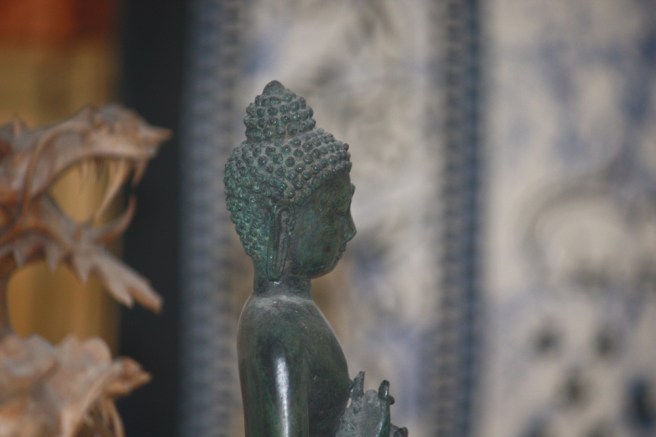
Archaic Deity – Archaic Iconography…

Many depictions of deity are a tad dated. They arose in times when the power of kings and emperors was quasi absolute. The iconography has “radioactive” halos around sainted beings, chariots, swords and thrones. There are arguments about who stands or sits around the throne and on which side various beings are to be found. There are crowns and often a patrilineal succession of power. Humanity obsesses about organisational flow charts of the heavens and in the past who had career advancement amongst the Gods depended upon level of obedience and sycophancy. The celestial “human” resources department had severance packages to negotiate.

Fear of God put bums on seats and pennies on the collection plate.

These days the power of kings is much diminished. We don’t drive roman chariots all that much. The machete has replaced the short sword. The Heckler and Koch automatic has replaced the spear. The ultimate symbol of mundane power is a ginormous nuclear powered aircraft carrier equipped with stealth bombers. Thrones are old hat.

In constructing a deity and a pecking order of them, whether that be of Gods and angels or Buddhas and bodhisattvas, the notions are related to the mundane order of things. The iconography perhaps an aid for the illiterate. In many cases the “clergy” asserted power over flock and encouraged supplication therefrom. The “clergy” encouraged a notion that they were higher, perhaps better and more revered than the lay. The churches and temples extracted wealth and called it meritorious. It might help your journey in the afterlife to fund the claret of a bishop. It was a good pitch. People can read and think now.

I am not sure older notions of Gods and Buddhas wash as well these days. Despite what fragrances Unilever might add. Subscription to religious providers it probably falling all over the world.

There is a glaring difference in iconography between the seated tranquil garden statue Buddha and the tortured crucified Christ bleeding from his crown of thorns. This despite much similarity in their teachings. Man has emphasised the suffering of Jesus over his peaceful message. It prefers to show images of internecine cruelty and suffering rather than brotherly love. In our time there is much need both for tranquillity and for love.

Religious iconography is very often chavvy and overly ornate. It is showy and “look at me”.

“We have shit loads of gold! We the clergy must be powerful! Kneel pleb!”

Modern military power does not lend itself to very personal, even familial iconography. There is no big hearted daddy on the throne. Rather a couple of old men, fingers above a red button, ready to embody Shiva the destroyer aspect of deity. It is not an image of fatherly love. It is one of pendant wrath and nuclear winter.

Notions of deity need updating in a manner more suitable for modern mind, modern living. And no I do not mean a Marvel escapist universe. The sublime needs divorced from the family drama and the incestuous and the Machiavellian.

Spirit and consciousness needs to evolve away from the zoomorphic whilst retaining the feelings and value. A new form of understanding might spring from where we find ourselves now, so very obsessed with corporeal image and public relations spin-bullshit. Petabytes of images are quite a quagmire for the minds of mankind.

Yup…I think the old forms of iconography and depictions of deity are looking rather dated and may no longer be fit for purpose.

We may even need a thorough review of what we imagine deity and/or a God to be.

I wonder how might we imagine and create a God 2.0 ?

The Bodhisattva’s Renunciation

IT was night. The prince found no rest on his soft pillow; he arose and went out into the garden. “Alas!” he cried “all the world is full of darkness and ignorance; there is no one who knows how to cure the ills of existence.” And he groaned with pain.

Siddhattha sat down beneath the great jambu-tree and gave himself to thought, pondering on life and death and the evils of decay. Concentrating his mind he became free from confusion. All low desires vanished from his heart and perfect tranquility came over him.

In this state of ecstasy he saw with his mental eye all the misery and sorrow of the world; he saw the pains of pleasure and the inevitable certainty of death that hovers over every being; yet men are not awakened to the truth. And a deep compassion seized his heart.

While the prince was pondering on the problem of evil, he beheld with his mind’s eye under the jambu tree a lofty figure endowed with majesty, calm and dignified. “Whence comest thou, and who mayst thou be asked the prince.

In reply the vision said: “I am a samana. Troubled at the thought of old age, disease, and death I have left my home to seek the path of salvation. All things hasten to decay; only the truth abideth forever. Everything changes, and there is no permanency; yet the words of the Buddhas are immutable. I long for the happiness that does not decay; the treasure that will never perish; the life that knows of no beginning and no end. Therefore, I have destroyed all worldly thought. I have retired into an unfrequented dell to live in solitude; and, begging for food, I devote myself to the one thing needful.

Siddhattha asked: “Can peace be gained in this world of unrest? I am struck with the emptiness of pleasure and have become disgusted with lust. All oppresses me, and existence itself seems intolerable.”

The samana replied: “Where heat is, there is also a possibility of cold; creatures subject to pain possess the faculty of pleasure; the origin of evil indicates that good can be developed. For these things are correlatives. Thus where there is much suffering, there will be much bliss, if thou but open thine eyes to behold it. Just as a man who has fallen into a heap of filth ought to seek the great pond of water covered with lotuses, which is near by: even so seek thou for the great deathless lake of Nirvana to wash off the defilement of wrong. If the lake is not sought, it is not the fault of the lake. Even so when there is a blessed road leading the man held fast by wrong to the salvation of Nirvana, if the road is not walked upon, it is not the fault of the road, but of the person. And when a man who is oppressed with sickness, there being a physician who can heal him, does not avail himself of the physician’s help, that is not the fault of the physician. Even so when a man oppressed by the malady of wrong-doing does not seek the spiritual guide of enlightenment, that is no fault of the evil-destroying guide.”

The prince listened to the noble words of his visitor and said: “Thou bringest good tidings, for now I know that my purpose will be accomplished. My father advises me to enjoy life and to undertake worldly duties, such as will bring honor to me and to our house. He tells me that I am too young still, that my pulse beats too full to lead a religious life.”

The venerable figure shook his head and replied: “Thou shouldst know that for seeking a religious life no time can be inopportune.”

A thrill of joy passed through Siddhattha’s heart. “Now is the time to seek religion,” he said; “now is the time to sever all ties that would prevent me from attaining perfect enlightenment; now is the time to wander into homelessness and, leading a mendicant’s life, to find the path of deliverance.”

The celestial messenger heard the resolution of Siddhattha with approval. “Now, indeed he added, is the time to seek religion. Go, Siddhattha, and accomplish thy purpose. For thou art Bodhisatta, the Buddha-elect; thou art destined to enlighten the world. Thou art the Tathagata, the great master, for thou wilt fulfill all righteousness and be Dharmaraja, the king of truth. Thou art Bhagavat, the Blessed One, for thou art called upon to become the savior and redeemer of the world. Fulfill thou the perfection of truth. Though the thunderbolt descend upon thy head, yield thou never to the allurements that beguile men from the path of truth. As the sun at all seasons pursues his own course, nor ever goes on another, even so if thou forsake not the straight path of righteousness, thou shalt become a Buddha. Persevere in thy quest and thou shalt find what thou seekest. Pursue thy aim unswervingly and thou shalt gain the prize. Struggle earnestly and thou shalt conquer. The benediction of all deities, of all saints of all that seek light is upon thee, and heavenly wisdom guides thy steps. Thou shalt be the Buddha, our Master, and our Lord; thou shalt enlighten the world and save mankind from perdition.

Having thus spoken, the vision vanished, and Siddhattha’s heart was filled with peace. He said to himself: “I have awakened to the truth and I am resolved to accomplish my purpose. I will sever all the ties that bind me to the world, and I will go out from my home to seek the way of salvation. The Buddhas are beings whose words cannot fail: there is no departure from truth in their speech. For as the fall of a stone thrown into the air, as the death of a mortal, as the sunrise at dawn, as the lion’s roar when he leaves his lair, as the delivery of a woman with child, as all these things are sure and certain-even so the word of the Buddhas is sure and cannot fail. Verily I shall become a Buddha.”

The prince returned to the bedroom of his wife to take a last farewell glance at those whom he dearly loved above all the treasures of the earth. He longed to take the infant once more into his arms and kiss him with a parting kiss. But the child lay in the arms of his mother, and the prince could not lift him without awakening both. There Siddhattha stood gazing at his beautiful wife and his beloved son, and his heart grieved. The pain of parting overcame him powerfully. Although his mind was determined, so that nothing, be it good or evil, could shake his resolution, the tears flowed freely from his eyes, and it was beyond his power to check their stream. But the prince tore himself away with a manly heart, suppressing his feelings but not extinguishing his memory.

The Bodhisattva mounted his noble steed Kanthaka, and when he left the palace, Mara stood in the gate and stopped him: “Depart not, O my Lord,” exclaimed Mara. “In seven days from now the wheel of empire will appear, and will make thee sovereign over the four continents and the two thousand adjacent islands. Therefore, stay, my Lord.”

The Bodhisattva replied: “Well do I know that the wheel of empire will appear to me; but it is not sovereignty that I desire. I will become a Buddha and make all the world shout for joy.”

Thus Siddhattha, the prince, renounced power and worldly pleasures, gave up his kingdom, severed all ties, and went into homelessness. He rode out into the silent night, accompanied only by his faithful charioteer Channa. Darkness lay upon the earth, but the stars shone brightly in the heavens.


Excerpted from:

BUDDHA, THE GOSPEL

By Paul Carus

Chicago, The Open Court Publishing Company,

[1894]

At Sacred Texts

Click here

The Lotus Eaters and a Logical If

As the nights draw in and the temperature drops the occurrence of wildlife in the garden goes up, becomes more frequent. Already the badger is looking for roots, soon we may get deer grazing. For sure the “lotus eaters” aka Coypu or Nutria will return. There was evidence of an attempted perimeter breach overnight. The charge on the battery driving the electric fence has dropped. I had a shock off it yesterday, a tickle. Today I have replaced the battery. This means if any of the Coypu family come to snack on our tasty lotuses Thor may release a lightning bolt to discourage. Since we have installed the electric fence by the river our display of lotuses has flourished. This year was magnificent.

Om mane padme hum

If we take dream content as evidence and consider visions as non hallucinatory then we might conclude that I have had at least four and probably five lives in a priestly or monk like Buddhist incarnation. It is therefore not too much of a stretch to suggest that the term bodhisattva might apply to me, I can be considered as someone seeking liberation. In one of these “visions” I was told that this is my very last incarnation, a suggestion which is internally consistent with the aforementioned logical if.  

This may not sit entirely easily in juxtaposition with a brief career as a pukka scientist. It might seem odd to the class professorial. To me there is no jarring.

We then come upon the Garry Glitter question, “to whose gang do I belong?”

Am I Toltec?

Am I Buddhist?

Am I boffinacious?

One could perhaps draw a Venn diagram, if one could be arsed.

I am unlikely to fall into worship of anti-scientific superstitious conspiracy theories. I am not science-phobic. Nor do I believe in the whole saviour fallacy. Nobody died to save you; it is up to you. Confessing your sins will not remove karmic debt even if you pay the pope a cool million quid. You cannot bribe karma.

To follow on from the logical if. There is an addendum.

If you have treated a bodhisattva badly then that is karmically “bad” for you.

We then get quickly into splitting karmic hairs about degree of bodhisattva and extent of transgression.

The basic rule of thumb is try not to be an arrogant bell end to anyone. It does not need to be any more complicated than this. It is not a bad mantram.

“Remember to try not to be an arrogant bell end…”

Bodhisattva

This from Britannica on line.

Click here

bodhisattva, in Buddhism, one who seeks awakening (bodhi)—hence, an individual on the path to becoming a buddha.

Pali: bodhisatta (“one whose goal is awakening”)

In early Indian Buddhism and in some later traditions—including Theravada, at present the major form of Buddhism in Sri Lanka and other parts of Southeast Asia—the term bodhisattva was used primarily to refer to the Buddha Shakyamuni (as Gautama Siddhartha is known) in his former lives. The stories of his lives, the Jatakas, portray the efforts of the bodhisattva to cultivate the qualities, including morality, self-sacrifice, and wisdom, which will define him as a buddha. Later, and especially in the Mahayana tradition—the major form of Buddhism in Tibet, China, Korea, and Japan—it was thought that anyone who made the aspiration to awakening (bodhicittotpada)—vowing, often in a communal ritual context, to become a buddha—is therefore a bodhisattva. According to Mahayana teachings, throughout the history of the universe, which had no beginning, many have committed themselves to becoming buddhas. As a result, the universe is filled with a broad range of potential buddhas, from those just setting out on the path of buddhahood to those who have spent lifetimes in training and have thereby acquired supernatural powers. These “celestial” bodhisattvas are functionally equivalent to buddhas in their wisdom, compassion, and powers: their compassion motivates them to assist ordinary beings, their wisdom informs them how best to do so, and their accumulated powers enable them to act in miraculous ways.

Avalokiteshvara

Bodhisattvas are common figures in Buddhist literature and art. A striking theme in popular literature is that of the concealed greatness of the bodhisattvas. In numerous stories ordinary or even distinctly humble individuals are revealed to be great bodhisattvas who have assumed common forms to save others. The lesson of these tales is that, because one can never distinguish between paupers and divinities, one must treat all others as the latter. In popular folklore bodhisattvas appear as something like saviour deities, a role they acquired both through the evolution of earlier ideas and through fusion with already existing local gods.

Buddhism: Celestial buddhas and bodhisattvas

A particularly important mythology in East Asia is that of Dharmakara. According to the Pure Land Sutra, Dharmakara was a bodhisattva whose vows were realized when he became the Buddha Amitabha. Pan-Buddhist bodhisattvas include Maitreya, who will succeed Shakyamuni as the next buddha in this world, and Avalokiteshvara, known in Tibet as Spyan ras gzigs (Chenrezi), in China as Guanyin (Kuan-yin), and in Japan as Kannon. Although all bodhisattvas act compassionately, Avalokiteshvara is considered the embodiment of the abstract principle of compassion. Bodhisattvas of more localized importance include Tārā in Tibet and Jizō in Japan.

Waking Dream – French GP – UK Charity Dream 18-10-2025 – Bodhicaryāvatāra

Here is the dreaming sequence had yesterday and overnight. The purpose of this current visit is to ascertain if a move back to the UK feels right and/or is otherwise on the cards. The previous few dreams have not been auspicious in this context.

Yesterday we were driving back along a valley and “no through road” “road ahead closed” signs became apparent with no further information. It is the only “A” road route. The signage for diversion was late and the following signage poor, to understate. It was done in a shoddy manner. This contributed to us getting lost in a hive of tiny single track country roads.

During the night around 1 AM the fire alarm in the bedroom started bleeping on a regular basis. I opened a window to allow air circulation. At home this often corrects. The bleeping continued. So stark bollock naked I climbed with my spastic body on a chair to investigate. The detector was stuck to the ceiling with dual sided sticky tape and two screws which had not been rawl plugged into the ceiling. The detector came away in my hands. I went to the bathroom the both of us wide awake and light on. I unplugged the battery and the bleeping stopped. The workmanship was quick-fix shoddy rushed.

——————————————-

A little later around 4:30 AM. Dreaming I find myself in the upstairs room of a village / town centre region in France. On the square outside I can see a church spire. The village square is cobbled. I do not know this village. In the waiting room next to the secretary a patient is waiting.  He is a man a little younger than me dressed in maroon cords and with a sleeveless puffer jacket. He has unruly curly hair around the circumference of male patterned baldness. He greets me in French with a great deal of warmth. He is a local big cheese. I have taken over as the village doctor, the village general practitioner. {GP}

I usher him into the office, and we discuss what ails him. He is after some more codeine for the pain in his knees. I know that the previous GP had been in the habit of dishing out drugs like sweeties. I ask him to get on the table for an examination. I flex and check his knees. Whilst I can hear some arthritic crunching the mobility is good. I say that we need to wean him of the opiates. He disagrees. I ask him if he remembers having a proper easy bowel movement. No. I say that this time I will prescribe him some codeine but the next time I will reduce the dosage. I open his cardboard covered dossier and look through we discuss in a mixture of French and English his posting to French Indochina and his time in the foreign legion.

Back in the waiting room / secretarial area the room is filling up with people to see the new GP. They are not all ill. It has a social function. The secretary gives me a glass of red wine, and the next patient comes with me for consultation. She too is a local big wig. She sits in my office and asks how much wine I drink. One glass a day I reply. I know in the dream that I do not drink at all. I am saying this because the wine was by way of a welcome. She then thanks me for taking up the position as GP for the village.

The scene changes and I am in a modern squashed in English new build two-bedroom house on the upstairs carpeted landing. A letter comes through the letterbox and lands on the doormat. It is a letter from a solicitor. I open the letter, and it is stating that I have inherited the chairman ship of an unspecified charity in Lerwick. I should travel there to take up post.

I make my way to a ferry port and get on a boat to cross to the islands. First, I have to descend in a lift to the disembarkation point. I get on the boat, and it is very low tide. Out of the window and in the caldera of a fountain which is where the boat is waiting, I can see large eels, ling and conger eels. They are congregating around the central fountain. There is no water. In my mind I note that I could come back here and throw a line should I wish to catch these eels / fish. Though I am unsure that I would wish so to do or why.

On board the boat is a member of the charity committee. He is advising me that there is a power struggle at the charity and as a non-islander there is both a chance that I could sort it out or a chance that I could further precipitate conflict. I am not overly keen on finding out which.

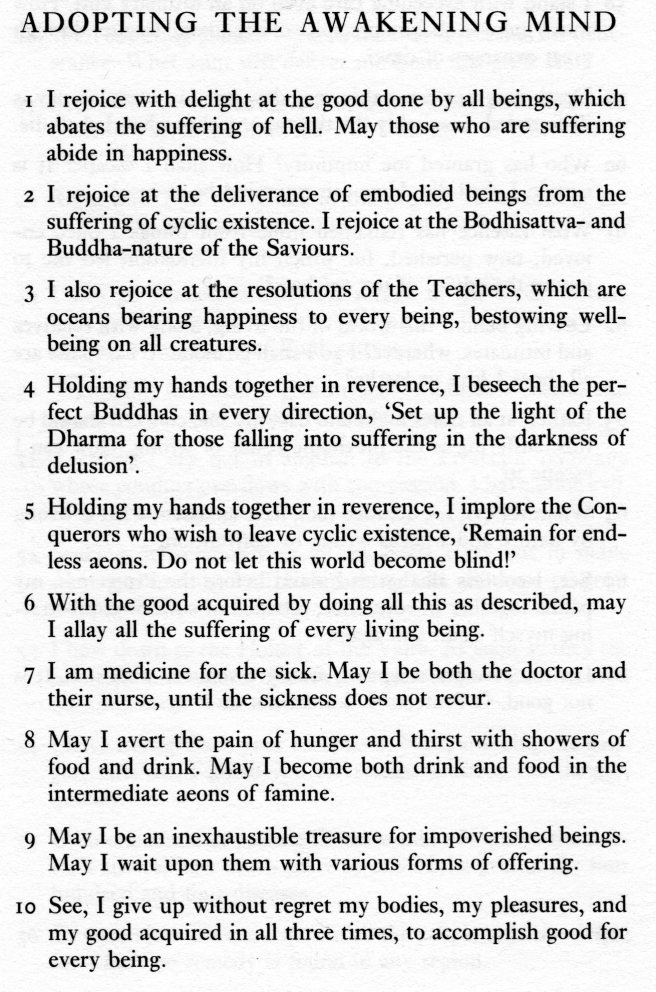
As I start to come to, I am reminded of two phrases, “perfidious Albion” and “may I be the doctor and the nurse”. The latter of which stems from Śāntideva’s so-called bodhisattva vows.

———————————————–

With my palms clasped at my heart,
I urge all buddhas longing for nirvāṇa:
Do not leave us blind and all alone,
But remain with us for countless ages!

Through whatever virtue I have gained
By all these actions now performed,
May the pain of every living being
Be cleared away entirely, never to return.

For all the beings ailing in the world,
Until their sickness has been healed,
May I become the doctor and the cure,
And may I nurse them back to health.

Bodhicaryāvatāra: An Introduction to the Bodhisattva’s Way of Life

by Śāntideva

The Old Guard and Toltecs – Speculations

The second instalment of the Old Guard series has recently hit Netflix. It has a shared plotline of sorts with the Highlander movies of ere. In this Old Guard dramatization physical plane immortals exist adjoint humanity and interact to either good or bad effect depending on mood and predilection. In Highlander in the end there can be only one in the battle between good and evil. In the Old Guard series “Andy” the main protagonist has fought to help, aid and otherwise nudge humanity in a “better” direction. Instead of reincarnating she has one contiguous and very long life in which she preserves her super model looks despite getting slashed and shot. A magical and miraculous healing occurs. She loses her regeneration powers and then regains them.

In each the burden of endless longevity / immortality is touched upon. They do not dwell overmuch on the boredom aspect rather the action and power angle. The omnipotence may appeal to the burdened and downtrodden. It may titillate the sociopath and the narcissist.

For dramatic impact pivotal points in global {human} history are referenced. An allied them is to be found in the “Assassins Creed” franchise though in this case reincarnation is invoked and a DNA bloodline is the bearer and propagator of ongoing conflicts.

It has been suggested to me that the so-called Toltecs were incarnated around pivotal times and played a role behind the scenes in the evolution of human and planetary history. Given that the technique of erasing personal history is part and parcel of the training, it is not surprising that little historical refence can be found. In the Old Guard Andy tries to avoid publicity. However in this day and age and thanks to internet monitoring and various intelligence services it is impossible to leave no trace. The times have changed.

In the Toltec tradition there is such a thing as a nagal being. The word Nagual in Spanish American is similar. The word Naga in the Indian tradition does not differ in root. In the hagiography of Buddhism Siddartha is protected by king cobra, a naga-raja, from the rain. These nagas live in the place or world of the nagas, naga-loka. Wisdom can be elicited from nagas and naga-loka. Serpents are the dreaming symbol for wisdom.

This suggests via speculation and extrapolation that a nagal being was a contemporary and perhaps companion of Shakyamuni Buddha.

——————-

“There is unanimous agreement that Nāgārjuna (ca 150–250 CE) is the most important Buddhist philosopher after the historical Buddha himself and one of the most original and influential thinkers in the history of Indian philosophy. His philosophy of the “middle way” (madhyamaka) based around the central notion of “emptiness” (śūnyatā) influenced the Indian philosophical debate for a thousand years after his death; with the spread of Buddhism to Tibet, China, Japan and other Asian countries the writings of Nāgārjuna became an indispensable point of reference for their own philosophical inquiries. A specific reading of Nāgārjuna’s thought, called Prāsaṅgika-Madhyamaka, became the official philosophical position of Tibetan Buddhism which regards it as the pinnacle of philosophical sophistication up to the present day.”

Stanford Encyclopedia of Philosophy

Nāgārjuna (नागार्जुन). – Name of an ancient Buddhist teacher of the rank of बोधिसत्त्व (bodhisattva).

Wisdom Library

The name also appears in the wider Hindu sources predating Shakyamuni Buddha

———————–

Typically a three pronged nagal is said to distribute knowledge widely. Like a stone thrown into a pond.  If Nāgārjuna is a wider term for a nagal teacher in the Indian sub-continent then this suggests that the core Toltec and Vedic / Buddhist teachings are similarly sourced and may differ only in method of expression and verbalisation. The term is a generic and not a specific and personal name.

I personally have not found any huge glaring clashes between these philosophies. There is a marked difference in emphasis and the cultural refence points and metaphors employed.

The entertainment mentioned above is not completely inconsistent with a hierarchy of spiritual “masters” on overwatch of humanity. However in order to make it dramatically appealing they must have meaty bits and interpersonal relations such as love with hints of corporeal hanky-panky.

Too abstract and the film would not sell. The immortals have to be beautiful people if good and have ugliness if bad. One is not allowed a minger of an immortal. They must be L’Oréal advert fresh out of the shower from time to time.

Having a “hot” teacher can badly detract from learning.

It is not difficult to see that the course of human history did indeed pivot around relatively small and local acts. The execution of Jesus ended up being a game changer. The invention of antibiotics added number density to humanity.  An assassination was used as a pretext for the first world war. If there is tension a simple fuse is all that is needed to ignite. A miscalculation in a Bay of Pigs might cause a nuclear winter. The simple protection of a Buddha from the rain enabled the propagation of the teachings for mind.

Humanity is prone to flying off the handle in rage and “self-righteous” indignation. Humanity has a “cob” on and is very prone to fits of angry pique which kill hundreds of thousands.

In the absence of overwatch might the history of humanity have been even more bloody and brutal?

We are heading into unknown territories with AI and Drone-robotics. What are the two biggest markets? War and sex. Thus humanity will expend effort into developing these for profit applications. Since the theoretical abolition of slavery humanity seeks a replacement.  I read yesterday that progress toward in vitro spermatogenesis is advancing, if the same continues for human eggs it may be possible to make a human-like foetus. A synthetic human is unlikely to have an indwelling Soul. This biological dabbling and getting a blind boner for technology represents a Pandora’s box the lid of which humanity will find difficult to resist. What is unleashed now and later in this century may cease to be readily controllable. The temptation of cash and the arrogant appeal of God-like potential may lead humanity down a very dark path indeed. It may regret…

How might Andy and the Highlander come to the rescue?

Arhats Pratyekabuddhas and Bodhisattvas – Hagiography

I have a pet theory that the hagiography of all religions exaggerates and glosses. From knowledge of human behaviour and Chinese whispers, things passed down get embellished so as to confer kudos on the teller, the raconteur. Rarely are things made greyer and more boring. This means that taking things with a pinch of salt might offer some balance.

To the faithful there is nothing quite like a miracle to prove truth and religious figures are given, in narrative, super-human abilities and qualities. These days they would be told with enhanced computer CGI and special effects on a big budget. Bigging up martyrs and buddhas is good PR for the various churches. Who in the past had control of the proles as a raison d’être. The Sacerdotes have always had ritual magic and theatre in their playbook. Simplifying the message to an all fire-consuming hell and blissful pearly-gated paradise could be writ large on the side of big red double decker “Brexit” bus. Nobody could come back to provide a TripAdvisor rating for either holiday destination.

What if all that exaggeration has gotten completely out of hand?

Christianity, depending on flavour has a host of saints. Jesus’ crew, his disciples, are sanctified and portrayed. That depiction has taken place over two millennia. They are represented as holy. When if you think about it, they were learners, disciples, in the act of being taught and trained. Similarly, Buddha’s sixteen {18} arhats are seen as holy, saintly. When they were hanging out listening to Buddha and learning his ideas. It is said they achieved enlightenment. Lessening of burden is enlightenment, full liberation may not be the same as the partial enlightenment.

People pray to the saints and the arhats.

The canon’s of both Buddhism and Christianity were/are written by human beings and therefore by logic are coloured with bias and wishful thinking. There may well be some idealising.

Mahayana promotes the bodhisattva ideal where enlightened or near enlightened beings come back to teach out of the kindness of their hearts for the benefit of all sentient beings. This is seen by some as more worthy. Whereas the haughty arhats are too arrogant to teach, the pratyekabuddhas who do it all by themselves are not sufficiently omniscient to teach. They leave no legacy. They shun the sangha; they are not one of the gang. They are too arrogant, snobby, aloof, to be with normal people. The arhats, perhaps at one with the awesome and austere nature of reality and universe, lack the cosy human compassion are biased against and not as “nice” and the smiling friendly bodhisattva. They cannot be arsed to come back time and time again, the bastards.

People who do not know what these states of consciousness are like, make judgments thereupon. This {scholarly?} interpretation gets incorporated into the ongoing cannon, the creed, the gospel. People like definitions and will roll out comparison between, all knowing, earning bragging rights about something which they do not know. One could look it up in “Buddhism for Dummies”.

Religious thinking likes its “signs”. A rainbow appearing when someone achieves Parinirvana.

What if all these processes are entirely natural, relatively low key and nothing to shout about?

The hagiography diverges from reality…what is natural becomes miraculous. Which may inhibit application. The idea of a miracle is out of reach; the idea of continuous improvement and stepwise attainment is less daunting. Toning it down might increase genuine uptake of practice.,

Status pissing contests are a common human practice and are to be found in religion and science. People like to bullshit each other and pretend to know shed loads.

I have a pet theory that the hagiography of all religions exaggerates and glosses.

The Power of a Buddha or Evolved Bodhisattva

The image of Buddha is very widespread and one can get a statue down the garden centre or a poster to put up on the walls of your home. The vibe associated is often calm tranquillity. Never is it in battle with Mara, Māra. In the west Buddha is often seen as wholly benign and passive. Those fond of smoking joints may have a Buddha statuette or have paraphernalia which is Buddha themed. One can get a vegetarian meal called a Buddha Bowl. Back when I was a vegan and visiting Japan I used to eat “Monk’s Meals” there.

Most of the statues have a Buddha who is not emaciated and with Thai style hair, a bit fat. Rarely is he seen as skinny. He is often depicted with a halo as might be perceived by a quasi-clairvoyant. 

It is not as weird as the blonde, blue eyed Aryan representations of Jesus who was probably semitic, Jewish, in appearance. But Buddha is often not quite as brown as he might have been in real life. He lived alfresco and would have tanned up well.

In the West people do not imagine the power, sometimes magical of a Buddha or evolved Bodhisattva. The imaginations do not extend beyond some dude sitting on a mat cross legged meditating.

“Hey man, that is Zen…”

Tibetan Buddhism is perhaps unique in representing wrathful forms of various Bodhisattvas. They do battle with evil. In Vajrayana there is black and white magic. Force sometimes needs met. There is significant power in a Buddha or evolved Bodhisattva. Power beyond normal ken.

The various canons have a list of special powers attained as a Bodhisattva proceeds along their journey to enlightenment. These supra-mundane powers are not to be found in garden centres. Scientists may quibble as to whether they are real manifestations or not.

As a teenager I was fascinated by the TV series Monkey.

“Monkey eats many of the peaches, which have taken millennia to ripen, becomes immortal and runs amok. Having earned the ire of Heaven and being beaten in a challenge by an omniscient, mighty, but benevolent, cloud-dwelling Buddha (釈迦如来, Shakanyorai), Monkey is imprisoned for 500 years under a mountain in order to learn patience.

Eventually, Monkey is released by the monk Tripitaka (三蔵法師, Sanzōhōshi), who has been tasked by the Boddhisatva Guanyin (観世音菩薩, Kanzeon Bosatsu) to undertake a pilgrimage from China to India to fetch holy scriptures (implied to be the region of Gandhāra in the song over the closing credits).”

Which is about the spread of the threefold Tripitaka to China and hence Japan. Evil tries to stop the dharma from being propagated and many adventures ensue. Here Buddhism is proactive and not passive. There is struggle.

The Buddhist canons have many stories of remarkable miracles carried out both by Siddartha and other Bodhisattvas. Padmasambhava considered a Nirmāṇakāya of Shakyamuni Buddha is attributed with magical powers and miracles. Those steeped in the tradition are less likely to scoff than your common or garden Western scientist. Vajrayana differs from East Enders or Coronation Street and markedly so. Exposure and immersion in its depths is likely to blow the minds of anyone lacking openness and fluidity.

Without direct personal experience there is no way to assess what the power of a Buddha or evolved Bodhisattva might be. Common sense suggests caution and not arrogance.

 A Buddha is not just a garden ornament, statuette or poster…