
“Spiritual” Journeys

I have used inverted commas quotation mark here because I struggle a little with how words have in a sense become tainted by multiple usage and being bandied about as PR. Spiritual as a word has had its impact and meaning downgraded to the point of near meaninglessness.

I am going to attempt to put into words something which I have hesitated to do. It is close to impossible. This cannot be undertaken without emphasising just how important a few years of my childhood were in my development, in this life. One constellation in particular left its mark deep in my psyche.

It was by its light during an English language common entrance exam that I foresaw events near two and a half decades later. It was the harbinger and the key of a volte face in life. I left the harbour alone in my coracle adrift upon the Southern ocean lit by its solace. I left Cape Town after being burned on table mountain.

Later I had another foreboding which was also to find consummation over a similar time delay. Each of these were pivotal. That foreboding prevented me making a UCAS university choice against the advice of my school teachers.

When I was young and in an English boarding school as an expat child I got to read the lessons and the prayers in church. While the others sat with parents. It was like a duck to water that I took to the lectern and the prayer “chair” deep in the nave. There I found St Francis of Assisi.

« Seigneur, faites de moi un instrument de votre paix.
Là où il y a de la haine, que je mette l’amour. »

« C’est en pardonnant qu’on est pardonné,
c’est en mourant qu’on ressuscite à l’éternelle vie. »

This man was in tune with the Mahayana bodhisattva ideal. His words touched.

Unfortunately those with the skill of a chameleon can adopt any mask, any direction, any character they choose. Believe me I learned how to blend. And in blending one loses authentic essence.

At the end of my schooling I took general studies courses in Buddhism, cooking and Rastafarianism. Ever Jah, ever loving, ever faithful. Rastafari. I read all that I could on witchcraft and alchemy. I made “friends” with the librarian in our town.

The Buddhism was presented in an intellectual descriptive manner in which the various fetters were enumerated for debate. Although I understood, the manner was for me boring and definitional. I sensed beyond that which was being professed. It was during intense meditation sat in seiza at karate that I learned that I had in fact been meditating all of my childhood. I used to sit and observe. I used to wait. I was touched directly by the dreamtime out in the shimmering bush of western Queensland. The aboriginal pointing stick had cleaved something open.

And then when I went to university I mostly forgot. By the time I was doing my Ph.D. research I figured that I had found something I was good at. So maybe this was the future. I enjoyed “pissing about with lasers”. I was to an extent, life and soul of the party. It was only in the early nineties that I started to withdraw, as if driven by a deeper current, out into the hills, the mountains and the countryside. It set up a kind of imbalance. On the one hand was a “normal” life and career. On the other there was silence and quiet. My reading was more intellectual philosophy, science and philosophy of science. I noted that despite mundane academic achievement many of “the greats” struggled with non-salary paying bigger questions.

I was offered a choice. Fort Collins Colorado or Bern Switzerland. One of those would have brought me quicker into contact with things “spiritual” than the other. The Swiss francs were certain, so I saw the Berner Oberland and learned painfully of “qualität”. Something which I tried thenceforth to express.

In the mid nineties at the place of my prior foreboding I was brought to my knees. Despite writing excellent research proposals I was stymied and unfunded. A grudge held by a “competing” senior academic could kill a proposal with a mere word. I had a breakdown. The answer to life the universe and everything could no longer be found in the laws of quantum mechanics and thermodynamics. It seemed there was more. It was around then that my ambition faded and the picture of a life academic dimmed. I began to search in earnest. I opened myself up wide. Again I largely forgot and tried to rebuild a life after breakdown. For some unknown reason money for research and start-up came more easily. I was “successful” for a while.

In the very early part of this century I was tested by power. I had a taste of it and did not abuse. Like Galadriel I refused the ring and was no longer sorely tempted thereby. It was around this time that a series of what might be called micro-renunciations began. In which step-wise I renounced or was forced to renounce the accoutrements of normal life. Each one was more difficult and profound than the last. Slowly life was stripped of all that made it busy and hectic. Until in the middle of 2006 I renounced all and walked off into the metaphorical “wilderness”. Dramatic as that sounds, at face value it looked simple, at core it cleaved and parted, severed and up-ended.

I did not become a wandering mendicant with charnel grounds for abode nor skull cup for beverage. Though adrift I most certainly was. I had already learned as a child, the nature of impermanence. Strangely without accoutrement life did not cease, the world did not implode, nor did it stop.

When you are thrust  from an Outlook calendar ruled life, with hours dissected into segments, with meetings set for you, with each action seemingly accountable, into nothing. The meaning of time changes in an unalterable and irrevocable way. It is no longer a spreadsheet thing. The boxes, the rice paper walls of the day, dissolve.

At end of 2008 I left the map so to speak. I began a series of meditations which went beyond. There was nothing, despite my research skill, which I could find written. These “meditations” continued in the UK in houses close to civilisation yet separate in the English countryside. I can say that the rigor of these was high and they continued for many years. In around 2010-11 I began having Buddhist dreams.

In the early part of the century whilst still teaching physical chemistry I had a series of waking visions in which I had “om mane padme hum” tattooed on my forearms in Sanskrit and with me in monastic robes. These visions were sufficiently powerful to be present whilst I was lecturing Chemical Reaction Kinetics to undergraduates in South Kensington. It was around then that I got to express my compassion for others, to care for them.

Overlaid on a “Toltec” background was a distinctly Buddhist vibe.

All the while I had a seemingly normal life as a married man doing for quite a while “A” level science private tutoring. The outer world and the inner world differed and markedly so.

To me as a member of the elephant dreaming class there is no problem with the scholastic wisdom teachings of Siddartha and the more dramatic Toltec corpus. The latter is a guide, when viewed with clarity, to the navigation of glamour and illusion. There is probably only one truth expressed via many different approaches. The Tower of Babel has a lot to answer for…

This is probably enough for today…
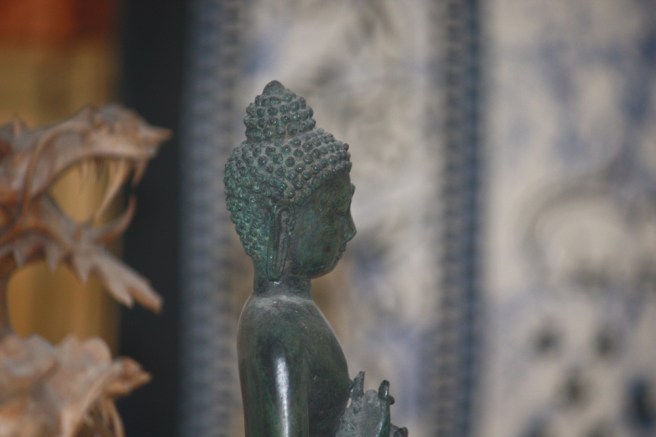
Bodhisattva

This from Britannica on line.

Click here

bodhisattva, in Buddhism, one who seeks awakening (bodhi)—hence, an individual on the path to becoming a buddha.

Pali: bodhisatta (“one whose goal is awakening”)

In early Indian Buddhism and in some later traditions—including Theravada, at present the major form of Buddhism in Sri Lanka and other parts of Southeast Asia—the term bodhisattva was used primarily to refer to the Buddha Shakyamuni (as Gautama Siddhartha is known) in his former lives. The stories of his lives, the Jatakas, portray the efforts of the bodhisattva to cultivate the qualities, including morality, self-sacrifice, and wisdom, which will define him as a buddha. Later, and especially in the Mahayana tradition—the major form of Buddhism in Tibet, China, Korea, and Japan—it was thought that anyone who made the aspiration to awakening (bodhicittotpada)—vowing, often in a communal ritual context, to become a buddha—is therefore a bodhisattva. According to Mahayana teachings, throughout the history of the universe, which had no beginning, many have committed themselves to becoming buddhas. As a result, the universe is filled with a broad range of potential buddhas, from those just setting out on the path of buddhahood to those who have spent lifetimes in training and have thereby acquired supernatural powers. These “celestial” bodhisattvas are functionally equivalent to buddhas in their wisdom, compassion, and powers: their compassion motivates them to assist ordinary beings, their wisdom informs them how best to do so, and their accumulated powers enable them to act in miraculous ways.

Avalokiteshvara

Bodhisattvas are common figures in Buddhist literature and art. A striking theme in popular literature is that of the concealed greatness of the bodhisattvas. In numerous stories ordinary or even distinctly humble individuals are revealed to be great bodhisattvas who have assumed common forms to save others. The lesson of these tales is that, because one can never distinguish between paupers and divinities, one must treat all others as the latter. In popular folklore bodhisattvas appear as something like saviour deities, a role they acquired both through the evolution of earlier ideas and through fusion with already existing local gods.

Buddhism: Celestial buddhas and bodhisattvas

A particularly important mythology in East Asia is that of Dharmakara. According to the Pure Land Sutra, Dharmakara was a bodhisattva whose vows were realized when he became the Buddha Amitabha. Pan-Buddhist bodhisattvas include Maitreya, who will succeed Shakyamuni as the next buddha in this world, and Avalokiteshvara, known in Tibet as Spyan ras gzigs (Chenrezi), in China as Guanyin (Kuan-yin), and in Japan as Kannon. Although all bodhisattvas act compassionately, Avalokiteshvara is considered the embodiment of the abstract principle of compassion. Bodhisattvas of more localized importance include Tārā in Tibet and Jizō in Japan.

Senior Tutor – Waifs & Strays – Great Compassion Dream 13-05-2025

Here is this morning’s dream. I have often thought of my stint as Senior Tutor as a karmic payback caused by my own days of depression and misery.

The dream starts on a dreary wet grey council estate multistorey housing facility. There are runway balconies connecting the apartments. This is grey and tatty. There is a smell of piss and there are graffiti tags. The feel, the air, is of decay and danger. It is in South London, the rough side of Brixton. I am approaching a red door. There is music and a whiff of skunk cannabis.

I knock on the door and ring the bell. There is some talk inside, someone goes to the net curtain and checks through the window. The music goes off and a young white American man answers the door. He has blonde skanky corn-row dreadlocks. He is both surprised to see me and not surprised at all.

I explain to him that I have come looking for him because he has been cutting classes and not turning up for lab work. I ask if I can come in. He is reticent to let me in. I explain that it is ultra-unlikely that I will be shocked by what I see. I have been to drug dens before, and I will not judge him for a few spliffs.

He lets me in, and we sit in a scruffy lounge area where there is “party” debris. He ushers to his flat mate to leave us alone. I ask him what the problem is. He says that he has some debts and has to earn a little money on the side. He is into some gang related problems. I say that if he wants, I can come to talk with his gang contact. He does not think I can hack it. I explain that I have talked with gang bangers before. They do not scare me.

I say that he needs to find some way of balancing his work at university and his gang activity. He needs to stay off the class A drugs. I suggest that he comes back to college and tapers off his involvement in selling drugs. Otherwise, I will come and talk to the gang. He realizes that I am serious.

The scene changes and I am in an office, my office. It is in a university hall of residence, and I am tutor / warden there. It is late in the evening. There is a knock on the door and a young woman is there. She has been crying. I let her in. She says that the American man from before has suggested that she talks with me. She is highly suspicious and on edge. I invite her in and have her sit in my living room. I say to here that it is my job to look after the lost and the wayward. I have seen most of it. There are few surprises. I deal with boy girl problems, coming out issues, parent problems, depression, hyperactivity. I can advise on finances, condom coming off type problems. I can refer to health services. I deal with handicap and disability. Sometimes I just listen for a while. I can change her tutors if they are being arseholes. As a Buddhist I am well placed to discuss faith from all perspectives and am non-judgemental and widely read. I can hear “confession” if there is something she wants off her chest. Try me I say. I will see if/how I can help. I pass her a box of tissues to dry her eyes. I say that I am not an ogre. She smiles.

A while later in the morning I have another knock on my door. It is a young man a dwarf with achondroplasia.  I let him in. Now I am wearing maroon monk’s robes with a yellow under vest. It is my job to “simply love them” to offer my great compassion. I usher him in, and he plops onto the soda. I ask him about his general health and how his dwarfism may be hindering his studies. He says that he has some thyroid problems which are handled medically and that from time to time the arthritis is his hips plays up. I say that if he runs out, he can have some of my hip arthritis pain killers. I joke that we should go dancing. He says that the girl from before, has by word of mouth, suggested that he talk with me. I ask him how I may help. He says that he needs to get some height aids and a reaching device for high shelves. I say that I will sort it. He has been in trouble with the warden for being drunk and disorderly. I remind him that because of his low body mass he should not try to drink pint for pint with the other students. I will tell the warden he has been to see me.  I say that my door is always open. He notices my rosary on my left hand which is made out of antique yellow-amber beads. I explain to him that I am not easily shocked and am not prone to judgement. He wishes me a good day and leaves.

Next, I am in the corridor outside my flat and another young male student approaches me. He taps me on the shoulder and asks if we can have a word. We go to sit in a coffee bar. He is agitated and keeps glancing over his shoulder. He says that he is in deep trouble. I ask in what way and what his name is. He is sat on a sofa, and I am sat cross legged on the carpet of the coffee shop. He says that he does not want to give me his real name. He gives me his passport name. The one he uses. He is Eastern European / Russian. I ask him to tell me is real name. Anayin, or something like that. He writes it in Cyrillic for me. I know this to be the name of an exiled Russian mafia boss. He is having problems with immigration and the Home Office. His father has a security services protected identity. He says that the officials are being shirty with him. I suggest that for his next meeting I come with him. I can show them my University Identity card and confirm that his application and attendance at university is all in order. He is doing well in his studies. I say that my manner of dress can have interesting effects on uppity officials. It wrong foots them. He agrees and we will keep his familial identity between us. He says that the girl who came to see me before is his girlfriend and that the morning after pill has worked according to her recent self-pregnancy test. I suggest that he needs to be more careful because the last thing that either of them needs right now is a baby. The studies are hard enough. I punch him playfully on the arm.

The dream ends…

More Tibetan Phrase Dream Follow Up

“I start out on my route and part the way along in or near Mongolia I am given two white plaques of an irregular shape. Phonetically these plates speak in the dream. They say, “Mon yet {yat} Dzong” and “Sprul yet Tsaay” I can see the associated Tibetan script but cannot associate it directly with the phonetics.”

—————————————————————————-

The name “Khyentse,” often equated with the Rimé movement, is the union of two Tibetan words, khyen (མཁྱེན་པ་,“ken,” or sometimes “chen”) and tsé (བརྩེ་བ་, “tsay”), meaning “wisdom” and “compassion.”

From web site of Dzongsar Jamyang Khyentse Rinpoche

————————————————————————————–

“Sprul yet Tsaay”

ཡེ – primordial – ye or je

བརྩེ་བ – compassion – tsay

—————

ཡེ

waldo1) first, primordial, beginning, original, eternal[ly] fundamental; 2) always, constant
valbyfrom the beginning, from eternity, utterly, perfectly, highly, quite, from the very beginning, principle of light & being, basic
barrontimeless; atemporal

བརྩེ་བ

rangjungbenevolent, affection, compassion, love, merciful, care for. love; to love (v); loving kindness; to love/ feel affection; to love, love, kindness, to count up, mercy, affection, playing with; {brtse ba, brtse ba, brtse ba} intr. v.; ft. of {rtse ba}
waldo1) will play [f rtse ba]; 2) (Tha mi dad pa,, 1 be unbearable; 2) affection, compassionate, pity, [p brtses],, love, have concern/ compassion, merci[ful], kind[ness], benevolent affection, compassion, love, care for, count up, play w
valbyresponsive, kindness, tenderness, benevolent, affection, compassion, love, merciful, mercy, fervent love

སྤྲུལ་

Sprul

Hopkins 2015send forth an emanation; emanate; emanation
Rangjung Yeshecreated, ཡིད་ mentally. emanated, “incarnated”, apparitional, magical, emanating, emanation, nirmanakaya, miraculous, transformed [into], manifested. vi. to change / transform [miraculously]; imp. of སྤྲུལ་བ་
Hackett Defi­nitions 2015(PH) snake
James Valbyjuggle, make phantoms appear, transform creation, emanating, recasting oneself, snake, 1 of ‘jigs pa rnam par brgyad, abbr for sprul sku
Ives Waldo1) mentally created/ emanated [as]; 2) incarnated; 3) apparitional, magical, miraculous, transformed [~into] emanated[ing][tion]; 4) nirmanakaya; 5) manifest, change/ transform [miraculously]

སྤྲུལ་ ཡེ བརྩེ་བ

Sprul ye tsay

Emanation of primordial compassion

————————————————

Avalokiteshvara or  Avalokiteśvara

In Buddhism, Avalokiteśvara (meaning “the lord who looks down”, also known as Lokeśvara (“Lord of the World”) and Chenrezig (in Tibetan), is a tenth-level bodhisattva associated with great compassion (mahakaruṇā). He is often associated with Amitabha Buddha.

Wikipedia

Avalokiteshvara (Skt. Avalokiteśvara; Tib. སྤྱན་རས་གཟིགས་ or སྤྱན་རས་གཟིགས་དབང་ཕྱུག, Chenrezik or chenrezig wangchuk, Wyl. spyan ras gzigs or spyan ras gzigs dbang phyug) is said to be the essence of the speech of all the buddhas and the incarnation of their compassion.

As one of the Eight Great Close Sons, he is usually depicted as white in colour and holding a lotus.

He is of special importance to Tibetans, so much so that he is sometimes described as the patron deity of Tibet. Among his emanations are King Songtsen Gampo—who is credited with authoring the Mani Kabum, a cycle of teachings and practices dedicated to the deity—as well as the lineages of Dalai Lamas and Karmapas.

Rigpa Wiki