The Coypu Saga Continued…

I extended a single strand electric fence over the most recently chewed hole and plugged in the HV.

I went out to inspect this morning…


The wire had been moved upwards and the support posts twisted consistent with an ingress attempt. The witness sticks around the pond had been moved so I assumed success.


Around 9pm CET time there is a movement to the left consistent with a shocked Coypu running off.


Around 4AM the camera is triggered but no Coypu recorded. You can see the wire twisted up. The blighter came back. It is probably hungry as the river is in flood so no access to bank and river bed food.


Just before dawn getting a hurry up shock on the way out.


It looks as though he is learning to take the risk for the reward.

I guess a shock to the nose is worse than to the back.

I will put two strands across the hole later today.

Coypu Chewing Fence – Caught in the Act!

Herewith the evidence for the prosecution M’Lord…


Big Daddy Coypu chewing the fence and making ingress yesterday evening…


This looks to be sound evidence. He was back again just before 4AM. I think he “plops” into the river, floats downstream and then returns to his rounds. He has made several holes. To the right you can see small logs blocking his previous forays.

Time for boiling oil from the parapets or greased lightning.

….It’s electrifying…

Coypu – Nutria – A Global Problem?

Based on last night’s trail cam the little blighters did not come up off the full river, nor did they cross the bridge. It is pissing down today. I walked around the pond and at the edge of the property I noticed what appears to be a freshly chewed hole in the wire mesh fence. The mesh wire is more than a couple of millimetres thick. That is some chewing.

I’ll monitor the hole tonight and if they come through, I will extend a single strand of the electric fence to cover the hole. I might run it wilderness side to protect the fence.

From the internet these coypu are a problem in Europe, Japan and USA.

I have read some interesting ideas some of which might not be accurate. The Americans prefer guns. Though on one forum I saw juicy fruit chewing gum mentioned.  Juicy fruit has a strong odour. The protagonist suggests that the Coypu cannot pass this so they die of constipation. Another suggestion was chocolate Ex-lax laxative. Apparently, this causes them to shit themselves to death.

When I was a kid, as a prank, I offered one of my school friends some Ex-lax. I even told him it was laxative chocolate. He ate it, nevertheless. Half an hour later he had to leave class in something of a rush. People sometimes do not believe the truth.

Clearly, coypu are something of a hobby / irritation for many around the globe.

They were introduced into Japan during the second world war to provide fur…

You learn something new every day…

We have some lemon flavoured Movicol in the drugs store and I can probably source some industrial grade Pico-lax before my next colonoscopy…we have loperamide and racecadotril or acetorphan, too.

Hmn….

The Coypu Saga Continues…

Over the last few days, the river has been in flood and flowing very quickly. Previously we have had no Coypu visits when it has been like that. So, I put the trail cam outside my office to confirm the re-appearance of the new hefty tom cat. Sure enough, he visited and sniffed the pissing tree during the night. He is probably not feral as he looks very well fed.

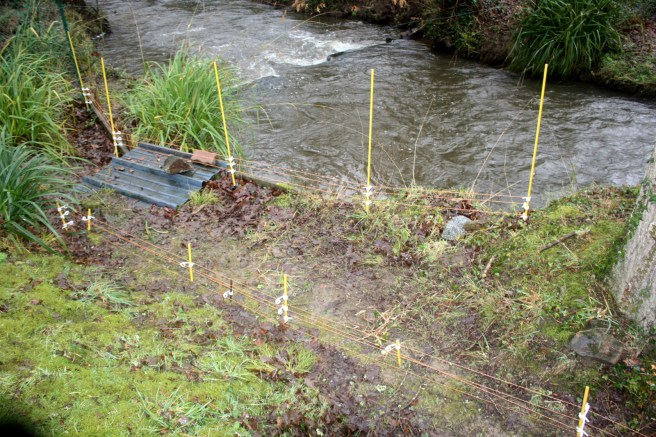
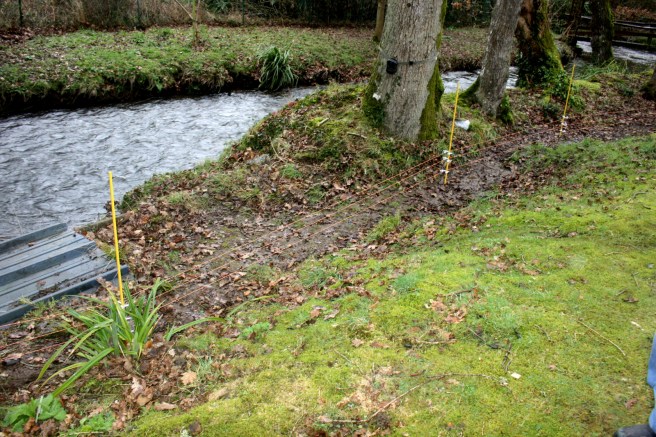
This morning, I inspected the electric fence in the corner of the property. The fence had been interfered with and some of the wires had slipped their guides.

Here is what a big Coypu does when it gets shocked {from February last year}. Turn up the volume. You can see an earthing spark in the infrared images.

As you can see the Coypu jumps, grunts and disturbs the fence. I am reasonably sure that something got shocked last night. BUT the witness sticks at two point of ingress into the pond were untouched.

So, I have repositioned the camera for tonight and placed witness sticks at all the points of entry into the pond.

Perhaps we have deterrence, perhaps not.

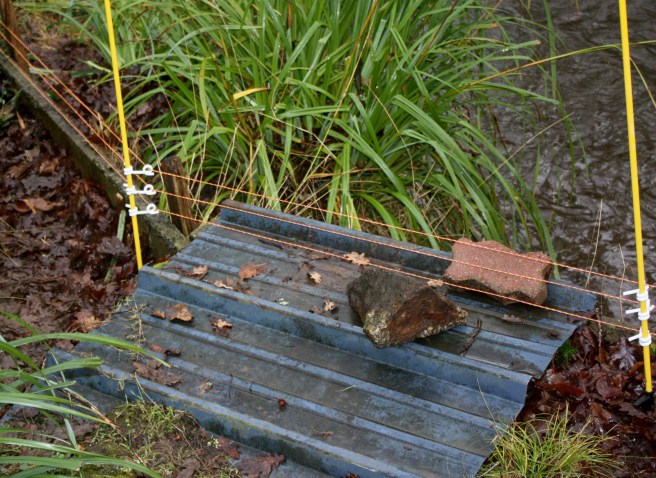
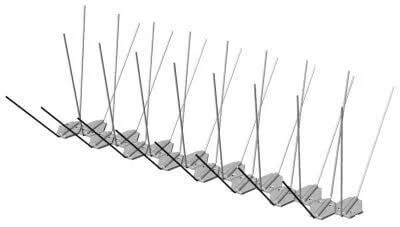
Maybe I can put some antipigeon spikes on the wall to the right in the video above, down by the river… if the blighters are accepting the shock for a nice midnight snack….

Do Coypu Get Used to Electric Shocks?

When I was ~ 11 years old my father insisted that I read “Don’t Die in the Bundu” which is a bushcraft survival manual for sub Saharan Africa.

I enjoyed it and built prototypes of several of the traps / snares.  I have a reservoir of unusual knowledge for someone who spent their adolescence and early adulthood largely in the city in the UK. I can track a little.

Passport photo taken at the GB High Commission in Lusaka a little before my tenth birthday.

I was involved in a fatal boating accident around that age 11 on the Kafue River in Zambia. My younger sister and I along with a younger boy went fishing with three African game wardens / rangers in a small rowing boat. On the way to the fishing grounds a hippo came up under the boat and capsized it. One of the rangers could not swim so he drowned. We swam to an island. The remaining two rangers followed. One was taken by a large crocodile only a few metres from where we stood. Later we had to island hop to get within shouting distance of the camp. Having witnessed a crocodile attack you might imagine the hesitancy getting back into water.

Last night I put witness sticks on to the pond ingress points used by the Coypu. The patterns were disturbed at two locations. I had the trail camera looking at the bridge and another part of the bank. I have learned from academic literature on this subject that Coypu don’t climb well. They did not use this root. But they were in the water of the pond overnight. I am guessing they are young males forced out of the den by dominant daddy Coypu who from prior video has a big set of cojones.

I will reposition the camera tonight. I have read that some animals develop strategies for passing electric fences like running fast so as to use the time between pulses. Some learn to jump. There is a risk reward balance. If the food is nice they might tolerate the shock.

There is another possibility that the Coypu are hiding in the pond during the day and do not leave.

Depending on tonight’s footage I have several options.

1) I can fit a fourth strand to the electric fence to make it higher, I have the kit already.

2) I can source a different power supply with shorter gaps between pulses and increase the energy up to 1 Joule. A wet Coypu has got to be a good conductor.

3) Some people apparently have had success with cat litter. I could collect some cat turds and put them down by the ingress from the river.

4) I could try to snare them, but I am not sure I could euthanise.

Hmnn…

Preparing for the Annual Toad Migration

Earlier this year, in February, I put up a three strand electric fence to try to deter the Coypu coming onto the property and eating all the lotuses on the pond. It worked.

This year we had a magnificent display of flowers and no Coypu turds. The availability of fresh shoots in the wild has dropped as we come further into winter. They managed to find a way in by the bridge in October. Here are four of the blighters I blocked this off with wire mesh at end of October.

The family of Coypu coming up from the river…

So, we have had no Coypu sign until about a week ago. I found some chewed iris shoots. I set up the trail camera and got one returning to the river hesitantly through the electric fence. I did not see it get shocked but I heard the audible click as 0.25 J earthed at kilo Volts through the Coypu. The animal seemed to be coming from another direction. I set up witness sticks on the river bank and by a hole in the fence. The little bugger was coming through the fence. I blocked it last night with one big and one medium sized pine fire logs. He shifted the smaller log last night. I saw some Coypu sign, damaged iris shoots. There are two fairly hefty fire logs there now.

Yesterday evening when checking the fence I came upon an electrocuted toad. For an animal ~50-100g I guess 0.25 J is too much. I am surprised that it was on the move. We have had an inordinately mild time of it. In general, we get up to 60 toads and frogs at any one time in the pond for mating. I wondered if the annual migration is beginning early.

Today I have put a few more posts up near the old ingress route for the Coypu and lifted the bottom wire so that at no point is it less than 6cm from the ground. That should be enough room for the amphibians but not enough for the Coypu…

We shall soon see if the toad migration proper is beginning early.

Another harbinger of anthropogenic planetary warming?