The Tendency to Literal Dead Letter Interpretations – Nāga

In our times there is, allegedly, a lot of fake news. People try to find titbits of “facts” to try and catch people out as proof of lying. It is almost like three year olds trying to get mummy or daddy to tell someone off or punish them. It is what I call sandpit politics. Some believe the bible verbatim and others use this verbatim interpretation to prove that it is not true, that there are errors. The hunt for the resting place of Noah’s Ark continues….

Two thousand years ago they did not have CGI nor for that matter AI. People were largely illiterate and stories had to be crafted in a way that people would remember. There was animistic religion. They had to speak in the parable of the times.

Take a look at the Mucalinda Sutta, – Mucalindavaggo.

Here soon after enlightenment Siddartha is sat deep in thought.

He might have been trying to figure out what to do next. “Ok so what next?”

Mucalindo Nāgarājā notes the incoming poor weather and wraps him in seven coils and protects his head with the hood of a king Cobra risen in threatening manner. They sit for seven days until the weather changes and Mucalinda morphs into a brahmin to praise Buddha the new Bhagavhad.

Naga can also mean Elephant, a semi divine Nāga part snake human who comes from another world Nāga-loka and Buddha is sometimes called Nāga-muni.

Iconography can be easily found with the nascent Buddha protected by a king cobra like Nāga with 1,5 or 7 heads. It is a core piece of iconography. It is core Buddhism.

In occult literature snakes and dragons are words use to hint at wise and sagacious beings, initiates and the like. In the Toltec tradition there are nagal/nagual beings who live in a nagual’s world an alternate assimilation of the one that is commonly held.

Snake is the dreaming symbol for wisdom or need for wisdom.

Rain is the process of life.

Seven is guidance or need for guidance.

Head is intuitive mentality.

Coil or circle is sobriety/ inclusiveness/ unity.

If we interpret this sutta like a dream. Siddartha having awoken as a Buddha had just radically changed his whole view on life the universe and everything. This was mind-blowing. Even for a Buddha. He would need time to assimilate and process things after his ordeal with Mara and the whole shebang. So, he sat in contemplation seeking guidance from his now Buddhic intuition looking at how to apply his Nāga – rājā {very big, king-snake, top notch wisdom} feeling protected by his new found knowledge and had insight, inner guidance, on how to use it to embrace and enlighten all the world.

And he said to himself, perhaps with a chuckle. His intuition had summed it all up for him

Blissful is solitude for one who is content, who has heard the Dhamma, who sees. Blissful is non-affliction with regard for the world, restraint for living beings. Blissful is dispassion with regard for the world, the overcoming of sensuality. But the subduing of the conceit “I am”— That is truly the ultimate bliss.

Wisdom Ripens Sentient Beings – Spooky

Well, I have just ordered a translation of a book by Jamgön Ju Mipham Gyatso or Mipham the Great a famous Tibetan polymath about divination using Manjushri mantra by dice. Manjushri is the Bodhisattva of wisdom and is depicted with a sword to cut through ignorance and a book for wisdom and learning. {The perfection of Wisdom Sutras}

For several years Manjushri mantra was a part of my chanting practice.

“Om ah ra pa tsa na dhi”

Wisdom ripens all sentient beings

I have just listened to Tsem Rinpoche on YouTube describe how dice for Mo divination are made from sandalwood…spooky if you look at my dream (previous) in which “my” dice are made from the root of a tree. He further states that divination and or knowledge can come in dreams to “advanced” practitioners.

From Wiki.

“Sandalwood is expensive compared to other types of woods. To maximize profit, sandalwood is harvested by removing the entire tree instead of felling at the trunk near ground level. This way wood from the stump and root, which possesses high levels of sandalwood oil, can also be processed and sold.”

I have always considered Manjushri as the most neutral of figures, because knowledge and wisdom have no emotional turbulence attached. The feeling of Manjushri is always light.

It looks like I am also back to the Kalachakra Tantra again.

Freaky Friday….

Tibetan Dice Dream 1-11-2024

This is one of a recent series of “out of the blue” dreams which seems to have little or no relevance to my current life circumstance and events therein.

I am shown a dice/die which is a cube with rounded corners. It has the feel of ivory and looks ancient. I know beyond doubt that it is a Tibetan dice. I know that Tibetan dice are unlike any other dice in the world because of their special properties. I can only see the face of the die with a singular dot to denote one. I know the others are there, but the dream zooms in.

A little later I see two dice. I see that they are carved out of a deep root of a tree and shaped and polished. It is a long process and a labour of love. These are my Tibetan dice. They are perfect cubes with sharp edges and corners. I hold them in my hand and throw the dice, and I see two faces each with a singular dark blue dot. I have thrown two. They are made of root and Tibetan. The workmanship is exquisite. I know the meaning of two and its significance,

Dream ends.

I had not heard of this but when I put Tibetan Dice into Google…

From Wikipedia

Mo (divination)

Mo (Tibetan: མོ་, Wylie: mo), is a form of divination that is part of the culture and religion of Tibet. The Tibetan people consult Mo when making important decisions about health, work or travel. Mo employs dice and there are books written by various lamas on interpretations for the casting of dice. The answers given by the Mo are regarded as coming from Manjushri, the Bodhisattva of wisdom. Mo is considered to represent a blend of Tibetan shaman traditions and Buddhist beliefs.

One Mo prediction manual was composed by Jamgon Ju Mipham Gyatso, a great scholar and saint of the Nyingmapa tradition of Tibetan Buddhism. This Mo prediction manual is based primarily upon the Kalachakra Tantra and supplementary explanations from the ‘Ocean of Dakinis’. To use this Mo divination, one must have a question in mind and roll the dice. The dice’s outcome will indicate an answer in the prediction manual. The answer in the manual should answer your question but may need some interpretation.

The Dalai Lama consults the Mo divination when making important decisions.

Losing Your Mind – Zen

Some people might think that I am/was a complete nut job for getting out of a contract which would have paid 8000 euros a month tax free, over a decade ago. I must have been out of my mind. Others might think me whacko for a number of my beliefs and that I have lost my mind. Why would a trained scientist not strive for recognition and research funding. Why renounce his job at a world “top ten” university? He must be barking mad and batshit crazy to boot.

I have lost my mind but not in the way people might think.

In general, my mind / head is a very quiet place. There is no continuous chatter of internal dialog. I am not busy with should and ought, nor is comparison mind resident there. My mental default is silence. I can observe, I can experience and absorb. I can hear and see, but there is no mind making endless qualitative thinking. If I want to think I have to actively engage my mind. It does not run off like a horse when the stable door is opened.

I could say that my “mind” differs from most. I know that it has changed markedly over the last two decades. But there is no way that I can explain or illustrate in a meaningful way what my “mind” is like to anyone suffering from internal dialogue or very attached to the common socio-political assimilation of world and society. I once experienced that world first hand as an active participant. I no longer do/am.

I still look much the way I used to but the animating contents of the meaty body are now changed. People might struggle to understand that I am not as I was and interpret me in terms of an old look up table of behaviour and manner. I’ll speculate that many would not get it or me. My assimilation of world is different, I cannot prove this to you or anyone really. It would take sharing a considerable amount of time and circumstance to appreciate and I would have to extrovert my thoughts and thinking in order for people to see just how different. I can still interpret events from a “normal” perspective but I do not share the emotions many are beholden to. I can appear to fit in and comply with the common world views.

In the Zen literature there is a lot of mention of Buddha nature. If I understand Zen at all it is to live fully in the present and at the point before mind knowing that as observer you are also participant and not separate from the arising phenomena. Zen does not like definitions because that is a feature of comparison mind and a definition by definition invites comparison to said definition which is “mind”. People stress over definition and argue the toss. Buddha nature is offered as a way of being, a nebulous ideal which exists when mind is fully quiescent. Most of the Zen koans are devised to show just how much mind trips one up and self-entangles. They point at not using mind the way which it is customary so to do.

In order to be “Zen”, one has to lose one’s mind and yet remain sane.

However, what is considered sane in the common socio-political assimilation of world, is all “mind” and therefore insane. If people like their possessions and acquisitional materialism, to detach from these would be considered lunacy by many. A wide empty path is the road of the lunatic who disavows possession, grabbing and the socio-political accumulation of kudos and social power.

Kudos is illusion in Zen and Buddhism as a whole. Yet many seek it with a passion.

Although people use Zen as an adjective for calm, they are not interested in attaining it because it requires that they forego the common world view. As we all know you cannot have your cake and eat it.

How is my logic?

Do we live in a sane world?

Is there an increasing problem with mental health as measured to the normative socio-political construct?

I have lost my “mind” does that make more or less sane than you?

Are you saner than I?

Discuss….

Become a Teacher or a Preacher!

There is a notion that the reincarnating dreamer chooses his or her own parents for birth which provides a cultural context and a genetic make-up. My maternal birth line reached back to the copper mines of Sygun near Beddgelert, the slate mines of Blaenau Ffestiniog and the coal pits of the Rhondda. My paternal grandfather was a docker in Cardiff, helping to shift the coal from the valleys and the steel from the steel works. My parents met at the Guest Keen steel works in Cardiff, a very Welsh story. I have often joked that my physical make up is suited to shifting heavy things in confined spaces, I am genetically qualified to mine a two foot coal seam.

Folklore has it that in valleys where most of the men went down the pit there were only two ways out. You had to become either a teacher or a preacher. There were a lot of teacher exports from Wales who came to educate the English. I belonged to London Welsh rugby club for a while, the exiles, and our pack was made up of Ph.Ds., lawyers and financial traders. Education was a big thing in South Wales. Our pack was very qualified.

It could be argued that solely by mantra I found myself at UCL, The Royal Institution and Imperial College.  In the so-called research golden triangle and at the heart of UK science in the capital city. So, for a while I was indeed a teacher. Though my father was not so impressed his mantra was “those that can do, those that can’t teach”.  Even when I co-founded a laser company, he found it hard to praise and easy to find fault. My family were all extroverts and so often I wished they would shut the F up and I had to flee for quiet time. When you surpass you no longer belong not that I ever really did. The film Educating Rita speaks some truths.

And now it seems I am a tad surplus to requirements, the world has little or no use for me. I will fade away in quiet obscurity on a meagre pension. I have seen and experienced much and there does not seem to be all that much that I want to do. I don’t have a bucket list. I travelled to far flung places as a child. Wherever there was a lead or steel smelter we went, kind of. It makes one difficult to impress. I saw the Sistine chapel at 12 and the Victoria Falls at 11. My childhood taught me impermanence with seven schools across three continents. We also nearly went to Brazil! I had 150,000 air miles by the age of 13 in 1978, when travel was far less common!

I have read quite extensively on various “religious” things, both exoteric and esoteric. I meditated for two decades, daily.

The difficulty is that once I get the gist of how something works. I tend to lose interest. I am not a fan of refinement and repetition. I don’t get hung up on minutiae.

I had some mildly grandiose ideas when a young man, some visions. I am a dreamer after all.

I have a pet theory/hypothesis. Culminating lives do not end with a bang or fireworks. They simply fizzle out. There is no lust for. There is little desire or ambition. One simply pops one’s clogs never to return. One explores and explores until there is not much left which one has any kind of urge for. If I want to find out something about say Myeloma, I can read up on it and assimilate the gist quickly. I know the method and background knowledge helps the understanding.

I am probably not a common phenomenon, given my scientific background and my interest in Buddhism and raja Yogas. This makes me a slightly unusual animal. To me it is no big deal but it stands out as being a bit odd, an anomaly even.

I am probably mostly done. But the universe has a bag of spanners and is fond of the odd curve ball or two. So, who knows? I am sure that I understand the likelihoods moving on but weird shit can and does happen…

If my understanding based on dreams is correct the mantra in the title has been active across lifetimes for me. When I used to talk to university students, I had a fair idea about which ones would go into teaching, I was nearly ~90% accurate.

So maybe I did choose my circumstances of birth after all.

Yes, I think I am probably done now.

Karmic Conundrums

In the context of karma, if you don’t {yet} believe in karma then it is your current karma so to do and be. It does not alter the fact of karma but your denial and disbelief thereof is karmic. Eventually karma will teach you about karma and cause & effect. In the context of karma there is an inevitability.

Do you believe in karma?

Answering this simple question has karmic consequences which may be wide ranging.

If, however, there is no such thing as karma the answer is a facile no.

To plump for an agnostic maybe suggests that karma exists, sometimes and in some circumstances. You might cherry pick the circumstances in which you give a nod to karma. Picking and choosing thus implies you want life on your own terms. You are selective.

To answer yes, implies that you acknowledge at least some responsibility for your actions.

To fully believe in karma at first might cause you to freeze and say, think and do nothing. You may not wish to cause anything.

A belief in karma has scaling to it. I have looked into its applicability and the concept of karma is for me sound and can be observed in many situations and events.

There are numerous social media, and YouTube videos entitled “instant karma”. There is a song by Lennon and Ono. People enjoy watching comeuppance. As a loose concept karma is held by many. But it is not as simple as prompt and obvious payback.  Enjoying people getting comeuppance is not in itself wise or pleasant.

It is my observation that karma can be very subtle and by way of a complex conundrum which is difficult to solve.

An obvious hurdle or bar to solving some karmic “problems” is the notion of face. People might want to resolve a situation but the only way to do that is to maybe apologise and lose some “face”. Thus, the problem never gets solved and it acts like a burr under the skin. It does not go away. Prompt action eases situations quickly, putting things off makes them worse. Boris Johnson struggled to admit he was wrong in Partygate because his sense of entitlement had it that rules did not apply to him the world king, they were for little people. Truss still refuses to accept she caused the markets to plummet. “Face” can exact a high price. And that price may come in the twilight of a life. Payment is due and with interest. Her political relevance wanes.

It is my thesis that much karma ripens and bears fruit near end of days. Challenges put off due to inconvenience re-appear just when one no longer has as much faculty to solve or face them.

In my experience karma has a lot to with attitude. Hoity toity and arrogant people can be knelt by the universe, taught a lesson of humility. To suggest to an arrogant person that this might happen is a thankless task and unlikely to succeed at first, it might sow a seed, however.

Those who believe they are able to act with impunity are the most likely not to believe in karma nor accept that they are responsible for the consequences of their actions. An example in case is the migrations from Iraq and Afghanistan. We caused this by invasion and destruction yet are unwilling to accept the consequence of immigration. We moan and complain and demand that it stops. We fail to acknowledge the lesson and are likely to repeat the same folly as a result.

 Karma can take many cycles to teach.

A typical karmic conundrum may involve wanting to resolve a situation but being unwilling to take the necessary risks or appropriate steps. In some cases, those steps which once were possible and facile have become very difficult. The longer resolution has been delayed the harder it becomes. The “problem” has grown, spread or bifurcated.

The poor attitude has acted as a growth factor for the problem. What was once simple has become highly complex and entangled. Escapism, avoidance and denial have fertilized the karma.

The saying, “what a tangled web we weave when first we practise to deceive”, is a statement of karma. With an inevitability one lie requires more to prop it up. An early stage fess-up prevents a massive web of lies, metastasising.

If is the word which most stops karmic resolution. People want to put conditions on their actions and keep apparent control. By trying to control a situation and not resolve it one can make it a lot worse. This seldom occurs to some. They can be very adamant and stubborn.

“If I do that what is in it for me?”

Is a mindset which negates the law of karma.  

Accepting responsibility for one’s actions and how they ripple out into the trajectories of the wider world is not something that most people do. Being me or egocentric they fail to appreciate the wider connectivity.

Karma ultimately teaches that we are all connected in the same world.  We are a part and not as separate as we might insist or imagine.

At the moment global karma is being initiated in the middle east violence. What will the longer term effects be? Will they be widespread or localised?

Do you believe in karma?

Place your bets…spin the wheel…

Visions or Visual Hallucinations?

If I understand it correctly the phenomena of visions plays a role in many religions. Things can be revealed by beings such as angels. Those prone to visions have been prone contextually to dreaming too.  

My general understanding is that angels are rare and play only a very important pivotal role in the religious context. They do not appear to common or garden people despite what many a new age book suggests. Helping you find the man of your dreams is probably not high on their to do list.

{I am generalising widely}.

Yet seeing something that others do not is classed as a hallucination, which can be a symptom of psychosis. Many of the figures in religious history might be diagnosed as having an episode of psychosis today.  They could be locked up and given anti-psychotic medicine.

In indigenous cultures going on a “Vision Quest” might be seen as a rite of passage. Isolated from the day to day and the tribe an individual seeks a vision of the future and his purpose. Visions can be had in caves, on high mountains. Usually, one has to step away from the mundane noise of life, maybe ease off the food.

I have participated in shamanic drumming and gone on a mini-vision quest. I can also use £250,000 femtosecond pulsed optical parametric amplifiers. It is possible that I am unique in this, there may be others. In non-linear optics world it is probably best not to talk about shamanic vision quests it could have a detrimental impact on promotion and employment prospects. So, many may have kept schtum like me.

It could be argued that I have relatively pure Welsh indigenous blood from the matrilinear line based in deepest darkest Snowdonia. As an indigenous it is not so weird for me to do indigenous things.

Anyway, I have had a number of visions over the years including when I lived in Brixton and was an academic. Needless to say, I told no colleagues nor a GP. This primarily because I always knew that I was having a vision/hallucination and was aware of my physical plane surroundings in day-to-day world at the same time. They did not overly impinge, nor were any of them frightening. If you speak to a medic about this kind of thing you could be opening a Pandora’s box and be exposed to pet theories and the latest pharma sponsored medication.

My working hypothesis concerning many of these visions is that most fall in the category of past-life recall. Some might think me whacko or that I have delusions of grandeur. People can have very closed minds.

Back in the mid seventies I used to travel by airplane from Zambia to school in Gloucestershire. There were six flights a year and by the age of 13, in the 1970s, I had 150,000 air miles. I am guilty about my childhood carbon footprint 😉. On occasion there would be a fuel stop at Malta. Each time I landed there I had a massive déjà-vu. Without knowing why, I knew that I had been there before.

This morning around 6 AM I was not sleeping so I started to do a meditation. For whatever reason, I was having difficulty and I started to have a relaxed enjoyable vision of myself in a cowled cloak and chain mail. The setting of the vision was around 800 years ago. I was aware of the vision and the bedroom. I could hear the wife breathing.

Why this is happening now I don’t know. It did point me back to a vision I had in 2003.

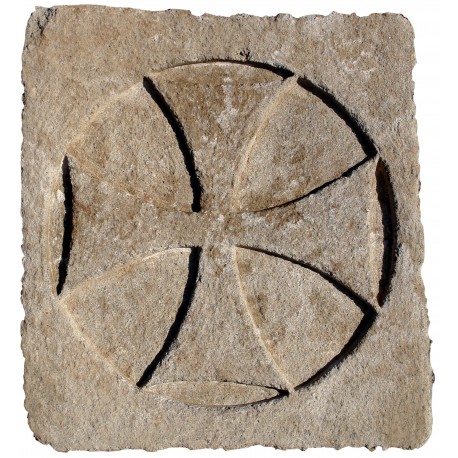
The vision last night may refer to “the knights of Malta”, a term used in Brittany for both Templars and the Hospitaliers, Ordre de Saint-Jean de Jérusalem.

I have had many visions associated with this putative life, a French one.

Nearby there is a hospitalier commanderie whose records do not go back past 1313 when the goods of the Templars were ceded to them.

There was also relatively nearby a Templar commanderie and the relics of a small church. The look of which is not far from one I saw in another vision.


What would you do?

Would you tell your general practice GP doctor?

Would you tell your line manager at work?

Would you imagine yourself off your trolley?

Or would you think that the sanest hypothesis was past life recall?


I am quite looking forward to seeing what may or may not happen over the next day or so…


The Four Stages of Awakening

Some speculations and developing a train of thought….


This excerpted from Wikipedia

“The ordinary person

An ordinary person or puthujjana (Pali; Sanskrit: pṛthagjana; i.e. pritha: without, and jnana: knowledge) is trapped in the endless cycling of samsara. One is reborn, lives, and dies in endless rebirths, either as a deva, human, animal, male, female, neuter, ghost, asura, hell being, or various other entities on different categories of existence.

An ordinary entity has never seen and experienced the ultimate truth of Dharma and therefore has no way of finding an end to the predicament. It is only when suffering becomes acute, or seemingly unending, that an entity looks for a “solution” to and, persisting, finds the Dharma (the ultimate solution/truth).

The four stages of awakening in Early Buddhism and Theravada are four progressive stages culminating in full awakening (Bodhi) as an Arahant.

These four stages are Sotāpanna (stream-enterer), Sakadāgāmi (once-returner), Anāgāmi (non-returner), and Arahant (conqueror). The oldest Buddhist texts portray the Buddha as referring to people who are at one of these four stages as noble people (ariya-puggala) and the community of such persons as the noble sangha (ariya-sangha).

A stream-enterer, having abandoned the first three fetters, is guaranteed enlightenment within seven lifetimes, in the human or heavenly realms.

Sole dominion over the earth,
going to heaven,
lordship over all worlds:
the fruit of stream-entry
excels them.

Pratyekabuddhayāna is a Buddhist term for the mode or vehicle of enlightenment of a pratyekabuddha or paccekabuddha (Sanskrit and Pali respectively), a term which literally means “solitary buddha” or “a buddha on their own” (prati- each, eka-one). The pratyekabuddha is an individual who independently achieves liberation without the aid of teachers or guides and without teaching others to do the same. Pratyekabuddhas may give moral teachings but do not bring others to enlightenment. They leave no sangha (i.e. community) as a legacy to carry on the Dhamma (e.g. Buddha’s teachings).”

—————————————————

There are some elements of Buddhism which I struggle with. This stems from the notion of evolution, a planetary principle. Things change and generally get more efficient adapting to the times and circumstances. Therefore, to my eyes it is very unlikely that a “human” would reincarnate as an animal. If the being had progressed from monkey to human, it would not make a retrograde step even as karmic punishment. The being, a human, reincarnating, would need a human form. There are plenty of human forms in which life is difficult, so there is no need to invoke life as a dog.

Bearing in mind that the origins of Buddhism are ~2500 years old, humanity was very different back then. Life was different and complex abstract thought very uncommon. The majority were illiterate and living in a manner not so very different from their livestock. Life was generally short and hard. Animism as a basis for interpreting world was using the available daily template, a reality encountered on a day to day basis. The teaching metaphor and allegory available to Siddartha would reflect daily life, belief and superstition.

I am not a member of any mundane Sangha and do not go to “teachings”. I am a trained academic researcher and have read widely on Buddhism. It seems to me there remains debate about what the various teachings mean. I am aware that discussion and/or arguing the toss is not the same as attainment. Being attached to wanting to be right or winning an argument does not seem enlightened to me, it seems petty.

People like definitions, especially those educated in modern ways. People might then discuss what an arahant is and profess on the subject. It is human nature. I’ll speculate that most people pertaining to being Buddhist have never nor will they ever meet one. The arahants can be seen aloof and uncaring.

A cornerstone of Buddhism is taking refuge in the Buddha, the Dharma and the sangha. Some schools of Buddhism subscribe to the Bodhisattva ideal. A Bodhisattva roughly means one who will {one day} become a Buddha. They can be “beginners” or be very highly realised. These realised Bodhisattvas put off their own nirvana in order to come back to teach. They can put if off for multiple lifetimes. There is entreaty and prayer begging them, so to do. There is a prejudice perhaps in that they are more compassionate than an Arahant who pisses off, but too much compassion can be a weakness.

If we see evolution as a ladder, if you are on the top step, you need to vacate it so that someone else can use it.

There is perhaps a prejudice against pratyekabuddhas in that they do not need a sangha or teachers nor do they have a sangha of their own.

Implicit is that people seek and need teachers or guides. The student can thereby hand his/her power over to a guru or teacher. In so doing the responsibility for development is shunned to an extent. The teacher becomes partially responsible for progress.  

Those in a sangha do not “like” those not in a sangha. The human “we” does not like the rejection of the outsider “they”.  They are not a part of the/our gang. I have seen pratyekabuddhas talked down as lesser Buddhas. A little thought suggests that THE Buddha was pratyekabuddha. The sangha came later. This snobbishness is logically unwarranted.

If you boil it down the fetters are simply human foibles, without which there would be no television soap operas. Getting rid of anger, envy, hatred and jealousy. Lessening attachment, ambition and pride makes for a less exciting and emotional script. One could say that the core direction of Buddhist development is a reduction in human folly, even a tendency to be less “human”. In the limit one no longer wants to partake of the drama and simply stops coming back, stops taking on more meat. Someone like that would be weird to society and not readily integrated therein. If they wore robes it might be easier for society to accept them.

The sangha is a stepping stone offering camaraderie as one lessens engagement with the socio-political world view prevalent at the time of a life. The sangha is kind of like a crutch or support mechanism for those ordained monastic.

I personally have doubts that monasticism is altogether good. The temptation is to an extent removed. It is easier to remain calm and detached when removed from the mundane “lunacy”. Celibacy can cause deviance; suppression can cause explosion.

The basic requirement to enter the stream is to see and acknowledge the truth of the Dharma, the impermanence of all conditioned things. Attaining and realising impermanence starts to untie attachment. “They” say that there is a maximum of seven lifetimes before nirvana once the stream has been entered.

The sixteen close disciples of Buddha are given arahant “status”. They are almost deified and their intervention sought via prayer. There are statues, painting and thangkas.

If they came to Siddartha as a fresh disciple when the Dharma was in infancy it seems to me that to go from zero to hero in such a short time and achieve arahant in one lifetime was some pretty fast work. Religious hagiography is often exaggerated and idealised. One could say through the power of the Buddha evolution was vastly accelerated.

There was no stream until Siddartha, in this context.

If I use the dreams in the blog as a basis I have had three Buddhist lifetimes, one Indian, one Thai and one Japanese. In all of these I was monastic. The next lifetime was as a Christian priest / soldier. The most recent prior lifetime I was a civilian. This current life started with science, a lot of it.

I have reason to believe that my first Buddhist life was at the dawn of Buddhism ~2500 years ago. If I entered the stream then I am now five lifetimes on. Which means I may not be doing an Arnie many more times.

Of course, the only way that I will know for sure is to pop my clogs and see what happens.

I’ll speculate that the human love of ritual and ceremony has lead to quasi-deification. The social need of groups is for some kind of celebratory focus or rite. This has little to do with what I understand to be the core teachings. In some texts removal or ritual is at a later stage of the enlightenment journey. It serves a good social purpose but must be transcended, being attached to ritual is an attachment after all.

My hunch is that the days of guru-yoga are drawing to a close. There have been many scandals and some far out cults.

Humanity might need to do more for and by itself.  

Boulanger – Dawn – Harbour – Naked – Trinity or Triquetra – investigation Dream 26-09-24

On a restless night a few days after high does Prednisolone.

The dream starts in a village in France. The village is on a hill and I am with an Asian Indian man. We are looking to buy some bread. We try one boulanger and it is closed, we try another. It is also closed. We run down the street to a third and it too is closed. The man is upset that all the bakers are closed.  I note a corner shop which is open and go in. In the back room there is a small rack of bread. I select a roughly triangular loaf. I note some bottles. I select a clear see through, as opposed to green, bottle of Sprite. I go to the till to pay.

The woman won’t accept payment. In English she says that she has been given a budget to pay for bread because the bakers are closed. She says that she will put my food, my lunch on her card.

The scene changes and it is the next day around dawn. I am only wearing a white duvet which is secured around me with a wide royal blue plastic belt. The belt trails behind. I am at a hewn out Mediterranean port.  The stone is sandstone and there is warmth in the air. I see a truly magnificent pale yellow dawn on the soft blue sky. It is so bright I turn away. I turn back it is so yellow, radiant pastel. This repeats several times.

Across the harbour I can see some boys and teenagers chasing fish in the water. They are shouting to scare the fish. I get into the water naked to intercept the fish. The fish change direction and swim back towards the boys. Several flying fish launch themselves out of the warm water and fly off.

I head up into the village naked. I go into a village meeting clothed. There is a bingo like game going on in which audience members are drawn out of a hat. The last two drawn are winners. Twice a young man called Mark and I win. He is a student. Another draw is made and he and I win for a third time. I ask him what he does. He says that he is an actor and is currently playing a murder victim in a play.

He ushers me to follow him. We go to a wood panelled room where he shows me various lengths of rope. He hands me a thick crimson red rope the thickness of my thumb. It is longer than me. It is inlaid with a single fine gold thread and tied into a trinity knot or Triquetra at its middle. The knot is comprised of exact circles. If one grabs the end of the rope and swings it the knot can be used as a whip. The feeling is that this is a Welsh as opposed to Irish version. He gives me the knot and says that I need to remount it in the church.

The feeling is of Brittany. I am in a brightly lit room which has a church like feel. I am trying to mount the rope on a leaded glass window. People are watching and commenting. The place is a shit tip, a huge mess and I am finding it hard to work. There are bits of window frame and hinges everywhere. I am up a ladder fixing the bright red rope to the top of the window. The sides of the rope will be attached to the horizontal lower part with a vertical piece dissecting the window in two.  The rope and the knot are special, relic like and mine.

As I am doing this M walks in and sits down. She is very much younger and now with blonde hair. In walks J. She too sits down and starts commenting on what I am doing. I tell her that I do not need her advice. I ask them what they are doing here in Brittany. M says that someone has begun investigating into my genealogy and family tree. The sense is that the investigation is official.

Dream ends..

Dream Recall as a Metaphor for Past-life Recall.

—————————————

Phowa is a tantric practice found in both Hinduism and Buddhism. It may be described as “transference of consciousness at the time of death”, “mind-stream transference”, “the practice of conscious dying”, or “enlightenment without meditation”. In Tibetan Buddhism phowa is one of the Six yogas of Naropa and also appears in many other lineages and systems of teaching.

—————————————

Tibetan Vajrayana Bon and Dzogchen inspired Buddhism is highly complex and rooted deep in tradition and lineage. It has an extensive death practice called Phowa in which one transfers consciousness, consciously, at the transition between corporeal and not. Timing is everything. Lamas and priests can enable others with ritual and there are publications like “The Tibetan Book of the Dead”. To an experimentalist like me these could be seen as recipes or syntheses to attempt in my body laboratory. One aspect is to hold a visual of pure white Amitabha Buddha for another being in transition.

A text might stimulate a memory recall of something done before.

It is common parlance to suggest memory from past lives. I’ll speculate that a lot of this is wishful thinking. Anecdotally many claim “famous” named prior incarnations. Ordinary people claim these. I’ll speculate that a non-ordinary or special being will incarnate in an even less ordinary vehicle next time around. There is a bit of dodgy logic with Joe Bloggs claiming Genghis Khan. Evolution is a planetary principle. Most people will have “normal” “humdrum” lives, over and over.

To develop a train of thought.

If the consciousness leaves the body by sudden jolt or force or with the mental incapacity of age it is unlikely to remember the former abode. With jolt comes trauma which might overarch any memory.  To have sufficient control of mind to consciously withdraw requires a considerable degree of realisation and attainment, which is likely to be rare. Such beings able to exit smoothly and under control are more likely to retain memories of previous lives. They are lucid in the act of death, aware of event and conscious therein. They may have practised this across several lifetimes. They practise lucid dying.  So, if they set their intent on remembering a life learning, they do. Just as one learns to remember and recall dreams. Dream recall is a skill which can be developed. Metaphorically life recall may also be a skill which can be honed.

In this train of thought only the more highly skilled and practiced will have any decent recall. It is likely that they may be able to recall many lives. There will be a first time recall of life.

———————————————–

From Wikipedia

Enumerations of special knowledges

In the Pali Canon, the higher knowledges are often enumerated in a group of six or of three types of knowledge.

The six types of higher knowledges (chalabhiññā) are:

  • “Higher powers” (iddhi-vidhā), such as walking on water and through walls.
  • “Divine ear” (dibba-sota), that is, clairaudience.
  • “Mind-penetrating knowledge” (ceto-pariya-ñāṇa), that is, telepathy.
  • “Remember one’s former abodes” (pubbe-nivāsanussati), causal memory, that is, recalling one’s own past lives.
  • “Divine eye” (dibba-cakkhu), that is, knowing others’ karmic destinations; and,
  • “Extinction of mental intoxicants” (āsavakkhaya), upon which arahantship follows.

———————————————————————————

This suggests that past life recall is not a beginner’s skill.

To extend the metaphor just as one learns to remember and recall dreams night after night one starts to recall former abodes. The knowledge from which advises on karmic effort needed. In order to better recall one needs to die lucidly just as one needs to be lucid and aware of the enactment of the dreaming state of consciousness.

Each life is a new dream for the dreamer.

In the logic of reincarnation lucid dream recall is a metaphor for the putative recall of past life memories. It is internally consistent. The degree of lucidity and extent and detail of recall must vary.

If you start to remember your dreams better you might re-member previous lives.