
Last night we watched an episode of the TV programme “Who do you think you are?” in which diamond geezer and EastEnders TV actor Danny Dyer found out that he was related back via Thomas Cromwell to King Edward the Third. In a sense the second part of this is related to recapping a part of this life. During the day I downloaded and scan-read numerous Tantra texts from the 84000 Reading Room web site. It is not uncommon for me to do some meditation visualisations at the transition from fully awake to “asleep”. I started with what I call geometric Vajrapani as I drifted off.
As I ready for sleep I invoke and visualize a blue Vajrapani in a readiness pose, not full wrathful. I am invoking his protection. I start by visualizing him in each of the four cardinal compass points to our property. Starting in the East, then South, then West and finally North. There is a calm familiarity with the practice.
I notice the transition from “awake” to “asleep”.
Now without any physical house and garden refence points I see Vajrapani first close and then far. He is stocky, muscular and well powered. He is of a physical age of a well maintained 40 year old athlete. He is definitely lithe and athletic.
I then see him at each of the four cardinal point of a two dimensional compass circle. He then appears also at the minor cardinals such as SW. Until I am at the centre of a circle in which there are eight Vajrapani. The ones at the true cardinals are slightly larger.
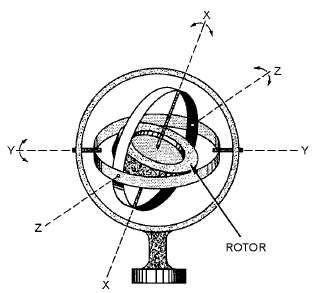
The scene changes to three dimensional in which there are two extra global circles one North-South and the other East-West. These are at right angles to the initial plane. Where these circles intersect, vertically above me and vertically below me an additional Vajrapani appears. So that there two more true cardinal Vajrapani. The quasi cardinal points fill in with smaller Vajrapani giving and extra eight smaller Vajrapani and a total now of eighteen. The feeling is of a three axes gyroscope.
–
–
There is a sense of being cradled.
The scene now changes and I am sat with Vajrapani as a younger man with long jet black hair still blue hued. He is dressed informally in a light off the shoulder white toga like robe. We are under a weeping willow like tree by the banks of a small gently flowing river. We are sat facing each other on the grass. He is very relaxed, beaming with an inner light, and it is as if we are having a picnic on the grass together though we are not eating. We are conversing without words mind to mind and are well en rapport with each other. In the dream our relationship is fraternal friendly. We know that my secondary predilection is for the light of the East. Between us is a shared knowledge of the Nagas. For a very pleasant while we sit enjoying the shade of the tree, the grassy lawn, the sound of the river, and the sparkling light of the sun reflecting therefrom. He is now always “available”.
I awake for a loo visit it is around 3:15 AM. I have an upset stomach which is telling me that I need to now cut something out of my post operative diet. I go downstairs and watch a bit of You Tube. I somehow know that it is near dawn in Northern India and Bhutan.
I go back to bed and to sleep.
I am now with the wife in the dining hall of Wycliffe College prep school. We are sat at high table with the headmaster. He is talking with us. I explain to him that it is good to revisit and that I was last here around 57 or 58. I do the maths and realised it must be 1977-8.
The scene changes and we are walking up then hill to Tiley field which used to be the athletics track. It was here that I used to run 800 and 1500 metres barefoot, sometimes for the school. I enjoyed the grass under my feet. There are a few younger people there and the use of the field has changed. The scene changes to an indoor swimming pool I am there with some teenagers from the upper school. Then we are back in the dining room.
I explain that because of my date of birth I was able to stay down and enter the scholarship class where I won the science exhibition to the school proper. I wonder if there are any records or photos of my time there. I know that there is at least one whole school photo in which I am.
The headmaster talks about how the alumni are helping to fund a school project. He gestures and someone brings an old style land line ‘phone in an olive green plastic. The ‘phone is bulky and wired in. He places it on the dinner table in front of me and gestures for me to pick it up. I know that it will have the alumni and fund raising office at the other end.
The ‘phone then looms large on the table and I wonder if the dream is telling me to make contact with my old school. Maybe they can throw some light on things. I remember that when I was there I was in trouble and had difficulty settling in. Perhaps something interesting happened about which there are records?
The wife and I look at each other knowing that the headmaster is simply doing his job as a fundraiser but also that there may be something important which he is missing by a mile.
The dreaming ends and I come to. My initial thought was that it was a nice change to have nice dreams.

 Dreamyoga