Group Control and Decision Making

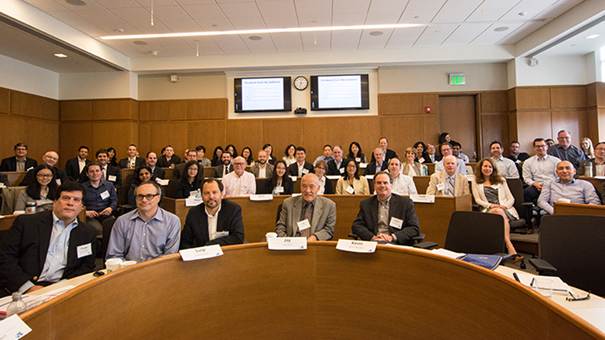
It is not unusual for groups of people to gather together and try to control what an individual outside of that group is doing. They may even have the illusion that said individual is keen or desperate to join their group as per the famous Garry Glitter song about gangs. Groups by their nature have real difficulty seeing and assimilating perspectives outside of the rarefied air of their Olympian group. We Gods know. The group may even believe that they know what is best for the “lucky” individual. Being quasi-corporate they can only see a quasi-corporate “answer” to whatever the imagined problem may be.

They can get quite complacent if something approaching within-group consensus is found.

The problem is that they can be very mistaken and totally unaware. There is very little one can do when a group has made up its mind. Nietzsche is attributed this quotation.

—-

“In individuals, insanity is rare; but in groups, parties, nations and epochs, it is the rule.”

Friedrich Nietzsche

—-

You can decide for yourself regarding some of the “sanity” currently coming out of the USA.

Groups may consider it sound to offer the lucky person a fait accompli. Having discussed only amidst themselves they may not consider how it might wash with an individual outside. Such a thing happened with the so-called peace efforts expecting Ukraine to suck it up and be grateful. The individual is then blamed and scapegoated for not accepting the divine arrogance of group omniscience.

“That pesky pleb should count his lucky stars!! He should be very grateful!!”

This phenomenon can be found on all sides in academia, industry, business, politics and amongst the righteous “they” down the pub.

Groups do not always make the best and most inclusive decisions because they cannot see outside their own Venn diagram walls. A collection of frogs at the bottom of a well, even though it may agree amongst itself, has not seen a pacific sunset nor has it gone on a silent retreat in the mountains for three years. It might imagine itself more knowledgeable and experienced than it actually is.

Groups with corporate mind always want to deal with other groups in which the socio-political hierarchy is known. They are obsessed with hierarchy and group positions. They struggle with even the notion of a non-affiliated individual. Group to group interaction can be even less inclusive. There are often power struggles and a great deal of negotiation. It is so often about power and preservation of status quo. It is about control.

The object of negotiation can be totally unaware of the blessings, he/she is about to receive.

People are people and the tendency is to do the same shit over and over.

The Slippery Slope to Totalitarianism

Postulate:

Humanity has a short memory and fails to learn from the past.

————

————-

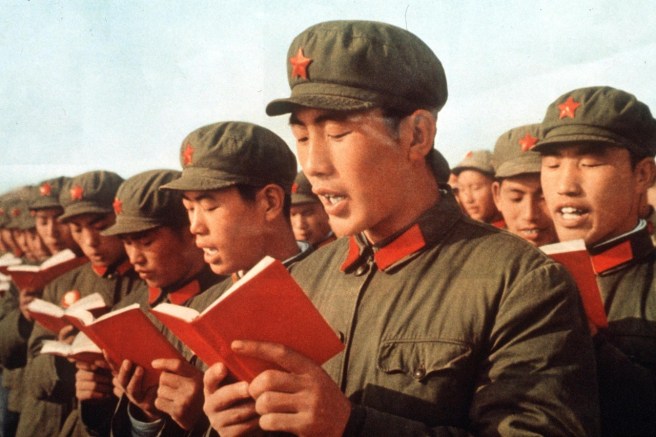
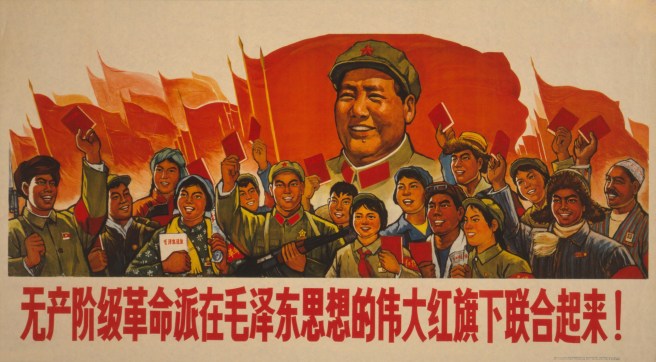
The Cultural Revolution, formally known as the Great Proletarian Cultural Revolution, was a sociopolitical movement in the People’s Republic of China (PRC). It was launched by Mao Zedong in 1966 and lasted until 1976. Its publicly stated goal was to preserve Chinese socialism by purging remnants of capitalist and traditional elements from Chinese society.

In May 1966, with the help of the Cultural Revolution Group, Mao launched the Revolution and said that bourgeois elements had infiltrated the government and society with the aim of restoring capitalism. Mao called on young people to bombard the headquarters and proclaimed that “to rebel is justified”. Mass upheaval began in Beijing with Red August in 1966. Many young people, mainly students, responded by forming cadres of Red Guards throughout the country. Quotations from Chairman Mao Tse-tung became revered within his cult of personality. In 1967, emboldened radicals began seizing power from local governments and party branches, establishing new revolutionary committees in their place while smashing public security, procuratorate and judicial systems. These committees often split into rival factions, precipitating armed clashes among the radicals. After the fall of Lin Biao in 1971, the Gang of Four became influential in 1972, and the Revolution continued until Mao’s death in 1976, soon followed by the arrest of the Gang of Four.

From Wikipedia

———–

The first step towards totalitarianism is to purge those who are against you and promote loyal brown nosers and supporters. Sycophantic yes-men are preferred over anyone who queries even if said queries are wise.

The intelligentsia must be crippled and undermined, democracy called into question and belittled. Propaganda is more important than fact. Short adamant statements hook and are preferred over detail.

Any voice to the contrary must be silenced, preferably in public and painfully so.

———-

———-

Postulate:

The cult of the personality is on the rise in humanity at large.

Substance and ethics are demoted and no longer important. Mini-me types are cloning themselves. We are sleep walking into very retrograde times.

People are easily drawn into group mind which prevents true thinking. Grievance can be exploited to garner support. Give someone an enemy and they will fall in behind you against them. Enemies unite rabbles and crowds.

—–

—-

Postulate:

Humanity has an anathema for inconvenient truths.

Humanity prefers any story or “plan” which means that they do not have to change their ways. If someone says that anthropogenic climate change is exaggerated that is easier to believe, because they want to. There is confirmation bias. People prefer to stick their heads in the sand rather than change. The bringer of messages which go against the inconvenient truths is a hero, a friend, “I told you so!”

Goebbels comments here on the power of mantra, the repetition of which can be black magic.

Postulate:

There is no such thing as a sustainable quick fix, this is an inconvenient truth.

Immediacy does not solve anything, knee jerks are never considered they are at best reactive.

Focused blame cultures and look-at-me attempts to fix “single-issue” problems are misguided if popular. It is easier to blame external factors than to accept responsibility and work hard at root cause.

Postulate:

China and Russia were never communist despite finger pointing to the contrary. They were / are totalitarian or authoritarian at best.

The bogey man of communism is an American invention, it has never been realised. Western quasi-socialism of the last century is the closest humanity has come to that ideal.

Postulate:

The cult of the personality is a very dangerous and a slippery slope. This too is an inconvenient truth.

There are numerous examples of this cult currently active and perhaps growing in the so-called democratic West. People can get easily caught up in the faux-euphoria of group mind and its sense of belonging.

Narcissists however have absolutely zero notion of loyalty and are fickle, motivated only by their own desires. Supporters are not shown the loyalty expected and demanded of them.

Postulate:

Humanity is again on the slippery slope to widespread totalitarianism pretending to be democracy.


Self-Diagnosed Omniscience and the Closed Mind

I have been having a dabble on LinkedIn and am more than a little surprised at the plethora of coaching, self-development schema and other things which sound too good to be true. People have to make a buck and the platform is used to tout and sell services. My logic suggests that either there are a lot of insecure and incapable people who need someone to help them and therefore there is a market or there are lot of “experts” surplus to demand. It has always seemed a bit of swizz to me. Someone develops some schema, some training, then demands payment from others to be certified by them. This kind of business model is in Aikido, NLP, Reiki etc. Someone must issue the certificates.

But exactly who was the source certificate, who passed them as competent?

I’ll postulate that many imagine their knowledge and wisdom to be more extensive and comprehensive than it actually is. This group of people includes really smart people at universities.

We might call them the self-diagnosed omniscient or the know-it-all gang. There are a lot of people who think they are “experts” who are unaware of the extent and breadth of their ignorance. But because they deem themselves clever and smart they are closed minded and negating of anything outside the limited church of their knowledge. They profess from their soap boxes in real life and on-line.

There is a related phenomenon, “the not invented here syndrome”. This is when group mind develops a norm, an explanation, a brand or a product. Anything which is not sourced from within that set or peer group is suspect. The brand must be evangelised and cannot tolerate any new ideas which might threaten market share. Ideas from outside of group mind are repelled with boiling oil from the parapets or Winchester rifle rapid fire from within the circled wagons. Nothing foreign and “Apache” can be tolerated and allowed to live. “They” and “we” do not like nor trust “them”.

On an off for over a decade I have had dreams in which I am not believed or listened to. There is not much I can do about that, nor do I feel hard done by. I know enough about human nature to understand that I am a bit of a non sequitur in the minds of many. I don’t make sense in the world of should and ought. For too many the step to “as it actually is” can be tricky.

We have the robes or Levis joke. I say that because of my background and my penchant for black Levis 501 I am not believed. If, however, I wore Buddhist monk’s robes the incredulity would mostly be washed away in a flash of saffron or magenta. It is that simple, people do judge a book by its cover even when they are self-diagnosed omniscient.

Which suggests that said diagnosis is at best premature.

Hmnn…