Bodhisattva

This from Britannica on line.

Click here

bodhisattva, in Buddhism, one who seeks awakening (bodhi)—hence, an individual on the path to becoming a buddha.

Pali: bodhisatta (“one whose goal is awakening”)

In early Indian Buddhism and in some later traditions—including Theravada, at present the major form of Buddhism in Sri Lanka and other parts of Southeast Asia—the term bodhisattva was used primarily to refer to the Buddha Shakyamuni (as Gautama Siddhartha is known) in his former lives. The stories of his lives, the Jatakas, portray the efforts of the bodhisattva to cultivate the qualities, including morality, self-sacrifice, and wisdom, which will define him as a buddha. Later, and especially in the Mahayana tradition—the major form of Buddhism in Tibet, China, Korea, and Japan—it was thought that anyone who made the aspiration to awakening (bodhicittotpada)—vowing, often in a communal ritual context, to become a buddha—is therefore a bodhisattva. According to Mahayana teachings, throughout the history of the universe, which had no beginning, many have committed themselves to becoming buddhas. As a result, the universe is filled with a broad range of potential buddhas, from those just setting out on the path of buddhahood to those who have spent lifetimes in training and have thereby acquired supernatural powers. These “celestial” bodhisattvas are functionally equivalent to buddhas in their wisdom, compassion, and powers: their compassion motivates them to assist ordinary beings, their wisdom informs them how best to do so, and their accumulated powers enable them to act in miraculous ways.

Avalokiteshvara

Bodhisattvas are common figures in Buddhist literature and art. A striking theme in popular literature is that of the concealed greatness of the bodhisattvas. In numerous stories ordinary or even distinctly humble individuals are revealed to be great bodhisattvas who have assumed common forms to save others. The lesson of these tales is that, because one can never distinguish between paupers and divinities, one must treat all others as the latter. In popular folklore bodhisattvas appear as something like saviour deities, a role they acquired both through the evolution of earlier ideas and through fusion with already existing local gods.

Buddhism: Celestial buddhas and bodhisattvas

A particularly important mythology in East Asia is that of Dharmakara. According to the Pure Land Sutra, Dharmakara was a bodhisattva whose vows were realized when he became the Buddha Amitabha. Pan-Buddhist bodhisattvas include Maitreya, who will succeed Shakyamuni as the next buddha in this world, and Avalokiteshvara, known in Tibet as Spyan ras gzigs (Chenrezi), in China as Guanyin (Kuan-yin), and in Japan as Kannon. Although all bodhisattvas act compassionately, Avalokiteshvara is considered the embodiment of the abstract principle of compassion. Bodhisattvas of more localized importance include Tārā in Tibet and Jizō in Japan.

Being Off the Map

In general people have a fairly fixed idea about how the world is, how people behave and what is expected. Which is a nice way of saying that people are prejudiced. The fact that I resigned my job at a decent university without any other, better job to go to, was for many a non sequitur. They could not get their head around it. It did not compute. Some invented some imaginary scandal to explain it, scandal ever being bread and butter in perfidious Albion.

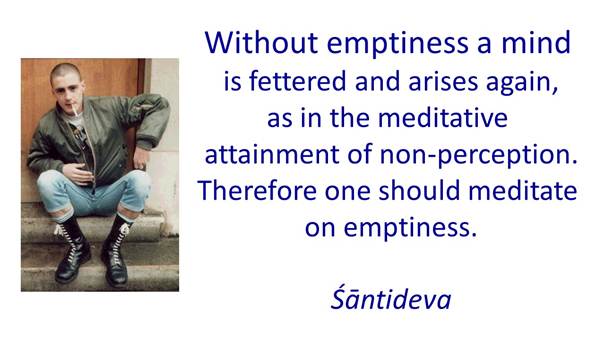
People do not associate words on perception and meditation with a smoking skinhead bovver-boy. Nor do they image that a piss artist front row rugby player can chant in deep voice. People are set in their ways and their minds are a tad concrete.

I quite like having more than one working explanation for any given situation. I do not have to settle in any absolute way for which one is “right”. Modern education insists on getting the socially accepted “right” answer to exam questions. Students want to learn how to produce and parrot the “right” answer so as to get “A” levels and degrees. People are trained to think in an absolute binary right-wrong way.

The most logical explanation from a socio-political point of view is that I am simply a burn-out who could not hack it with the big boys, the big cheeses.

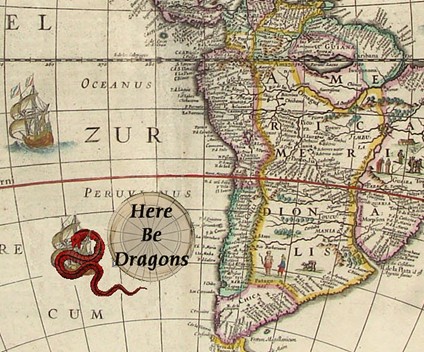
Another explanation is that I am off the map. I differ significantly in orientation from most. I just don’t fit. I am a square peg which cannot be hammered into a round hole. No drama. People have long been wary of things which have not been mapped out.

This means that only the foolhardy might seek to touch me with a barge pole. I could be infectious. Association with me could be career threatening.

I have been told by others that people do not want to be seen associating with me in public.

There is no incentive in a “what-is-in-it-for-me” sense to interact with me in any way, whether meaningful or otherwise.

I will likely remain off the map, uncharted.

People can choose to choose whatever it is they want to choose. Their choice is their choice. I have no wish to influence. If they make poor choices that is not my problem. I never advised them and they never sought my advice. People need to learn in whichever way helps them to learn.

This notion of standing back, non-interference, is neutral. It is nether life enhancing nor life destructive. It is an approach which does not make sense to others who wish to interact, to impinge, to affect and to influence. Some cannot resist trying to guide the lives of others and bend them to their will.

Non-interference is a direct consequence of emptiness, lack of will or ambition, is not on the map of modern ways of living. It is not there in “opportunity” land. After all “opportunities” should and must be seized!!

Why?

New Age – New Humanity

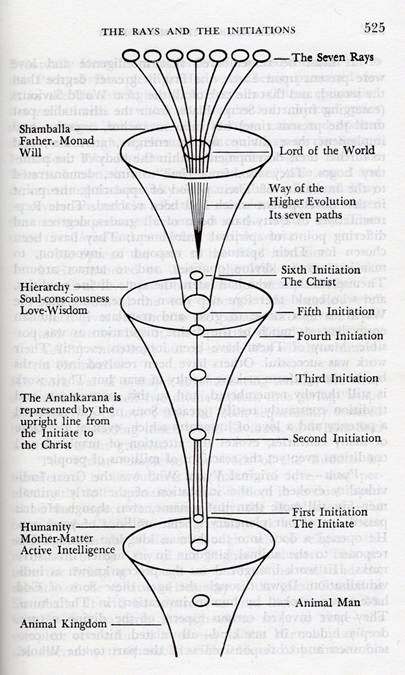
In the occult and esoteric literature there is promise of a New Age. This New Age will be radically different from the Woodstock – Wellness type of age. The change in human consciousness is mooted upward away from gonadic-emotional-concrete mind towards a fully intuitional or Soular consciousness. Such an age promises the understanding and perhaps attainment of The One Life. To get there it must cross the deserts of separative thinking. It must get past the we, me and mine towards a more global citizenship and to a wider ours. The old ways will not surrender easily. They will burn fiercely as they refuse to let go. Burn being the separation by fire and munition. They will burn for quite a while. People will justify death and fire to themselves.

For this new age an entirely new and evolving human vehicle is predicted one which is no longer so rigidly at face value heterosexual in the traditional and socio-political sense. The new humans will be configured differently. I take the whole so-called current “gender” debate as a hint, a precursor of what is to come. In time when fully Soul conscious, the entire notion of gender will no longer be important or something to soap box about. Gender roles will become historical. People will procreate according to the apparatus at birth, they will not feel out of place.  They will not feel the need to claim any gonadic based notion of gender. Which is illusory on the timescale of Soul. There will be more fluidity. The entire framework for living we currently have will become old-fashioned, a historical artefact.

The incoming beings of different make up will at first be few and far between. Their number will grow as more incarnating Souls require them. There will be oppression. Their lives will not be easy. The process will be decades even centuries long.

The transition to the new age will not be quick or painless…

The Dreamers of Mankind are Group Conscious…

At the level of the reincarnating Soul or dreamer humanity is group conscious. It is aware of other Souls or dreamers who are on the same wavelength or colour. This is soul to soul. The incarnate being may not be fully or even partially conscious at the soul level being wrapped up in the “personality” of the meaty vehicle and its desires and worries. This so-called personality is the separative notion of self, focused on by modern psychology. As yet soul-centred psychology has not come into being. The “self” may be mentally polarised, emotionally polarised or gonad obsessed. It may prefer ideas and concepts, drama and emotional manipulation, or think only about sex and shagging. The soul or the dreamer is a level of consciousness which is true intuition, the inner-tuition of the real incarnating you, the soul, the dreamer. It seeks life after life to fully infuse the vehicle and its personality into which it is born. Its journey is home to the ONE source.

An IDF soldier firing into a crowd of people queuing for food in Gaza may be killing someone whose soul is the same colour as his, who belongs to the same group of souls. Literally he kills his brother or sister. This he justifies to him or herself.

In this context my soul ray or colour is indigo-blue, the second “ray”, which means that I pertain to the elephant dreaming class in Toltec nomenclature. There are people on the same wavelength, at the level of dreamer, as me, incarnate in bodies all over the world. They may be Aboriginal, Russian or Arab or Jew. They may be Nigerian or Chinese, they may even at a push, be English. The vehicle matters not to the soul. You may drive a Honda, a Peugeot or even a Chevrolet. The driver can change “cars” from life to life. That way one gets to experience different mundane circumstance and traditions. It is all about learning.

At this level of the soul, the heart, we are the same colour, we have similar sound and a basic urge to love-wisdom. It is possible via meditation and/or dreaming practice to ascertain to which group of souls you belong, to which dreaming class you pertain.

Of course even a rainbow verbalised as Richard of York etc. is a model. The colours of the rainbow do not care for our mundane descriptors, they merge into each other, without seam or boundary. The dreaming classes are defined for clarity but abut gently. Separation and division along with comparison are faculties of human mind, lower mind at that. The dreamers of the rainbow blend into a symphony of colour where each tone, each nuance of shade and vibrancy adds to the whole, the One Life in its human aspect.

Ever since humans started killing each other the practice of fratricide has plagued this planet!!

It continues to this day…

Slowly more people will sense this innate interconnectedness, they will feel it. They will know in heart that we are but one humanity and not a bunch of angry petty warring primitives. It will take a long time. Already there are tens of thousands who sense this.

The dreamers of mankind are group conscious and it is their challenge to manifest this consciousness fully onto the physical material plane, on the planet we call earth!!

Dhyāna

From Wikipedia

In the oldest texts of Buddhism, dhyāna (Sanskrit) or jhāna (Pāḷi) is the training of the mind, commonly translated as meditation, to withdraw the mind from the automatic responses to sense-impressions, and leading to a “state of perfect equanimity and awareness (upekkhā-sati-parisuddhi).” Dhyāna may have been the core practice of pre-sectarian Buddhism, in combination with several related practices which together lead to perfected mindfulness and detachment and are fully realized with the practice of dhyana.

In the later commentarial tradition, which has survived in present-day Theravāda, dhyāna is equated with “concentration,” a state of one-pointed absorption in which there is a diminished awareness of the surroundings. In the contemporary Theravāda-based Vipassana movement, this absorbed state of mind is regarded as unnecessary and even non-beneficial for awakening, which has to be reached by mindfulness of the body and vipassanā (insight into impermanence). Since the 1980s, scholars and practitioners have started to question this equation, arguing for a more comprehensive and integrated understanding and approach, based on the oldest descriptions of dhyāna in the suttas.

In Chán and Zen, the names of which Buddhist traditions are the Chinese and Japanese pronunciations, respectively, of dhyāna, dhyāna is the central practice, which is ultimately based on Sarvastivāda meditation practices, and has been transmitted since the beginning of the Common Era.

Etymology

Dhyāna, from Proto-Indo-European root *√dheie-, “to see, to look,” “to show.” Developed into Sanskrit root √dhī and n. dhī, which in the earliest layer of text of the Vedas refers to “imaginative vision” and associated with goddess Saraswati with powers of knowledge, wisdom and poetic eloquence. This term developed into the variant √dhyā, “to contemplate, meditate, think”, from which dhyāna is derived.

According to Buddhaghosa (5th century CE Theravāda exegete), the term jhāna (Skt. dhyāna) is derived from the verb jhayati, “to think or meditate,” while the verb jhapeti, “to burn up,” explicates its function, namely burning up opposing states, burning up or destroying “the mental defilements preventing […] the development of serenity and insight.”

Commonly translated as meditation, and often equated with “concentration,” though meditation may refer to a wider scala of exercises for bhāvanā, development. Dhyāna can also mean “attention, thought, reflection.”

The jhānas

The Pāḷi canon describes four progressive states of jhāna called rūpa jhāna (“form jhāna“), and four additional meditative states called arūpa (“without form”).

Preceding practices

Meditation and contemplation are preceded by several practices, which are fully realized with the practice of dhyāna. As described in the Noble Eightfold Path, right view leads to leaving the household life and becoming a wandering monk. Sīla (morality) comprises the rules for right conduct. Right effort, or the four right efforts, aim to prevent the arising of unwholesome states, and to generate wholesome states. This includes indriya samvara (sense restraint), controlling the response to sensual perceptions, not giving in to lust and aversion but simply noticing the objects of perception as they appear. Right effort and mindfulness calm the mind-body complex, releasing unwholesome states and habitual patterns, and encouraging the development of wholesome states and non-automatic responses. By following these cumulative steps and practices, the mind becomes set, almost naturally, for the practice of dhyāna. The practice of dhyāna reinforces the development of wholesome states, leading to upekkhā (equanimity) and mindfulness.

The rūpa jhānas

Qualities of the rūpa jhānas

The practice of dhyāna is aided by ānāpānasati, mindfulness of breathing. The Suttapiṭaka and the Agamas describe four stages of rūpa jhāna. Rūpa refers to the material realm, in a neutral stance, as different from the kāma realm (lust, desire) and the arūpa-realm (non-material realm). Each jhāna is characterised by a set of qualities which are present in that jhāna.

  • First dhyāna: the first dhyāna can be entered when one is secluded from sensuality and unskillful qualities, due to withdrawal and right effort. There is pīti (“rapture”) and non-sensual sukha (“pleasure”) as the result of seclusion, while vitarka-vicara (“discursive thought”) continues.
  • Second dhyāna: there is pīti (“rapture”) and non-sensual sukha (“pleasure”) as the result of concentration (samadhi-ji, “born of samadhi”); ekaggata (unification of awareness) free from vitarka-vicara (“discursive thought”); sampasadana (“inner tranquility”).
  • Third dhyāna: upekkhā (equanimous; “affective detachment”), mindful, and alert, and senses pleasure with the body.
  • Fourth dhyāna: upekkhāsatipārisuddhi (purity of equanimity and mindfulness); neither-pleasure-nor-pain. Traditionally, the fourth jhāna is seen as the beginning of attaining psychic powers (abhijñā).

The arūpas

Grouped into the jhāna-scheme are four meditative states referred to in the early texts as arūpas. These are also referred to in commentarial literature as immaterial/formless jhānas (arūpajhānas), also translated as The Formless Dimensions, to be distinguished from the first four jhānas (rūpa jhānas). In the Buddhist canonical texts, the word “jhāna” is never explicitly used to denote them; they are instead referred to as āyatana. However, they are sometimes mentioned in sequence after the first four jhānas (other texts, e.g. MN 121, treat them as a distinct set of attainments) and thus came to be treated by later exegetes as jhānas. The immaterial are related to, or derived from, yogic meditation, while the jhānas proper are related to the cultivation of the mind. The state of complete dwelling in emptiness is reached when the eighth jhāna is transcended.

The four arūpas are:

  • fifth jhāna: infinite space (Pāḷi ākāsānañcāyatana, Skt. ākāśānantyāyatana),
  • sixth jhāna: infinite consciousness (Pāḷi viññāṇañcāyatana, Skt. vijñānānantyāyatana),
  • seventh jhāna: infinite nothingness (Pāḷi ākiñcaññāyatana, Skt. ākiṃcanyāyatana),
  • eighth jhāna: neither perception nor non-perception (Pāḷi nevasaññānāsaññāyatana, Skt. naivasaṃjñānāsaṃjñāyatana).

Although the “Dimension of Nothingness” and the “Dimension of Neither Perception nor Non-Perception” are included in the list of nine jhānas taught by the Buddha they are not included in the Noble Eightfold Path. Noble Truth number eight is sammā samādhi (Right Concentration), and only the first four jhānas are considered “Right Concentration.” If he takes a disciple through all the jhānas, the emphasis is on the “Cessation of Feelings and Perceptions” rather than stopping short at the “Dimension of Neither Perception nor Non-Perception”.

Nirodha-samāpatti

Beyond the dimension of neither perception nor non-perception lies a state called nirodha samāpatti, the “cessation of perception, feelings and consciousness”. Only in commentarial and scholarly literature, this is sometimes called the “ninth jhāna

—————————————————————————————————

And from Wikipédia

Dhyāna

Dhyāna (sanskrit : ध्यान (devanāgarī) ; pali : झान, romanisation, jhāna ; chinois simplifié : 禅 ; chinois traditionnel : 禪 ; pinyin : chán ; coréen : 선, translit. : seon ; zen (禅) ; vietnamien : thiền ; tibétain : བསམ་གཏན, Wylie : bsam gtan, THL : Samten) est un terme sanskrit qui correspond dans les Yoga Sūtra de Patañjali au septième membre (aṅga) du Yoga. Ce terme désigne des états de concentration cultivés dans l’hindouisme, le bouddhisme, et le jaïnisme. Il est souvent traduit par « absorption », bien qu’étymologiquement il signifie simplement méditation ou contemplation. Le terme méditation est utilisé aujourd’hui comme un mot désignant de nombreuses techniques en occident, il s’apparente à la vigilance en psychologie ou en philosophie. Historiquement et pour le sous-continent indien, dhyana en est le plus proche.

Patañjali, le compilateur des Yoga Sūtra, en fait une étape préliminaire du samādhi. Les deux termes sont interchangés pour désigner ces états de conscience « transcendants ». Par exemple, les traductions Ch’an en chinois, Sŏn en coréeen, Thiền en vietnamien et Zen en japonais sont des noms d’écoles de dhyāna bouddhistes, dérivées les unes des autres, où dhyāna prend ce sens fort de samādhi.

On rencontre plus souvent, en bouddhisme, le terme pāli jhāna, parce que les enseignements qui y sont liés sont plutôt une préoccupation de l’école Theravāda.

Therāvada

Atteindre les jhānas correspond au développement de la tranquillité et de la sagesse (voir Samatha bhavana). On distingue cinq jhānas de la forme ou de la sphère physique pure, et quatre jhanas dans la méditation sur les royaumes immatériels. Anapanasati est la principale technique d’accès aux jhānas, la méditation metta en est une autre. Ces jhānas sont différenciés en fonction des « facteurs » qui les caractérisent :

  • Application initiale (mouvement de l’esprit vers l’objet de méditation) : vitakka ;
  • Application soutenue (saisie de l’objet par l’esprit) : vicāra ;
  • Joie, ravissement : piti ;
  • Bonheur : sukha ;
  • Concentration en un point : ekaggata ;
  • Équanimité : upekkha.

Pour être atteints, les jhānas nécessitent la suppression de cinq empêchements :

  • le désir des sens (kāmacchanda) ;
  • la colère ou l’animosité (vyāpāda) ;
  • la paresse ou la torpeur (thīna-middha) ;
  • l’agitation ou le remords (uddhacca-kukkucca) ;
  • le doute (vicikicchā).

Les cinq jhānas du monde de la forme comportent tous des facteurs différents ; leur nombre est souvent réduit à quatre (en ne tenant pas compte d’un état intermédiaire entre le premier et le deuxième, dépourvu de vitakka, mais avec un reste de vicāra) :

  1. premier dhyâna : vitakka, vicāra, piti, sukha et ekaggata (le monde des cinq sens est complètement transcendé) ;
  2. deuxième dhyâna : piti, sukha et ekaggata (il n’y a plus d’action, de mouvement du mental, sont seulement ressentis la joie et le bonheur).
  3. troisième dhyâna : sukha et ekaggata (seul le bonheur demeure).
  4. quatrième dhyâna : upekkha et ekaggata (pure équanimité, il y a arrêt temporaire de la respiration dans cet état).

Ces deux facteurs, équanimité et concentration, resteront présents dans les 4 jhānas du sans-forme ou non physiques.

Les quatre royaumes immatériels de la méditation sont :

  1. la sphère de l’espace infini
  2. la sphère de la conscience infinie
  3. la sphère du néant
  4. la sphère sans perception et sans non-perception

The So-called Externalisation

If you swing by this blog from time to time you may note that I write a little on the blue books opus. These are written, so the story goes, by Alice Bailey acting as a telepathic amanuensis for the master Djwhal Kuhl a.k.a. the Tibetan. Whether or not you believe this story or the contents of these books, it is fair to say that a great deal of effort was made and that the contents, should you read them in entirety, no mean feat, have a marked internal consistency.

He suggests that the spiritual “hierarchy” may incarnate and live among humanity as a whole in preparation for the New Age and the coming of the Christ given impulse by the Avatar of Synthesis. I personally am not fond of any nomenclature which uses the word hierarchy. His thesis is these beings have guided humanity for millennia. An incarnate example being perhaps Comte de Saint Germain {still} who was “seen” at various European courts around the time of the French revolution.

In the works the Tibetan became a master taking the fifth initiation in the body of an old man in 1875 yet still writing books telepathically in 1950s. Such a statement is prone to disbelief.

This is not “Assassins Creed” and nor is this a Templar plot.

Nowhere in his opus does he mention that such an occurrence would be welcomed with open arms by the powers that be. In fact he is very scant on what that might look like. He does speculate on future schools of meditation and that various experiments would be undertaken. He mentions that Roosevelt was a disciple of the white magic and hints that Hitler and his evil gang of henchmen were dark and evil, dark adepts even.

Before I go further, I want to drop in a piece of nomenclature. This is the term karmic clusterfuck. A karmic clusterfuck is the biggest mistake that one can make in terms of messing up karma. In front lies a truly golden sparkly and shiny opportunity which you completely fuck up out of arrogance, power craziness and stubbornness. In seeking to control everything you turn it in a right royal, grade A karmic clusterfuck of gargantuan near cosmic proportions. The causal karmic clusterfuck will have huge ongoing effects and consequences rippling forward in space-time. That karmic clusterfuck has personal, racial and national impacts moving forward. The impacts can be global, geo-political and planetary.

It is noteworthy to examine the different treatment of Siddartha and Jesus. The resultant effects from these two karmic causes have differed, one characterised by blood greed violence and oppression the other more benign. One can draw own opinion from careful study.

Given the current obsession with espionage and “intelligence” it is not far-fetched to assume a few things. If the blue books opus is not written by the fairy godmother and has some measure of fact, then should such an externalisation happen it will be monitored. The likelihood of an open arms welcome is low. No powerful human would enjoy the interference of a bunch of beings with unknown provenance {to them}. The fatted calf would not be killed and put upon the great barbecue next to the Wagyu. Behaviour might be to observe and/or persecute. If threatened then incarnations could be encouraged to be short lived, truncated. There could even be partisan attempts to on-side the incarnating adepts and initiates, should they be discovered. Most likely there will be large intellectual resistance and this likely to emanate from the so-called scientific community as well as from churches of all flavours and creeds. Those with vested interests are the least likely to offer a heartfelt “Bienvenue”.

In clear simple terms, there will be shenanigans.

The tendency to try to double guess and assume would be difficult to resist. The basic assumption might be of motive, that the new kids on the block want to take over the ‘hood. To an enlightened being the notion of power over is an anathema. A concept difficult to comprehend for your normal powerful human being.

What is safe to say is that if such an externalisation were to occur it would be totally new and there would be zero precedent on how to approach it. Locking up an initiate in Guantanamo Bay, would be karmically unwise. It is however likely that humanity, some of its leaders, would react in a non-measured way. The new and unfamiliar can stimulate fear-dramas into those already mildly paranoid. No way would these enlightened beings be after the job of prime minister, archbishop, ayatollah or president. But people may fail to appreciate this. There would be psychological transference of motive. People would see their own reflection in the mirror.

Although a positional organisational chart was given out in the last century it would not be clear how to approach. Contact details are not available for Kuhl on LinkedIn. In 2025 he would be well in excess of 150 earth years old which is a bit of a mindfuck. Who might be the receptionist, the organisational gatekeepers? Where is headquarters? Why is their web site not SEO optimised? What is the protocol? The organisation has probably changed and evolved.

Any conventional corporate approach probably would not apply. One could not meet and share corporate PowerPoint presentations, handing out business cards with roles like Quartermaster, CEO, Secretary of State on. The concept of dealmaking may have zero applicability.

The world has changed since Kuhl was writing in depth.

I don’t know if Kuhl had envisioned how it might play out, probably not because when he was writing it was a long way into the future, a dream yet to coalesce. It would be a metaphorical minefield given that the vast majority of humanity is in no way soul-infused. The overarching psychology is that of the personality and its self-ish orientation. The interconnectedness of The One Life is not uppermost and goodwill to all men has been sadly much eroded as of late. People are self-centred and do not feel the One Humanity all that much. Separation and division are currently rife. People are not working together to face the real incoming crisis of planetary climate change; they are squabbling as “Rome” burns. They have pressed snooze on their smartphone alarm clocks.

Is it even possible for humanity to engage in a calm intelligent fashion with such a putative externalisation were it to happen?

How would you bet?

Arhats Pratyekabuddhas and Bodhisattvas – Hagiography

I have a pet theory that the hagiography of all religions exaggerates and glosses. From knowledge of human behaviour and Chinese whispers, things passed down get embellished so as to confer kudos on the teller, the raconteur. Rarely are things made greyer and more boring. This means that taking things with a pinch of salt might offer some balance.

To the faithful there is nothing quite like a miracle to prove truth and religious figures are given, in narrative, super-human abilities and qualities. These days they would be told with enhanced computer CGI and special effects on a big budget. Bigging up martyrs and buddhas is good PR for the various churches. Who in the past had control of the proles as a raison d’être. The Sacerdotes have always had ritual magic and theatre in their playbook. Simplifying the message to an all fire-consuming hell and blissful pearly-gated paradise could be writ large on the side of big red double decker “Brexit” bus. Nobody could come back to provide a TripAdvisor rating for either holiday destination.

What if all that exaggeration has gotten completely out of hand?

Christianity, depending on flavour has a host of saints. Jesus’ crew, his disciples, are sanctified and portrayed. That depiction has taken place over two millennia. They are represented as holy. When if you think about it, they were learners, disciples, in the act of being taught and trained. Similarly, Buddha’s sixteen {18} arhats are seen as holy, saintly. When they were hanging out listening to Buddha and learning his ideas. It is said they achieved enlightenment. Lessening of burden is enlightenment, full liberation may not be the same as the partial enlightenment.

People pray to the saints and the arhats.

The canon’s of both Buddhism and Christianity were/are written by human beings and therefore by logic are coloured with bias and wishful thinking. There may well be some idealising.

Mahayana promotes the bodhisattva ideal where enlightened or near enlightened beings come back to teach out of the kindness of their hearts for the benefit of all sentient beings. This is seen by some as more worthy. Whereas the haughty arhats are too arrogant to teach, the pratyekabuddhas who do it all by themselves are not sufficiently omniscient to teach. They leave no legacy. They shun the sangha; they are not one of the gang. They are too arrogant, snobby, aloof, to be with normal people. The arhats, perhaps at one with the awesome and austere nature of reality and universe, lack the cosy human compassion are biased against and not as “nice” and the smiling friendly bodhisattva. They cannot be arsed to come back time and time again, the bastards.

People who do not know what these states of consciousness are like, make judgments thereupon. This {scholarly?} interpretation gets incorporated into the ongoing cannon, the creed, the gospel. People like definitions and will roll out comparison between, all knowing, earning bragging rights about something which they do not know. One could look it up in “Buddhism for Dummies”.

Religious thinking likes its “signs”. A rainbow appearing when someone achieves Parinirvana.

What if all these processes are entirely natural, relatively low key and nothing to shout about?

The hagiography diverges from reality…what is natural becomes miraculous. Which may inhibit application. The idea of a miracle is out of reach; the idea of continuous improvement and stepwise attainment is less daunting. Toning it down might increase genuine uptake of practice.,

Status pissing contests are a common human practice and are to be found in religion and science. People like to bullshit each other and pretend to know shed loads.

I have a pet theory that the hagiography of all religions exaggerates and glosses.

Revisiting the “Thai” Incarnation – Ong Bak

I mentioned earlier in the blog that around 2003 I started having visions of myself as Buddhist priest / monk with om mane padme hum tattooed on my forearms in Sanskrit. This tattooing suggested the Sak Yant of Thai, Laos, Vietnam, Cambodia / Burma, I could not see the colour of the robes in those visions but was certain that the calligraphy was not Tibetan.

More recently I had an “Indochina” dream, a link is below.

One could say that the Buddhist Muay Thai dream resulted from me watching Tony Jaa in the early Ong Bak films. But I don’t think so.

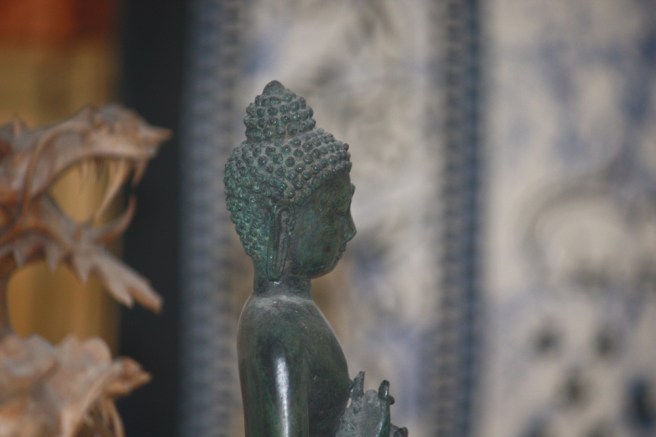
As a regular user of Watkins books where one can find much on “spirituality” I frequented Cecil Court near Trafalgar Square, London. There was an artefact shop opposite. There I purchased this Buddha / Avalokiteśvara. He is sitting in our hallway to this day.

At the time I was talking with a chemistry student during her final year research project on statute patinas joint with The Royal College of Art. The shop has moved probably to Camden. I had a long conversation with proprietor about how the village from which he sourced the statuettes used special techniques to create ancient looking patinas.

Many years later following on from a dream I visited a Thai Forest Buddhist centre, Cittaviveka, also known as Chithurst Buddhist Monastery. This was not far from where we lived in the UK.

When I had the “Thai” dream in 2023 I was genuinely quite surprised because I had mentally ruled out Indochina. But today that notion has again resurfaced. The hair-do on the statute is very Indochina – style. I have said “Thai” but it could be elsewhere on the peninsula.

The Buddhist thread is linked to the pen-pal of the wife’s mother who was the daughter of a Sri Lankan ambassador and a Pali Scholar, the author of a Pali dictionary and important to the spread of Buddhism to London. This is the Theravada link.

The monk I spoke with at Cittaviveka had looked after Christmas Humphreys. A key figure in bringing Buddhism and meditation to London.

In that dream for the first time, “I am wearing only some saffron-yellow trousers.” I am clearly Asian.

Hmnn…