Wet Memory – Intrinsic and Extrinsic Entropy Dream – 30-01-2026

Here is last night’s dream which is out of the blue and does not relate to the day to day of fence repair after another visit by the wild boars. Where this came from I have no clue.

I am walking through central London, Mayfair Piccadilly. It is a bright sunny day. I notice people converging on an ornate building in light coloured near white stone. It is a hybrid of Burlington House the old Royal Society of Chemistry where I spent many enjoyable hours in the library and of The Royal Society. People are gathering for some kind of scientific meeting. There is a mixture of academics and industry figures. I am not invited to this meeting. Through the doors and in the atrium I can see a reception desk which is being staffed by some women whom I used to know, a generation younger than me.

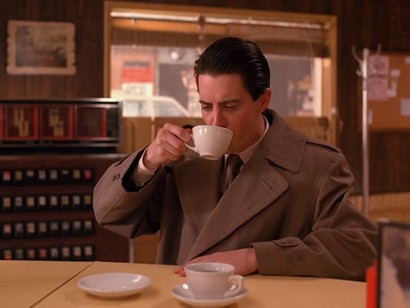
On a whim I walk in to say hi. They greet me and I ask if there is any chance of a cup of coffee. They get me one and warn me that it is not all that. I see that the conference is on “New Frontiers in Memory”. It has the theme of molecular architectures and memory and is of a think tank type of conjecture meeting. Rob walks in with one of the invited speakers who is a yank around 40. He is some kind of big cheese at the conference. Rob and I recognise each other after all these years. He introduces me to the speaker who is going to talk on protein molecular architectures and memory storage in the brain. He tells me that memory is all about entropy. You have to work against entropy to remember.

Rob invites me upstairs to look around. There are academic posters and a coffee service area. We queue and get a coffee and then stand at a pub style chest height table. In my mind’s eye I can see the way the cheese tries to address a memory array stored in a synthetic gel matrix. It is his way of modelling a wet memory, a mimic of biological memory which he seeks to incorporate into the next generation computers. I say to him that the encoding is of two types and that there are intrinsic and extrinsic entropies. The intrinsic entropy relates to where an individual amino acid is found along a protein chain and the pattern of its neighbour molecules. The extrinsic entropy is related to its local environment, degrees of folding and how space filling it is, how many gaps and voids are incorporated in the macroscopic protein structure. He says that he not previously thought about the molecular location entropy within a given protein strand. It might answer one of the questions he has. I can see in my mind’s eye an address matrix or tensor in mathematical form which defines coordinates for a given amino acid in a 3d protein amongst a wider gel matrix. The intrinsic lack of entropy is how a memory is stored. Memory works my comparing entropy. Anything not expected entropically is a memory. Low entropy is memory.

I say that the coffee is poor and that I hope they enjoy the meeting. I am off in search of a Starbucks, Costa or Caffè Nero.

The dream ends and I think WTF was that…

Memories – Alzheimer’s – Still Alice

The other night we watched a film “Still Alice” the purpose of which was to get the viewers to empathise with the Columbia University professor Alice who develops early onset Alzheimer’s disease. It portrayed the impact on her and her family as she lost cognitive function and recall. There was no CGI, sex or violence in the film and it was engaging, well written and well-acted. A nice change from the glitzy, violent and insubstantial. It was a bit sentimental drawing on the American idealism of family and career. It showed how when someone devotes all life to career it can be taken away. Where value is placed can be fragile.

It is pretty easy to prematurely self-diagnose Alzheimer’s as one moves towards dotage. In our case the need for linguistic engagement outside of our proximal relationship is minimal. One could say that I am out of practice talking shite.

Modern psychology is very normative in its approach and there are a series of behavioural norms which, if there is divergence from, evokes a label of illness or syndrome. I don’t know where the set of societal norms are garnered from, what the statistical evidence is or whether the ultimate arbiter of “they” decrees what is normal. I don’t know who drew up and populated the Venn diagrams.

In the film there was mention of “memory makes us who we are”, there was thumbing of family photo albums and old holiday film footage was played in the narrative.

Human perception is never 100% objective and any recall of past events is subject to selective perception and selective memory. Humans are biased. We have selective recall. The memories, the bedrock upon which we build our re-collection of life are not entirely sound. In the film the protagonist identified as a clever university professor. That identity was removed when she started to lecture poorly. Her entire personal legend fell into question. The film suggested she suffered during this process, trying to cling on to her faculties and her legend.

A saccharin rose-tinted view of the past is perhaps the tearful key to enjoy the twilight years according to many. Looking back wistfully sustains as incapacity and incontinence sets in. Our past “glories” provide a nice warm feeling which is not a leaking catheter. The ability to live partially in the past is seen good as the quantity of future available fades.

I am certain that how I hold memories of the past differs from many because I have recapitulated my life numerous times and worked hard at erasing my personal history {not in a browser}. I’ll speculate that were a psychologist to investigate my recall of life memory they might note a difference to norm.

I am not beholden to past nor do I cling on to it. Nevertheless, it has a causal relationship in how I interact in the now. I have a decent scientific training and could, if pushed, sustain a scientific conversation or persona.

One could argue that I have forgotten who or what I once was and have morphed into an anti-social bumpkin. Look how far he has sunken! What a fall from intellectual grace! How sad, what a shame!

But that would be facile.

This addiction to creating “memories” or “Insta-stories” is counterproductive to the pursuit of liberation. The concretising enhances the urge for rebirth. The constant re-telling of “family means everything” is often a lie and something we are encouraged to provide in our PR stories for public consumption. There is a big illusion concerning “family”. To err from ideal is seen as bad even when the ideal itself is an illusory construct. We are complicit in the propagation and recounting of this illusion.

This means that although I can appear approximately normal, the underlying psyche in my case differs markedly in that a shared basis is not there. I do not think the way I am “supposed” to.

About a decade ago I had cause to re-learn university level physical chemistry. It took a while. I had big difficulty because some of the so-called proofs which I once accepted without question no longer seemed adequate to me. They seemed short-cut. Yet thousands of undergraduates receive degrees every year by correctly reproducing them and applying them mathematically to exercises generated by faculty. I have no doubt in the physical applicability of much science, because we can build rockets that work. I am not entirely convinced that the methodology is as perfect as we imagine and profess. There may be some element of kidding of self along the way.

Maybe I have lost my science ability, my science faculties.

The film touched briefly on the notion of identity, or self, and hence self-perception. Something which Alzheimer’s gradually erases, if I understand correctly. In some ways my notions of self are gone already even though I maintain some cognitive function and have near zero resident social-event memory. There is nothing which I cling to and not very much which keeps me here, incarnate, on earth.

This notion of self, seen as good, is also behind war and conflict. The gist of the film was that maintaining the sense of self and still being the same person underneath despite all the loss of function and memory was a good thing. I am still…despite…

I am not sure that it is, from the point of view of liberation. Karmically if you place a lot of stock in intellect and its application, then to have it withdrawn is a major challenge. One which could set you up well for the next life. Sometimes our worst fears manifest and that is not necessarily a bad thing. Our challenges at end of life can be the most profound and the most enabling for our onward evolution.

In the end, for all of us, our current notion of self must dissolve and pass whether quickly or otherwise.

Self is impermanent.