Shamballa and Guardians of the Race

Shambhala (Sanskrit: शम्भल, IAST: Śambhala), also spelled Shambala or Shamballa (Tibetan: བདེ་འབྱུང, Wylie: Bde’byung; Chinese: 香巴拉; pinyin: Xiāngbālā), is a spiritual kingdom in Tibetan Buddhist tradition. Shambhala is mentioned in the Kalachakra Tantra. The Bon scriptures speak of a closely related land called Tagzig Olmo Lung Ring.

The Sanskrit name is taken from the name of a city near the Ganges, sometimes identified with Sambhal in the Indian state of Uttar Pradesh, as mentioned in the Hindu Puranas. The mythological relevance of the place originates with a prophecy in Vishnu Purana (4.24) according to which Shambhala will be the birthplace of Kalki, the next incarnation of Vishnu, who will usher in a new age (Satya Yuga); and the prophesied ruling Kingdom of Maitreya, the future Buddha.

Excerpted from Wikipedia

In the blue books opus Kuhl makes numerous mentions of Shamballa and it is referred to in the Kalachakra Tantra. The obvious Lara Croft or Indiana Jones question is where? Where can I find this mysterious place which is perhaps imbued with secrets, power and treasure?

Kuhl suggests that initiates of a certain degree { 3 and above} can go “there” as members of the blue or white lodges. Here the term lodge has perhaps been adopted for the benefit of those inculcated into freemasonry. A lodge is hardly a Himalayan notion. He suggests that Shamballa acts as a kind of planetary chakra. It is “at” Shamballa that certain members of the so-called hierarchy meet and meditate. This so-called hierarchy correlates with those Théun Mares refers to as “The Guardians of the Race”. The notion is that these beings have since the beginning of humanity been looking over us and revealing various teachings to help humanity evolve. They distribute “energies” which are both causal and facilitative.

In this school of thought beings who have taken the fourth initiation no longer have a causal body which is blown off during the act of initiation. These beings are no longer required to incarnate by the laws of material karma. If you accept such a notion, if only as a working hypothesis, it should be reasonably clear that a being who no longer needs to incarnate will be markedly different to one who must. Technically they no longer have a reincarnating Jiva or Soul. They have transcended. They are now something else.

If you are not even partially soul infused it might be difficult to comprehend someone/something who has gone way past where you might find yourself now. It might be tempting to suggest that this is a bunch of codswallop and made up fairy tales.

To look for a physical plane manifestation of Shamballa would be a sign that one only believes in physically measurable physical materiality. The absence of stones or ruins mighty be deemed proof of the non-existence. History suggests that many things “proven” by humanity are subsequently found incomplete, inaccurate and wrong. Yet humanity remains adamant and vocal about the completeness of current “proof”. The soap box beckons. There is an in public alignment with the currently accepted dogma.

Shamballa is probably not a Disneyland style magic castle in the air…

As it is described it is an operative “sacred” thought form, a place of work and/or meditation. It is “there” that a gathering of consciousness occurs. Over a long while this thought form has been built refined and shared. One cannot construct it, imagine it, unless one is already able.

The thought form is more complex and extensive than one might imagine. Certain “areas” are available only to relatively few. One might say that physical limitations like brain and noisy mind can limit access.

The way Kuhl describes it is by analogy perhaps to some kind of temple in which there is an inner sanctuary open only to those evolved enough to enter. There can be found, depending upon the needs of the time, the three Buddhas of activity, the senior members of the hierarchy and the Sanat Kumara.

To expect a corporeal from, human shaped, points at the endless anthropomorphic ideation of humans. The one which casts God as a geezer on a cloud. Human imagination has a bit of a meat, bricks and mortar, fetish.

Not all members of the externalising hierarchy are linked or tied to Shamballa, according to Kuhl. One might take the published writings as merely a taster of a much wider plan. It is by way of, perhaps, a “for instance”.

He suggests that those working with the Shamballa impulse are developed meditatively in a particular way, trained to work therein and therewith. They may well be in a physical incarnation; there are others which are not.

The notion of a disincarnate being working on “energies” pertaining to the planet, is not currently provable, nor might it be swallowed easily by the modern omniscient scientist. These putative contemplatives are formless to mundane eye. The notion of a formless intellect or consciousness is an anathema to a neuroscientist who must publish and put dinner on the table. MRI machines cost shit loads and these must be justified. They could not measure a formless contemplative.

To accept that things which cannot be measured using the instrumentation based on The Standard Model exist, is not easy to accept. Yet dark matter and dark energy are mooted.

The more that minds construct the Shamballa thought form the more “concrete” and “real” it becomes.

If a lot of people think of “Gangnam Style” then one can be easily infected by a brain worm, which is difficult to shift. Thought forms have a non-material existence in the “aether” for want of a better word. We can easily tap into them whether we might wish to or not.

Shamballa then is by way of a meditative and intuitive “thought form” which has a non-material existence and “where” meditation and work can be carried out in a group like manner, in formation and en rapport

“Spiritual” Journeys

I have used inverted commas quotation mark here because I struggle a little with how words have in a sense become tainted by multiple usage and being bandied about as PR. Spiritual as a word has had its impact and meaning downgraded to the point of near meaninglessness.

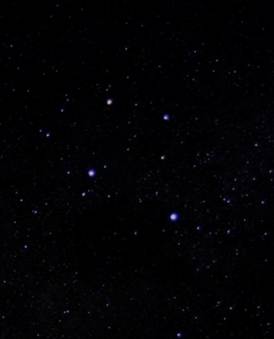
I am going to attempt to put into words something which I have hesitated to do. It is close to impossible. This cannot be undertaken without emphasising just how important a few years of my childhood were in my development, in this life. One constellation in particular left its mark deep in my psyche.

It was by its light during an English language common entrance exam that I foresaw events near two and a half decades later. It was the harbinger and the key of a volte face in life. I left the harbour alone in my coracle adrift upon the Southern ocean lit by its solace. I left Cape Town after being burned on table mountain.

Later I had another foreboding which was also to find consummation over a similar time delay. Each of these were pivotal. That foreboding prevented me making a UCAS university choice against the advice of my school teachers.

When I was young and in an English boarding school as an expat child I got to read the lessons and the prayers in church. While the others sat with parents. It was like a duck to water that I took to the lectern and the prayer “chair” deep in the nave. There I found St Francis of Assisi.

« Seigneur, faites de moi un instrument de votre paix.
Là où il y a de la haine, que je mette l’amour. »

« C’est en pardonnant qu’on est pardonné,
c’est en mourant qu’on ressuscite à l’éternelle vie. »

This man was in tune with the Mahayana bodhisattva ideal. His words touched.

Unfortunately those with the skill of a chameleon can adopt any mask, any direction, any character they choose. Believe me I learned how to blend. And in blending one loses authentic essence.

At the end of my schooling I took general studies courses in Buddhism, cooking and Rastafarianism. Ever Jah, ever loving, ever faithful. Rastafari. I read all that I could on witchcraft and alchemy. I made “friends” with the librarian in our town.

The Buddhism was presented in an intellectual descriptive manner in which the various fetters were enumerated for debate. Although I understood, the manner was for me boring and definitional. I sensed beyond that which was being professed. It was during intense meditation sat in seiza at karate that I learned that I had in fact been meditating all of my childhood. I used to sit and observe. I used to wait. I was touched directly by the dreamtime out in the shimmering bush of western Queensland. The aboriginal pointing stick had cleaved something open.

And then when I went to university I mostly forgot. By the time I was doing my Ph.D. research I figured that I had found something I was good at. So maybe this was the future. I enjoyed “pissing about with lasers”. I was to an extent, life and soul of the party. It was only in the early nineties that I started to withdraw, as if driven by a deeper current, out into the hills, the mountains and the countryside. It set up a kind of imbalance. On the one hand was a “normal” life and career. On the other there was silence and quiet. My reading was more intellectual philosophy, science and philosophy of science. I noted that despite mundane academic achievement many of “the greats” struggled with non-salary paying bigger questions.

I was offered a choice. Fort Collins Colorado or Bern Switzerland. One of those would have brought me quicker into contact with things “spiritual” than the other. The Swiss francs were certain, so I saw the Berner Oberland and learned painfully of “qualität”. Something which I tried thenceforth to express.

In the mid nineties at the place of my prior foreboding I was brought to my knees. Despite writing excellent research proposals I was stymied and unfunded. A grudge held by a “competing” senior academic could kill a proposal with a mere word. I had a breakdown. The answer to life the universe and everything could no longer be found in the laws of quantum mechanics and thermodynamics. It seemed there was more. It was around then that my ambition faded and the picture of a life academic dimmed. I began to search in earnest. I opened myself up wide. Again I largely forgot and tried to rebuild a life after breakdown. For some unknown reason money for research and start-up came more easily. I was “successful” for a while.

In the very early part of this century I was tested by power. I had a taste of it and did not abuse. Like Galadriel I refused the ring and was no longer sorely tempted thereby. It was around this time that a series of what might be called micro-renunciations began. In which step-wise I renounced or was forced to renounce the accoutrements of normal life. Each one was more difficult and profound than the last. Slowly life was stripped of all that made it busy and hectic. Until in the middle of 2006 I renounced all and walked off into the metaphorical “wilderness”. Dramatic as that sounds, at face value it looked simple, at core it cleaved and parted, severed and up-ended.

I did not become a wandering mendicant with charnel grounds for abode nor skull cup for beverage. Though adrift I most certainly was. I had already learned as a child, the nature of impermanence. Strangely without accoutrement life did not cease, the world did not implode, nor did it stop.

When you are thrust  from an Outlook calendar ruled life, with hours dissected into segments, with meetings set for you, with each action seemingly accountable, into nothing. The meaning of time changes in an unalterable and irrevocable way. It is no longer a spreadsheet thing. The boxes, the rice paper walls of the day, dissolve.

At end of 2008 I left the map so to speak. I began a series of meditations which went beyond. There was nothing, despite my research skill, which I could find written. These “meditations” continued in the UK in houses close to civilisation yet separate in the English countryside. I can say that the rigor of these was high and they continued for many years. In around 2010-11 I began having Buddhist dreams.

In the early part of the century whilst still teaching physical chemistry I had a series of waking visions in which I had “om mane padme hum” tattooed on my forearms in Sanskrit and with me in monastic robes. These visions were sufficiently powerful to be present whilst I was lecturing Chemical Reaction Kinetics to undergraduates in South Kensington. It was around then that I got to express my compassion for others, to care for them.

Overlaid on a “Toltec” background was a distinctly Buddhist vibe.

All the while I had a seemingly normal life as a married man doing for quite a while “A” level science private tutoring. The outer world and the inner world differed and markedly so.

To me as a member of the elephant dreaming class there is no problem with the scholastic wisdom teachings of Siddartha and the more dramatic Toltec corpus. The latter is a guide, when viewed with clarity, to the navigation of glamour and illusion. There is probably only one truth expressed via many different approaches. The Tower of Babel has a lot to answer for…

This is probably enough for today…

The Lotus Eaters and a Logical If

As the nights draw in and the temperature drops the occurrence of wildlife in the garden goes up, becomes more frequent. Already the badger is looking for roots, soon we may get deer grazing. For sure the “lotus eaters” aka Coypu or Nutria will return. There was evidence of an attempted perimeter breach overnight. The charge on the battery driving the electric fence has dropped. I had a shock off it yesterday, a tickle. Today I have replaced the battery. This means if any of the Coypu family come to snack on our tasty lotuses Thor may release a lightning bolt to discourage. Since we have installed the electric fence by the river our display of lotuses has flourished. This year was magnificent.

Om mane padme hum

If we take dream content as evidence and consider visions as non hallucinatory then we might conclude that I have had at least four and probably five lives in a priestly or monk like Buddhist incarnation. It is therefore not too much of a stretch to suggest that the term bodhisattva might apply to me, I can be considered as someone seeking liberation. In one of these “visions” I was told that this is my very last incarnation, a suggestion which is internally consistent with the aforementioned logical if.  

This may not sit entirely easily in juxtaposition with a brief career as a pukka scientist. It might seem odd to the class professorial. To me there is no jarring.

We then come upon the Garry Glitter question, “to whose gang do I belong?”

Am I Toltec?

Am I Buddhist?

Am I boffinacious?

One could perhaps draw a Venn diagram, if one could be arsed.

I am unlikely to fall into worship of anti-scientific superstitious conspiracy theories. I am not science-phobic. Nor do I believe in the whole saviour fallacy. Nobody died to save you; it is up to you. Confessing your sins will not remove karmic debt even if you pay the pope a cool million quid. You cannot bribe karma.

To follow on from the logical if. There is an addendum.

If you have treated a bodhisattva badly then that is karmically “bad” for you.

We then get quickly into splitting karmic hairs about degree of bodhisattva and extent of transgression.

The basic rule of thumb is try not to be an arrogant bell end to anyone. It does not need to be any more complicated than this. It is not a bad mantram.

“Remember to try not to be an arrogant bell end…”

Dhyāna

From Wikipedia

In the oldest texts of Buddhism, dhyāna (Sanskrit) or jhāna (Pāḷi) is the training of the mind, commonly translated as meditation, to withdraw the mind from the automatic responses to sense-impressions, and leading to a “state of perfect equanimity and awareness (upekkhā-sati-parisuddhi).” Dhyāna may have been the core practice of pre-sectarian Buddhism, in combination with several related practices which together lead to perfected mindfulness and detachment and are fully realized with the practice of dhyana.

In the later commentarial tradition, which has survived in present-day Theravāda, dhyāna is equated with “concentration,” a state of one-pointed absorption in which there is a diminished awareness of the surroundings. In the contemporary Theravāda-based Vipassana movement, this absorbed state of mind is regarded as unnecessary and even non-beneficial for awakening, which has to be reached by mindfulness of the body and vipassanā (insight into impermanence). Since the 1980s, scholars and practitioners have started to question this equation, arguing for a more comprehensive and integrated understanding and approach, based on the oldest descriptions of dhyāna in the suttas.

In Chán and Zen, the names of which Buddhist traditions are the Chinese and Japanese pronunciations, respectively, of dhyāna, dhyāna is the central practice, which is ultimately based on Sarvastivāda meditation practices, and has been transmitted since the beginning of the Common Era.

Etymology

Dhyāna, from Proto-Indo-European root *√dheie-, “to see, to look,” “to show.” Developed into Sanskrit root √dhī and n. dhī, which in the earliest layer of text of the Vedas refers to “imaginative vision” and associated with goddess Saraswati with powers of knowledge, wisdom and poetic eloquence. This term developed into the variant √dhyā, “to contemplate, meditate, think”, from which dhyāna is derived.

According to Buddhaghosa (5th century CE Theravāda exegete), the term jhāna (Skt. dhyāna) is derived from the verb jhayati, “to think or meditate,” while the verb jhapeti, “to burn up,” explicates its function, namely burning up opposing states, burning up or destroying “the mental defilements preventing […] the development of serenity and insight.”

Commonly translated as meditation, and often equated with “concentration,” though meditation may refer to a wider scala of exercises for bhāvanā, development. Dhyāna can also mean “attention, thought, reflection.”

The jhānas

The Pāḷi canon describes four progressive states of jhāna called rūpa jhāna (“form jhāna“), and four additional meditative states called arūpa (“without form”).

Preceding practices

Meditation and contemplation are preceded by several practices, which are fully realized with the practice of dhyāna. As described in the Noble Eightfold Path, right view leads to leaving the household life and becoming a wandering monk. Sīla (morality) comprises the rules for right conduct. Right effort, or the four right efforts, aim to prevent the arising of unwholesome states, and to generate wholesome states. This includes indriya samvara (sense restraint), controlling the response to sensual perceptions, not giving in to lust and aversion but simply noticing the objects of perception as they appear. Right effort and mindfulness calm the mind-body complex, releasing unwholesome states and habitual patterns, and encouraging the development of wholesome states and non-automatic responses. By following these cumulative steps and practices, the mind becomes set, almost naturally, for the practice of dhyāna. The practice of dhyāna reinforces the development of wholesome states, leading to upekkhā (equanimity) and mindfulness.

The rūpa jhānas

Qualities of the rūpa jhānas

The practice of dhyāna is aided by ānāpānasati, mindfulness of breathing. The Suttapiṭaka and the Agamas describe four stages of rūpa jhāna. Rūpa refers to the material realm, in a neutral stance, as different from the kāma realm (lust, desire) and the arūpa-realm (non-material realm). Each jhāna is characterised by a set of qualities which are present in that jhāna.

  • First dhyāna: the first dhyāna can be entered when one is secluded from sensuality and unskillful qualities, due to withdrawal and right effort. There is pīti (“rapture”) and non-sensual sukha (“pleasure”) as the result of seclusion, while vitarka-vicara (“discursive thought”) continues.
  • Second dhyāna: there is pīti (“rapture”) and non-sensual sukha (“pleasure”) as the result of concentration (samadhi-ji, “born of samadhi”); ekaggata (unification of awareness) free from vitarka-vicara (“discursive thought”); sampasadana (“inner tranquility”).
  • Third dhyāna: upekkhā (equanimous; “affective detachment”), mindful, and alert, and senses pleasure with the body.
  • Fourth dhyāna: upekkhāsatipārisuddhi (purity of equanimity and mindfulness); neither-pleasure-nor-pain. Traditionally, the fourth jhāna is seen as the beginning of attaining psychic powers (abhijñā).

The arūpas

Grouped into the jhāna-scheme are four meditative states referred to in the early texts as arūpas. These are also referred to in commentarial literature as immaterial/formless jhānas (arūpajhānas), also translated as The Formless Dimensions, to be distinguished from the first four jhānas (rūpa jhānas). In the Buddhist canonical texts, the word “jhāna” is never explicitly used to denote them; they are instead referred to as āyatana. However, they are sometimes mentioned in sequence after the first four jhānas (other texts, e.g. MN 121, treat them as a distinct set of attainments) and thus came to be treated by later exegetes as jhānas. The immaterial are related to, or derived from, yogic meditation, while the jhānas proper are related to the cultivation of the mind. The state of complete dwelling in emptiness is reached when the eighth jhāna is transcended.

The four arūpas are:

  • fifth jhāna: infinite space (Pāḷi ākāsānañcāyatana, Skt. ākāśānantyāyatana),
  • sixth jhāna: infinite consciousness (Pāḷi viññāṇañcāyatana, Skt. vijñānānantyāyatana),
  • seventh jhāna: infinite nothingness (Pāḷi ākiñcaññāyatana, Skt. ākiṃcanyāyatana),
  • eighth jhāna: neither perception nor non-perception (Pāḷi nevasaññānāsaññāyatana, Skt. naivasaṃjñānāsaṃjñāyatana).

Although the “Dimension of Nothingness” and the “Dimension of Neither Perception nor Non-Perception” are included in the list of nine jhānas taught by the Buddha they are not included in the Noble Eightfold Path. Noble Truth number eight is sammā samādhi (Right Concentration), and only the first four jhānas are considered “Right Concentration.” If he takes a disciple through all the jhānas, the emphasis is on the “Cessation of Feelings and Perceptions” rather than stopping short at the “Dimension of Neither Perception nor Non-Perception”.

Nirodha-samāpatti

Beyond the dimension of neither perception nor non-perception lies a state called nirodha samāpatti, the “cessation of perception, feelings and consciousness”. Only in commentarial and scholarly literature, this is sometimes called the “ninth jhāna

—————————————————————————————————

And from Wikipédia

Dhyāna

Dhyāna (sanskrit : ध्यान (devanāgarī) ; pali : झान, romanisation, jhāna ; chinois simplifié : 禅 ; chinois traditionnel : 禪 ; pinyin : chán ; coréen : 선, translit. : seon ; zen (禅) ; vietnamien : thiền ; tibétain : བསམ་གཏན, Wylie : bsam gtan, THL : Samten) est un terme sanskrit qui correspond dans les Yoga Sūtra de Patañjali au septième membre (aṅga) du Yoga. Ce terme désigne des états de concentration cultivés dans l’hindouisme, le bouddhisme, et le jaïnisme. Il est souvent traduit par « absorption », bien qu’étymologiquement il signifie simplement méditation ou contemplation. Le terme méditation est utilisé aujourd’hui comme un mot désignant de nombreuses techniques en occident, il s’apparente à la vigilance en psychologie ou en philosophie. Historiquement et pour le sous-continent indien, dhyana en est le plus proche.

Patañjali, le compilateur des Yoga Sūtra, en fait une étape préliminaire du samādhi. Les deux termes sont interchangés pour désigner ces états de conscience « transcendants ». Par exemple, les traductions Ch’an en chinois, Sŏn en coréeen, Thiền en vietnamien et Zen en japonais sont des noms d’écoles de dhyāna bouddhistes, dérivées les unes des autres, où dhyāna prend ce sens fort de samādhi.

On rencontre plus souvent, en bouddhisme, le terme pāli jhāna, parce que les enseignements qui y sont liés sont plutôt une préoccupation de l’école Theravāda.

Therāvada

Atteindre les jhānas correspond au développement de la tranquillité et de la sagesse (voir Samatha bhavana). On distingue cinq jhānas de la forme ou de la sphère physique pure, et quatre jhanas dans la méditation sur les royaumes immatériels. Anapanasati est la principale technique d’accès aux jhānas, la méditation metta en est une autre. Ces jhānas sont différenciés en fonction des « facteurs » qui les caractérisent :

  • Application initiale (mouvement de l’esprit vers l’objet de méditation) : vitakka ;
  • Application soutenue (saisie de l’objet par l’esprit) : vicāra ;
  • Joie, ravissement : piti ;
  • Bonheur : sukha ;
  • Concentration en un point : ekaggata ;
  • Équanimité : upekkha.

Pour être atteints, les jhānas nécessitent la suppression de cinq empêchements :

  • le désir des sens (kāmacchanda) ;
  • la colère ou l’animosité (vyāpāda) ;
  • la paresse ou la torpeur (thīna-middha) ;
  • l’agitation ou le remords (uddhacca-kukkucca) ;
  • le doute (vicikicchā).

Les cinq jhānas du monde de la forme comportent tous des facteurs différents ; leur nombre est souvent réduit à quatre (en ne tenant pas compte d’un état intermédiaire entre le premier et le deuxième, dépourvu de vitakka, mais avec un reste de vicāra) :

  1. premier dhyâna : vitakka, vicāra, piti, sukha et ekaggata (le monde des cinq sens est complètement transcendé) ;
  2. deuxième dhyâna : piti, sukha et ekaggata (il n’y a plus d’action, de mouvement du mental, sont seulement ressentis la joie et le bonheur).
  3. troisième dhyâna : sukha et ekaggata (seul le bonheur demeure).
  4. quatrième dhyâna : upekkha et ekaggata (pure équanimité, il y a arrêt temporaire de la respiration dans cet état).

Ces deux facteurs, équanimité et concentration, resteront présents dans les 4 jhānas du sans-forme ou non physiques.

Les quatre royaumes immatériels de la méditation sont :

  1. la sphère de l’espace infini
  2. la sphère de la conscience infinie
  3. la sphère du néant
  4. la sphère sans perception et sans non-perception

Seeing Things Differently

Recently I was talking with someone who suggested that an in-patient group oriented intensive physiotherapy regime postoperative for hip arthroplasty was a good idea / French practice. He was, to understate, more extroverted than I. The idea of being around loads of people “helping” me to recuperate via conviviality just does not work for me. It would be close to torture, feeling unwell and having to interact in a foreign language on a regular basis, with others. No thanks.

This sounds like a showstopper to me. In my mentality I would delay or not proceed at all.

Maybe I am ungrateful or maybe I know myself well.

It is clear in this simple example how we see things differently.

“Jack Sprat he ate no fat; his wife she ate no lean.”

What works for one person does not work for others. According to all the common metrics I am socially isolated. Some might imagine that I need help. Poor Alan.

They may even imagine that they know what is best for me. Because as every newspaper vendor knows it is always the antisocial loner, who is not well liked, that becomes the heinous murderer. Helping the socially excluded is an anti-murder prophylactic measure, which makes sound societal sense.

Unlike most people I don’t care what the ‘phone companies do with my data, because I don’t generate any. I am not in any target marketing demographic. Daytime TV however is full of adverts aimed at the likes of me. I’ll get my SAGA loyalty card soon, to use until my pre-paid cremation plan kicks in.

The problem with seeing things differently is that it is nigh on impossible to explain or otherwise convey that difference to others, specifically the scale thereof.

I look relatively normal. I can speak “normal” for a short while. But I know from experience that the way I assimilate the world differs radically from others. I am not prone to influencers, whatever they are. I do not swallow hook line and sinker what I might read in the news of whichever flavour / prejudice. As an outsider, I need help to rejoin the fold, the group lunacy. Bless…

Most people suffer from worry and catastrophising. I can have brutal clarity without dramatic catastrophic thinking. I can envision futures and remain calm.

It is impossible to communicate the lack of ambition / goal to anyone who is beholden to theirs. I am happy to make unilateral decisions based on available information even when I know that information is incomplete.

Once you have attained impermanence, you change as does your orientation towards life.

“This too, shall pass”, is more than just a saying.

People in general have a need to “do” something. There is a need of immediacy. A desire, an urge, to get things “sorted”. I have learned that some things simply cannot be sorted. Some have to be endured. Some need let go of. Some need to calm in emotional temperature and thence to fade away.

It is economical not to intrude, to inflict oneself upon or otherwise interfere in the lives of others. This is a form of harmlessness.

A passive approach of response when needed tends to calm. Though it can also infuriate, humans being as they are.

It is impossible to please everyone.

I see apertures in the web of life, during which things may be possible. When I see them closing, I know that the possibility and probability of things happening drops. Until finally what once might have been possible, no longer is.

One of the aspects of impermanence is the notion of timeliness. Timeliness has a time limit. If things do not occur when they may or might, they do not and cannot. The moment has passed. The “permanent” possibility or opportunity is gone.

Impermanence teaches that complacency is unwise. It is a non-nihilistic implication which many fail to see. There is only a discrete aperture in spacetime for things to occur…

You have only my word for it, that I imagine that I see things differently from others…

I could be talking BS…

You decide…..

Entrepreneur – Consciousness Studies – Dream 16-04-2025

Here is this morning’s dream had between 3 and 6 AM.

The dream starts in a non-chain coffee shop similar to one I once went to in San Jose. It has a Berkley – San Francisco feel. There is wooden panelling and stools up to an island style table. They are the same height as lab stools but out of wood with an inbuilt orange-red “cushion”. I am with a young man {~40} who is very excited and energised. He is dressed smartly and known to me though I cannot see who he is. We are to meet an acquaintance of his who is some relatively big shot tech entrepreneur. He is wealthy and now investing.

A man comes in with a small entourage. He is wearing a dark suit with unruly black hair. His shirt is unbuttoned. He spies my companion across the room and motions for his entourage to be seated. He comes over. My companion gets up and they great each other profusely as “bros” in a transatlantic accent. The entrepreneur is also in his 40s. He sits on a stool opposite me and has the air of someone in a rush used to not wasting time.

My companion introduces me as the ex-academic mystic he has been talking about. The entrepreneur is setting up some kind of endeavour looking into consciousness studies. He asks me how I got involved. I explain that my first formal introduction into meditation was during Kyokushin Karate training and the zen meditation therein. I demonstrate a brief series of karate style chudan-ski punches. I explain that I looked into shamanism. And that later I did some very pioneering meditation.

The man decides that he wants me “on board”. I know in the dream beyond any doubt that he has not the faintest idea what he is letting himself in for nor what I am capable of. He has no clue what I am. He is completely unaware of his ignorance and full of bluster.

The scene changes and I am now in a red brick UK mansion in an upper floor large room. The entrepreneur is sat there with some of the people he has gathered. I am there too, near a large sash window. I am standing. A part of the motivation of the entrepreneur is to understand his father, his meditation and what has happened to him after death.

I look out onto the lawn and sat there cross legged is a large white man with a complelety bald head and a massive ZZ top beard. He is meditating in the light rain, his hands in mudras in his lap. The sun is behind him and I can see at the far end of the lawn a faint rainbow lit up in the rain. The man on the lawn and I know each other well. We go way back, lifetimes.

The dream ends.

Goal Orientation – Suffering and Dissatisfaction

If you search for “coaching” you will find many people offering their services as coaches and often a part of this is setting goals or targets for success and advancement. Few notice the similarity of goal and gaol. People can become prisoners of their goal orientation. Society is obsessed with measurable metrics and tick lists of things to do, to the extent that life can be a wearisome endless list of devoirs. It is de rigueur to have goals and ambition it seems.

Siddartha wanted so badly to end suffering for all sentient beings, suffering, or dukka, can be translated as dissatisfaction.

I’ll make a statement: goal orientation is directly causal of dissatisfaction.

If you fail to make a goal you are dissatisfied, if you make a goal, you are temporarily done but the next goal awaits lurking on the horizon. Any “satisfaction” is fleeting. This measurement obsession more often than not suggests some measure of inadequacy, could do better.

People then have massive internal dialogue about whether of not they are meeting their goals. Internal dialogue is nearly always negative and hence the being suffers unnecessarily because of this internal “mental” cacophony.

Goal orientation and rush often skip hand in hand. Focussed only on the goal there is a tendency to finish quick and this can cause poor application to task and lower standards. Goal orientation can prevent impeccability. Eye on goal one does not fully absorb into whatever it is one is doing. There are distractions from other pending goals. Quality suffers on the noose of measurable quantity. Goals hang.

The antithesis of spiritual development is rush. It is impossible to rush it, but many try and seek milestones to prove progress. The hangover of societal obsession with goal orientation is difficult to ease.

Striving is a form of suffering.

Relaxation and complete absorption is the antidote. Complete absorption brings completion but without obsessional suffering. Complete absorption quietens the internal dialogue and therefore reduces dissatisfaction. Everyone knows when they have been impeccable. Impeccability is not an absolute. If you give completely of your current very best that is all you can do, this never brings dissatisfaction. Subsequent comparative internal dialogue can cause the nine headed hydra of dissatisfaction to rise again.

Internal dialogue is a primary cause of dissatisfaction and suffering.

Endless measuring is causal of dissatisfaction and suffering.

Comparison mind is directly causal of dissatisfaction.

Rational thinking causes dissatisfaction. Therefore, rational thinking is an irrational unwise thing to do. It does not make sense.

Of course, under certain circumstances one needs some rationality.

If one is ever goal oriented one never experiences the moment, the eternal now, because the goal is very distracting. Not being fully present causes dissatisfaction. If one lives in the twin worlds of what if and if only, there is rarely now. The past whether melancholic or rose tinted, the future whether idealised or catastrophe is not now, it is mind-stuff often of the nature of internal dialogue. Trash.

Goal orientation causes impatience which is a form of dissatisfaction. Goal orientation when one is driving a car is a cause of road rage.

Letting go of goal orientation is liberating.

Try it, having no goals is harder than it might seem, because societal habituation near worships them.

Hence there is suffering and dissatisfaction, which we might call samsara or saṃsāra, which is another term for endless human folly.

Unprecedented Dreaming

For me it has been a useful exercise to group these dreams thematically and see the scope and variety of subject matter. Many people are interested in dreams and things like lucid dreaming. There is an attempt to gain scientific credibility for dream studies using instrumentation and the statistical methods of psychology. Taken as a whole the opus of dreams published here and those not yet published may be unprecedented, and unique. Who else dreams of vajras, patents, lamas and hydrogen bonded water clusters?   

Am I simply an anomaly or is there something more significant at work?

In general people seek to promote their own ideas and profile. The not invented here syndrome can be found on all sides. Group mind is very anti anyone or any idea which does not originate in the group. Outsiders are not very welcome especially if they challenge the status quo or question current operational dogma.

I did, religiously, a Toltec dreaming practice daily at least once a day for eight years. I did it on the Victoria line of a morning. If you can do dreaming practice on a crowded rush hour tube you can do it anywhere. The control has to be good. The intent behind this practice is to connect with the dreamer {Soul or reincarnating Jiva} and then to hand over the steering wheel of the earthly vehicle to her. To live life according to the advice given in dreams, to surrender control.

Subsequent to this I did a meditation called the master in the heart which has a similar purpose, of connection. It builds the Antahkarana, a rāja yoga. One could say that Toltec dreaming draws inspiration down and the yoga builds upwards. They are rose and lotus visualisations. Union or at-one-ment are the goals or aim if you like. It does not require wearing tight leggings or looking fit / hot. It does mean that some measure of letting go of imagined control is needed.

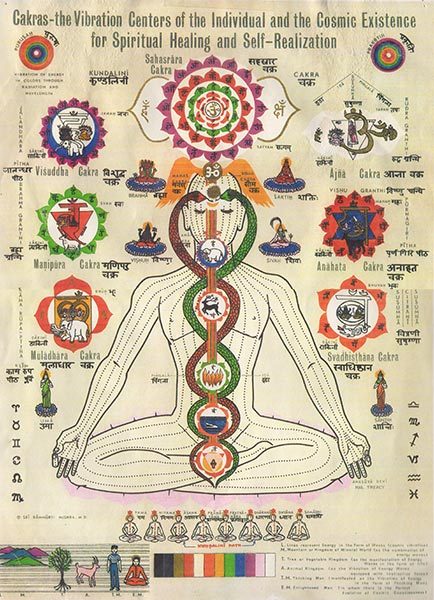
Because I am good at visualisation, I have extended the rāja yoga to “places” beyond any written account. In Toltec terms a steady pictorial visualisation is an active dream in which you imagine and hold fast an image. These dream thought forms tend to stabilize when they are “accurate” and reproducible.  For example, the Sahasrāra chakra or crown chakra is one such visualisation. Opening this chakra and going beyond it is a death practice in which one opens the exit door. In order to do this one needs to stretch the sūtrātman anchoring the life inside the body. It is a risky thing to do, control must be impeccable. I first did this in a detached house in the middle of a wood on a country estate a distance from interruption and people. During the day I was quite alone in a “cabin” in a wood.

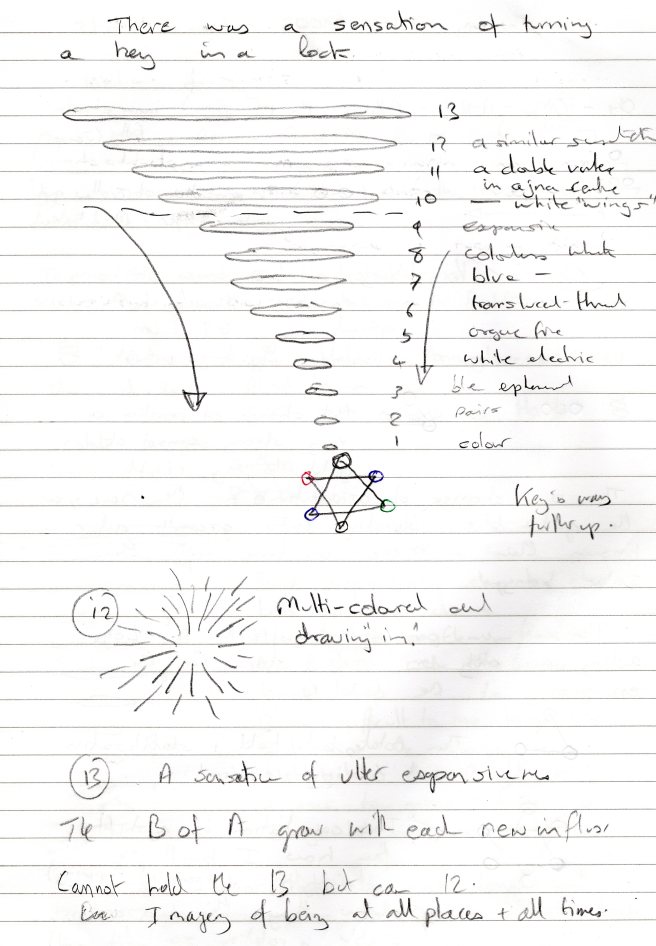
Because I am a scientist by training and I used to train smart young things in science at a top university and at high school sixth form levels. I even had postdoctoral workers. I have kept lab books or dream journals. The rāja yoga or active dream meditations were extensive with some of the thought forms taking weeks and months to build.  What one experiences in passing to a “higher” more “rarefied” state of consciousness is a kind of “membrane” which has to be transcended / popped. Each new state is difficult to hold or stabilize. Yet with practice it can be done. Here is one page from my dream journal.

In these meditations slight residual corporeal awareness remains but all sense of earth-time vanishes. There is a distant awareness of the room. One continues breathing but unconsciously so. I did record electroencephalograms {EEG} and video for a few of these. The EEG is, aside from very low frequency and amplitude theta, essentially flat despite the visualisation.

These meditations have a sensation of extensive travel to non-mundane “levels” “states” or “places”.

There is no way that I could adequately convey the experience to others. Unless you have “gone” there yourself you cannot know. Of particular assistance was the mantra associated with the Heart Sutra which one can chant in order to change between states when working upwards.

Gate gate, para gate, para sum gate bodhi svaha

Gone gone, gone beyond, gone beyond the beyond, hail the awakening

I was in conscious control doing this during daylight and without drugs or booze.

One needs to take great care to come back “down” and into body consciousness. At first the “path” downwards is as slow as the “upward”. In time one knows the way “home” and this can be done more quickly.

I guess these meditations are a form of white tantra. They are situated at anja and above and have nothing to do with basal tantra. In some later meditations three centres are active, heart, anja and sahasrāra.

In my book active visualisation and 3d {sometimes +} thought form building is active dreaming.

Of course I could be kidding myself, but I somehow doubt that.

This is what I mean by dreamyoga…

Losing Your Mind – Zen

Some people might think that I am/was a complete nut job for getting out of a contract which would have paid 8000 euros a month tax free, over a decade ago. I must have been out of my mind. Others might think me whacko for a number of my beliefs and that I have lost my mind. Why would a trained scientist not strive for recognition and research funding. Why renounce his job at a world “top ten” university? He must be barking mad and batshit crazy to boot.

I have lost my mind but not in the way people might think.

In general, my mind / head is a very quiet place. There is no continuous chatter of internal dialog. I am not busy with should and ought, nor is comparison mind resident there. My mental default is silence. I can observe, I can experience and absorb. I can hear and see, but there is no mind making endless qualitative thinking. If I want to think I have to actively engage my mind. It does not run off like a horse when the stable door is opened.

I could say that my “mind” differs from most. I know that it has changed markedly over the last two decades. But there is no way that I can explain or illustrate in a meaningful way what my “mind” is like to anyone suffering from internal dialogue or very attached to the common socio-political assimilation of world and society. I once experienced that world first hand as an active participant. I no longer do/am.

I still look much the way I used to but the animating contents of the meaty body are now changed. People might struggle to understand that I am not as I was and interpret me in terms of an old look up table of behaviour and manner. I’ll speculate that many would not get it or me. My assimilation of world is different, I cannot prove this to you or anyone really. It would take sharing a considerable amount of time and circumstance to appreciate and I would have to extrovert my thoughts and thinking in order for people to see just how different. I can still interpret events from a “normal” perspective but I do not share the emotions many are beholden to. I can appear to fit in and comply with the common world views.

In the Zen literature there is a lot of mention of Buddha nature. If I understand Zen at all it is to live fully in the present and at the point before mind knowing that as observer you are also participant and not separate from the arising phenomena. Zen does not like definitions because that is a feature of comparison mind and a definition by definition invites comparison to said definition which is “mind”. People stress over definition and argue the toss. Buddha nature is offered as a way of being, a nebulous ideal which exists when mind is fully quiescent. Most of the Zen koans are devised to show just how much mind trips one up and self-entangles. They point at not using mind the way which it is customary so to do.

In order to be “Zen”, one has to lose one’s mind and yet remain sane.

However, what is considered sane in the common socio-political assimilation of world, is all “mind” and therefore insane. If people like their possessions and acquisitional materialism, to detach from these would be considered lunacy by many. A wide empty path is the road of the lunatic who disavows possession, grabbing and the socio-political accumulation of kudos and social power.

Kudos is illusion in Zen and Buddhism as a whole. Yet many seek it with a passion.

Although people use Zen as an adjective for calm, they are not interested in attaining it because it requires that they forego the common world view. As we all know you cannot have your cake and eat it.

How is my logic?

Do we live in a sane world?

Is there an increasing problem with mental health as measured to the normative socio-political construct?

I have lost my “mind” does that make more or less sane than you?

Are you saner than I?

Discuss….