Gelugpa Wrasse – Dreams and Snippets 21-02-2025

The first thing to say here is that what follows is inordinately difficult to verbalize.

Leading up to the last few days and despite numerous appearances of Tibetan based themes in dreaming I have been fairly certain that I have never had a Tibetan-Bhutanese-Nepalese incarnation. In whatever visions or dreams I have had with a Buddhist flavour I have never been wearing the maroon robes of that locality and certainly never any groovy hats.

Nevertheless, the tulku {or nirmāṇakāya} phenomenon has been resident at the periphery. I have never had the Mahayana urge or thought form pertaining to a bodhisattva training journey of coming back for the benefit of all sentient beings, to teach and to aid. This idealised wish form projected onto would be bodhisattvas seems a human thing and potentially prevents beings from leaving when they ought to be exiting the wheel of rebirth. “Please don’t leave us”, is not an empowering or enabling sentiment.

A few days ago, in the twilight between sleep and wakefulness I had a few images of me dressed in maroon monks robes with a yellow hat characteristic of the Gelug lineage of Tibetan Buddhism. I was surprised. It was a “turn up for the books” and does not fit with my hypothetical chronology. The only Tibetan stuff I have felt akin with are the tales of Chögyam Trungpa though I met at a distance Akong Rinpoche. Their relationship was complex if I understand it correctly. I have a hypothesis as to why Trungpa resonated.

What is safe to say is that the thought-forms associated with and to centuries old Buddhist traditions, studied and recited by thousands are firm, almost solid. The lineage has a “mind” all of its own, nurtured by devotees of and with a ruthless and tireless devotion. It exists in the mental and emotional space of humanity. People reciting and chanting for centuries make something almost tangible in a physical sense. The traditions and practice are kept vital and alive by regular enactment, quasi-archaic though they may be. They are alive.

Newtonian mechanics dominated the human psyche to be improved upon around a century ago for microscopic systems. Yet Newton is useful to this day in our everyday reality. These mechanics are a part of the mental space of humanity. They have merit. They work. There is a loose analogy.

This morning, I had a brief dreaming sequence in which I encountered a fish in a tank. The tank was large, beautiful and with coral. The fish was an ocean going wrasse. It introduced it self as a Gelugpa Wrasse. It told me that even if I had been previously associated with the Gelug, there was no place for me therein in this life. Such a thing would be way too disruptive. The wrasse was calm and relaxed. It was just conveying without colouration.

It said that way back in the 1990s in Switzerland there had been a possibility but life circumstances had scuppered that. “Not to worry”, it said. It showed me some images of Bern.

I struggled to hold more of the dream but the wrasse part remained clear. Fish is the dreaming symbol for awareness or the need to be wide awake. The wrasse was pretty enough though contained in a tank. It was not free.

I am not sure what to make of it.

Last night we watched the Netflix programme “Adolescence” in which life for a family changes dramatically overnight. It was very good and left one with a breathless reminder of how normality can be completely flipped in a matter of hours.

We have had a few flips over the years.

Freaky Friday, an equinox talking with fish again…

Past Life CVs or Resumés

As a part of application for jobs it is not uncommon to be asked to provide a curriculum vitae (CV) or resumé. Often one is asked for references of referees. The offer of job is therefore based on something one writes oneself and what some other geezers say about you. If I understand it correctly it is not uncommon {these days} to do a social media trawl on an applicant and get them to sign some corporate social media usage contract if the application is successful. If people want to work, they must not express any controversial opinion or behaviour in public, there is a kind of thought police. PR concerns may be more important than ability to do the tasks required, adequately or well. The world is an edgy place with PR driven cancel culture.

In this context I can say that my current incarnation is as a retired person specialising in gardening and DIY. The only person on earth who could write me a reference which is less than five years old is the wife. I have not been employed by a company or institution for nearly twenty years, so there is nobody who could write me, with any honesty, a reference less than ~ two decades old. The logic of this is that I am not qualified for any job which requires a current written or oral reference.

I could say that in a prior incarnation I was a university lecturer. The phlebotomist yesterday asked me why I needed a Ph.D. in chemistry and I said that a long time ago in a land far away I once taught at a university in London.

It is very much like a prior incarnation, an entirely different and pressured existence in a place with a high human density per cubic metre, a prior life. A different world entirely. I said to her, “Londres, c’est fou!”

Why do CVs not extend to prior incarnations?

Few actually check in detail what is claimed in CVs for even the current life. Though no doubt there will be CV fraud and certainly exaggeration. People are encouraged to big up the CV and add a hype polish. It may be interesting to do a statistical analysis of distortion in CVs submitted.

As far as I know only one culture is interested in past-life CVs, prior incarnations and that is the Tibeto-Bhutanese-Nepalese one, which extends by exile into India. Reincarnated Rinpoche Lamas, Tulkus, have travelled to and taught in the west. In that context a great deal of respect is offered to these beings and they get the throne of a lamasery or even to lead a country based upon their rebirth CV which may extend back more than ten incarnations.

How would you behave if you met a Rinpoche tulku lama? Would that differ to the criticism in your head about hocus pocus? Would you go through the motions or refuse to go along with charade?

People who may not believe in reincarnation might offer respect to a high tulku lama if they meet in a certain cultural context. How they might behave in a pub or coffee shop could be a different matter. Kudos is of course culture specific, yet there is some transferability. An anointed Nobel prizewinning scientist has kudos in Academica and more widely, they have the stardust of deity attached. There are even questions about them on University Challenge!! This ranks them with Tintoretto and Da Vinci.

A CV is meant to be a witness of experience and kudos harvested. If you have been to a famous institution {not asylum} you get CV brownie points. A mere whisper of Harvard sprinkles some magic dust of assumed elite braininess and knowledge. You could have been shit, but the name-kudos camouflages this.

It is very difficult to check the truth of many CV claims. Employers tend not to keep aged records. I could make factual claims {according to my recollections} about where I was employed. But to get supportive records from human resources there may not be facile. I could, knowing this, make some shit up. Proof may not exist, not even in the pudding. There is an unwritten assumption that CVs are not complete packs of lies.

I have circumstantial evidence which suggests that I have had two {three} lifetimes as a Buddhist practitioner {monk / priest}. Does that mean I can put it on my CV to apply for jobs as a Buddhist teacher? Nobody alive could offer me a current reference because they all carked it centuries ago and I have not found them again in this lifetime. If things for prior lives are as difficult to prove as those from current lives why not put them on the CV.

There is a part of me, which might like to submit a CV dating back 3000 B.C.E for a job position just to see if they responded, binned it or kept in “on file” because there were other applicants more suited to the job description dogma grid. My bet would be zero response. I could then telephone to inquire…

Perhaps I could then write a movie script…

“A long time ago in a land far away…”

“A long time ago in a galaxy far, far away….”

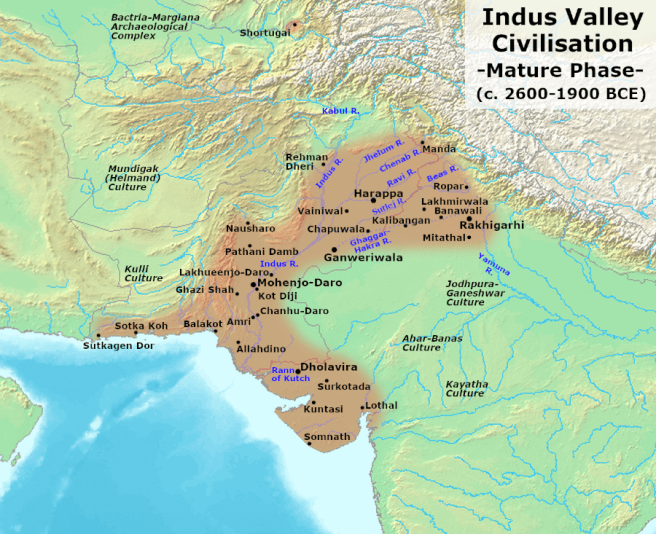
3000 B.C.E. Son of a Brahman Indus Valley, Northern India

The Bronze Age in the Indian subcontinent begins around 3000 BCE, and in the end gives rise to the Indus Valley Civilisation, which had its (mature) period between 2600 BCE and 1900 BCE. It continues into the Rigvedic period, the early part of the Vedic period. It is succeeded by the Iron Age in India, beginning in around 1000 BCE.

Standard cubic weights from the Indus Valley 2600-1900 BCE

Cubic “dice” made by me {unknowing} for Tibetan Mo divination, Brittany 2024 CE.

The measurments are made with a high precision capacitance micrometer and are accurate to plus or minus 0.01 mm..

How Many Fully Enlightened People Are There?

If you type various versions of this question into Google you see that there are people discussing it on line. I have even seen articles on Buddhism which states that the goal is to achieve nirvāṇa. Buddhism does not have KPIs and personal development planning, nor does your line manager tear you off a strip if you don’t achieve your goals.

I’ll speculate whoever considers nirvāṇa a goal is a long way indeed from said goal. He is in a gaol of Western thinking.

In various school of thought nirvāṇa is when the causal vehicle {Soul or reincarnating Jiva} has been blown off. This means there is no requirement to reincarnate, a strictly human thing. Humans are “bound” to the wheel of rebirth. Someone, some being, who has done that, nirvāṇa, is strictly speaking no longer human. In the context at death the being who has attained nirvāṇa achieves the state of parinirvāṇa at the dissolution of the meaty incarnate form. Thereafter “they” remain formless.

We could get into the gender debate about pronouns. What pronouns do you use for some entity which has no body, no observable physical plane presence? What is the correct pronoun for a fully enlightened Buddha? It?

The problem I have with enlightenment as a concept is that is enlightenment an absolute or a relative term? It might be said that someone got enlightenment, does that mean that they are a fully enlightened Buddha or does it mean that they are little less heavy than before. They have attained a quantum of enlightenment, a bit, one step further up the ladder. They are lighter, less dark and thereby enlightened. To progress one gains enlightenment in a stepwise fashion, realisation by realisation. At nirvāṇa the being is lighter because it no longer has a causal vehicle or personality, notions of self have dissolved. It is enlightened, unburdened.

There is the concept of returning high attainment Bodhisattvas, who on death put off the attainment of parinirvāṇa and come back of their own free will to teach. Because they have no causal vehicle, they create a nirmāṇakāya emanation for such a purpose. If I understand it correctly there may be many of these in the Tulku tradition. Arhats can be seen as selfish because they do not come back. But that is a transference of human personality onto someone who has no self. I have seen it prejudiced that Bodhisattvas are good, and Arhats not so. Human folly, methinks.

In esoteric thinking the end of the causal vehicle comes at the fourth initiation. If one cross references, this is nirvāṇa or blowing off. If I understand it correctly this phenomenon is associated often with physical plane death {but not always}. One gets nirvāṇa and sharpish thereafter parinirvāṇa. In that school of thinking there are a few more stages of development, the other initiations, after doing what Siddartha did in getting planetary nirvāṇa.

One might rephrase the question, “how many fully enlightened beings are there?”

In the esoteric school of thought the fourth degree initiate goes on to take the fifth and become what some call masters. This happens, according to my reading, relatively soon.

I think most people would struggle to envision or envisage a “living” awareness or consciousness in the absence of a physical plane body. So, people invent worlds and dimensions or abodes where they might picture some enveloping form even if that be nebulous. The inventions are inspired by life on earth. Being superstitious people like signs and miracles as circumstantial evidence or proof of nirvāṇa or parinirvāṇa. There must be a rainbow or a comet. If it is a wholly natural part of evolution why would this happen? It is kind of no big deal. There is a desire for sanctity and holiness where they may just be a natural evolutionary process.

The question itself seeks to quantify and scale because people like to compare, to play top trumps.

“My God is better and more real than yours”, being a root of many wars.

Going a step further “are” implies existence or being. Can something exist if there is no form, no measurable lump of meat. If something is formless, is it?

Instead of quantifying we may now rephrase.  “Are there enlightened beings?” “Do they exist?”

“It’s life Jim, but not as we know it!”

Astrobiology and astrochemistry are looking for life in a chemical-biological entity with a physical existence measurable by modern instrumentation. The assumption being that life can only exist in some kind of form, or particularly a corporeal form no matter how small. Science requires a form {and perhaps reproductive urge} as a basic component of life and its definition.

A formless Buddha after paranirvāṇa would not technically be alive according to human definition.

So maybe according to science enlightened beings do not exist.

The answer is therefore zero and not 42….

Which poses the ancillary question does, zero exist or not?

Language – 800 years ago.

The spoken language around here in Brittany would be evolving back then. The founding saints, purportedly mostly Welsh, and from near Llantwit Major in Glamorgan would have spoken Welsh.  There was St Illtud’s “academy”. They moved here around 500 AD as Welsh was changing from the other Brittonic languages such as Cornish or old Cornish Kernewek Koth. In around 500 Welsh would have been more similar to Kernewek.  There was migration from all the west coast of Britain. Cornish resembles Breton well.

There would be residual Latin which was slowly morphing into medieval French. So far, I have found out that there are few texts in rakkrennvrezhoneg or pre-medieval Breton. There are plenty of Welsh texts.

There are old texts from Brittany in Latin. I am guessing that the clergy and those with money were versed in Latin and it was used to “translate” a sort of universal.

So, if I was incarnate around 800 years ago as a “priest” or member of a religious order I would have had to speak Latin and if on crusade medieval French. I would have spoken rakkrennvrezhoneg with the locals

One can see that the shape of word in Medieval French is closer to Breton than modern French

The word order in The Song of Roland is different but I can interpolate some meaning using French and my rusty “O” level Latin.

Looks like I have a new thing to invetsigate on the rainy days.


Quotations from English French and Breton Wikipedia

Medieval Welsh literature is the literature written in the Welsh language during the Middle Ages. This includes material starting from the 5th century AD, when Welsh was in the process of becoming distinct from Common Brittonic and continuing to the works of the 16th century.

The Welsh language became distinct from other dialects of Old British sometime between AD 400 and 700; the earliest surviving literature in Welsh is poetry dating from this period. The poetic tradition represented in the work of Y Cynfeirdd (“The Early Poets”), as they are known, then survives for over a thousand years to the work of the Poets of the Nobility in the 16th century.

The core tradition was praise poetry; and the poet Taliesin was regarded as the first in the line. The other aspect of the tradition was the professionalism of the poets and their reliance on patronage from kings, princes and nobles for their living, similar to the way Irish bards and Norse skalds were patronized for the production of complex, often highly alliterative forms of verse. The fall of the Kingdom of Gwynedd and the loss of Welsh independence in any form in 1282 proved a crisis in the tradition, but one that was eventually overcome. It led to the innovation of the development of the cywydd meter, a looser definition of praise, and a reliance on the nobility for patronage.

——————-

Le moyen breton (krennvrezhoneg en breton moderne) est le nom que l’on donne à la langue brittonique parlé en Bretagne de la fin du XIe siècle à la première partie du XVIIe siècle. On place généralement la date de fin en 1659 lors de la sortie du dictionnaire du père Julien Maunoir. Il a été précédé par le vieux breton et suivi par le breton moderne.

Elle a fourni une littérature, une poésie, mais surtout un théâtre, d’inspiration religieuse.

Chronologie du moyen breton

On distingue plusieurs périodes :

  • 1100 – 1450 : pré moyen breton
  • 1450 – 1600 : moyen breton classique
  • 1600 – 1659 : moyen breton tardif

Caractéristiques du moyen breton

Les emprunts au français deviennent très nombreux. Le français est alors la langue la plus influente de l’Europe et influence également l’anglais. D’une manière étonnante quand un mot breton ressemble à de l’anglais, il provient généralement du moyen français. Ex. : to strive; strivañ : s’efforcer de

  • Le -ff traduit un v nasalisé. Cependant, à la fin du moyen breton le v disparaîtra complètement, à l’exception du dialecte guérandais ou du Goélo (prononcé f),
  • Le son dh est marqué par z (menez, scoaz…),
  • Le son th est transcrit par z, tz ou zz (scuiz, bartz, hennez, harzaff),
  • Le son ts, qui vient la plupart du temps de nom français est transcrit par ç, cc, cz,
  • Le son [oe] évolue en oa (sauf en vannetais-guérandais et Haute-Cornouaille où il reste oe. Il reste oe également au Pays de galles),
  • Le son eu venant des débuts de l’ancien breton.

——————

krennvrezhoneg

Ar c’hrennvrezhoneg eo ar stumm eus ar brezhoneg a veze komzet ha skrivet etre dibenn an XIvet kantved ha kreiz ar XVIIvet kantved.

Mareadoù ar C’hrennvrezhoneg

  • 1100 – 1450 : rakkrennvrezhoneg
  • 1450 – 1600 : krennvrezhoneg klasel
  • 1600 – 1659 : krennvrezhoneg diwezhat

Ar rakkrennvrezhoneg

Eus ar rakkrennvrezhoneg ne vez anavezet nemet spisc’herioù, anvioù-tud hag anvioù-lec’h.

Ivonet Omnes en deus skrivet ur varzhoneg war marzh an dornskrid e oa o sevel dre eilskrivañ war-dro ar bloavezhioù 1350 ; setu amañ ar varzhoneg hag he reizhiad klotennoù :

An guen heguen am laouenas,

An hegarat an lacat glas,

Mar ham guorant va karantic,

Da vout in nos o he kostic.

Vam garet, nep pret.

————-

Catholicon, geriadur brezhoneg-galleg-latin Jehan Lagadeuc, skrivet e 1464 ha moullet e 1499

Catholicon eo anv ar geriadur kentañ e brezhoneg, a oa bet skrivet e teir yezh, brezhoneg, galleg ha latin : ennañ e vez kavet an droidigezh c’hallek eus ar gerioù brezhonek kement hag o c’hevatal e latin.

Ar c’hentañ geriadur galleg an hini eo ivez enta ha war an dro ar c’hentañ geriadur teiryezhek er bed.

Savet e voe, pe beurechuet da vihanañ, e 1464 (d’ar 16 a viz Eost hervez) gant Jehan Lagadeuc, person e Plougonven, ha moullet e voe evit ar wech kentañ d’ar 5 a viz Du 1499 e Landreger gant Jehan Calvez (Euzen Roperz e lizherennour). O soñjal e kloareged yaouank Breizh o vont war o studi e oa bet savet an oberenn-mañ evit o skoazellañ da zeskiñ latin evel ma vez diskouezet splann amañ dindan (bet treuzskrivet e brezhoneg a-vremañ) :

    Me, Yann Lagadeg, eus parrez Plougonven, en eskopti Treger, Bachelour war an arzoù hag an dekredoù, goude ma n’on ket dellezek d’en ober, savet am eus al levr bihan-mañ evit talvezout da gloer vihan baour Breizh peotramant d’ar re zo dizesk war al latin.

Anvet e oa bet Catholicon (geriadur hollel), pa ne oa ket bet roet an anv-se gant an oberour, moarvat diwar anv ur geriadur all, ar geriadur latin brudet a oa anvet Catholicon ivez (Summa grammaticalis quae vocatur Catholicon), savet gant an Dominikan Giovanni Balbi (Johannes Januensis de Balbis), eus Genova, hag echuet d’ar 7 a viz Meurzh 1286.

—-

La Chanson de Roland

Belief and Proof

I’ll speculate that many believe things, ideologies and religions for which there in no possibility of proof. Half of the UK “believed” that Brexit was a good idea, many were adamant even though the outcome was unknown. They professed with absolute certainty about something which had not yet happened. Some Americans chant the MAGA mantra. Exactly when was America ever a great and equal place? Bad stuff has always gone on there to some extent.

People will believe whatever it is they want to believe. The strength of belief may vary. The war in Vietnam seemed like a good idea at first. Someone thought agent orange was good.

The church had a vested interest in making people God-fearing. Bums on seats meant coins on collection plates and salaries for clergy. The gold held by the churches and all that chavvy stuff goes against my interpretation of New Testament Christianity which differs from Old Testament Torah. Yet many who name themselves Christian believe in an eye for an eye instead of turning a cheek. I personally cannot envisage any deity in human or anthropomorphic form. {With the exception of Ganesh} I was made to draw God as a white bearded white geezer at the convent school in Zambia.

People born with penises believe that they can be “women” after a few hormones and a change of clothes, a new frock.

Some of the conspiracy theories floating about are to my eyes far-fetched, yet they have their devotees. I do believe that the world is controlled loosely by rich people. The extent to which they conspire is moot. It is all about profit and the best way to get that is by being good at business and ensuring calm by means of pecuniary compliance. There is no need to do weird far-out stuff. 

Yep, some get corrupted by power and this can be expressed by abuse, sexual abuse and coercion. There are a number of ring-like groups that take advantage of those who are corruptible by promise of an easy ticket. Sometimes the cost of association to/with a powerful figure is high. Savile, Epstein, Al-Fayed. There are mini-mes of these scattered through the population, the degree of unpleasantness varies.

Between belief and proof, we might have working hypothesis. In which one tries out a framework or context to see how well it works, what the generality is like. There are “proofs” which are more circumstantial than direct.  There are things which suggest or point at an idea.

I believe in the concept of karma, there is sufficient observable causality for me to trust it as a concept, a working hypothesis. However, the subject is vast. I once did a whole blog exploring karma. The cornerstone of karma is evolution. One needs to learn from mistakes. Evolution and karma are of the same process. There is a cost associated with some actions which “the universe” wants paid. Karma not worked at in a timely fashion and with willing mood accrues karmic debt, much like a bank loan. One learns the effect of a causal action or behaviour. Sometimes people are slow learners.

The coypu no longer trouble our lotuses. Electric shock training with 0.25 Joule pulses at kilovolts works. We have a low electric fence which I installed. Cause and effect. Coypu karma.

I have had sufficient circumstantial evidence via visions and dreaming to believe in reincarnation. There is no way, on this planet, that I could ever prove reincarnation to the satisfaction of my scientific training. I could not put data into a spreadsheet and plot a graph with a fitted equation and a statistical quality of fit metric. I share the belief in reincarnation with millions. I probably believe it more strongly than most.

Karma and reincarnation as concepts are internally consistent. Karma spans lifetimes so that we can evolve. Karma is a teacher of sorts, in my world.  It takes lifetime after lifetime to learn somethings.

Is it significant that I who once was a pukka scientist at a pukka institution can remember three lives as a Buddhist monastic?

Depends upon what you think is significant. To your average common or garden UK football supporter it means nothing.  To someone who is a committed Buddhist it would not be a huge surprise, it might be tad interesting. Why not a scholar scientist and a scholar monk? It is not so different. Both have cerebral elements. To a bunch of scientists, it might be a red flag which needs disproved.

Have you noticed how science has a negation bias?

I’ll speculate that most people have a host of things which they believe which cannot be proven and moreover they do not question their beliefs or the provenance of the source from which they were obtained / picked up. Gossip and tittle tattle being a common currency which can become Gospel or God’s honest truth. “They” know and say an awful lot, do they not?

People can be very adamant about things which they have not checked or researched themselves. There is heavy reliance on hearsay. There are a lot of soap box orators both in real life and on-line. Hearsay has it that the spread of disinformation is huge and increasing.  This is consistent with what I see on Twitter. 

If you watch BBC, Sky, France 24 and Al-Jazeera the reporting on Gaza is very different. The British news is very sanitized and biased. People trust the BBC but it is reporting on a very different “war” to Al-Jazeera. Chalk and cheese. The UK right think the BBC is luvvie-socialist oriented.

People will believe whatever they want to believe. Convenience is a major factor in belief. They will believe what is the most convenient for them to believe. Inconvenient truths are generally not preferred. Coming round to an inconvenient belief takes time and is resisted, exemplified by the three individuals mention previously.  So far nobody has said a great deal about the Princess Diana – Al-Fayed relationship. That narrative is altered by recent news. Did King Charles have her bumped off? Is he still the villain or are there other factors now?

Belief is also mutable…

What you believe today is impermanent…I can’t prove it to you…I can offer it as a working hypothesis which you might see to be applicable.

———————————

How many of your beliefs are convenient?

Why did you prefer them?

The Four Stages of Awakening

Some speculations and developing a train of thought….


This excerpted from Wikipedia

“The ordinary person

An ordinary person or puthujjana (Pali; Sanskrit: pṛthagjana; i.e. pritha: without, and jnana: knowledge) is trapped in the endless cycling of samsara. One is reborn, lives, and dies in endless rebirths, either as a deva, human, animal, male, female, neuter, ghost, asura, hell being, or various other entities on different categories of existence.

An ordinary entity has never seen and experienced the ultimate truth of Dharma and therefore has no way of finding an end to the predicament. It is only when suffering becomes acute, or seemingly unending, that an entity looks for a “solution” to and, persisting, finds the Dharma (the ultimate solution/truth).

The four stages of awakening in Early Buddhism and Theravada are four progressive stages culminating in full awakening (Bodhi) as an Arahant.

These four stages are Sotāpanna (stream-enterer), Sakadāgāmi (once-returner), Anāgāmi (non-returner), and Arahant (conqueror). The oldest Buddhist texts portray the Buddha as referring to people who are at one of these four stages as noble people (ariya-puggala) and the community of such persons as the noble sangha (ariya-sangha).

A stream-enterer, having abandoned the first three fetters, is guaranteed enlightenment within seven lifetimes, in the human or heavenly realms.

Sole dominion over the earth,
going to heaven,
lordship over all worlds:
the fruit of stream-entry
excels them.

Pratyekabuddhayāna is a Buddhist term for the mode or vehicle of enlightenment of a pratyekabuddha or paccekabuddha (Sanskrit and Pali respectively), a term which literally means “solitary buddha” or “a buddha on their own” (prati- each, eka-one). The pratyekabuddha is an individual who independently achieves liberation without the aid of teachers or guides and without teaching others to do the same. Pratyekabuddhas may give moral teachings but do not bring others to enlightenment. They leave no sangha (i.e. community) as a legacy to carry on the Dhamma (e.g. Buddha’s teachings).”

—————————————————

There are some elements of Buddhism which I struggle with. This stems from the notion of evolution, a planetary principle. Things change and generally get more efficient adapting to the times and circumstances. Therefore, to my eyes it is very unlikely that a “human” would reincarnate as an animal. If the being had progressed from monkey to human, it would not make a retrograde step even as karmic punishment. The being, a human, reincarnating, would need a human form. There are plenty of human forms in which life is difficult, so there is no need to invoke life as a dog.

Bearing in mind that the origins of Buddhism are ~2500 years old, humanity was very different back then. Life was different and complex abstract thought very uncommon. The majority were illiterate and living in a manner not so very different from their livestock. Life was generally short and hard. Animism as a basis for interpreting world was using the available daily template, a reality encountered on a day to day basis. The teaching metaphor and allegory available to Siddartha would reflect daily life, belief and superstition.

I am not a member of any mundane Sangha and do not go to “teachings”. I am a trained academic researcher and have read widely on Buddhism. It seems to me there remains debate about what the various teachings mean. I am aware that discussion and/or arguing the toss is not the same as attainment. Being attached to wanting to be right or winning an argument does not seem enlightened to me, it seems petty.

People like definitions, especially those educated in modern ways. People might then discuss what an arahant is and profess on the subject. It is human nature. I’ll speculate that most people pertaining to being Buddhist have never nor will they ever meet one. The arahants can be seen aloof and uncaring.

A cornerstone of Buddhism is taking refuge in the Buddha, the Dharma and the sangha. Some schools of Buddhism subscribe to the Bodhisattva ideal. A Bodhisattva roughly means one who will {one day} become a Buddha. They can be “beginners” or be very highly realised. These realised Bodhisattvas put off their own nirvana in order to come back to teach. They can put if off for multiple lifetimes. There is entreaty and prayer begging them, so to do. There is a prejudice perhaps in that they are more compassionate than an Arahant who pisses off, but too much compassion can be a weakness.

If we see evolution as a ladder, if you are on the top step, you need to vacate it so that someone else can use it.

There is perhaps a prejudice against pratyekabuddhas in that they do not need a sangha or teachers nor do they have a sangha of their own.

Implicit is that people seek and need teachers or guides. The student can thereby hand his/her power over to a guru or teacher. In so doing the responsibility for development is shunned to an extent. The teacher becomes partially responsible for progress.  

Those in a sangha do not “like” those not in a sangha. The human “we” does not like the rejection of the outsider “they”.  They are not a part of the/our gang. I have seen pratyekabuddhas talked down as lesser Buddhas. A little thought suggests that THE Buddha was pratyekabuddha. The sangha came later. This snobbishness is logically unwarranted.

If you boil it down the fetters are simply human foibles, without which there would be no television soap operas. Getting rid of anger, envy, hatred and jealousy. Lessening attachment, ambition and pride makes for a less exciting and emotional script. One could say that the core direction of Buddhist development is a reduction in human folly, even a tendency to be less “human”. In the limit one no longer wants to partake of the drama and simply stops coming back, stops taking on more meat. Someone like that would be weird to society and not readily integrated therein. If they wore robes it might be easier for society to accept them.

The sangha is a stepping stone offering camaraderie as one lessens engagement with the socio-political world view prevalent at the time of a life. The sangha is kind of like a crutch or support mechanism for those ordained monastic.

I personally have doubts that monasticism is altogether good. The temptation is to an extent removed. It is easier to remain calm and detached when removed from the mundane “lunacy”. Celibacy can cause deviance; suppression can cause explosion.

The basic requirement to enter the stream is to see and acknowledge the truth of the Dharma, the impermanence of all conditioned things. Attaining and realising impermanence starts to untie attachment. “They” say that there is a maximum of seven lifetimes before nirvana once the stream has been entered.

The sixteen close disciples of Buddha are given arahant “status”. They are almost deified and their intervention sought via prayer. There are statues, painting and thangkas.

If they came to Siddartha as a fresh disciple when the Dharma was in infancy it seems to me that to go from zero to hero in such a short time and achieve arahant in one lifetime was some pretty fast work. Religious hagiography is often exaggerated and idealised. One could say through the power of the Buddha evolution was vastly accelerated.

There was no stream until Siddartha, in this context.

If I use the dreams in the blog as a basis I have had three Buddhist lifetimes, one Indian, one Thai and one Japanese. In all of these I was monastic. The next lifetime was as a Christian priest / soldier. The most recent prior lifetime I was a civilian. This current life started with science, a lot of it.

I have reason to believe that my first Buddhist life was at the dawn of Buddhism ~2500 years ago. If I entered the stream then I am now five lifetimes on. Which means I may not be doing an Arnie many more times.

Of course, the only way that I will know for sure is to pop my clogs and see what happens.

I’ll speculate that the human love of ritual and ceremony has lead to quasi-deification. The social need of groups is for some kind of celebratory focus or rite. This has little to do with what I understand to be the core teachings. In some texts removal or ritual is at a later stage of the enlightenment journey. It serves a good social purpose but must be transcended, being attached to ritual is an attachment after all.

My hunch is that the days of guru-yoga are drawing to a close. There have been many scandals and some far out cults.

Humanity might need to do more for and by itself.  

Dream Recall as a Metaphor for Past-life Recall.

—————————————

Phowa is a tantric practice found in both Hinduism and Buddhism. It may be described as “transference of consciousness at the time of death”, “mind-stream transference”, “the practice of conscious dying”, or “enlightenment without meditation”. In Tibetan Buddhism phowa is one of the Six yogas of Naropa and also appears in many other lineages and systems of teaching.

—————————————

Tibetan Vajrayana Bon and Dzogchen inspired Buddhism is highly complex and rooted deep in tradition and lineage. It has an extensive death practice called Phowa in which one transfers consciousness, consciously, at the transition between corporeal and not. Timing is everything. Lamas and priests can enable others with ritual and there are publications like “The Tibetan Book of the Dead”. To an experimentalist like me these could be seen as recipes or syntheses to attempt in my body laboratory. One aspect is to hold a visual of pure white Amitabha Buddha for another being in transition.

A text might stimulate a memory recall of something done before.

It is common parlance to suggest memory from past lives. I’ll speculate that a lot of this is wishful thinking. Anecdotally many claim “famous” named prior incarnations. Ordinary people claim these. I’ll speculate that a non-ordinary or special being will incarnate in an even less ordinary vehicle next time around. There is a bit of dodgy logic with Joe Bloggs claiming Genghis Khan. Evolution is a planetary principle. Most people will have “normal” “humdrum” lives, over and over.

To develop a train of thought.

If the consciousness leaves the body by sudden jolt or force or with the mental incapacity of age it is unlikely to remember the former abode. With jolt comes trauma which might overarch any memory.  To have sufficient control of mind to consciously withdraw requires a considerable degree of realisation and attainment, which is likely to be rare. Such beings able to exit smoothly and under control are more likely to retain memories of previous lives. They are lucid in the act of death, aware of event and conscious therein. They may have practised this across several lifetimes. They practise lucid dying.  So, if they set their intent on remembering a life learning, they do. Just as one learns to remember and recall dreams. Dream recall is a skill which can be developed. Metaphorically life recall may also be a skill which can be honed.

In this train of thought only the more highly skilled and practiced will have any decent recall. It is likely that they may be able to recall many lives. There will be a first time recall of life.

———————————————–

From Wikipedia

Enumerations of special knowledges

In the Pali Canon, the higher knowledges are often enumerated in a group of six or of three types of knowledge.

The six types of higher knowledges (chalabhiññā) are:

  • “Higher powers” (iddhi-vidhā), such as walking on water and through walls.
  • “Divine ear” (dibba-sota), that is, clairaudience.
  • “Mind-penetrating knowledge” (ceto-pariya-ñāṇa), that is, telepathy.
  • “Remember one’s former abodes” (pubbe-nivāsanussati), causal memory, that is, recalling one’s own past lives.
  • “Divine eye” (dibba-cakkhu), that is, knowing others’ karmic destinations; and,
  • “Extinction of mental intoxicants” (āsavakkhaya), upon which arahantship follows.

———————————————————————————

This suggests that past life recall is not a beginner’s skill.

To extend the metaphor just as one learns to remember and recall dreams night after night one starts to recall former abodes. The knowledge from which advises on karmic effort needed. In order to better recall one needs to die lucidly just as one needs to be lucid and aware of the enactment of the dreaming state of consciousness.

Each life is a new dream for the dreamer.

In the logic of reincarnation lucid dream recall is a metaphor for the putative recall of past life memories. It is internally consistent. The degree of lucidity and extent and detail of recall must vary.

If you start to remember your dreams better you might re-member previous lives.

The Problem of Out of the Box Thinking

Of late I have stopped looking at Twitter because there is an awful lot of stuff about the upcoming American presidential election. It does not speak well of the level of intelligence. It remains a mystery to me why/how such a technologically advanced society can have some very backward thinking, which is adamant and dogmatic.

Because I was “forced” to be right handed my school career got off to a bad start. I was forever being deducted marks for poor hand writing and shite diagrams. I chose not to study biology in six form because I was always losing marks for poor diagrams. I use a bow and arrow left-handed and I set up the food mixer “gammy” according to the wife.

Human beings can hold seemingly contradictory ideas at the same time without it causing them problems. For example, it is OK to bomb Gaza to smithereens killing thousands but to abort a foetus is forbidden / evil.  People believe the standard model of physics and yet still talk of heaven up there and hell down there. The concept of getting virgins as a reward for martyrdom is inconsistent with not having a body or penis when dead. People refer to heaven as a “place” but without physical form Cartesian notions of space are invalid. How would a discarnate consciousness be even aware of space with no eyes, no ears and in the absence of a heartbeat there would be no clock to provide time. Time and space would no longer exist.

Apparently, there is more in the universe which we don’t know than we do.

“In the standard lambda-CDM model of cosmology, the mass–energy content of the universe is 5% ordinary matter, 26.8% dark matter, and 68.2% a form of energy known as dark energy. Thus, dark matter constitutes 85% of the total mass, while dark energy and dark matter constitute 95% of the total mass–energy content.”

Yet people can be very adamant and assertive.

History shows that scientific models evolve and change. We tend to keep the old models and then add exception or special cases until using the old model is like flogging a dead horse. New out of the box ideas are nearly always seen as whacky at the get-go. This can lead to reputational loss and peer group shunning.

The phenomenon of quantum entanglement and its resolution with at distance effects on the other half of an entangled pair was a non sequitur for Einstein. We choose to describe the physics by calling two eigenstates entangled. It works for our purposes and has practical application. There is a part of me which wonders if we are missing something, if there is an underlying physics we are not yet aware of.  Will the people a century from now look back at our naivety? We teach wave particle duality but the electron does not give a toss how we describe things. We forget that our descriptions and models are just that. They are only so good as they are useful yet people are evangelical about them.

Logically there is a physics problem with heaven and hells. Where are they? Are they off planet, in a parallel universe, down the back of a sofa? What exactly goes there? It cannot be corporeal.

People can tend not to ask such questions. They can be seen as heretical.

A fair swathe of humanity believe in some form of “life” after death, which seems illogical from a reductionist point of view. Nobody has every proven life after death; therefore all “scientists” will tend towards atheism and life ends period. Yet there are many scientists of faith.

I personally have circumstantial dream evidence which points at reincarnation. I can say this in public because it no longer can affect my career prospects.

Modern science can be said to apply to the manifest universe. Religion suggests something non-manifest as we know it in the common view of the world. If using our current thinking we don’t know what 95% of the energy-mass of the manifest universe is, how can we be sure what is not manifest?

There is a big hole in our understanding.

In meditation I have opened the Sahasrāra chakra using visualisation and, in a stepwise manner visualized my awareness and consciousness outside my body. I did this by stretching the Sutratma and Antahkarana over a number of months. This was thinking out of the box so to speak. There was very little residual corporeal awareness “there”. According to some theories this is what happens at death. In that tradition this is a death practice.

I can in no way prove that I took my awareness out. I could have been kidding myself. I did also have a visual of looking down at me on the operating table during my colon cancer surgery. If I had to place a bet. Some kind of non-corporeal awareness can exist. I’ll find out for sure, soon enough.

People are allowed to think outside the societal box but they must not stray too far from the accepted reality box. If they think outside accepted paradigm, they risk excommunication. Another human being (priest) can by using a spell (rite) stop them from going to a place which nobody knows where it is and from which no one has come back bearing tales.

Anything truly original and avantgarde is very risky in socio-political terms.

Thinking outside the box close, just a tad outside the box, is allowed.

Trans-paradigmatic thinking is forbidden.

Dramatizations by the Soul

The Tibetan Djwhal Khul on Dreams:

We will now touch upon the subject of dreams, which is assuming such importance in the minds of certain prominent psychologists and in certain schools of psychology. It is not my intention to criticize or attack their theories in any way. They have arrived at a most important and indicative fact – the fact of the interior, inner subjective life of humanity, which is based on ancient memories, on present teachings, and on contacts of various kinds. A true understanding of the dream-life of humanity would establish three facts:

  • The fact of reincarnation.
  • The fact of there being some activity during sleep or unconsciousness.
  • The fact of the soul, of that which persists and has continuity.

These three facts provide a definite line of approach to the problems which we are considering and they would, if analyzed, substantiate the position of the esotericists.

The origin of the word “dream” is in itself debatable and nothing really sure and proved is known. Yet what is inferred and suggested is of itself of real significance. In a great standard authority, Webster’s Dictionary, two origins of the word are given. One traces the word back to a Sanskrit root, meaning “to harm or to hurt”; the other traces it back to an old Anglo-Saxon root, signifying “joy or bliss.” Is there not a chance, that both derivations have in them a measure of truth, and that in their mutual tracing back to some most ancient origin and root we should discover a real meaning? In any case two thoughts emerge from an understanding study of these derivations.

The first is that dreams were originally regarded as undesirable, probably because they revealed or indicated, in the majority of cases, the astral life of the dreamer. In Atlantean times, when man was basically astral in his consciousness, his outer physical consciousness was largely controlled by his dreams. In those days, the guidance of the daily life, of the religious life, and of the psychological life (such as it was) was founded on a lost science of dreams, and it is this lost science (little as he may like the idea) which the modern psychologist is rapidly recovering and seeking to interpret. Most of the people (though necessarily not all of them) who find themselves needing the care and instruction of the psychologist are Atlantean in consciousness, and it is this fact which has predisposed the psychologist unconsciously to lay the present emphasis upon dreams and their interpretation.

May I point out again that the true psychology will only appear and right techniques be used when psychologists ascertain (as a first and needed measure) the rays, the astrological implications and the type of consciousness (Aryan or Atlantean) of the patient.

However, as time elapsed, the dreams of the more intelligent minds became of an increasingly forward-looking, idealistic nature; these, as they came to the surface and were remembered and recorded, began to control the brain of man so that the Anglo-Saxon emphasis on joy and bliss eventually became descriptive of many so-called dreams. We have then the emergence of the utopias, the fantasies, the idealistic presentations of future beauty and joy which distinguishes the thought life of the advanced human being, and which find their expression in such presented (and as yet unfulfiled) hopes as Plato’s Republic, Milton’s Paradise Regained and the best Utopian, idealistic creative productions of our Western poets and writers. Thus Occident and Orient together present a theory of dreams – of a lower astral or higher intuitional nature – which are a complete picture of the wish life of the race. These range all the way from the dirty ideas and the bestial filth, drawn forth at times from their patients by psychologists (thus revealing a wish life and an astral consciousness of a very low order), up to the idealistic schemes and the carefully thought-out paradises and cosmic orders of the higher types of aspirants. All, however, come into the realm of Dreams. This is true, whether such dreams are tied up with frustrated sex or unfulfiled idealism; they are all indicative of an urge, a powerful urge, either to selfish satisfaction or group betterment and group welfare.

These dreams can embody in themselves ancient astral illusions and glamors, potent and strong because of ancient origin and racial desire, or they can embody the sensitive response of advanced humanity to systems and regimes of existence which are hovering on the borderland of manifestation, awaiting future precipitation and expression.

This will indicate to you how vast is this subject, for it includes not only the past astral habits of the race, ready – when given certain pathological conditions or fostered by fretting frustrations – to assert themselves, but they also include the ability of the spiritually-minded aspirant in the world today to touch the intended plans for the race and thus see them as desirable possibilities.

Having thus indicated the scope of our theme, I would like to point out that I seek only, in the limited space at my disposal, to do two things:

  • Touch briefly upon the conditions which foster dreams.
  • Indicate the sources from which dreams can come and what produces them.

I do not expect to have these theories accepted by the average psychologist, but there may be somewhere those minds which will be open enough to accept some of the suggestions and thus benefit themselves and certainly benefit their patients.

The major cause of a distressing dream life is, in every case, a frustration or an inability of the soul to impose its wishes and designs upon its instrument, the man. These frustrations fall into three categories:

Sex frustration. This type of frustration leads in many cases, especially in the average person, to an over-emphasis of the fact of sex, to an uncontrolled sex thought-life, to sexual jealousies (oft unrecognized) and to physical underdevelopment.

Frustrated ambition. This dams back the resources of the life, produces constant inner fret, leads to envy, hatred, bitterness, intense dislike of the successful, and causes abnormalities of many kinds.

Frustrated love. This would perhaps be included under sex frustration by the average psychologist, but it is not so viewed by the esotericist. There can be full sexual satisfaction or else complete freedom from its grip and yet the outgoing magnetic love nature of the subject may meet only with frustration and lack of response.

Where these three types of frustration exist, you will frequently have a vivid, unwholesome dream life, physical liabilities of many kinds and a steadily deepening unhappiness.

You will note that all these frustrations are, as might be expected, simply expressions of frustrated desire, and it is in this particular field (tied up as it is with the Atlantean consciousness) that the work of the modern psychologist primarily and necessarily lies. In an effort to bring the patient to an understanding of his difficulty and in line with that which constitutes the way of least resistance, the psychologist endeavors to relieve the situation by teaching him to evoke and bring to the surface of his consciousness forgotten episodes and his dream life. Two important facts are sometimes forgotten and hence constitute a fruitful source of the frequent failure to bring relief.

First, the patient as he descends into the depths of his dream life, will bring to the surface not only those things which are undesirable in his unrecognized “wish-life” but also those which were present in previous lives. He is penetrating into a very ancient astral past. Not only is this the case, but also – through the open door of his own astral life – he can tap or tune in on the astral life of the race. He then succeeds in producing the emergence of racial evil which may have absolutely no personal relation to him at all. This is definitely a dangerous thing to do, for it may prove stronger than the man’s present capacity to handle.

Secondly, in his desire to be freed from the things in himself which are producing trouble, in his desire to please the psychologist (which is encouraged by certain of them under the method of “transference”) and in his desire to produce what he believes the psychologist wants him to produce, he will frequently draw upon his personal imagination, upon the collective imagination or, telepathically, tune in on the imagination of the one who is seeking to treat and help him. He, therefore, produces something which is basically untrue and misleading.

These two points warrant careful attention and the patient must be safeguarded from himself, from the environing racial thought life, and also from the psychologist whose aid he is seeking. A difficult thing to do, is it not?

I would like, at this point, to make what I feel to be a needed and suggestive interpolation. There are three main ways in which the person who seeks psychological aid can be helped and this is true of all types and cases. There is, first of all, the method with which we have been dealing. This method delves into the patient’s past; it seeks to unearth the basic determining conditions which lie hidden in the happenings of childhood or infancy. These discovered events, it is held, gave a wrong direction or twist to the desire nature or to the thought life; they initiated predisposing germ-complexes, and therefore constitute the source of all the trouble. This method (even if the psychologist does not realize it) can carry over into past lives, and thus open doors which it might be well to leave shut until they can be more safely opened.

The second method which is sometimes combined with the previous one is to fill the present moment with constructive creative occupation and so drive out the undesirable elements in the life through the dynamic expulsive power of new and paramount, engrossing interests. I would like to point out that this method could be more safely applied if the subjective dream life and the hidden difficulties were left untreated – temporarily at least. This method is (for the average ordinary person who is pure Atlantean in consciousness but is just beginning to develop mental activity) usually a sound and safe way to work, provided the psychologist can gain the understanding cooperation of the person concerned.

The third method, which has the sanction of the Hierarchy and which is the one its members employ in Their work, is to bring in consciously the power of the soul. This power then pours through the personality life, vehicles and consciousness, and thus cleanses and purifies all aspects of the lower nature. It will be apparent to you, however, that this method is of use only to those who have reached the point in their unfoldment (and there are many such today) where the mind can be reached and trained, and where the soul can consequently impress the brain, via the mind.

If these three methods are studied, you can arrive at an understanding as to the three systems which psychologists could elaborate and develop in order to handle the three types of modern consciousness – the Lemurian, which is the lowest found upon our planet at this time; the Atlantean, which is the commonest found today, and the Aryan, which is developing and unfolding with great rapidity. At present, psychologists are using the lowest type of aid for all groups and states of consciousness. This does not seem wise, does it?

The question now arises as to the source of dreams. Again, as in those cases we considered in connection with the sources of guidance, I shall simply enumerate such origins and leave the student of psychology to make adequate application of the information, when faced with a dream problem. These sources are about ten in number and could be enumerated as follows:

1. Dreams based upon Brain Activity. In these cases, the subject is sleeping too lightly. He never really leaves his body and the thread of consciousness is not completely withdrawn as it is in deep sleep or in unconsciousness. He remains, therefore, closely identified with his body, and because of the partial withdrawal of the thread of consciousness, his condition is more like a dazed, benumbed self-recognition than real sleep. This condition may persist throughout the entire night or period of sleep, but it is usually found present only in the first two hours of sleep and for about one hour prior to returning to full waking consciousness. The problems, worries, pleasures, concerns, etc., etc. of the waking hours are still agitating the brain cells, but the recognition and interpretation of these vague or agitated impressions is uncertain and of a confused nature. No importance whatever need be attached to this type of dream. They indicate physical nervousness and poor sleeping capacity but have no deep psychological significance or spiritual meaning. These dreams are the most common at this time, owing to the prevalence of the Atlantean consciousness and the stress under which people live today. It is easy to attach undue importance to the wild and stupid or jumbled vagaries of a restless brain, yet the sole trouble is that the man is not sleeping soundly enough.

The effort to make people dream and to train them to recover their dream life when they are naturally sound sleepers, and drop easily into deep and dreamless sleep is not good. The evocation of the dream life, as brought about through the methods of certain schools of psychology, should only be brought about forcibly (if one may use this word in that connection) through the determination of the will during the later stages upon the Path. To do so earlier produces frequently a kind of continuity of consciousness which adds the complexities of the astral plane to those of daily living upon the physical plane; few people are competent to handle the two and, when there is persistence in the endeavor to evoke the dream life, the brain cells get no rest and forms of sleeplessness are apt to supervene. Nature wills that all forms of life should “sleep” at times.

We now come to two forms of dreams which are related to the astral or emotional nature and which are of great frequency.

2. Dreams of Remembrance. These are dreams which are a recovery of the sights and sounds encountered in the hours of sleep upon the astral plane. It is on this plane that the man is usually found when the thread of consciousness is separated from the body. In this case, the man is either participating in certain activities, or he is in the position of the onlooker who sees actual sights, performances, people, etc., etc., just as any person can see them as he walks down a street in any large city or as he looks out of a window in any environment. These sights and sounds will often be dependent upon the wish-life and the predilections of the subject, upon his likes and dislikes and his desires and recognized attractions. He will seek for and often find those he loves; he will sometimes search for and find those he seeks to damage, and find occasion to hurt those he hates; he will favor himself by participating in the fulfilment of what he desires, which is always imaginatively possible upon the astral plane. Such desires may range all the way from desire for sexual gratification to the longing of the spiritually-minded aspirant to see the Master, the Christ or the Buddha. Thought forms, created by the similar wishes of the multitude, will be found to meet his desire and – on returning to his body in the morning – he brings with him the recollection of that satisfaction in the form of a dream. These dreams, related to astral satisfactions, are all of them in the nature of glamor or illusion; they are self-evoked and self-related; they indicate however real experience, even if only astral in accomplishment and can be of value to the interested psychologist in so far as they indicate the character trends of the patient. One difficulty can, however, be found. These thought forms (to which the man has responded and in which he has found an imaginative satisfaction) embody the expression of the wish-life of the race and exist, therefore, upon the astral plane for all to see. Many people do see and contact them and can identify themselves with them upon returning to waking consciousness. In fact, however, they have really done no more than register these thought forms in the same manner as one can register the contents of a shop window when passing by. A shocked horror can, for instance, induce a person to relate, quite innocently, a dream which is, in reality, no more than the registering of a sight or experience which was witnessed in the hours of sleep but with which the man has no real connection whatever. This experience he relates with dismay and disgust; most feelingly he tells the experience to the psychologist, and frequently receives an interpretation which reveals to him the depths of evil to which his unrealized desires apparently bear witness. His unexpressed longings are “brought to the surface” by the psychologist. He is told that these longings, when faced, will then leave him, and that the ghost of his mental and psychological disorder will then be laid. Unless the psychologist is of real enlightenment, the subject of his care is then saddled with an experience which was never his but which he simply witnessed. I give this as an example of great frequency and of much damaging value. Until psychologists recognize the actuality of the life of humanity when separated at night from the physical body, such errors will be of increasing occurrence. The implications are obvious.

3. Dreams which are Recollections of true Activity. These dreams are registrations of true activities. They are not simply witnessed, registered and related by the subject. As soon as a person has reached:

  • A state of real integration of the astral body and the vital or etheric body, plus the physical body, then these three aspects function harmoniously.
  • A capacity to pursue ordered activity at night or in the hours of sleep. Then the man can impress the physical brain with a knowledge of those activities and on returning to waking consciousness put it to actual use by the physical body.

The man’s dreams will then be, in reality, nothing more nor less than the relation of the continuance of the day’s activities, as they have been carried forward on the astral plane. They will be simply the record, registered on the physical brain, of his doings and emotions, his purposes and intentions, and his recognized experiences. They are as real and as true as any of those which have been recorded by the brain, during waking hours. They are, nevertheless, only partial records in the majority of cases, and mixed in nature, for the glamors, illusions and the perceptions of the doings of others (as recorded in the second category of dreams above) will still have some effect. This condition of mixed recording, of erroneous identifications, etc., leads to much difficulty. The psychologist has to make allowance for:

  1. The age or soul experience of the patient. He has to determine whether the related dream is an illusory participation, a perceived or registered activity, or a real and true happening in the experience of the man during the hours of sleep.
  2. The ability of the subject to bring through correctly the related experience. This ability is dependent upon the pre-establishing of continuity of consciousness, so that at the moment of return, the brain of the man concerned is easily impressed by the experience of the true man when out of the body.
  3. The freedom of the patient from the desire to make an impression upon the psychologist, his innate truthfulness, his control of the imagination, and his power of verbal expression.

Where advanced aspirants and disciples are concerned, we have a somewhat different situation. The demonstrated integration has involved the mind nature and is involving the soul likewise. The activity, registered, recorded and related, is that of a server upon the astral plane. The activities which interest a world server are, therefore, quite different in nature to those earlier experienced and related. They will be concerned with deeds which are related to other people, to the fulfilment of duties involving other people, to the teaching of groups rather than individuals, etc. These differences, when carefully studied, will be recognized by the psychologist of the future (who will necessarily be also an esotericists) as most revealing because they will indicate in an interesting manner, the spiritual status and hierarchical relationship of the patient.

4. Dreams which are of a Mental Nature. These have their origin upon the mental plane and presuppose a consciousness which is, at least, becoming more sensitive mentally. At any rate, they are not recorded in the waking brain consciousness until there is some measure of mind control. I might add at this point that one of the major difficulties with which a psychologist is confronted, as he attempts to interpret the dream life of his patient, is based not only on his inability esoterically to “place” his patient as to ray type, evolutionary status, astrological indications and inherent characteristics, but also he is confronted with the inability of the patient to relate his dream correctly. What is presented to the psychologist is a confused and imaginative description of brain reactions, astral phenomena, and (where there is a measure of intellectual poise) some mental phenomena also. But there is no capacity to differentiate. This confusion is due to lack of alignment, and of true mental relation between the mind and the brain. It becomes, therefore, oft a case of the “blind leading the blind”.

Dreams which are of mental origin are fundamentally of three kinds:

Those dreams which are based on contact with the world of thought forms. This comprises a vast realm of ancient thought forms, of modern thought forms, and those thought forms also which are nebulous and emerging. They are of purely human origin and are definitely a part of the Great Illusion. They constitute, in the bulk of cases, man’s effort at the interpretation of life and its meaning down the ages. They merge with the soul of glamor which is astral in nature. It will be obvious to you that these thought forms comprise all possible themes. They do not embody the wish-life of the race, but are concerned with men’s thoughts about the ideas and ideals which – down the ages – have controlled human life and which, therefore, form the basis of all history.

Those dreams which are geometrical in nature, and in which the subject becomes aware of those basic patterns, forms and symbols which are the blue prints of the archetypes determining the evolutionary process, and which produce eventually the materializing of God’s Plan. They are also the great symbols of man’s unfolding consciousness. For instance, the recognition of the point, the line, the triangle, the square, the Cross, the pentagon and similar symbols are simply the recognition of a connection with, and a founding upon, certain lines of force which have, to date, determined the evolutionary process. There are seven such forms, evolved and recognized in every race and, for our present purposes, there are, therefore, twenty-one basic symbols which, in geometrical form, embody the concepts which determine the Lemurian, Atlantean and Aryan civilizations. It is interesting to realize that there are fourteen more to come. The symbols which are already evolved are deeply ingrained in the human consciousness, and lead, for instance, to the constant use of the cross in its many diverse forms. Two symbols are at this time taking form as the basis of the coming civilization. These are the lotus and the flaming torch. Hence the frequent appearance of these two in the life of meditation and the dream life of the world aspirants.

Those dreams which are symbolic presentations of teaching received in the hours of sleep by aspirants and disciples in the Hall of Learning on the highest level of the astral plane, and in the Hall of Wisdom on the mental plane. In the first Hall is the best that the race has already learnt through its Atlantean experience and in the world of glamor. Through these, wise choice can be developed. The Hall of Wisdom embodies the teaching which the two coming races will develop and unfold, and thus trains the disciple and the initiate.

I cannot do more than thus indicate the nature of these three basic mental experiences which find their way into the dream life of the man on the physical plane. These are given expression by him in the form of related dreams, creative work, and the expression of the ideals which are building the human consciousness.

5. Dream which are Records of Work done. This activity the aspirant carries on at night and when absent from the body, and it is carried on

  • In the borderland between the astral plane and the physical plane.
  • In the so-called “summerland” wherein the entire wish-life of the race is centered and all racial desire takes form.
  • In the world of glamor which is part of the astral plane which embodies the ancient past, which fertilizes the desire life of the present, and which indicates the nature of the desire life of the immediate future.

These phases and spheres of activity are very real in nature. Aspirants who succeed in functioning with any measure of consciousness on the astral plane are all occupied, at some level or another, with some form of constructive activity or work. This activity, selfishly performed (for many aspirants are selfish) or unselfishly carried forward, constitutes much of the material of many of the so-called dreams, as related by the average intelligent citizen. They warrant no more attention or mysteriously applied interpretation or symbolic elucidation than do the current activities and events of daily life as carried on in waking consciousness upon the physical plane. They are of three kinds:

  1. The activity of the patient himself when freed, in sleep, from the physical body.
  2. His observation of the activities of others. These he is apt to appropriate unwillingly and quite erroneously to himself because of the egocentric tendency of the average human mind.
  3. Instruction which is given to him by those responsible for his unfoldment and training.

This category of dreams is becoming increasingly prevalent as the alignment of the astral body and the physical body is perfected and continuity of consciousness is slowly developed. The activity involves religious activity, sexual living in its many phases (for not all of them are physical, though all of them are related to the problem of the polar opposites and the essential duality of manifestation) political activity, creative and artistic activity and the many other forms of human expression. They are as varied and as diverse as those in which humanity indulges on the physical plane; they are the source of much confusion in the mind of the psychologist and need most careful consideration and analysis.

6. Telepathic Dreams. These dreams are simply the record upon the physical brain consciousness of real events which are telepathically communicated from one person to another. Some friend or relation undergoes some experience. He seeks to communicate it to his friend or – at the moment of crisis – he thinks powerfully of his friend. This registers on the friend’s mind but is often only recovered in the hours of sleep and is brought through in the morning as a man’s own personal experience. Many of the dreams related by people are records of the experiences of other people of which a man becomes aware and which he is appropriating to himself in all sincerity.

We come now to a group of dreams which are a part of the experience of those people who have made a definite soul contact and are in process of establishing a close link with the world of souls. The “things of the kingdom of God” are opening up before them and the phenomena, the happenings, the ideas, and the life and knowledge of the soul realm are being registered with increasing accuracy in the mind. From the mind, they are being transferred to or imprinted upon the brain cells. We have therefore:

7. Dreams which are Dramatizations by the Soul. This type of dream is a symbolic performance by the soul for the purpose of giving instruction, warning or command to its instrument, man, on the physical plane. These dramatic or symbolic dreams are becoming increasingly numerous in the case of aspirants and disciples, particularly in the early stages of soul contact. They can express themselves in the hours of sleep and also during the meditation period or process. Only the man himself, from his knowledge of himself, can rightly interpret this class of dreams. It will be apparent to you also that the ray type of the soul and of the personality will largely determine the type of symbolism or the nature of the dramatization employed. This must be determined, therefore, by the psychologist before interpretation can be intelligently given and prove useful.

8. Dreams concerned with Group Work. In this type of dream, the soul trains or fits its vehicle, the lower man, for group activity. This type of dream is also the higher correspondence of the dreams dealt with under our fifth heading. The group work involved is not this time carried on in the three worlds of human expression but in the world of soul life and soul experience. Soul knowledges and purposes are involved; work in a Master’s group may be registered and regarded as a dream in spite of its reality and basically phenomenal occurrence. The realities of the kingdom of God may for a time seep through into the brain consciousness in the form of dreams. Much of the experiences recorded in the mystical writings during the past few centuries in the Occident, are in this category. This is a point worth careful consideration.

9. Dreams which are Records of Instruction. This type of dream embodies the teaching given by a Master to His accepted disciple. With these I shall not deal. When a man can receive these instructions consciously, either at night when absent from the body or in meditation, he has to learn to direct them correctly from mind to brain and to interpret them accurately. They are communicated by the Master to the man’s soul. The soul then impresses them on the mind, which has been held steady in the light, and then the mind, in its turn, formulates them into thought forms which are then thrown down into the quiescent waiting brain. According to the mental development and educational advantages of the disciple so will be his response and his correct use of the communicated teaching.

10. Dreams connected with the World Plan, the solar plan, and the cosmic scheme. These can range all the way from the insane brain and recorded experiences of the mentally unbalanced to the wise and measured teaching of the World Knowers. This teaching is communicated to the world disciples and can be regarded by them as either an inspired utterance or a dream with a deep significance. It should be remembered in both cases (the mentally unbalanced and the trained disciple) that a similar condition exists; there is a direct line from the soul to the brain. This is true of both types. These dreams or recorded instructions indicate a high stage of evolutionary advancement.

A consideration of all the above will indicate to you the complexity of the subject. The superficial student or the mystically inclined person is apt to feel that all these technicalities are of minor importance. The charge is often made that the “jargon” of occultism and its academic information is of no true importance where knowledge of the divine is concerned. It is claimed that it is not necessary to know about the planes and their various levels of consciousness, or about the Law of Rebirth and the Law of Attraction; it is an unnecessary tax upon the human mind to study the technical foundation for a belief in brotherhood, or to consider our distant origin and our possible future. It is nevertheless just possible that if the mystics down the ages had recognized these truths we might have had a better managed world. It is only today that those forces are being set in motion which will lead, to a truer understanding of the human family, a wiser comprehension of the human equipment, and, therefore, to an effort to bring human living into line with the basic spiritual truths. The sorry condition of the world today is not a result of the intellectual unfoldment of man as is often claimed, but it is the working out of the unalterable effects of causes, originated in the past of the Aryan race.

That good can come from evil, that the bad effects of man’s mental laziness can be transmuted into teaching point in the future and that humanity is now intelligent enough to learn wisdom will be the result of the widespread dissemination of the academic truths of the esoteric teaching and its correct interpretation by the trained minds in the Occident. The East has had this teaching for ages and has produced numerous commentaries upon it – the work of the finest analytical minds that the world has ever seen – but it has made no mass use of the knowledge, and the people in the Orient do not profit by it, as a whole. It will be different in the West and is already modifying and influencing human thought on a large scale; it is permeating the structure of our civilization and will eventually salvage it. Be not, therefore, afraid of the technicalities of wisdom but seek for the reason of the undesirable reaction against them in the latent inertia of the mystical mind, plus the lowered vital condition of the entire race.

—————

Excerpted from:

Esoteric Psychology II – Chapter II – The Ray of Personality – Some Problems of Psychology

Alice Bailey & Djwhal Khul

The Waking Dream – Saṃsāra

Saṃsāra in Buddhism, states Jeff Wilson, is the “suffering-laden cycle of life, death, and rebirth, without beginning or end”. Also referred to as the wheel of existence (Bhavacakra), it is often mentioned in Buddhist texts with the term punarbhava (rebirth, re-becoming); the liberation from this cycle of existence, Nirvāṇa, is the foundation and the most important purpose of Buddhism.”

From Wikipedia.


If you are not aware that you are dreaming during nocturnal dreams, what chance do you have of being awake during the samsaric waking dream which people assume is the day to day socio-political reality?

It follows that in the limit a genuine dreaming practice has the goal, the purpose of liberation, Nirvāṇa.

The common socio-political mundane “reality” is a different assimilation of world from that of a being who has attained much of Buddhist philosophy. The mind of one of these follows the advice of the diamond sutra and is not anywhere near as gripping nor as adamant that the assimilated and evangelised version of reality is both factual and the only true reality. They would not kill anyone who has a different opinion.

If you are awake in your night dreams you can wake up in the samsara day dream and see things for what they are. If you understand dissatisfaction {suffering} has a large mental component it is possible to not want to be reborn. Carnal rebirth requires a carnal re-death. If you are obsessed by the form, your meat, then you will desire another piece of meat. Letting go of obsession is a stepping stone toward liberation.

I’ll speculate that many people have had a conversation with me and been totally unaware of how differently I view the world from them.  People assume a commonality of socio-political interpretation. The world is encapsulated by the boundary conditions of should and ought.

In order to wake up in the samsaric day dream one needs to quieten the mind and to really know oneself and not simply at façade level.

A very common modern form of delusion is called fear of missing out, FOMO. It stems from group mind and wanting to be “in” on whatever it is that is going on. Not being up to date with gossip can risk social exclusion. Newspapers rely on juicy titbits to sell. But nobody has ever died from not knowing what Harry and Meghan have been whinging about today. If you are awake to this you will not waste your life worrying about them and the gigabytes of gossip generated.

Some of the things in nocturnal dreams are clearly not real, likewise many of the things in the samsaric daydream are not real. There are a lot of delusions which people advocate and defend. People tend to forget that image, self-image, is explicitly imaginary yet they work to prop it up and defend it, they can get psychologically ill because of image.

The basic truth is glamour is not real, simple reality is simple and unglamorous. Yet people spend vast sums on “glamorous” things and travel. They document it in vast energy ravenous server farms and destroy the planet to take selfies in famous glamorous places. People want to show off in ultrahigh definition gigapixel style.

They are asleep in the waking samsaric dream.

Being awake aware and lucid in nocturnal dreams aids waking up in the samsaric daydream/nightmare which we call modern 21st century living.