“Spiritual” Journeys

I have used inverted commas quotation mark here because I struggle a little with how words have in a sense become tainted by multiple usage and being bandied about as PR. Spiritual as a word has had its impact and meaning downgraded to the point of near meaninglessness.

I am going to attempt to put into words something which I have hesitated to do. It is close to impossible. This cannot be undertaken without emphasising just how important a few years of my childhood were in my development, in this life. One constellation in particular left its mark deep in my psyche.

It was by its light during an English language common entrance exam that I foresaw events near two and a half decades later. It was the harbinger and the key of a volte face in life. I left the harbour alone in my coracle adrift upon the Southern ocean lit by its solace. I left Cape Town after being burned on table mountain.

Later I had another foreboding which was also to find consummation over a similar time delay. Each of these were pivotal. That foreboding prevented me making a UCAS university choice against the advice of my school teachers.

When I was young and in an English boarding school as an expat child I got to read the lessons and the prayers in church. While the others sat with parents. It was like a duck to water that I took to the lectern and the prayer “chair” deep in the nave. There I found St Francis of Assisi.

« Seigneur, faites de moi un instrument de votre paix.
Là où il y a de la haine, que je mette l’amour. »

« C’est en pardonnant qu’on est pardonné,
c’est en mourant qu’on ressuscite à l’éternelle vie. »

This man was in tune with the Mahayana bodhisattva ideal. His words touched.

Unfortunately those with the skill of a chameleon can adopt any mask, any direction, any character they choose. Believe me I learned how to blend. And in blending one loses authentic essence.

At the end of my schooling I took general studies courses in Buddhism, cooking and Rastafarianism. Ever Jah, ever loving, ever faithful. Rastafari. I read all that I could on witchcraft and alchemy. I made “friends” with the librarian in our town.

The Buddhism was presented in an intellectual descriptive manner in which the various fetters were enumerated for debate. Although I understood, the manner was for me boring and definitional. I sensed beyond that which was being professed. It was during intense meditation sat in seiza at karate that I learned that I had in fact been meditating all of my childhood. I used to sit and observe. I used to wait. I was touched directly by the dreamtime out in the shimmering bush of western Queensland. The aboriginal pointing stick had cleaved something open.

And then when I went to university I mostly forgot. By the time I was doing my Ph.D. research I figured that I had found something I was good at. So maybe this was the future. I enjoyed “pissing about with lasers”. I was to an extent, life and soul of the party. It was only in the early nineties that I started to withdraw, as if driven by a deeper current, out into the hills, the mountains and the countryside. It set up a kind of imbalance. On the one hand was a “normal” life and career. On the other there was silence and quiet. My reading was more intellectual philosophy, science and philosophy of science. I noted that despite mundane academic achievement many of “the greats” struggled with non-salary paying bigger questions.

I was offered a choice. Fort Collins Colorado or Bern Switzerland. One of those would have brought me quicker into contact with things “spiritual” than the other. The Swiss francs were certain, so I saw the Berner Oberland and learned painfully of “qualität”. Something which I tried thenceforth to express.

In the mid nineties at the place of my prior foreboding I was brought to my knees. Despite writing excellent research proposals I was stymied and unfunded. A grudge held by a “competing” senior academic could kill a proposal with a mere word. I had a breakdown. The answer to life the universe and everything could no longer be found in the laws of quantum mechanics and thermodynamics. It seemed there was more. It was around then that my ambition faded and the picture of a life academic dimmed. I began to search in earnest. I opened myself up wide. Again I largely forgot and tried to rebuild a life after breakdown. For some unknown reason money for research and start-up came more easily. I was “successful” for a while.

In the very early part of this century I was tested by power. I had a taste of it and did not abuse. Like Galadriel I refused the ring and was no longer sorely tempted thereby. It was around this time that a series of what might be called micro-renunciations began. In which step-wise I renounced or was forced to renounce the accoutrements of normal life. Each one was more difficult and profound than the last. Slowly life was stripped of all that made it busy and hectic. Until in the middle of 2006 I renounced all and walked off into the metaphorical “wilderness”. Dramatic as that sounds, at face value it looked simple, at core it cleaved and parted, severed and up-ended.

I did not become a wandering mendicant with charnel grounds for abode nor skull cup for beverage. Though adrift I most certainly was. I had already learned as a child, the nature of impermanence. Strangely without accoutrement life did not cease, the world did not implode, nor did it stop.

When you are thrust  from an Outlook calendar ruled life, with hours dissected into segments, with meetings set for you, with each action seemingly accountable, into nothing. The meaning of time changes in an unalterable and irrevocable way. It is no longer a spreadsheet thing. The boxes, the rice paper walls of the day, dissolve.

At end of 2008 I left the map so to speak. I began a series of meditations which went beyond. There was nothing, despite my research skill, which I could find written. These “meditations” continued in the UK in houses close to civilisation yet separate in the English countryside. I can say that the rigor of these was high and they continued for many years. In around 2010-11 I began having Buddhist dreams.

In the early part of the century whilst still teaching physical chemistry I had a series of waking visions in which I had “om mane padme hum” tattooed on my forearms in Sanskrit and with me in monastic robes. These visions were sufficiently powerful to be present whilst I was lecturing Chemical Reaction Kinetics to undergraduates in South Kensington. It was around then that I got to express my compassion for others, to care for them.

Overlaid on a “Toltec” background was a distinctly Buddhist vibe.

All the while I had a seemingly normal life as a married man doing for quite a while “A” level science private tutoring. The outer world and the inner world differed and markedly so.

To me as a member of the elephant dreaming class there is no problem with the scholastic wisdom teachings of Siddartha and the more dramatic Toltec corpus. The latter is a guide, when viewed with clarity, to the navigation of glamour and illusion. There is probably only one truth expressed via many different approaches. The Tower of Babel has a lot to answer for…

This is probably enough for today…

The Bodhisattva’s Renunciation

IT was night. The prince found no rest on his soft pillow; he arose and went out into the garden. “Alas!” he cried “all the world is full of darkness and ignorance; there is no one who knows how to cure the ills of existence.” And he groaned with pain.

Siddhattha sat down beneath the great jambu-tree and gave himself to thought, pondering on life and death and the evils of decay. Concentrating his mind he became free from confusion. All low desires vanished from his heart and perfect tranquility came over him.

In this state of ecstasy he saw with his mental eye all the misery and sorrow of the world; he saw the pains of pleasure and the inevitable certainty of death that hovers over every being; yet men are not awakened to the truth. And a deep compassion seized his heart.

While the prince was pondering on the problem of evil, he beheld with his mind’s eye under the jambu tree a lofty figure endowed with majesty, calm and dignified. “Whence comest thou, and who mayst thou be asked the prince.

In reply the vision said: “I am a samana. Troubled at the thought of old age, disease, and death I have left my home to seek the path of salvation. All things hasten to decay; only the truth abideth forever. Everything changes, and there is no permanency; yet the words of the Buddhas are immutable. I long for the happiness that does not decay; the treasure that will never perish; the life that knows of no beginning and no end. Therefore, I have destroyed all worldly thought. I have retired into an unfrequented dell to live in solitude; and, begging for food, I devote myself to the one thing needful.

Siddhattha asked: “Can peace be gained in this world of unrest? I am struck with the emptiness of pleasure and have become disgusted with lust. All oppresses me, and existence itself seems intolerable.”

The samana replied: “Where heat is, there is also a possibility of cold; creatures subject to pain possess the faculty of pleasure; the origin of evil indicates that good can be developed. For these things are correlatives. Thus where there is much suffering, there will be much bliss, if thou but open thine eyes to behold it. Just as a man who has fallen into a heap of filth ought to seek the great pond of water covered with lotuses, which is near by: even so seek thou for the great deathless lake of Nirvana to wash off the defilement of wrong. If the lake is not sought, it is not the fault of the lake. Even so when there is a blessed road leading the man held fast by wrong to the salvation of Nirvana, if the road is not walked upon, it is not the fault of the road, but of the person. And when a man who is oppressed with sickness, there being a physician who can heal him, does not avail himself of the physician’s help, that is not the fault of the physician. Even so when a man oppressed by the malady of wrong-doing does not seek the spiritual guide of enlightenment, that is no fault of the evil-destroying guide.”

The prince listened to the noble words of his visitor and said: “Thou bringest good tidings, for now I know that my purpose will be accomplished. My father advises me to enjoy life and to undertake worldly duties, such as will bring honor to me and to our house. He tells me that I am too young still, that my pulse beats too full to lead a religious life.”

The venerable figure shook his head and replied: “Thou shouldst know that for seeking a religious life no time can be inopportune.”

A thrill of joy passed through Siddhattha’s heart. “Now is the time to seek religion,” he said; “now is the time to sever all ties that would prevent me from attaining perfect enlightenment; now is the time to wander into homelessness and, leading a mendicant’s life, to find the path of deliverance.”

The celestial messenger heard the resolution of Siddhattha with approval. “Now, indeed he added, is the time to seek religion. Go, Siddhattha, and accomplish thy purpose. For thou art Bodhisatta, the Buddha-elect; thou art destined to enlighten the world. Thou art the Tathagata, the great master, for thou wilt fulfill all righteousness and be Dharmaraja, the king of truth. Thou art Bhagavat, the Blessed One, for thou art called upon to become the savior and redeemer of the world. Fulfill thou the perfection of truth. Though the thunderbolt descend upon thy head, yield thou never to the allurements that beguile men from the path of truth. As the sun at all seasons pursues his own course, nor ever goes on another, even so if thou forsake not the straight path of righteousness, thou shalt become a Buddha. Persevere in thy quest and thou shalt find what thou seekest. Pursue thy aim unswervingly and thou shalt gain the prize. Struggle earnestly and thou shalt conquer. The benediction of all deities, of all saints of all that seek light is upon thee, and heavenly wisdom guides thy steps. Thou shalt be the Buddha, our Master, and our Lord; thou shalt enlighten the world and save mankind from perdition.

Having thus spoken, the vision vanished, and Siddhattha’s heart was filled with peace. He said to himself: “I have awakened to the truth and I am resolved to accomplish my purpose. I will sever all the ties that bind me to the world, and I will go out from my home to seek the way of salvation. The Buddhas are beings whose words cannot fail: there is no departure from truth in their speech. For as the fall of a stone thrown into the air, as the death of a mortal, as the sunrise at dawn, as the lion’s roar when he leaves his lair, as the delivery of a woman with child, as all these things are sure and certain-even so the word of the Buddhas is sure and cannot fail. Verily I shall become a Buddha.”

The prince returned to the bedroom of his wife to take a last farewell glance at those whom he dearly loved above all the treasures of the earth. He longed to take the infant once more into his arms and kiss him with a parting kiss. But the child lay in the arms of his mother, and the prince could not lift him without awakening both. There Siddhattha stood gazing at his beautiful wife and his beloved son, and his heart grieved. The pain of parting overcame him powerfully. Although his mind was determined, so that nothing, be it good or evil, could shake his resolution, the tears flowed freely from his eyes, and it was beyond his power to check their stream. But the prince tore himself away with a manly heart, suppressing his feelings but not extinguishing his memory.

The Bodhisattva mounted his noble steed Kanthaka, and when he left the palace, Mara stood in the gate and stopped him: “Depart not, O my Lord,” exclaimed Mara. “In seven days from now the wheel of empire will appear, and will make thee sovereign over the four continents and the two thousand adjacent islands. Therefore, stay, my Lord.”

The Bodhisattva replied: “Well do I know that the wheel of empire will appear to me; but it is not sovereignty that I desire. I will become a Buddha and make all the world shout for joy.”

Thus Siddhattha, the prince, renounced power and worldly pleasures, gave up his kingdom, severed all ties, and went into homelessness. He rode out into the silent night, accompanied only by his faithful charioteer Channa. Darkness lay upon the earth, but the stars shone brightly in the heavens.


Excerpted from:

BUDDHA, THE GOSPEL

By Paul Carus

Chicago, The Open Court Publishing Company,

[1894]

At Sacred Texts

Click here

Unacceptable Hypotheses

How we view and to an extent assimilate our notion of world is underpinned by a number of hypotheses which we may deem fact or gospel. Counter hypotheses are therefore cognitively unacceptable. This is because they can literally change our world and view thereof. Different hypotheses can upset the mundane power balance. And we cannot allow that can we.

For a long time, according to history, mankind imagined a flat Earth with earth at the centre of all things heavenly. Others suggested a heliocentric solar system and a quasi-spherical planet. Such views were considered heretic and punishable. For a long time the hypotheses of heliocentricity and orb-like planet were totally unacceptable especially to those in power, in the church. The infallibility of a human pope kept bums on seat and pennies on the collection plate. The infallibility of the pope was deemed factual and not hypothetical. It was the sort of “fact” that was enforced at the end of a blade or a noose.

Human history is littered with old hypotheses which have been used as the reason for slaughter. Hypotheses can be used to justify blood and murder.

The implications of a spherical globe are significantly different from a flat “2d” world. There is no edge off of which to sail. Without a round planet we would not have satellite TV nor surveillance satellites. A flat earth would be bad for NSA and CIA. The hypothesis of a quasi-spherical planet is game-changing in its implications.

An example of a hypothesis which is unacceptable to some is that Jesus was and is the long promised biblical messiah, the saviour. A significant population in the world find such a hypothesis unacceptable. No rabbi could accept this hypothesis and others see him more as a significant prophet. Were a rabbi to accept such a hypothesis it would radically change the assimilation of world and the recounting and recollection of history. You can argue that there is a vested interest not to accept such a hypothesis.

Some hypothesis cannot therefore be accepted because the implication of accepting them is too vast, it changes far too much.

Scientific causality and locality was a notion of Newtonian mechanics. Quantum entanglement kind of fucked with this idea and people like Einstein found this a swede masher and difficult to accept. Nowadays there is a burgeoning quantum aspect to science, business and technology.  

One could argue that there is precedent for old, dated hypotheses giving way to newer more widely applicable ones. Things of significant implication always face resistance and slow uptake.

I like the idea of a how a change in hypothesis can fundamentally and significantly alter how a world is and has been assimilated. A benign example of this is when adopted children find out they have been adopted and search out the backstory. The world is turned upside down for a while, perhaps permanently. Modern DNA testing has scuppered many a dubious narrative about parenthood. The hypothesis that Bob was dad to Alice was incorrect, it was Sergei in reality.

A while back somebody insisted that I was a so-called Man of Action and for many years dozens of people interacted with me on the basis of that hypothesis. It underpinned their assimilation of our interaction. It was a hypothesis which may not have been well founded. People might struggle to re-assimilate the world and the nature of interaction given an alternate notion.

Hypothesis can be a close relative of assumption. The working assumption here in France is that I am “anglais”. It is the first “hypothesis”. It is pretty easy to change intellectual understanding of this but still people behave towards me as if I have the same orientation as an English. Although the hypothesis has changed its latent implementation remains.

Based on various visions and dreams I have had one can draw up at least two different hypothetical explanations. These might be radically different in implication both locally for me and more globally.

The simplest explanation is that the nocturnal dreams and waking visons are a form of hallucinatory psychosis. I am off  my trolley and provided that I don’t cause any discomfort / break laws there is no need to have me locked up in a psychiatric unit. I am not a threat to anyone and by and large understand my day to day reality such a taxes and medical appointments. Although socially isolated I am not dangerous to myself or others. This is a facile hypothesis with only a very local implication. It does not impinge outside of our immediate geo-location.

Another interpretation is that some of the dreams are to do with previous incarnations of mine. If we accept this as a hypothesis then we can assimilate an explanatory narrative which has me having several Buddhist flavoured lives etc. As this stands it  has no wide implication. It is the sort of thing someone well into their cups might claim down the local boozer. No drama. Just another hippy-trippy fruitcake believing something which cannot be proved nor directly unequivocally disproved. Disproof is implied from lack of proof. If however this points at a tulku incarnation of a high lama, this has wide implication in at least one context. Some would struggle to accept this as a hypothesis specifically because of the way they see me and have behaved towards me. It would need a rewrite of life narrative.

This points at an obvious. Hypothesis can not ever be completely separated from context; they are nearly always highly context specific.

In 2009 I had a “conversation” early one morning walking around a wood near Tring. In that I was told that I was a very close disciple of Buddha, Siddartha. Implied that I had been a contemporary of him and spent time with him. The default hypothesis of psychotic hallucination or schizophrenic voice hearing explains this easily.

To accept the “conversation” as factual or hypothetically correct would be a push for some, particularly those who have made my acquaintance.

In 2011 I had a dream which pointed at Bakula one of Buddha’s closet disciples, a scholar who came late to the path according to text. He is named as arhat in scripture and hagiography has him as an enlightened being. I am less convinced that enlightenment of a disciple happens in a single lifetime just from hanging out with the Siddhartha dude. In certain circumstances he is revered as a kind of Buddhist “saint”. Prior to the dream I had no conscious memory of having heard the name Bakula.

The facile invocation of grandiose psychotic dreaming is easily made. Maybe I want to be important subconsciously and made up a story to make me significant.

For me to accept it as hypothetically possible is not tricky. For others it may be harder. For example what does one do with that? How does one treat a reincarnated person who actually met and hung with Siddartha? What is the precedent? What is the protocol?

Quickly such a hypothesis becomes cognitively unacceptable. It cannot be proven true and it would take more evidence than Mulder and Scully could ever furnish for it to be believed, no matter how much we may want to believe. I’ll suggest that there may be many hypotheses which describe an aspect of reality which are totally unacceptable. These hypotheses may be before their time. In time they may become less unacceptable until such time as people are ready to believe them.

Careful if you believe, you might fall off the edge of your world…

My Five Buddhist Incarnations – Dreaming

In around 2003 whilst living in London and working as a lecturer in Physical Chemistry at Imperial College in London I started having waking visions of myself dressed as a Buddhist monk / priest. These visions overlaid normal day to day reality and I was able to lecture to a theatre full of ~one hundred students on chemical reaction kinetics or in smaller groups, chemical applications of group theory, whilst these visions were resident. They persisted on the crowded Victoria Line tube trains. I had repeat visions of om mane padme hum tattooed in Sanskrit on my inner forearms. Accompanying these images was/is the sensation of tattoo. These visions lasted on and on for over a year.

I did not mention this to anyone because I thought it would not go down well in the Chemistry department. I thought human resources might not appreciate this and occupational health might be consulted.

I however was pretty sure that this was past life recall.

Obviously, it is impossible to prove scientifically, that any past life recall is real. At best there can be what the courts call, circumstantial evidence. Dreaming comprises some of this kind of evidence.

In 2009 I had a series of visionary telepathic conversations, early in the morning, walking in the woods near Tring with the master Djwhal Kuhl. He told me of five of my previous lives, two of which were Buddhist. He said that I had been a very close disciple of Siddartha.

The dream yesterday has added Nāgārjuna to the list of possible life-candidates.

Irrespective of accuracy or otherwise the theme of scholasticism and scholar runs through all the/my putative incarnations as does the theme of entrepreneurship. I am “on” the second ray, of the Elephant dreaming class and conditioned by love-wisdom, the teaching ray.

One dream suggests that I was Bakula a close disciple of Siddartha who came late to the path after a scholarly life.

Yesterday’s dream suggests some six hundred years later Nāgārjuna. Who was a “founder” of Mahayana and may have taught at Nalanda university.

Another dream has pointed at a saffron trousered Muay Thai trained Burmese / Thai incarnation, a monk/priest/protector.

Then there is dreaming evidence of a Japanese Vajrayana monk incarnation, with poetry.

{The feeling for me is that I also had a Japanese Zen life but no dreams as yet}.

The next two lives were not substantially Buddhist.

Of late there has been increasing “evidence” for a 20th century incarnation as a Tibetan Buddhist. So far there is no evidence of a named individual. If it was a sequential birth then they need to have died before or in early 1964. If it is a shared emanation then there is no strict constraint of time frame.

It is not for me beyond the realms of possibility that I have had five {six} incarnations with a dominant Buddhist flavour and of a non lay orientation.

It is not going to detrimentally affect my career prospects to write about this here and now.

I can just be some crazy eccentric old git living like a quasi-hermit.

“Look at the twp boy over by there…”

.

Lightning Tree – Rainbow – Karmapa – I Ching – Windhorses – Nagarjuna Dream – 05-05-2025

Here is this morning’s dream / vision.

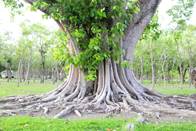
The dream starts with a view of a large, gnarled tree with many visible roots. The tree is effectively dead with no foliage or growth. I know it to be a bodhi tree which has been struck by lightning.

The tree is in the middle of a temple / monastery courtyard. It is in a square shaped flowerbed sectioned off with stones. The courtyard is very foot worn. Around the edge is a quasi-covered walk way on all four sides. There is one entrance and one exit corridor. The feel is very Tibetan / Himalayan. This tree has lain dormant ever since it was struck by lightning, by a thunderbolt, dorje. There is sun on the tree and despite its state it is tended and looked after.

This morning a young novice monk to whom the job has fallen is weeding and watering the tree. He notices significant new growth which has appeared overnight. There is growth on some of the roots and higher up in the tree. That growth has been caused by me and my arrival on the planet. The young monk is very excited and runs to find someone to tell. Soon there are a few monks there looking and chattering excitedly. They look up to the sky and to the South they can see a rainbow just below the clouds. The rainbow is feint but persistent. There is much excitement, which increases.

I wake up for a loo break it is 4:30 AM.

In between sleep and wake, I become very aware of the 17th Gyalwa Karmapa in my full visual and mental field. It is as if we are some how joined twinned or connected. The feeling is guttural. They have started some kind of pre-dawn / dawn ritual in honour of the Parinirvana of Siddhartha. They are in a planetary sense to the East of me. There is chanting and those awful horns. I can hear and feel the ritual as if I am there in the hall with them. The visual image of the 17th persists and it is even here slightly as I type. It is clear that something is up / happening. I wonder if the Dalai Lama is dying but search for him and can still find the feeling of him, so am reassured. The ritual goes on and I know in one sense it is connected with me.

I drift off.

I am shown D whom I knew ~ 20 years ago. He is bloated and unwell. He is filled with anger and even hatred towards me. I can see his bloated bare stomach upon which are written the positions by number of each of the 64 I Ching hexagram numbers. They are medical points. I know that he has misused Dao and that he has been taught dark Dao and it has taken seed in him and others. The only chance that they have is to use the I Ching medically to reverse and impede the spread of bad-Dao. I am the key.

The scene changes and I am in the garden outside my office here. I can hear some noises up by the purple rhododendron. Out of sight I can hear munching. I catch sight of a grey spotted foal and her mother a dark brown horse. So as not to scare them I move very quietly. I know they are windhorses or lungta. They jump up and run along the top of our hedges down towards the river. The foal stops and takes a snack on the maple. As they approach the river they are joined by two more white adult horses. Together all four of them ride off along the tops of the French oaks by the river. They are not touching the oaks but flying and galloping in the air.

I am now in communication with some being which says that I am of Nāgārjuna with the j being specific. That I am of the nāgas and nāgarājas.  That is my source and my belonging. I am of Nāgārjuna. The role of the nāgas is not yet understood.

The dream ends.

——————————–

Notes:

Nāgārjuna (Sanskrit: नागार्जुन, Nāgārjuna; c. 150 – c. 250 CE) was an Indian monk and Mahāyāna Buddhist philosopher of the Madhyamaka (Centrism, Middle Way) school. He is widely considered one of the most important Buddhist philosophers.

Nāgārjuna is widely considered to be the founder of the Madhyamaka school of Buddhist philosophy and a defender of the Mahāyāna movement. His Mūlamadhyamakakārikā (Root Verses on Madhyamaka, MMK) is the most important text on the Madhyamaka philosophy of emptiness. The MMK inspired a large number of commentaries in Sanskrit, Chinese, Tibetan, Korean and Japanese and continues to be studied today.

From Wikipedia

Leaving the Palace and Miscellaneous

Nirmāṇakāya (Chinese: 應身; pinyin: yīngshēn; Tibetan: སྤྲུལ་སྐུ་, tulku, Wylie: sprul sku) is the third aspect of the trikāya and the physical manifestation of a Buddha in time and space.

Nearly ten years ago I tried to explain to the anaesthetist that because of the very large amount of meditation I had done there might be some anomalies in how I responded to medication – anaesthetic. They completely ignored me and did not take me in any way seriously. A few days subsequent to the operation I had strong recall of being above the operating table watching the “vultures” around my corpse operating. On going into theatre, I was chatting about the clean room conditions of the operating theatre. The same night after ~ six hours of surgery to remove a colon cancer, I stood on my own two feet. Which freaked out the nurse in recovery.

I am pretty sure that something weird transpired during the operation and that it was not spoken about.

There is no way that a modern medical professional would countenance the notion of a nirmāṇakāya or janmanirmāṇakāya; སྐྱེ་བ་སྤྲུལ་སྐུ, skye ba sprul sku. Nor that they might be biologically different to a regular human being.

If one takes the dreaming “evidence” in this blog, then there is a hint of non-standard reincarnations plural stemming back lifetimes. It could be a Soul reincarnating or it could simply be some kind of emanation. In the latter case the emanation body or nirmāṇakāya may not clothe itself in meat in a standard way. I have not read of any different approach to the medical treatment of Tibetan tulkus. But there is a vast amount of stuff which is kept away from prying eyes. My guess is that Tibetan Vajrayana etc. is like an iceberg, with only a tiny bit showing.

The body may be similar but the “mind” very different. Tulkus may be very different to normal people though looking the same. The manifestation, the emanation, need not be that of a full buddha.

On the horizon for me are up to three more major surgeries. In 2019 they put my titanium pin into the left femoral neck/head whist under the influence of a spinal injection and some other drugs. I can remember the bone shaking pneumatic drill. They would not let me watch even though I asked. It was enough to induce PTSD…I was conscious if drugged.

It can be said or observed that I left / renounced the Imperial palace, when I walked out of my job as a senior lecturer at Imperial College in London. I was a strict vegan for a long time, close to nine years. I walked out of a relationship with a wife, a home and a very young female child. I renounced my family later. I meditated extensively away from the madding crowd. I learned science sport and martial arts. There are some of the twelve acts attributed to Siddartha.

At a very long stretch one could say I share these, have them in common.

There is a part of me that wonders if the medical approach to me needs to take other factors into consideration. This adds a little reticence to the notion of drastic orthopaedic surgery. Somehow, I need to understand better…

Hmmn..

The Power of a Buddha or Evolved Bodhisattva

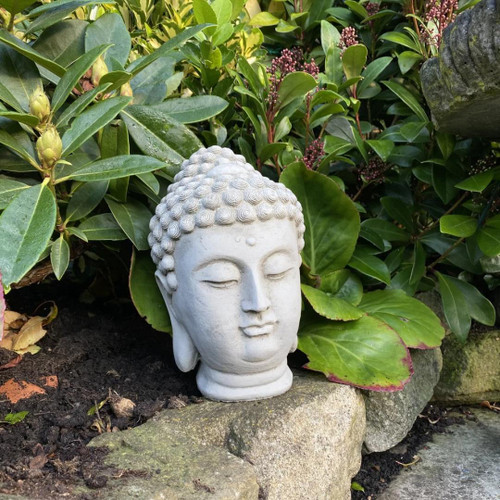
The image of Buddha is very widespread and one can get a statue down the garden centre or a poster to put up on the walls of your home. The vibe associated is often calm tranquillity. Never is it in battle with Mara, Māra. In the west Buddha is often seen as wholly benign and passive. Those fond of smoking joints may have a Buddha statuette or have paraphernalia which is Buddha themed. One can get a vegetarian meal called a Buddha Bowl. Back when I was a vegan and visiting Japan I used to eat “Monk’s Meals” there.

Most of the statues have a Buddha who is not emaciated and with Thai style hair, a bit fat. Rarely is he seen as skinny. He is often depicted with a halo as might be perceived by a quasi-clairvoyant. 

It is not as weird as the blonde, blue eyed Aryan representations of Jesus who was probably semitic, Jewish, in appearance. But Buddha is often not quite as brown as he might have been in real life. He lived alfresco and would have tanned up well.

In the West people do not imagine the power, sometimes magical of a Buddha or evolved Bodhisattva. The imaginations do not extend beyond some dude sitting on a mat cross legged meditating.

“Hey man, that is Zen…”

Tibetan Buddhism is perhaps unique in representing wrathful forms of various Bodhisattvas. They do battle with evil. In Vajrayana there is black and white magic. Force sometimes needs met. There is significant power in a Buddha or evolved Bodhisattva. Power beyond normal ken.

The various canons have a list of special powers attained as a Bodhisattva proceeds along their journey to enlightenment. These supra-mundane powers are not to be found in garden centres. Scientists may quibble as to whether they are real manifestations or not.

As a teenager I was fascinated by the TV series Monkey.

“Monkey eats many of the peaches, which have taken millennia to ripen, becomes immortal and runs amok. Having earned the ire of Heaven and being beaten in a challenge by an omniscient, mighty, but benevolent, cloud-dwelling Buddha (釈迦如来, Shakanyorai), Monkey is imprisoned for 500 years under a mountain in order to learn patience.

Eventually, Monkey is released by the monk Tripitaka (三蔵法師, Sanzōhōshi), who has been tasked by the Boddhisatva Guanyin (観世音菩薩, Kanzeon Bosatsu) to undertake a pilgrimage from China to India to fetch holy scriptures (implied to be the region of Gandhāra in the song over the closing credits).”

Which is about the spread of the threefold Tripitaka to China and hence Japan. Evil tries to stop the dharma from being propagated and many adventures ensue. Here Buddhism is proactive and not passive. There is struggle.

The Buddhist canons have many stories of remarkable miracles carried out both by Siddartha and other Bodhisattvas. Padmasambhava considered a Nirmāṇakāya of Shakyamuni Buddha is attributed with magical powers and miracles. Those steeped in the tradition are less likely to scoff than your common or garden Western scientist. Vajrayana differs from East Enders or Coronation Street and markedly so. Exposure and immersion in its depths is likely to blow the minds of anyone lacking openness and fluidity.

Without direct personal experience there is no way to assess what the power of a Buddha or evolved Bodhisattva might be. Common sense suggests caution and not arrogance.

 A Buddha is not just a garden ornament, statuette or poster…

Das Glasperlenspiel – Reincarnation – Missing Pieces

It was not until I read Das Glasperlenspiel – The Glass Bead Game – that I gave much thought to past lives. Somehow the scope of the book and the Three Lives of Knecht appended caught my attention. Hesse was the first person whose mind was so comprehensive. At last. Somebody who thought a bit like me….

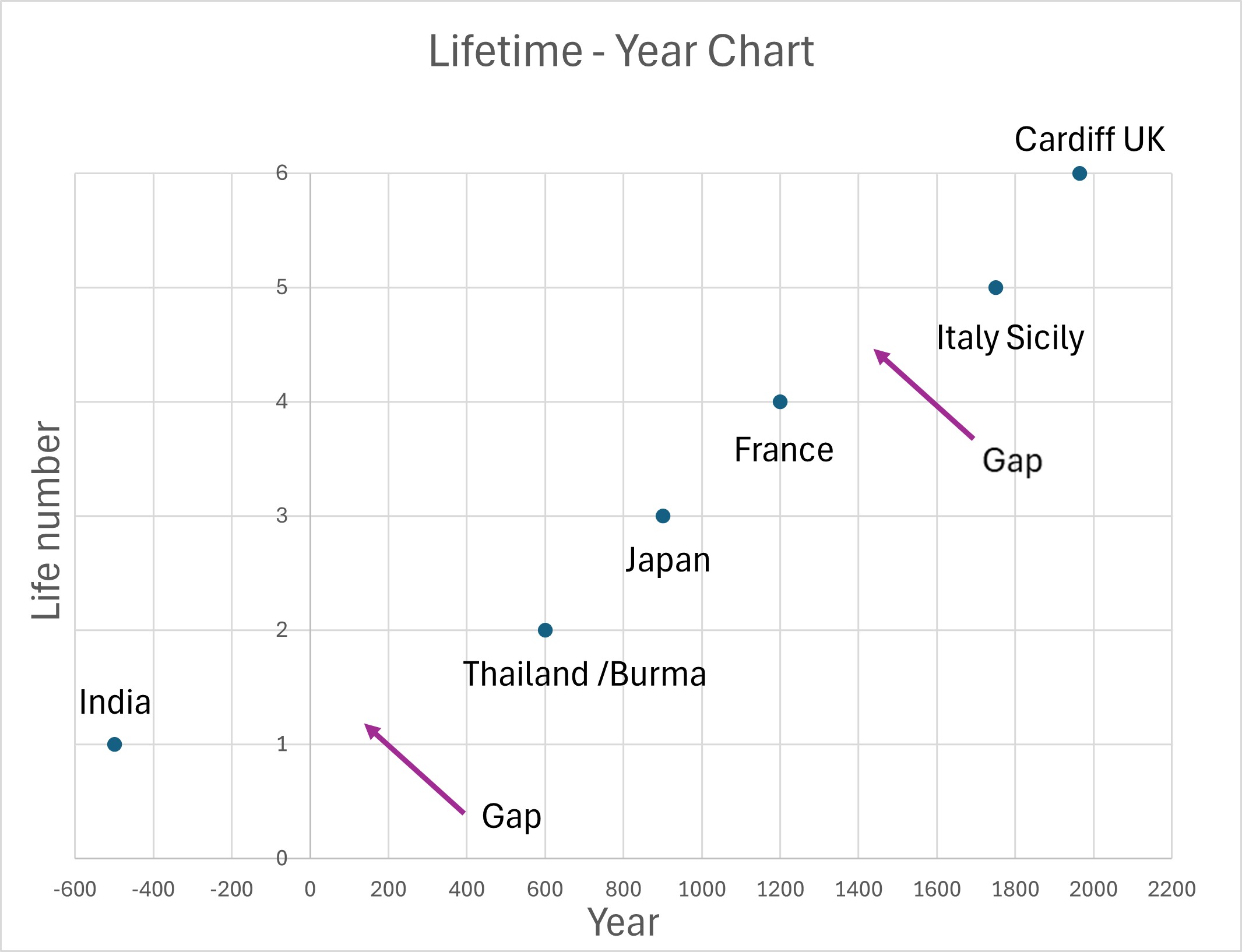
Based on the circumstantial evidence inter alia of dreams I can draw up a rough chronology of putative previous lives.

The more recent graph starts ~2500 years ago as a disciple of Siddartha, possibly with a named individual. In principle I may have heard the esoteric Kālacakra first hand. It then proceeds with two further Buddhist lives, one Theravada Thai/Burmese and one Vajrayana Japanese. This is followed by a Christian priest-soldier in France and a seeker / occultist in Sicily Italy. Finally, I incarnated as a proto-scientist in Wales.

Inspection of the chart shows two “gaps”. One of a thousand years and one of ~ six hundred. It does not mean that I did not incarnate then. One can conclude that no memory / data has yet come through for these periods. A thousand years is a big gap. Looks a bit iffy.

Being cynical there is little history written for the -500 to + 600 time period. Therefore, it is more difficult for me to fabricate an internally consistent story / legend / delusion for that period.

I can cobble together a satisfactory rough explanation for this graph. What I cannot explain, what perhaps is the missing piece, is the occurrence of all the Tibetan “stuff” in my dreams.

Speculating the most likely time for any “Tibetan” incarnation would be in the ~1200-1750 window.

No western “scientist” could publish a definitive claim for proof of reincarnation and expect a career of longevity, peer kudos and substantial research funding. A country {Tibet} can choose its leaders entirely on the basis of the Tulku phenomenon and “circumstantial” evidence.

The practice in London/Oxford/Cambridge differs from that in Lhasa and Shigatze.

Only very recently have I had imagery consistent with a Tibetan “maroon” life. I could have snuck one in before Wales.

We shall see what the dreaming brings….

Renunciation or Self-Sabotage?

The human ability to kid oneself is well known though for those kidding, difficult to accept. At the moment there are many who deem the slaughter in Gaza justifiable and apt. They do not imagine any karmic consequences because that notion would be very inconvenient. Irrespective of how things are temporarily brought to a close, there will be consequences ongoing.

The normal idea of success in the “West” might be to have a good career, make progress, climb the housing ladder and perhaps have a relationship or marriage and thence to propagate the species. One might like a nice car and pleasant foreign holidays. Perhaps gaining some measure of societal kudos along the way. One would not sulkily throw one’s toys out of the cot; one would comply more or less to the norm. Psychology might point you in this direction.

If for example you are a bodhisattva called Siddartha Gautama, it would be OK to run out on a young wife and child, leave the palace of your father the King and renounce the kingdom to which you are heir. But for normal people this would be wrong.

Viewed from one angle this is an ungrateful act of wanton self-sabotage. Siddhartha shot himself in the foot and abandoned a pleasant life, one which many might aspire to. To the starving, the poor and the unshod this makes no sense. Yet according to legend this subsequently facilitated his teaching and his completion of the career goal of any bodhisattva, namely enlightenment and Buddhahood.

In the post previous I pointed at something that many would not understand. I shelved a high value job at a prestigious space agency. The successful completion of which could have opened the way for senior positions and a way back from the “wilderness”. We would have had plenty of cash.

There were a number of warning omens when we were viewing properties in and near Leiden. Retrospect suggests that the job was a temptation of sorts.

Earlier I walked out of a marriage with a very young child which caused the sale of a house in London now worth £ 1 million. I left a new age group which I gave heart and soul to establish. I “gave” my shares back to a start-up company the vision for which was to a fair extent mine. I quit a then tenured academic job at a top university, something to which many aspired. I had no other job lined up just a few training courses. One of these went pear shaped so I gave them up too. To move from a highly timetabled job into near nothing was a bit of a shock to the system. I resigned from another short lived university teaching post. I cut contact with my aged mother. I forwent relations with family.

None of these were easy. I am not a prince.

One could say that I am simply a loser who could not hack it.

One could say that these were acts of stepwise renunciation. The integral over micro-renunciations has a similar effect to sudden departure.

 Or one could call deem them all the INFJ door slam, a fault in my character.

What is it that seeks success? It is the self and not the Soul. In this logic renunciation is indeed an act of self-sabotage. The ambitions of the self are stymied in stepwise succession. I know that I can live without any of these accoutrements. If you like I have physical plane proof by experience. I am not bound by the fear of missing out on a normal successful life.

I could be kidding myself. Trying to find an excuse for my squandering of opportunity. Or maybe I have simply thrown my toys out of my cot because things did not go my way.

Nobody else has experienced these things like I did. Nobody else has felt the tearing, the ripping. I am alone in my moccasins which I may not loan to another.

People might have opinions.

I cannot return to the trajectory my life was once on. Any attempt has gone badly awry. The dramatic might say that I am not meant to. Or one could argue that it is the karma of wanton squandering. I made the bed and now I must sleep in it.

There remains one question concerning what if anything I do with the remainder of earthly sojourn.

Hmnn…

Goal Orientation – Suffering and Dissatisfaction

If you search for “coaching” you will find many people offering their services as coaches and often a part of this is setting goals or targets for success and advancement. Few notice the similarity of goal and gaol. People can become prisoners of their goal orientation. Society is obsessed with measurable metrics and tick lists of things to do, to the extent that life can be a wearisome endless list of devoirs. It is de rigueur to have goals and ambition it seems.

Siddartha wanted so badly to end suffering for all sentient beings, suffering, or dukka, can be translated as dissatisfaction.

I’ll make a statement: goal orientation is directly causal of dissatisfaction.

If you fail to make a goal you are dissatisfied, if you make a goal, you are temporarily done but the next goal awaits lurking on the horizon. Any “satisfaction” is fleeting. This measurement obsession more often than not suggests some measure of inadequacy, could do better.

People then have massive internal dialogue about whether of not they are meeting their goals. Internal dialogue is nearly always negative and hence the being suffers unnecessarily because of this internal “mental” cacophony.

Goal orientation and rush often skip hand in hand. Focussed only on the goal there is a tendency to finish quick and this can cause poor application to task and lower standards. Goal orientation can prevent impeccability. Eye on goal one does not fully absorb into whatever it is one is doing. There are distractions from other pending goals. Quality suffers on the noose of measurable quantity. Goals hang.

The antithesis of spiritual development is rush. It is impossible to rush it, but many try and seek milestones to prove progress. The hangover of societal obsession with goal orientation is difficult to ease.

Striving is a form of suffering.

Relaxation and complete absorption is the antidote. Complete absorption brings completion but without obsessional suffering. Complete absorption quietens the internal dialogue and therefore reduces dissatisfaction. Everyone knows when they have been impeccable. Impeccability is not an absolute. If you give completely of your current very best that is all you can do, this never brings dissatisfaction. Subsequent comparative internal dialogue can cause the nine headed hydra of dissatisfaction to rise again.

Internal dialogue is a primary cause of dissatisfaction and suffering.

Endless measuring is causal of dissatisfaction and suffering.

Comparison mind is directly causal of dissatisfaction.

Rational thinking causes dissatisfaction. Therefore, rational thinking is an irrational unwise thing to do. It does not make sense.

Of course, under certain circumstances one needs some rationality.

If one is ever goal oriented one never experiences the moment, the eternal now, because the goal is very distracting. Not being fully present causes dissatisfaction. If one lives in the twin worlds of what if and if only, there is rarely now. The past whether melancholic or rose tinted, the future whether idealised or catastrophe is not now, it is mind-stuff often of the nature of internal dialogue. Trash.

Goal orientation causes impatience which is a form of dissatisfaction. Goal orientation when one is driving a car is a cause of road rage.

Letting go of goal orientation is liberating.

Try it, having no goals is harder than it might seem, because societal habituation near worships them.

Hence there is suffering and dissatisfaction, which we might call samsara or saṃsāra, which is another term for endless human folly.