“Spiritual” Journeys

I have used inverted commas quotation mark here because I struggle a little with how words have in a sense become tainted by multiple usage and being bandied about as PR. Spiritual as a word has had its impact and meaning downgraded to the point of near meaninglessness.

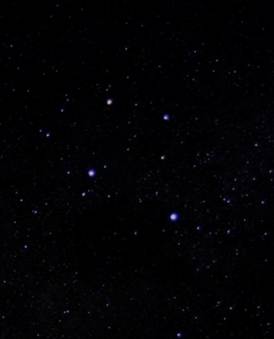
I am going to attempt to put into words something which I have hesitated to do. It is close to impossible. This cannot be undertaken without emphasising just how important a few years of my childhood were in my development, in this life. One constellation in particular left its mark deep in my psyche.

It was by its light during an English language common entrance exam that I foresaw events near two and a half decades later. It was the harbinger and the key of a volte face in life. I left the harbour alone in my coracle adrift upon the Southern ocean lit by its solace. I left Cape Town after being burned on table mountain.

Later I had another foreboding which was also to find consummation over a similar time delay. Each of these were pivotal. That foreboding prevented me making a UCAS university choice against the advice of my school teachers.

When I was young and in an English boarding school as an expat child I got to read the lessons and the prayers in church. While the others sat with parents. It was like a duck to water that I took to the lectern and the prayer “chair” deep in the nave. There I found St Francis of Assisi.

« Seigneur, faites de moi un instrument de votre paix.
Là où il y a de la haine, que je mette l’amour. »

« C’est en pardonnant qu’on est pardonné,
c’est en mourant qu’on ressuscite à l’éternelle vie. »

This man was in tune with the Mahayana bodhisattva ideal. His words touched.

Unfortunately those with the skill of a chameleon can adopt any mask, any direction, any character they choose. Believe me I learned how to blend. And in blending one loses authentic essence.

At the end of my schooling I took general studies courses in Buddhism, cooking and Rastafarianism. Ever Jah, ever loving, ever faithful. Rastafari. I read all that I could on witchcraft and alchemy. I made “friends” with the librarian in our town.

The Buddhism was presented in an intellectual descriptive manner in which the various fetters were enumerated for debate. Although I understood, the manner was for me boring and definitional. I sensed beyond that which was being professed. It was during intense meditation sat in seiza at karate that I learned that I had in fact been meditating all of my childhood. I used to sit and observe. I used to wait. I was touched directly by the dreamtime out in the shimmering bush of western Queensland. The aboriginal pointing stick had cleaved something open.

And then when I went to university I mostly forgot. By the time I was doing my Ph.D. research I figured that I had found something I was good at. So maybe this was the future. I enjoyed “pissing about with lasers”. I was to an extent, life and soul of the party. It was only in the early nineties that I started to withdraw, as if driven by a deeper current, out into the hills, the mountains and the countryside. It set up a kind of imbalance. On the one hand was a “normal” life and career. On the other there was silence and quiet. My reading was more intellectual philosophy, science and philosophy of science. I noted that despite mundane academic achievement many of “the greats” struggled with non-salary paying bigger questions.

I was offered a choice. Fort Collins Colorado or Bern Switzerland. One of those would have brought me quicker into contact with things “spiritual” than the other. The Swiss francs were certain, so I saw the Berner Oberland and learned painfully of “qualität”. Something which I tried thenceforth to express.

In the mid nineties at the place of my prior foreboding I was brought to my knees. Despite writing excellent research proposals I was stymied and unfunded. A grudge held by a “competing” senior academic could kill a proposal with a mere word. I had a breakdown. The answer to life the universe and everything could no longer be found in the laws of quantum mechanics and thermodynamics. It seemed there was more. It was around then that my ambition faded and the picture of a life academic dimmed. I began to search in earnest. I opened myself up wide. Again I largely forgot and tried to rebuild a life after breakdown. For some unknown reason money for research and start-up came more easily. I was “successful” for a while.

In the very early part of this century I was tested by power. I had a taste of it and did not abuse. Like Galadriel I refused the ring and was no longer sorely tempted thereby. It was around this time that a series of what might be called micro-renunciations began. In which step-wise I renounced or was forced to renounce the accoutrements of normal life. Each one was more difficult and profound than the last. Slowly life was stripped of all that made it busy and hectic. Until in the middle of 2006 I renounced all and walked off into the metaphorical “wilderness”. Dramatic as that sounds, at face value it looked simple, at core it cleaved and parted, severed and up-ended.

I did not become a wandering mendicant with charnel grounds for abode nor skull cup for beverage. Though adrift I most certainly was. I had already learned as a child, the nature of impermanence. Strangely without accoutrement life did not cease, the world did not implode, nor did it stop.

When you are thrust  from an Outlook calendar ruled life, with hours dissected into segments, with meetings set for you, with each action seemingly accountable, into nothing. The meaning of time changes in an unalterable and irrevocable way. It is no longer a spreadsheet thing. The boxes, the rice paper walls of the day, dissolve.

At end of 2008 I left the map so to speak. I began a series of meditations which went beyond. There was nothing, despite my research skill, which I could find written. These “meditations” continued in the UK in houses close to civilisation yet separate in the English countryside. I can say that the rigor of these was high and they continued for many years. In around 2010-11 I began having Buddhist dreams.

In the early part of the century whilst still teaching physical chemistry I had a series of waking visions in which I had “om mane padme hum” tattooed on my forearms in Sanskrit and with me in monastic robes. These visions were sufficiently powerful to be present whilst I was lecturing Chemical Reaction Kinetics to undergraduates in South Kensington. It was around then that I got to express my compassion for others, to care for them.

Overlaid on a “Toltec” background was a distinctly Buddhist vibe.

All the while I had a seemingly normal life as a married man doing for quite a while “A” level science private tutoring. The outer world and the inner world differed and markedly so.

To me as a member of the elephant dreaming class there is no problem with the scholastic wisdom teachings of Siddartha and the more dramatic Toltec corpus. The latter is a guide, when viewed with clarity, to the navigation of glamour and illusion. There is probably only one truth expressed via many different approaches. The Tower of Babel has a lot to answer for…

This is probably enough for today…

The Bodhisattva’s Renunciation

IT was night. The prince found no rest on his soft pillow; he arose and went out into the garden. “Alas!” he cried “all the world is full of darkness and ignorance; there is no one who knows how to cure the ills of existence.” And he groaned with pain.

Siddhattha sat down beneath the great jambu-tree and gave himself to thought, pondering on life and death and the evils of decay. Concentrating his mind he became free from confusion. All low desires vanished from his heart and perfect tranquility came over him.

In this state of ecstasy he saw with his mental eye all the misery and sorrow of the world; he saw the pains of pleasure and the inevitable certainty of death that hovers over every being; yet men are not awakened to the truth. And a deep compassion seized his heart.

While the prince was pondering on the problem of evil, he beheld with his mind’s eye under the jambu tree a lofty figure endowed with majesty, calm and dignified. “Whence comest thou, and who mayst thou be asked the prince.

In reply the vision said: “I am a samana. Troubled at the thought of old age, disease, and death I have left my home to seek the path of salvation. All things hasten to decay; only the truth abideth forever. Everything changes, and there is no permanency; yet the words of the Buddhas are immutable. I long for the happiness that does not decay; the treasure that will never perish; the life that knows of no beginning and no end. Therefore, I have destroyed all worldly thought. I have retired into an unfrequented dell to live in solitude; and, begging for food, I devote myself to the one thing needful.

Siddhattha asked: “Can peace be gained in this world of unrest? I am struck with the emptiness of pleasure and have become disgusted with lust. All oppresses me, and existence itself seems intolerable.”

The samana replied: “Where heat is, there is also a possibility of cold; creatures subject to pain possess the faculty of pleasure; the origin of evil indicates that good can be developed. For these things are correlatives. Thus where there is much suffering, there will be much bliss, if thou but open thine eyes to behold it. Just as a man who has fallen into a heap of filth ought to seek the great pond of water covered with lotuses, which is near by: even so seek thou for the great deathless lake of Nirvana to wash off the defilement of wrong. If the lake is not sought, it is not the fault of the lake. Even so when there is a blessed road leading the man held fast by wrong to the salvation of Nirvana, if the road is not walked upon, it is not the fault of the road, but of the person. And when a man who is oppressed with sickness, there being a physician who can heal him, does not avail himself of the physician’s help, that is not the fault of the physician. Even so when a man oppressed by the malady of wrong-doing does not seek the spiritual guide of enlightenment, that is no fault of the evil-destroying guide.”

The prince listened to the noble words of his visitor and said: “Thou bringest good tidings, for now I know that my purpose will be accomplished. My father advises me to enjoy life and to undertake worldly duties, such as will bring honor to me and to our house. He tells me that I am too young still, that my pulse beats too full to lead a religious life.”

The venerable figure shook his head and replied: “Thou shouldst know that for seeking a religious life no time can be inopportune.”

A thrill of joy passed through Siddhattha’s heart. “Now is the time to seek religion,” he said; “now is the time to sever all ties that would prevent me from attaining perfect enlightenment; now is the time to wander into homelessness and, leading a mendicant’s life, to find the path of deliverance.”

The celestial messenger heard the resolution of Siddhattha with approval. “Now, indeed he added, is the time to seek religion. Go, Siddhattha, and accomplish thy purpose. For thou art Bodhisatta, the Buddha-elect; thou art destined to enlighten the world. Thou art the Tathagata, the great master, for thou wilt fulfill all righteousness and be Dharmaraja, the king of truth. Thou art Bhagavat, the Blessed One, for thou art called upon to become the savior and redeemer of the world. Fulfill thou the perfection of truth. Though the thunderbolt descend upon thy head, yield thou never to the allurements that beguile men from the path of truth. As the sun at all seasons pursues his own course, nor ever goes on another, even so if thou forsake not the straight path of righteousness, thou shalt become a Buddha. Persevere in thy quest and thou shalt find what thou seekest. Pursue thy aim unswervingly and thou shalt gain the prize. Struggle earnestly and thou shalt conquer. The benediction of all deities, of all saints of all that seek light is upon thee, and heavenly wisdom guides thy steps. Thou shalt be the Buddha, our Master, and our Lord; thou shalt enlighten the world and save mankind from perdition.

Having thus spoken, the vision vanished, and Siddhattha’s heart was filled with peace. He said to himself: “I have awakened to the truth and I am resolved to accomplish my purpose. I will sever all the ties that bind me to the world, and I will go out from my home to seek the way of salvation. The Buddhas are beings whose words cannot fail: there is no departure from truth in their speech. For as the fall of a stone thrown into the air, as the death of a mortal, as the sunrise at dawn, as the lion’s roar when he leaves his lair, as the delivery of a woman with child, as all these things are sure and certain-even so the word of the Buddhas is sure and cannot fail. Verily I shall become a Buddha.”

The prince returned to the bedroom of his wife to take a last farewell glance at those whom he dearly loved above all the treasures of the earth. He longed to take the infant once more into his arms and kiss him with a parting kiss. But the child lay in the arms of his mother, and the prince could not lift him without awakening both. There Siddhattha stood gazing at his beautiful wife and his beloved son, and his heart grieved. The pain of parting overcame him powerfully. Although his mind was determined, so that nothing, be it good or evil, could shake his resolution, the tears flowed freely from his eyes, and it was beyond his power to check their stream. But the prince tore himself away with a manly heart, suppressing his feelings but not extinguishing his memory.

The Bodhisattva mounted his noble steed Kanthaka, and when he left the palace, Mara stood in the gate and stopped him: “Depart not, O my Lord,” exclaimed Mara. “In seven days from now the wheel of empire will appear, and will make thee sovereign over the four continents and the two thousand adjacent islands. Therefore, stay, my Lord.”

The Bodhisattva replied: “Well do I know that the wheel of empire will appear to me; but it is not sovereignty that I desire. I will become a Buddha and make all the world shout for joy.”

Thus Siddhattha, the prince, renounced power and worldly pleasures, gave up his kingdom, severed all ties, and went into homelessness. He rode out into the silent night, accompanied only by his faithful charioteer Channa. Darkness lay upon the earth, but the stars shone brightly in the heavens.


Excerpted from:

BUDDHA, THE GOSPEL

By Paul Carus

Chicago, The Open Court Publishing Company,

[1894]

At Sacred Texts

Click here