The Problems of Should

Many problems arise not because things are but because people think they should be different. This enforcement of conditional opinion about how things should be is directly causal of conflict and of angst. There is another level to this where problems arise out of people thinking that things should meet expectations. Expectations are a mental-emotional construct of largely human origin.

To give a trite example.

Data collection suggests that for the western European male population an average life expectancy is a tad over 80 years. Nevertheless many die in their sixties. People kind of think they should live to 80. There is even planning to that target. I am largely convinced, in my opinion, that it is very unlikely that I will live to that age. I should not have that opinion and it can make people uncomfortable that I do. Many people like the idea of a long life and the expression that X left us too early is not uncommon. You should not die that young. It is a tragedy.

If you say such a death is natural and therefore not a tragedy you are speaking heinous. You should not be so cruel heartless and frank. Because of opinion like that you are a problem. You do not comply with the social should. Should makes you a problem and a right bastard to boot.

Wanting things to be different, access to the green grass on the other side of the fence is a human notion of change according to how things should be. The notion of “rights” in a democratic society is currently being widely eroded. This is because people think that others should not have opinions which differ from theirs. There is suppression and on occasion violence because people should agree, have the same colour skin and follow the same notion of deity as the noble and omniscient US.

“If you convert to our religion, we will not slay your ass painfully! You should follow our God, the only true God!”

This should causes death and bloodshed.

I live as I do, it does not really impinge on the outer world over much. Theoretically there may be opinions that it should not be thus. I should not live like this. The holders of those opinions have created a problem by the notion of should. It does not gel with the reality.

There is a disconnect between should and is/are. Which can be viewed as problematic. If you drop the imposition of should-based opinion any notion of problem evaporates.

I am now prepared for no hip operation in the rest of this foreseeable calendar year {As a starter for ten}. There is no problem outside the compound with this. It will limit some of my gardening and I will be taking pain medication. As a thought experiment others might imagine that this should not be the case. Yet despite the should, it is. A problem in this kind of gedankenexperiment arises solely out of a contrast between notions of should, an aspiration to the contrary and some idea about what is right for me to bear.

“In this day and age…”

In the UK news people harp on about waiting lists for appointments and operations as if these were some God-given right. They are not. I am not owed, due nor do I particularly deserve an operation. Were it not for modern medicine neither the wife nor I would be alive.

Viewed from one angle a bit of end of life pain is no big deal. It is only a problem if people deem that it could be and therefore should be different.

Problems often arise out of attempts to alter reality and the unfoldment of life. People try to steer things towards how they think they should be, how they ought to be, of how they want them to be.

The infliction of people’s opinion of should is one of the A number one causes of strife.

Israel thinks Iran should not have nuclear weapons so they coerce Trump into using big bombs. It is OK for US to have nuclear bombs but THEY should not.

There is a part for me which thinks that if Israel had been a lot more friendly and cooperative helping local economies to develop a comfortable middle class over the last few decades, all the simmering anger and bile might have faded. However that is not the case. A different suppressive ideology has held sway. Oppression has no sell by date; it must be continued until revolution. The mind set of they should be taught a bloody vengeful and punitive lesson has endured.

It has not brought peace, it has not brought love, it has not brought harmony.

A little thought shows that should is a key component in many problems, local, relational and in terms of geo-politics.

Arguably should is more dangerous and destructive than nuclear weapons.

Social Blurring and Status Problems

During the night I came up with this term “social blurring” to try to verbalize something which has seemed difficult to / with me in my social interactions. That is behaviour within the common social-conditioned view of the world. It is surprisingly difficult to put into words.

One could say that I do not have the “proper” respect for social position and authority. Nevertheless, I am law abiding, these days. I am pretty sure that I have put noses out of joint among those who consider themselves higher, better, more powerful than me.  I am not prone to arse licking or sycophancy. I do not play the itchy back game in a transactional sense.  I do not curry favour nor do I butter up. It is possible that this has been noted. People have gotten hoity-toity with me when I have not shown enough respect “due” to their position in society. In some cases, this has caused a punitive response, particularly when I was a precocious graduate student. I have reason to believe that this detrimentally affected my career. To me it is no big deal if someone is a famous Prof, a CEO or a King. I see the person and not the status.

Clearly there are social “problems” inherent in this attitude. A mere pleb did not ought to think like this and perhaps needs reminded of their position on the ladder of life. I do not appreciate my position in “the” pecking order as a serf.

Various people have said things to me which made little or no sense to me but seemed to make sense to them.

My mother, from the Rhondda valley, said that I behaved “to the manor born”. Which meant that I was a bit posh and at ease in posh places like expensive hotels and restaurants. Nchanga Consolidated Copper Mines paid for four years at an English private preparatory school. I had an itinerant childhood and thus became an adept chameleon. I never had a sense of not belonging in a posh place. I can walk into the Ritz and feel at ease. I have been on stage at The Royal Albert Hall. I can walk into expensive private homes and not feel at awe.

Twenty odd years ago Théun Mares said that I was an alpha male. I thought to myself what the fuck is he on about. He kept banging on about this and some wolf pack interpretation of status. It had never occurred to me that I am in any way alpha nor dominant. I have no desire to assert position nor have underlings. I do not need nor want to snarl to keep a pack in line. In this weird world view I am a lone wolf not a pack animal. I clearly do not exert or exude the boundaries others anticipate. I am not interested in being top dog nor will I be overly submissive either. I don’t get excited by the intrigue of power struggles, nor can I be arsed with them. As a consequence of not snarling people can take the piss. The boundaries are blurred. Some, so I am told, like clear boundaries and definition of position in pecking order.

When I was a lecturer, it never occurred to me that I had status and position, in that context. I saw myself as no better than the students and definitely not a font of all wisdom. I interacted in a manner similar to a third year graduate student with a first year graduate student. It was more working together than professing. When I left my job, it became abundantly obvious that there were elements of social positional power associated with that role and the institution in which I had been institutionalised. It was a big deal for some, whereas for me it was bog standard. The lines between staff and student were accidentally blurred. I saw them more as equals than underlings.

In a weird sense I am used to being listened to irrespective of social position, there may even be some residual expectation of that. This expectation is rarely met. I have mostly gotten used to it, though on occasion it can flare up particularly if the other person concerned is ignorant and yet adamant in their ignorance. Sometimes I fail to hold my tongue and I do not care what their social standing may be.

In general, I am not awed by social positions but may be socially awkward when in numbers. I just find the ritual sniffing or normal social interaction boring and pointless. This means that I do not satisfy apparent needs / requirements of others. I can seem like an odd fish. I have no need to brag and claim social ladder rung in consversation..

When I have had “power” I have not wielded it. Nor have I taken advantage of that power when I might have. Being a young man with a paper share value of £ 2 million has an impact on knicker elastic. I feel pretty sure in my self that I have been tempted by power and come out the other side relatively unscathed. I did not turn into a power crazed arsehole.

I keep coming back to a perception that somehow, I do not fit what others expect.

I do not see others as better than, higher than me. Nor do I see others as beneath me. I am no better. I may be more experienced and intelligent, but I am not above. It is a kind of egalitarianism which can make people uncomfortable. There are some who have deferred to me and others who are perennially spoiling for a fight as if to assert position in pecking order. A fight I have no interest in partaking in. It has been my perception that people who have thus engaged have failed to learn whatever it is that I might have taught them. The immediacy of perceived status and competition for it has blinded them. Some people want to bring me down, teach me a lesson.

Perhaps the overarching weirdness in this life has been the number of people who want to tell me something, argue the toss, try to convince me they are right and otherwise teach me.

“That’ll learn ‘im!”

It remains an unsolved mystery as to how and why others feel the burning pressing need to educate me.

Because I do not have strong demands or wants, I have been pliable and subject to manipulation. I rarely have an agenda in contrast to many.

On occasion people have looked to me to provide a lead, only later to undermine me when that lead has not been to their liking. I have come around to the idea that I like planning and envisioning way more than execution. I am certain that I am not cut out to provide any ongoing leadership role in a socio-political sense because I cannot be bothered with the social “niceties” and tedious transactional negotiations. I am not a sycophant nor am I prone to sycophancy. In terms of leadership, I can sustain that for very short terms only. Sooner or later its will go pear shaped because I am unwilling to play the “normal” games.

Quite how and why I was born with this set of self-perceptions may be due to prior incarnations, prior learned inclinations. The more I have meditated the less impressed with socio-political status and imagined kudos I become. The whole notion of “advancement” “position” and social rank escapes me. Even though for others I once had a little.

As far as I can tell my beingness and how I am interpreted by others do not match. There is nothing I can do about that. I have to reel myself in because if I let it go, fully, people might struggle.

I am socially a bit of an oddball. At first pass I seem OK, normal-ish. There is some blurring where social perception and shoe-horn expectation does not fit. My behaviour has been “status” inappropriate not in a criminal way, rather something which is mildly unsettling for others.

I don’t fit the social conditioned mould as well as a I might.

The Wrong End of the Stick Dream 16-03-2025

An English idiom meaning to get something wrong by one’s approach by making stupid assumptions. To think that something you’ve been offered is the opposite of what it is. To confuse left and right. To turn an ability into a disability, a solution into a problem.

From the Urban Dictionary

Overnight I have had another dream in which some people get the very wrong idea about my “relationship” with them and on the basis of that make incorrect assumptions about what I must and will do for them, to help them out and otherwise clear up a mess which is entirely of their own making. They, in the dream, imagine that I am a bit like one of them, on the same level and with the same motivations. Which I am not.

The dream prior to that says that in some things I have no choice. I simply cannot do what might be convenient because it is evil.

This recurrent theme of somebody else’s mess has occurred numerous times over more than the last decade or so. It is not my mess, I cannot clear it up, nor can I like a fairy Godmother rescue them. Bonnie Tyler may be singing a song but it does not refer to me, sorry. I cannot offer any advice because it would fall on deaf ears.

It is said that a warrior lives by challenge. I have found increasingly that the challenge for me is non-intervention, to leave well alone and to let others have the opportunity to learn. This notion of stepping back did not initially sit well. It turns out not getting involved or conflated into the drama of others, is both relaxing and economic. In the midst of some soap opera or other everything seems very important, with detachment that looks more like emotional over reaction. Some people like drama and thrive thereupon. They stoke it and feed.

I have learned that it is impossible to explain to someone caught up in and obsessed by their social conditioning, what things are like, and how they look, when that conditioning has nearly completely gone. It is one of those things that has to be experienced. No verbalisation can convey.

This may sound arrogant, as if I may be looking down. Is that real or your reflection which you see in the mirror I hold up for you. Am I haughty? Or have I at least partially risen above the soap-opera-plane?

Poor me, I am so misunderstood…

It that my being victim or a truth of sorts.

I do not feel victimised rather inured to, accustomed with, bored by, an experience I have had often in my sixty years.

——————————————————-

We’re only making plans for Nigel
We only want what’s best for him
We’re only making plans for Nigel
Nigel just needs that helping hand

And if young Nigel says he’s happy
He must be happy
He must be happy
He must be happy in his world

We’re only making plans for Nigel
He has his future in a British steel
We’re only making plans for Nigel
Nigel’s whole future is as good as sealed, yeah

XTC

———————————————————-

Diametric Orientations to Life

“Diametric Motivational Approach (DMA) combines four different reinforcements (social incentive, progress monitoring, immediate reward, and evaluating consequences) in order to reach the possible full potential of every learner. Its modest origin, scientific foundation, and prospective reach could explain its role in sustainable education.”

I found this excerpt doing a search for “diametric”. It is clear that this belongs to the realm, the world, of social conditioning. The statement only touches briefly on karma in “evaluating consequences”. I suspect that many would subscribe to the notions of motivations it portrays. They have a “what is in it for me” flavour. We could rephrase, “kudos, ambition – advancement, satiation of need / greed, effect or affect”. It is self-ish.

They are largely non Buddhist.

Phrased in a way that does not use “big” words and societal justification of how things should be there is an implicit subscription to the common view of how an “advancing” society might be. There are assumptions and expectations, which may or may not be general. They are to an extent society specific.

Many people want to “win” and “be right”, the notion of victory underpins much of “western” society. There are winners and losers.

If someone wants so very badly to win, they can have a very narrow egocentric perspective. They might adopt a win-at-all-cost mentality. The notion of karmic consequence may not enter their mind (or heart) for even a picosecond. They might imagine others to be similarly victory oriented and it may not occur that others cede to them because they can’t be arsed or they want to make them “happy”.

They may not imagine that someone else might think, “if they need to, let them experience the consequences of their actions upon the karmic potential hypersurface.” There may be no judgement simply a willingness to let the other person explore their own folly {or reasons}.

Winning can be diametrically opposed to letting people experience under some circumstances. One of these orientations has more clarity and less obsession. It might be argued that the more passive person is learning to experience what it means to be a loser. It depends upon the motivation. If one consciously steps back and lets the would be victor move forward, it is different from capitulation.

Aikido uses the force, the energy, of the aggressor and makes space for it to manifest. It can be turned back or simply let to pass by.

Most people do not expect an Aikido like orientation, itching for some level of confrontation as they may be.


Those who have victory may be entirely blind to the consequences of that victory both for themselves and others. They may be unable to see the karma caused by the manner of the victory and even if the consequences manifest, they will be unwilling or unable to see or accept the causal link. As a consequence, they are likely to repeat their folly.

I’ll speculate that many assume and expect that I have a similar motivation to them within the common view of the socially conditioned world. I’ll speculate further that it is impossible for me to persuade people to the contrary and that even if I demonstrated by my actions the truth of this difference, they would be unable to see, accept or appreciate this.

There are many different orientations to life and people can judge those who differ, who do not conform, harshly.

Believe it or not a “loser” can in the long run be the “victor”. That which is won is not material and not subject to rational metric. Loss of attachment is in one context victory. Obsession with attachment is to be the ultimate loser. Freedom is surrendered for trophy and kudos.

There is potential, power, beyond the material and societal. Most do not aim for this, which is a shame.

It takes all sorts…

Removal of the Ten Buddhist Fetters and Psychology

Removal of the Ten Buddhist Fetters and Psychology

I have always thought that Buddhism is pretty radical. If one removes all ten fetters one no longer reincarnates, so the theory goes.  In the context of Abhidhamma Pitaka the vast majority of humans have no experience beyond the first couple of fetters. Discussion therefore is based on scripture and not personal experience; it is by way of speculation.

The first fetter of self can be thought of as the business of psychology, one is encouraged therein to have a notion of self, an identity. If you lack many of the emotions in the second enumeration you might get a diagnosis of Aspergers’ or clinical depression. You certainly would not have a starring role in Dallas or East Enders.

The teachings of Buddha if applied take one way beyond psychology and the socio-political framing of mundane human experience. It, the fetter, could be called the limitation of and by social conditioning, complying with societal ideas and trying to fit therein. Making an image to attempt to convey to others. If you think in terms of social media Abhidhamma Pitaka’s list of ten fetters are perhaps the guidebook to social popularity, the more you express the more likes and followers you get. Does Trump exhibit any of these fetters?

I find some of the available Buddhist interpretations a bit absolutist. Complete removal of reproductive urge is probably not possible. Porn hub reinforces the first fetter kāma-rāga.   

Getting things in perspective and balanced is probably a healthier way. After all the Diamond sutra admonishes against seeking the absolute. A classic sign of depression is loss of libido. Psychologists may contest the teachings of Siddhartha.


What are the ten fetters in Buddhist tradition?

 This by Andrei Palskoi on Quora

https://www.quora.com/What-are-the-ten-fetters-in-Buddhist-tradition

The fetters are attachments to illusory ideas about how reality is built and operates. They are the rules that you believe are solid and unbreakable, whereas in fact they are nothing more than ephemeral mental contracts.

Each of them can be seen as a counterweight applied to balance the scales after they’ve been originally tipped off by the 10th fetter, culminating with the 1st fetter like a cork sealing the jinn’s bottle. They are intended to create and/or restore the illusion of stability, and the price for having that illusion is the lack of freedom – that’s why they called “fetters”. They feel important to abide by, even when they result in suffering.

There are many different interpretations of their meaning. Below is mine – by no means accurate or even orthodox, but it’s one of those things where you cannot rely on dogmas (see fetter #3).

  1. Person – thinking that there is an actual object with fixed properties called “a person”, or “self”. Once the imaginary description of “who you are” is formed, there is a strong feeling of being obligated to act in accordance with how that “you” would act. Essentially, in this fetter you are bound by the mental model of yourself. The fear of violating this fetter is that for your reputation in your own or someone else’s eyes. Also, many other stories and beliefs are predicated on the idea of “you” as an actor playing a crucial role in them.
  2. Doubt – traditionally by this it is meant doubt in Buddha’s teachings. Effectively, it is doubt that there is indeed a way back out of your existential conundrum. It binds you into arguing about everything, rather than putting sincere whole-hearted effort into looking at the facts and be willing to honestly admit what they show, even if it goes against your preconceived beliefs.

{often very specifically about the teachings of Buddha and the Dharma my addition}.

  1. Rites and rituals – this includes dogmas, habits and any other kind of mind automation. It binds you into thinking that if “things were this way before”, they are expected to continue the same way. This fetter is an inertia of mind, i.e. repeating what it was accustomed to doing. It is also a belief in magic that merely by doing some rituals that you don’t understand you can control the experiences and prevent unwanted ones from happening. Basically, relying on stale old recipes and ignoring the new realities of the moment.
  2. Desire, or lust – belief that you can want a form and when you do, you must run after it. Effectively, it is imagining some experience and feeling irresistible draw to falling into it, as well as aversion to the idea of not getting what’s desired. Together the 4th and 5th fetters are manifestations of the false belief that by mastering the art of pulling in pleasant experiences and pushing out unpleasant ones it is possible to achieve ever-lasting comfort.
  3. Aversion, or ill will – when something goes against your expectations (which is inevitable), you feel in your guts some invisible force that is presumably pushing you towards resistance in all its forms (hatred, fear, suppression, avoidance, etc.). Rather than an attachment to experiencing pleasant experiences, it is an attachment to reacting to unpleasant ones. This is where the suffering is born out of refusal to accept that ultimately there is no control of what happens.
  4. Forms – belief that reality consists of fixed objects with properties and feeling of being bound by those forms and their importance. Subject-object separation.
  5. Attachment to formless ideas – belief that apart from the pure “being”, there are other fundamental qualities of experience such as time and space, and there is witnessing of these qualities through perception. This is where the idea of “independent reality” is born.
  6. Conceit – belief that the mental idea of what is going on is more important than the actual experience. This is a belief that the experience must “make sense”, which begins with the simplest sense of pure “being” – the first fixed mental construct, the first attempt to fabricate an illusion of something reliable, predictable and lasting, something that can be grasped at.
  7. Restlessness – the outcome of the original ignorance, chaotic flow of ever-changing experiences with no fixed structure whatsoever. The first anxiety of having nothing to grasp at. The other 8 fetters are essentially failed attempts to hide this anxiety, which can be felt again at any time when they don’t work.
  8. Ignorance – The beginning of the “flame” – falling for the false appearance of experiences and ignoring the true knowledge that there can be no experience that has any substance, permanence, satisfactoriness. A “big bang” manifestation of experiential reality, i.e. samsara. Conscious emptiness that accidentally confused itself into dreaming up the realm of experiences and cannot awaken back from its dream.

This from Wikipedia:

Abhidhamma Pitaka’s list of ten fetters

The Abhidhamma Pitaka’s Dhamma Sangani (Dhs. 1113-34) provides an alternate list of ten fetters, also found in the Khuddaka Nikaya’s Culla Niddesa (Nd2 656, 1463) and in post-canonical commentaries. This enumeration is:

  1. sensual lust (Pali: kāma-rāga)
  2. anger (paṭigha)
  3. conceit (māna)
  4. views (diṭṭhi) {opinions my addition}
  5. doubt (vicikicchā)
  6. attachment to rites and rituals (sīlabbata-parāmāsa)
  7. lust for existence (bhava-rāga)
  8. jealousy (issā)
  9. greed (macchariya)
  10. ignorance (avijjā).

The commentary mentions that views, doubt, attachment to rites and rituals, jealousy and greed are thrown off at the first stage of Awakening (sotāpatti); gross sensual lust and anger by the second stage (sakadāgāmitā) and even subtle forms of the same by the third stage (anāgāmitā); and conceit, lust for existence and ignorance by the fourth and final stage (arahatta).


The Wolf of Wall Street is not close to enlightenment, “greed is good!”

If you encountered someone who had overcome to a great extent these ten fetters how would you interact?

The notion of transactional “you scratch my back…” interaction would not work. They would not have the same emotional soap-opera buttons. They may even seem very boring and dead-pan.

Are they still alive? Are they completely overcome with anhedonia?

We are seeing the first fetter of “person” or “self” as a battleground for the so-called gender “debate” or slinging match. Self-image plays a role in anorexia and bulimia. Social media has created a zombie army of influencers, self-obsessed. People forget that image is imaginary and not real.  Yet they devote a lot of time and effort to image.

Removal of the Abhidhamma Pitaka’s fetters might imply a saintly person, an impossible thing. But there again human idealisation and absolutism comes in. The passage above suggests a sequential list based removal, a tick box approach. Done that, got the t-shirt. Isn’t it more likely that one would be working at removing the dramas/fetters all at the same time? Tick box thinking is not a high level overview. Goals achieved can cause conceit and ambition.

Twitter is full of aversion, or ill will. It fills our news programmes in Israel and Gaza, in the US presidential elections.

I’ll speculate that a psychologist / psychiatrist might have trouble framing and understanding a being largely free from these fetters. Maybe they would invent a new syndrome to categorize them…

Or they could lock them up in a loony bin, especially if they were not an ordained monk or priest in robes.


.

Worked up Cardiff Bus – Fox – London Bus Dream Sequence 15-08-2024

This dream sequence is unusual because I had a “real” world encounter with a fox in the middle.

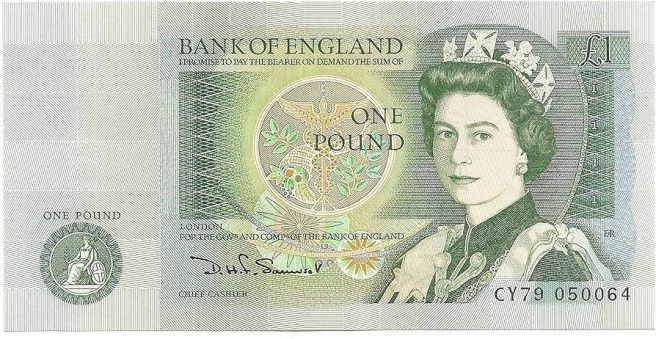
The dream starts with me being on a double decker bus {Social Conditioning / awareness thereof}. I am in Cardiff and on the ground {grounded?} floor of the bus. The conductor comes by and asks me where I am going. I say Cardiff Queen Street {Implied Queen Street station – social conditioning}. He suggests that the bus {Social Conditioning} is heading in the wrong direction but I must nevertheless buy a ticket. He, using a very old fashioned ticket machine, rolls of a ~ one inch long old school pinkish paper bus ticket marked with a black ink. I reach into my pocket and get out my wallet. I pay him with an old green one pound note. {Money = crystallised power one = fluidity or the lack thereof not sure if the one is significant. The one pound note was withdrawn in 1988. The feeling is more of old and old fashioned. An old way of giving power away?}

Up ahead we can see Dewi Sant, St David’s Centre. It looks very modern. I know that I must get off the bus. {Social Conditioning} I must change direction away from the old.

The only real social conditioning I am interacting with aside from our own is social media – LinkedIn. My WordPress and Substack don’t as yet have much social interaction.

I awake and visit the loo. Nearby the loo is one of the doors to the house made of glass. The shutter is always partially down to avert bird strikes. Just the other side of the door is an adolescent fox who I know from trail cam is a regular visitor. He is less than a metre from my feet and he has not yet heard or seen me. Straight from the dream this is an odd sensation. I stand still for several seconds. The fox remains oblivious. I make a slight clicking sound in my mouth the fox hears me and disappears.

Fox is the dreaming symbol for cunning, rationality and or logic and denotes the need for these things

I go back to bed and fall asleep.

I am now on a driverless {Going nowhere? chaotic} red double decker {Social Conditioning / awareness thereof} bus in London. I am on the top deck. It is careering through the streets near Leicester Square. I am engaged in combat with a tall Chinese {I often associated Chinese with the old, too many kung fu movies} man who is trying to kill me. He has an accomplice. I fight {need for protection?} with the man and he eventually falls off the bus {Social Conditioning / awareness thereof} and his body folds at the hip such that his legs {Ability to let go or move forward in life} are at an unusual angle. The legs twang back into position. And he shakes his fist at me angrily as the bus drives off.

I climb down the outside of the bus and into the driver’s seat.  {Take control of the state of awareness.}

I know that I must meet some young {new} people at a square outside {a sense of open space, un cluttered}  the centre of London. In my mind’s eye I can see them travelling there. I drive the bus {Social Conditioning / awareness thereof} to a square with many trees and shade.

Dream ends.

——————————

I was born in Cardiff.

I have not been there in well over two decades. I associate St David’s centre with opera concerts and buying last minute Christmas presents.

We did look into moving back to Cardiff or the Cardiff area.

Given the bus theme the dreams segments are probably linked.

Working idea is that the bus is LinkedIn

LinkedIn in not going where I want it to, I need to pay for the ride a little longer and then get off the bus and try a different direction.

Someone is angry at me on the bus and is having trouble letting go. It is a London bus. There is a lot of old for me in London.

In reality someone could be angry.

It is looking like the dreamer is advising that the time to leave LinkedIn is soon.

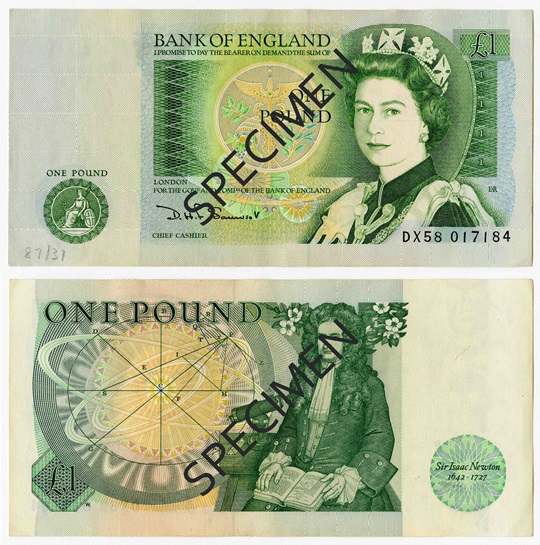
The old pound note {1981-1988} had a picture of the queen on it and in the example here a Caduceus. The flip side was Issac Newton. This would be the note that I used last.

There are no king Charles one pound notes.


The Last Ever £1 Note Issued by the Bank of England

The green Somerset £1 note (known as the Series D) — was the ‘last of its kind’ £1 note to circulate in the UK. Somerset was the Chief Cashier at the Bank of England at that time, and hence the banknote bears his signature. It is one of the Pictorial Series, referred to as such because notes in this series featured pictorial representations of famous British figures. This note bears the image of Sir Isaac Newton on the reverse and is the very banknote ever to do so. The prism on the table beside Newton refers to his work, “The New Theory of Lights and Colours” (1672) and “Optics” (1704). On the obverse of the note is the portrait of Queen Elizabeth II alongside the image of the caduceus and a cornucopia. This imagery beautifully links the obverse design to the theme of science established by the image of Newton.”

“Design features on this banknote include:

  1. An apple blossom tree symbolising Newton’s discovery of gravity.
  2. A reflecting telescope which was one of Newton’s inventions.
  3. A copy of Newton’s famous works ‘Principia’.
  4. Machine-engraved patterns of swirling orbits suggesting the theory of universal gravitation.
  5. A triangular cross-section prism which Newton used to understand optics.
  6. A caduceus which is the staff of Hermes, the Greek god of trade and finance.
  7. A cornucopia which is a symbol of plentiful supply.
  8. A particular feature of this note was that it has only one serial number”

From Wikipedia

Hermes is an Olympian deity in ancient Greek religion and mythology considered the herald of the gods. He is also widely considered the protector of human heralds, travellers, thieves, merchants, and orators. He is able to move quickly and freely between the worlds of the mortal and the divine aided by his winged sandals. Hermes plays the role of the psychopomp or “soul guide”—a conductor of souls into the afterlife.

In myth, Hermes functions as the emissary and messenger of the gods and is often presented as the son of Zeus and Maia, the Pleiad. He is regarded as “the divine trickster” about which the Homeric Hymn to Hermes offers the most well-known account.

Hermes’ attributes and symbols include the herma, the rooster, the tortoise, satchel or pouch, talaria (winged sandals), and winged helmet or simple petasos, as well as the palm tree, goat, the number four, several kinds of fish, and incense. However, his main symbol is the caduceus, a winged staff intertwined with two snakes copulating and carvings of the other gods.

In Roman mythology and religion many of Hermes’ characteristics belong to Mercury, a name derived from the Latin merx, meaning “merchandise,” and the origin of the words “merchant” and “commerce.”