Dhyāna

From Wikipedia

In the oldest texts of Buddhism, dhyāna (Sanskrit) or jhāna (Pāḷi) is the training of the mind, commonly translated as meditation, to withdraw the mind from the automatic responses to sense-impressions, and leading to a “state of perfect equanimity and awareness (upekkhā-sati-parisuddhi).” Dhyāna may have been the core practice of pre-sectarian Buddhism, in combination with several related practices which together lead to perfected mindfulness and detachment and are fully realized with the practice of dhyana.

In the later commentarial tradition, which has survived in present-day Theravāda, dhyāna is equated with “concentration,” a state of one-pointed absorption in which there is a diminished awareness of the surroundings. In the contemporary Theravāda-based Vipassana movement, this absorbed state of mind is regarded as unnecessary and even non-beneficial for awakening, which has to be reached by mindfulness of the body and vipassanā (insight into impermanence). Since the 1980s, scholars and practitioners have started to question this equation, arguing for a more comprehensive and integrated understanding and approach, based on the oldest descriptions of dhyāna in the suttas.

In Chán and Zen, the names of which Buddhist traditions are the Chinese and Japanese pronunciations, respectively, of dhyāna, dhyāna is the central practice, which is ultimately based on Sarvastivāda meditation practices, and has been transmitted since the beginning of the Common Era.

Etymology

Dhyāna, from Proto-Indo-European root *√dheie-, “to see, to look,” “to show.” Developed into Sanskrit root √dhī and n. dhī, which in the earliest layer of text of the Vedas refers to “imaginative vision” and associated with goddess Saraswati with powers of knowledge, wisdom and poetic eloquence. This term developed into the variant √dhyā, “to contemplate, meditate, think”, from which dhyāna is derived.

According to Buddhaghosa (5th century CE Theravāda exegete), the term jhāna (Skt. dhyāna) is derived from the verb jhayati, “to think or meditate,” while the verb jhapeti, “to burn up,” explicates its function, namely burning up opposing states, burning up or destroying “the mental defilements preventing […] the development of serenity and insight.”

Commonly translated as meditation, and often equated with “concentration,” though meditation may refer to a wider scala of exercises for bhāvanā, development. Dhyāna can also mean “attention, thought, reflection.”

The jhānas

The Pāḷi canon describes four progressive states of jhāna called rūpa jhāna (“form jhāna“), and four additional meditative states called arūpa (“without form”).

Preceding practices

Meditation and contemplation are preceded by several practices, which are fully realized with the practice of dhyāna. As described in the Noble Eightfold Path, right view leads to leaving the household life and becoming a wandering monk. Sīla (morality) comprises the rules for right conduct. Right effort, or the four right efforts, aim to prevent the arising of unwholesome states, and to generate wholesome states. This includes indriya samvara (sense restraint), controlling the response to sensual perceptions, not giving in to lust and aversion but simply noticing the objects of perception as they appear. Right effort and mindfulness calm the mind-body complex, releasing unwholesome states and habitual patterns, and encouraging the development of wholesome states and non-automatic responses. By following these cumulative steps and practices, the mind becomes set, almost naturally, for the practice of dhyāna. The practice of dhyāna reinforces the development of wholesome states, leading to upekkhā (equanimity) and mindfulness.

The rūpa jhānas

Qualities of the rūpa jhānas

The practice of dhyāna is aided by ānāpānasati, mindfulness of breathing. The Suttapiṭaka and the Agamas describe four stages of rūpa jhāna. Rūpa refers to the material realm, in a neutral stance, as different from the kāma realm (lust, desire) and the arūpa-realm (non-material realm). Each jhāna is characterised by a set of qualities which are present in that jhāna.

  • First dhyāna: the first dhyāna can be entered when one is secluded from sensuality and unskillful qualities, due to withdrawal and right effort. There is pīti (“rapture”) and non-sensual sukha (“pleasure”) as the result of seclusion, while vitarka-vicara (“discursive thought”) continues.
  • Second dhyāna: there is pīti (“rapture”) and non-sensual sukha (“pleasure”) as the result of concentration (samadhi-ji, “born of samadhi”); ekaggata (unification of awareness) free from vitarka-vicara (“discursive thought”); sampasadana (“inner tranquility”).
  • Third dhyāna: upekkhā (equanimous; “affective detachment”), mindful, and alert, and senses pleasure with the body.
  • Fourth dhyāna: upekkhāsatipārisuddhi (purity of equanimity and mindfulness); neither-pleasure-nor-pain. Traditionally, the fourth jhāna is seen as the beginning of attaining psychic powers (abhijñā).

The arūpas

Grouped into the jhāna-scheme are four meditative states referred to in the early texts as arūpas. These are also referred to in commentarial literature as immaterial/formless jhānas (arūpajhānas), also translated as The Formless Dimensions, to be distinguished from the first four jhānas (rūpa jhānas). In the Buddhist canonical texts, the word “jhāna” is never explicitly used to denote them; they are instead referred to as āyatana. However, they are sometimes mentioned in sequence after the first four jhānas (other texts, e.g. MN 121, treat them as a distinct set of attainments) and thus came to be treated by later exegetes as jhānas. The immaterial are related to, or derived from, yogic meditation, while the jhānas proper are related to the cultivation of the mind. The state of complete dwelling in emptiness is reached when the eighth jhāna is transcended.

The four arūpas are:

  • fifth jhāna: infinite space (Pāḷi ākāsānañcāyatana, Skt. ākāśānantyāyatana),
  • sixth jhāna: infinite consciousness (Pāḷi viññāṇañcāyatana, Skt. vijñānānantyāyatana),
  • seventh jhāna: infinite nothingness (Pāḷi ākiñcaññāyatana, Skt. ākiṃcanyāyatana),
  • eighth jhāna: neither perception nor non-perception (Pāḷi nevasaññānāsaññāyatana, Skt. naivasaṃjñānāsaṃjñāyatana).

Although the “Dimension of Nothingness” and the “Dimension of Neither Perception nor Non-Perception” are included in the list of nine jhānas taught by the Buddha they are not included in the Noble Eightfold Path. Noble Truth number eight is sammā samādhi (Right Concentration), and only the first four jhānas are considered “Right Concentration.” If he takes a disciple through all the jhānas, the emphasis is on the “Cessation of Feelings and Perceptions” rather than stopping short at the “Dimension of Neither Perception nor Non-Perception”.

Nirodha-samāpatti

Beyond the dimension of neither perception nor non-perception lies a state called nirodha samāpatti, the “cessation of perception, feelings and consciousness”. Only in commentarial and scholarly literature, this is sometimes called the “ninth jhāna

—————————————————————————————————

And from Wikipédia

Dhyāna

Dhyāna (sanskrit : ध्यान (devanāgarī) ; pali : झान, romanisation, jhāna ; chinois simplifié : 禅 ; chinois traditionnel : 禪 ; pinyin : chán ; coréen : 선, translit. : seon ; zen (禅) ; vietnamien : thiền ; tibétain : བསམ་གཏན, Wylie : bsam gtan, THL : Samten) est un terme sanskrit qui correspond dans les Yoga Sūtra de Patañjali au septième membre (aṅga) du Yoga. Ce terme désigne des états de concentration cultivés dans l’hindouisme, le bouddhisme, et le jaïnisme. Il est souvent traduit par « absorption », bien qu’étymologiquement il signifie simplement méditation ou contemplation. Le terme méditation est utilisé aujourd’hui comme un mot désignant de nombreuses techniques en occident, il s’apparente à la vigilance en psychologie ou en philosophie. Historiquement et pour le sous-continent indien, dhyana en est le plus proche.

Patañjali, le compilateur des Yoga Sūtra, en fait une étape préliminaire du samādhi. Les deux termes sont interchangés pour désigner ces états de conscience « transcendants ». Par exemple, les traductions Ch’an en chinois, Sŏn en coréeen, Thiền en vietnamien et Zen en japonais sont des noms d’écoles de dhyāna bouddhistes, dérivées les unes des autres, où dhyāna prend ce sens fort de samādhi.

On rencontre plus souvent, en bouddhisme, le terme pāli jhāna, parce que les enseignements qui y sont liés sont plutôt une préoccupation de l’école Theravāda.

Therāvada

Atteindre les jhānas correspond au développement de la tranquillité et de la sagesse (voir Samatha bhavana). On distingue cinq jhānas de la forme ou de la sphère physique pure, et quatre jhanas dans la méditation sur les royaumes immatériels. Anapanasati est la principale technique d’accès aux jhānas, la méditation metta en est une autre. Ces jhānas sont différenciés en fonction des « facteurs » qui les caractérisent :

  • Application initiale (mouvement de l’esprit vers l’objet de méditation) : vitakka ;
  • Application soutenue (saisie de l’objet par l’esprit) : vicāra ;
  • Joie, ravissement : piti ;
  • Bonheur : sukha ;
  • Concentration en un point : ekaggata ;
  • Équanimité : upekkha.

Pour être atteints, les jhānas nécessitent la suppression de cinq empêchements :

  • le désir des sens (kāmacchanda) ;
  • la colère ou l’animosité (vyāpāda) ;
  • la paresse ou la torpeur (thīna-middha) ;
  • l’agitation ou le remords (uddhacca-kukkucca) ;
  • le doute (vicikicchā).

Les cinq jhānas du monde de la forme comportent tous des facteurs différents ; leur nombre est souvent réduit à quatre (en ne tenant pas compte d’un état intermédiaire entre le premier et le deuxième, dépourvu de vitakka, mais avec un reste de vicāra) :

  1. premier dhyâna : vitakka, vicāra, piti, sukha et ekaggata (le monde des cinq sens est complètement transcendé) ;
  2. deuxième dhyâna : piti, sukha et ekaggata (il n’y a plus d’action, de mouvement du mental, sont seulement ressentis la joie et le bonheur).
  3. troisième dhyâna : sukha et ekaggata (seul le bonheur demeure).
  4. quatrième dhyâna : upekkha et ekaggata (pure équanimité, il y a arrêt temporaire de la respiration dans cet état).

Ces deux facteurs, équanimité et concentration, resteront présents dans les 4 jhānas du sans-forme ou non physiques.

Les quatre royaumes immatériels de la méditation sont :

  1. la sphère de l’espace infini
  2. la sphère de la conscience infinie
  3. la sphère du néant
  4. la sphère sans perception et sans non-perception

The Old Guard and Toltecs – Speculations

The second instalment of the Old Guard series has recently hit Netflix. It has a shared plotline of sorts with the Highlander movies of ere. In this Old Guard dramatization physical plane immortals exist adjoint humanity and interact to either good or bad effect depending on mood and predilection. In Highlander in the end there can be only one in the battle between good and evil. In the Old Guard series “Andy” the main protagonist has fought to help, aid and otherwise nudge humanity in a “better” direction. Instead of reincarnating she has one contiguous and very long life in which she preserves her super model looks despite getting slashed and shot. A magical and miraculous healing occurs. She loses her regeneration powers and then regains them.

In each the burden of endless longevity / immortality is touched upon. They do not dwell overmuch on the boredom aspect rather the action and power angle. The omnipotence may appeal to the burdened and downtrodden. It may titillate the sociopath and the narcissist.

For dramatic impact pivotal points in global {human} history are referenced. An allied them is to be found in the “Assassins Creed” franchise though in this case reincarnation is invoked and a DNA bloodline is the bearer and propagator of ongoing conflicts.

It has been suggested to me that the so-called Toltecs were incarnated around pivotal times and played a role behind the scenes in the evolution of human and planetary history. Given that the technique of erasing personal history is part and parcel of the training, it is not surprising that little historical refence can be found. In the Old Guard Andy tries to avoid publicity. However in this day and age and thanks to internet monitoring and various intelligence services it is impossible to leave no trace. The times have changed.

In the Toltec tradition there is such a thing as a nagal being. The word Nagual in Spanish American is similar. The word Naga in the Indian tradition does not differ in root. In the hagiography of Buddhism Siddartha is protected by king cobra, a naga-raja, from the rain. These nagas live in the place or world of the nagas, naga-loka. Wisdom can be elicited from nagas and naga-loka. Serpents are the dreaming symbol for wisdom.

This suggests via speculation and extrapolation that a nagal being was a contemporary and perhaps companion of Shakyamuni Buddha.

——————-

“There is unanimous agreement that Nāgārjuna (ca 150–250 CE) is the most important Buddhist philosopher after the historical Buddha himself and one of the most original and influential thinkers in the history of Indian philosophy. His philosophy of the “middle way” (madhyamaka) based around the central notion of “emptiness” (śūnyatā) influenced the Indian philosophical debate for a thousand years after his death; with the spread of Buddhism to Tibet, China, Japan and other Asian countries the writings of Nāgārjuna became an indispensable point of reference for their own philosophical inquiries. A specific reading of Nāgārjuna’s thought, called Prāsaṅgika-Madhyamaka, became the official philosophical position of Tibetan Buddhism which regards it as the pinnacle of philosophical sophistication up to the present day.”

Stanford Encyclopedia of Philosophy

Nāgārjuna (नागार्जुन). – Name of an ancient Buddhist teacher of the rank of बोधिसत्त्व (bodhisattva).

Wisdom Library

The name also appears in the wider Hindu sources predating Shakyamuni Buddha

———————–

Typically a three pronged nagal is said to distribute knowledge widely. Like a stone thrown into a pond.  If Nāgārjuna is a wider term for a nagal teacher in the Indian sub-continent then this suggests that the core Toltec and Vedic / Buddhist teachings are similarly sourced and may differ only in method of expression and verbalisation. The term is a generic and not a specific and personal name.

I personally have not found any huge glaring clashes between these philosophies. There is a marked difference in emphasis and the cultural refence points and metaphors employed.

The entertainment mentioned above is not completely inconsistent with a hierarchy of spiritual “masters” on overwatch of humanity. However in order to make it dramatically appealing they must have meaty bits and interpersonal relations such as love with hints of corporeal hanky-panky.

Too abstract and the film would not sell. The immortals have to be beautiful people if good and have ugliness if bad. One is not allowed a minger of an immortal. They must be L’Oréal advert fresh out of the shower from time to time.

Having a “hot” teacher can badly detract from learning.

It is not difficult to see that the course of human history did indeed pivot around relatively small and local acts. The execution of Jesus ended up being a game changer. The invention of antibiotics added number density to humanity.  An assassination was used as a pretext for the first world war. If there is tension a simple fuse is all that is needed to ignite. A miscalculation in a Bay of Pigs might cause a nuclear winter. The simple protection of a Buddha from the rain enabled the propagation of the teachings for mind.

Humanity is prone to flying off the handle in rage and “self-righteous” indignation. Humanity has a “cob” on and is very prone to fits of angry pique which kill hundreds of thousands.

In the absence of overwatch might the history of humanity have been even more bloody and brutal?

We are heading into unknown territories with AI and Drone-robotics. What are the two biggest markets? War and sex. Thus humanity will expend effort into developing these for profit applications. Since the theoretical abolition of slavery humanity seeks a replacement.  I read yesterday that progress toward in vitro spermatogenesis is advancing, if the same continues for human eggs it may be possible to make a human-like foetus. A synthetic human is unlikely to have an indwelling Soul. This biological dabbling and getting a blind boner for technology represents a Pandora’s box the lid of which humanity will find difficult to resist. What is unleashed now and later in this century may cease to be readily controllable. The temptation of cash and the arrogant appeal of God-like potential may lead humanity down a very dark path indeed. It may regret…

How might Andy and the Highlander come to the rescue?

The So-called Externalisation

If you swing by this blog from time to time you may note that I write a little on the blue books opus. These are written, so the story goes, by Alice Bailey acting as a telepathic amanuensis for the master Djwhal Kuhl a.k.a. the Tibetan. Whether or not you believe this story or the contents of these books, it is fair to say that a great deal of effort was made and that the contents, should you read them in entirety, no mean feat, have a marked internal consistency.

He suggests that the spiritual “hierarchy” may incarnate and live among humanity as a whole in preparation for the New Age and the coming of the Christ given impulse by the Avatar of Synthesis. I personally am not fond of any nomenclature which uses the word hierarchy. His thesis is these beings have guided humanity for millennia. An incarnate example being perhaps Comte de Saint Germain {still} who was “seen” at various European courts around the time of the French revolution.

In the works the Tibetan became a master taking the fifth initiation in the body of an old man in 1875 yet still writing books telepathically in 1950s. Such a statement is prone to disbelief.

This is not “Assassins Creed” and nor is this a Templar plot.

Nowhere in his opus does he mention that such an occurrence would be welcomed with open arms by the powers that be. In fact he is very scant on what that might look like. He does speculate on future schools of meditation and that various experiments would be undertaken. He mentions that Roosevelt was a disciple of the white magic and hints that Hitler and his evil gang of henchmen were dark and evil, dark adepts even.

Before I go further, I want to drop in a piece of nomenclature. This is the term karmic clusterfuck. A karmic clusterfuck is the biggest mistake that one can make in terms of messing up karma. In front lies a truly golden sparkly and shiny opportunity which you completely fuck up out of arrogance, power craziness and stubbornness. In seeking to control everything you turn it in a right royal, grade A karmic clusterfuck of gargantuan near cosmic proportions. The causal karmic clusterfuck will have huge ongoing effects and consequences rippling forward in space-time. That karmic clusterfuck has personal, racial and national impacts moving forward. The impacts can be global, geo-political and planetary.

It is noteworthy to examine the different treatment of Siddartha and Jesus. The resultant effects from these two karmic causes have differed, one characterised by blood greed violence and oppression the other more benign. One can draw own opinion from careful study.

Given the current obsession with espionage and “intelligence” it is not far-fetched to assume a few things. If the blue books opus is not written by the fairy godmother and has some measure of fact, then should such an externalisation happen it will be monitored. The likelihood of an open arms welcome is low. No powerful human would enjoy the interference of a bunch of beings with unknown provenance {to them}. The fatted calf would not be killed and put upon the great barbecue next to the Wagyu. Behaviour might be to observe and/or persecute. If threatened then incarnations could be encouraged to be short lived, truncated. There could even be partisan attempts to on-side the incarnating adepts and initiates, should they be discovered. Most likely there will be large intellectual resistance and this likely to emanate from the so-called scientific community as well as from churches of all flavours and creeds. Those with vested interests are the least likely to offer a heartfelt “Bienvenue”.

In clear simple terms, there will be shenanigans.

The tendency to try to double guess and assume would be difficult to resist. The basic assumption might be of motive, that the new kids on the block want to take over the ‘hood. To an enlightened being the notion of power over is an anathema. A concept difficult to comprehend for your normal powerful human being.

What is safe to say is that if such an externalisation were to occur it would be totally new and there would be zero precedent on how to approach it. Locking up an initiate in Guantanamo Bay, would be karmically unwise. It is however likely that humanity, some of its leaders, would react in a non-measured way. The new and unfamiliar can stimulate fear-dramas into those already mildly paranoid. No way would these enlightened beings be after the job of prime minister, archbishop, ayatollah or president. But people may fail to appreciate this. There would be psychological transference of motive. People would see their own reflection in the mirror.

Although a positional organisational chart was given out in the last century it would not be clear how to approach. Contact details are not available for Kuhl on LinkedIn. In 2025 he would be well in excess of 150 earth years old which is a bit of a mindfuck. Who might be the receptionist, the organisational gatekeepers? Where is headquarters? Why is their web site not SEO optimised? What is the protocol? The organisation has probably changed and evolved.

Any conventional corporate approach probably would not apply. One could not meet and share corporate PowerPoint presentations, handing out business cards with roles like Quartermaster, CEO, Secretary of State on. The concept of dealmaking may have zero applicability.

The world has changed since Kuhl was writing in depth.

I don’t know if Kuhl had envisioned how it might play out, probably not because when he was writing it was a long way into the future, a dream yet to coalesce. It would be a metaphorical minefield given that the vast majority of humanity is in no way soul-infused. The overarching psychology is that of the personality and its self-ish orientation. The interconnectedness of The One Life is not uppermost and goodwill to all men has been sadly much eroded as of late. People are self-centred and do not feel the One Humanity all that much. Separation and division are currently rife. People are not working together to face the real incoming crisis of planetary climate change; they are squabbling as “Rome” burns. They have pressed snooze on their smartphone alarm clocks.

Is it even possible for humanity to engage in a calm intelligent fashion with such a putative externalisation were it to happen?

How would you bet?

Aux vrays difciples de Hermes – Immortalité

There is a very real likelihood of ancient non mainstream, dare I say it, non-peer reviewed knowledge, being undervalued and forgotten. Some manuscripts have been kept. This one has a publication date of 1710 by Limojon de Saint-Didier, Alexandre-Toussaint {approximately 1630-1689}. These are {inter alia} in the internet archive and at Wellcome Collection library, there are other Alchemical texts.

I have seen a 1699 frontispiece for this.

Peter the Philosopher was made famous by J. K. Rowling. In the Hermetic mercurial tradition, there are references on turning quicksilver into gold. Here silver {quick} is matter and gold is spirit. Transmutation of consciousness is out of gross form to achieve liberation {nirvana} and cease the endless cycle of rebirth and hence death. One never dies again; one ceases to be mortal and hence achieves im-mortality. It does not mean living in meat, incarnate, for ever and ever {or a very long time}. It means not being reborn. No more dying.

Just as in esoteric Vajrayana Buddhism there are Hermetic mandalas:

The symbolism in sketches like this is extensive and cannot be understood entirely rationally. That approach gets nowhere other than intellectual masturbation. The thought form has to be built with care and the consequences of making it, managed in “real” meaty life. It is the battle royal of soul in matter. The Caduceus in not solely two dimensional. People imagine, incorrectly, that the stone, the rock, Pierre is a thing, a talisman, a magic artefact. They may fuck around in a chemistry lab trying to synthesise it.

One can only grasp and attain these mandalas fully when one is ready. Whoever drew this one was no novice….

It is a shame that required orthodoxy often squanders knowledge and burns books. Socio-political position and self-advancement so often overshadows. The powerful often destroy knowledge, wisdom and science if it threatens their power base. Because knowledge is power, in a sense, those in search of mundane power seek to handicap and destroy it. Anything not catholic enough in terms of the papal edicts, whatever shape or form they may be, is ostracised and attacked.

Soon New-speak and The Ministry of Truth rule the roost and all dissidents are punished.

In the kingdom of the blind the one eyed man is king.

This pattern is a historically repeating one.

Sometimes the esoteric can survive in the shadows. Sometimes things are lost for ever. We will never know, by definition, what is lost already.

The orthodoxy always ridicules and talks down, bad mouths, that which does not conform or obey. It has always been thus and it will probably continue to be…

Karma and End of Life

In my opinion it is very unwise to discount the effects of karma both as an individual, as a group or as a nation. Karma suggests that behavioural causes have inevitable effects. Our actions create our future. There are consequences.

Of course, there is no compelling reason why you should pay heed to my opinion. I am not some big cheese new-age book-selling guru, nor have I been recommended by hosts of followers {paid or otherwise}. I am not famous and I have no introduction written by a senior religious figure, a lama with a throne. My provenance if unknown and/or dodgy.  I am a retired person living in the countryside without cult or church. Perhaps a lone eccentric in a quiet by-way of a vast internet.

In the philosophy of karma, what you sow you reap.

It is not a great step to imagine that harvest comes towards the end of life. That harvest might be of a dual kind, material financial to retire on and spiritual karmic to set up the next evolutionary step, the next life. By the time you reach the autumn of life one might speculate that one has learned good from bad. One may have acquired a modicum of wisdom and life experience. In the light of that knowledge what you do towards end of life is more important because you can no longer plead inexperience or ignorance. As knowledge increases so does karmic import, karmic impact. You know better. You may not behave consistently with this knowledge.

The time in and around your {natural} death is the harvest of karma from this life and the others which precede. One might die well or cling on to the starboard bow with all your energy, afraid of letting go of the ship of life. In order to die “well” it is perhaps wise to pay off any residual karmic debt {if possible} before passing. This is because karmic debt accrues interest. One might wish an enabling birth subsequent.

But if you are of the “phew I got away with it” mentality under no circumstances, might you feel it necessary to settle accounts. You might take your smugness to the crematorium. You may remain stubbornly convinced, entitled even. As the crem gas burners light, you may look on and still think, “I told you so, there is no life after death!”

Even if you do not believe in karma, in the philosophy of karma, your words, deeds and bile add up. Karmically, you deny karma until such time as karma makes itself irrevocably obvious to you. You can struggle but karma is “bigger” than any petty human. Sooner or later “you” learn and your dogmatic adamant insistence to the contrary is shown to be flawed and inaccurate. This can come as quite a shock!!

For example, if you had unresolved karma with me, once divested of your stubborn personality vehicle, we might meet on the cusp of the dream, in the in between of worlds after physical plane death. There you cannot pretend not to have seen me or make an excuse because you are busy. I, still living, would not be surprised to see you but sure as hell you might be. What might you say?

At one time I briefly considered working with end of life care. But when I thought about it, I might go down like a lead balloon with friends and family.

From a Buddhist perspective having a “good” death gains karmic merit, it is a stepping stone, to the other shore of liberation. Being awake and conscious at withdrawal eases the transfer of emotive unpleasantness and thereby lessens the ongoing karmic burden. Panic and fear are not helpful; resistance is ultimately futile. Because of modern medicine I have had six more years. In the old days I would have died when I broke my femur.

I have a pet theory that modern medicine has complicated the workings of karma. That makes sense because karma too must evolve. Human choices are more nuanced than they once were. The temptation to strive to have life on you own terms and to try to dictate to the universe is strong.

In my dreams I have foreseen meetings {after their death} with a number of individuals with whom I was once acquainted. To my knowledge most of them still breathe earth air. If my dreams are predictive, we shall meet again in a “place” with which I am the more familiar.

What I am hinting here is that karma does not cease on “dying” but persists into the in-between experience on going. The slate is not wiped clean. How you live your life at and towards the end matters.

As I suggested at the beginning it is unwise to discount the notion of karma.

Monk’s Robes – Toilets – Seminar Dream 09-05-2025

Here is this morning’s dream.

The dream starts in my chambers. They are wooden panelled and there is not a great deal of light. It is not long after dawn and I am getting dressed in my monk’s robes. I am being helped by my assistant, a young relatively novice monk. He is fussing over me. The robes which I am putting on are of Himalayan-Tibetan colour with a yellowish undervest. I am putting them on left-handed in that it is my left shoulder which is relatively bare. I am left-handed. I sit on a chair and the young monk helps me to put on some grey part woollen socks to go with my open toed synthetic walking sandals. He helps me stand up because I am very stiff and slow moving in the morning.

We go to the communal wash facilities in which there are showers and toilets. I use the toilet and come back to the line of washbasins in front of a mirror to wash my face and clean my teeth. Dzongsar Jamyang Khyentse Rinpoche is there as a younger man maybe around forty years of age. He is smiling. He notes how the novice and I play fight a little. He jokes that he has seen quite enough of our kung fu and that we should be serious. I say that it is not a good idea to always be so dour. Something which all of us find hysterically funny.

Today I am going to give a seminar at a London university. As I approach the lecture halls / seminar block I come upon an open office scenario with cubicles for side offices. Throughout the office, on slightly raised pedestals, are isolated “Armitage Shanks” style WC toilets without cisterns. They are antique with wooden seats and lids. Several of my erstwhile colleagues from decades ago are in the office. They do not seem to notice the more than half a dozen toilets. They are fixtures. I go into one of the side offices and someone is sat upon the “throne” mid dump. I apologise and back out.

I move down the corridor and into the seminar rooms / lecture theatre. There are more Buddhist monks with me now one of whom is quite senior and bespectacled. I go into the seminar room and pick up an overhead projector which I take to the lecture desk at the front. I comment than in addition to computer slides I sometimes like to scribble.

The senior monk stands up and says that it is important not to try to take notes as handouts will be given. He says that it is particularly important to note whatever it is that Rinpoche writes down by hand. I am holding a marker pen in my left hand as he speaks. The monk says that Rinpoche’s annotations are key-like and important.

A young female member of the audience who knew me from before as a senior tutor asks me why I am wearing robes. I say that I have not yet been fully ordained and that these are by way of an experiment to see how people respond to me during the course of this three days long seminar. I say that tomorrow I might wear a business suit or sports gear.

I say to her that ordination is a bit like semantics. I am very aligned with Buddhist thinking and don’t really need a “certificate”. I say the difference between vegetarianism and a plant-based diet is also semantic. If you eat a fully plant-based diet as a vegan you are already a vegetarian and don’t need to prove your veggie status. Whereas some veggies are insistent about the virtue of their diet, a true vegan just does. Deeds are more important than words.

The dream ends.

My Five Buddhist Incarnations – Dreaming

In around 2003 whilst living in London and working as a lecturer in Physical Chemistry at Imperial College in London I started having waking visions of myself dressed as a Buddhist monk / priest. These visions overlaid normal day to day reality and I was able to lecture to a theatre full of ~one hundred students on chemical reaction kinetics or in smaller groups, chemical applications of group theory, whilst these visions were resident. They persisted on the crowded Victoria Line tube trains. I had repeat visions of om mane padme hum tattooed in Sanskrit on my inner forearms. Accompanying these images was/is the sensation of tattoo. These visions lasted on and on for over a year.

I did not mention this to anyone because I thought it would not go down well in the Chemistry department. I thought human resources might not appreciate this and occupational health might be consulted.

I however was pretty sure that this was past life recall.

Obviously, it is impossible to prove scientifically, that any past life recall is real. At best there can be what the courts call, circumstantial evidence. Dreaming comprises some of this kind of evidence.

In 2009 I had a series of visionary telepathic conversations, early in the morning, walking in the woods near Tring with the master Djwhal Kuhl. He told me of five of my previous lives, two of which were Buddhist. He said that I had been a very close disciple of Siddartha.

The dream yesterday has added Nāgārjuna to the list of possible life-candidates.

Irrespective of accuracy or otherwise the theme of scholasticism and scholar runs through all the/my putative incarnations as does the theme of entrepreneurship. I am “on” the second ray, of the Elephant dreaming class and conditioned by love-wisdom, the teaching ray.

One dream suggests that I was Bakula a close disciple of Siddartha who came late to the path after a scholarly life.

Yesterday’s dream suggests some six hundred years later Nāgārjuna. Who was a “founder” of Mahayana and may have taught at Nalanda university.

Another dream has pointed at a saffron trousered Muay Thai trained Burmese / Thai incarnation, a monk/priest/protector.

Then there is dreaming evidence of a Japanese Vajrayana monk incarnation, with poetry.

{The feeling for me is that I also had a Japanese Zen life but no dreams as yet}.

The next two lives were not substantially Buddhist.

Of late there has been increasing “evidence” for a 20th century incarnation as a Tibetan Buddhist. So far there is no evidence of a named individual. If it was a sequential birth then they need to have died before or in early 1964. If it is a shared emanation then there is no strict constraint of time frame.

It is not for me beyond the realms of possibility that I have had five {six} incarnations with a dominant Buddhist flavour and of a non lay orientation.

It is not going to detrimentally affect my career prospects to write about this here and now.

I can just be some crazy eccentric old git living like a quasi-hermit.

“Look at the twp boy over by there…”

.

Leaving the Palace and Miscellaneous

Nirmāṇakāya (Chinese: 應身; pinyin: yīngshēn; Tibetan: སྤྲུལ་སྐུ་, tulku, Wylie: sprul sku) is the third aspect of the trikāya and the physical manifestation of a Buddha in time and space.

Nearly ten years ago I tried to explain to the anaesthetist that because of the very large amount of meditation I had done there might be some anomalies in how I responded to medication – anaesthetic. They completely ignored me and did not take me in any way seriously. A few days subsequent to the operation I had strong recall of being above the operating table watching the “vultures” around my corpse operating. On going into theatre, I was chatting about the clean room conditions of the operating theatre. The same night after ~ six hours of surgery to remove a colon cancer, I stood on my own two feet. Which freaked out the nurse in recovery.

I am pretty sure that something weird transpired during the operation and that it was not spoken about.

There is no way that a modern medical professional would countenance the notion of a nirmāṇakāya or janmanirmāṇakāya; སྐྱེ་བ་སྤྲུལ་སྐུ, skye ba sprul sku. Nor that they might be biologically different to a regular human being.

If one takes the dreaming “evidence” in this blog, then there is a hint of non-standard reincarnations plural stemming back lifetimes. It could be a Soul reincarnating or it could simply be some kind of emanation. In the latter case the emanation body or nirmāṇakāya may not clothe itself in meat in a standard way. I have not read of any different approach to the medical treatment of Tibetan tulkus. But there is a vast amount of stuff which is kept away from prying eyes. My guess is that Tibetan Vajrayana etc. is like an iceberg, with only a tiny bit showing.

The body may be similar but the “mind” very different. Tulkus may be very different to normal people though looking the same. The manifestation, the emanation, need not be that of a full buddha.

On the horizon for me are up to three more major surgeries. In 2019 they put my titanium pin into the left femoral neck/head whist under the influence of a spinal injection and some other drugs. I can remember the bone shaking pneumatic drill. They would not let me watch even though I asked. It was enough to induce PTSD…I was conscious if drugged.

It can be said or observed that I left / renounced the Imperial palace, when I walked out of my job as a senior lecturer at Imperial College in London. I was a strict vegan for a long time, close to nine years. I walked out of a relationship with a wife, a home and a very young female child. I renounced my family later. I meditated extensively away from the madding crowd. I learned science sport and martial arts. There are some of the twelve acts attributed to Siddartha.

At a very long stretch one could say I share these, have them in common.

There is a part of me that wonders if the medical approach to me needs to take other factors into consideration. This adds a little reticence to the notion of drastic orthopaedic surgery. Somehow, I need to understand better…

Hmmn..

The Power of a Buddha or Evolved Bodhisattva

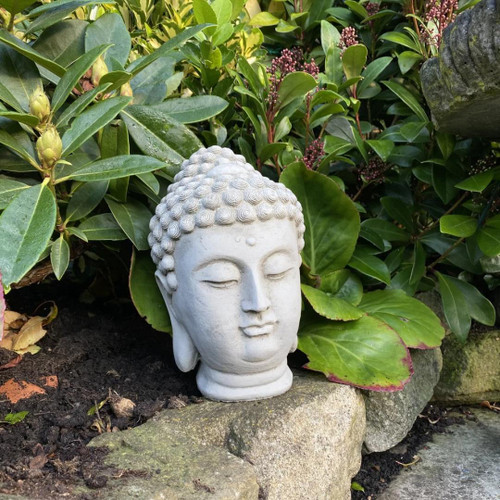
The image of Buddha is very widespread and one can get a statue down the garden centre or a poster to put up on the walls of your home. The vibe associated is often calm tranquillity. Never is it in battle with Mara, Māra. In the west Buddha is often seen as wholly benign and passive. Those fond of smoking joints may have a Buddha statuette or have paraphernalia which is Buddha themed. One can get a vegetarian meal called a Buddha Bowl. Back when I was a vegan and visiting Japan I used to eat “Monk’s Meals” there.

Most of the statues have a Buddha who is not emaciated and with Thai style hair, a bit fat. Rarely is he seen as skinny. He is often depicted with a halo as might be perceived by a quasi-clairvoyant. 

It is not as weird as the blonde, blue eyed Aryan representations of Jesus who was probably semitic, Jewish, in appearance. But Buddha is often not quite as brown as he might have been in real life. He lived alfresco and would have tanned up well.

In the West people do not imagine the power, sometimes magical of a Buddha or evolved Bodhisattva. The imaginations do not extend beyond some dude sitting on a mat cross legged meditating.

“Hey man, that is Zen…”

Tibetan Buddhism is perhaps unique in representing wrathful forms of various Bodhisattvas. They do battle with evil. In Vajrayana there is black and white magic. Force sometimes needs met. There is significant power in a Buddha or evolved Bodhisattva. Power beyond normal ken.

The various canons have a list of special powers attained as a Bodhisattva proceeds along their journey to enlightenment. These supra-mundane powers are not to be found in garden centres. Scientists may quibble as to whether they are real manifestations or not.

As a teenager I was fascinated by the TV series Monkey.

“Monkey eats many of the peaches, which have taken millennia to ripen, becomes immortal and runs amok. Having earned the ire of Heaven and being beaten in a challenge by an omniscient, mighty, but benevolent, cloud-dwelling Buddha (釈迦如来, Shakanyorai), Monkey is imprisoned for 500 years under a mountain in order to learn patience.

Eventually, Monkey is released by the monk Tripitaka (三蔵法師, Sanzōhōshi), who has been tasked by the Boddhisatva Guanyin (観世音菩薩, Kanzeon Bosatsu) to undertake a pilgrimage from China to India to fetch holy scriptures (implied to be the region of Gandhāra in the song over the closing credits).”

Which is about the spread of the threefold Tripitaka to China and hence Japan. Evil tries to stop the dharma from being propagated and many adventures ensue. Here Buddhism is proactive and not passive. There is struggle.

The Buddhist canons have many stories of remarkable miracles carried out both by Siddartha and other Bodhisattvas. Padmasambhava considered a Nirmāṇakāya of Shakyamuni Buddha is attributed with magical powers and miracles. Those steeped in the tradition are less likely to scoff than your common or garden Western scientist. Vajrayana differs from East Enders or Coronation Street and markedly so. Exposure and immersion in its depths is likely to blow the minds of anyone lacking openness and fluidity.

Without direct personal experience there is no way to assess what the power of a Buddha or evolved Bodhisattva might be. Common sense suggests caution and not arrogance.

 A Buddha is not just a garden ornament, statuette or poster…