Initiation, Human and Solar

INITIATION DEFINED

The question anent initiation is one that is coming more and more before the public. Before many centuries pass the old mysteries will be restored, and an inner body will exist in the Church – the Church of the period, of which the nucleus is already forming – wherein the first initiation will become esoteric, in this sense only, that the taking of the first initiation will, before so very long, be the most sacred ceremony of the Church, performed esoterically as one of the mysteries given at stated periods, attended by those concerned. It will also hold a similar place in the ritual of the Masons. At this ceremony those ready for the first initiation will be publicly admitted to the Lodge by one of its members, authorized to do so by the great Hierophant Himself.

Four Words Defined

When we speak of Initiation, of wisdom, of knowledge, or of the probationary Path, what do we mean? We use the words so glibly, without due consideration of the meaning involved. Take, for instance, the word first mentioned. Many are the definitions, and many are the explanations to be found as to its scope, the preparatory steps, the work to be done between initiations, and its result and effects. One thing before all else is apparent to the most superficial student, and that is, that the magnitude of the subject is such that in order to deal with it adequately one should be able to write from the viewpoint of an initiate; when this is not the case, anything that is said may be reasonable, logical, interesting, or suggestive, but not conclusive.

The word Initiation comes from two Latin words, in, into; and ire, to go; therefore, the making of a beginning, or the entrance into something. It posits, in its widest sense, in the case we are studying, an entrance into the spiritual life, or into a fresh stage in that life. It is the first step, and the succeeding steps, upon the Path of Holiness. Literally, therefore, a man who has taken the first initiation is one who has taken the first step into the spiritual kingdom, having passed out of the definitely human kingdom into the superhuman. Just as he passed out of the animal kingdom into the human at individualization, so he has entered upon the life of the spirit, and for the first time has the right to be called a “spiritual man” in the technical significance of the word. He is entering upon the fifth or final stage in our present fivefold evolution. Having groped his way through the Hall of Ignorance during many ages, and having gone to school in the Hall of Learning, he is now entering into the university, or the Hall of Wisdom. When he has passed through that school he will graduate with his degree as a Master of Compassion.

It might be of benefit to us also if we studied first the difference or the connection between Knowledge, Understanding, and Wisdom. Though in ordinary parlance they are frequently interchanged, as used technically they are dissimilar.

Knowledge is the product of the Hall of Learning. It might be termed the sum total of human discovery and experience, that which can be recognized by the five senses, and be correlated, diagnosed, and defined by the use of the human intellect. It is that about which we feel mental certitude, or that which we can ascertain by the use of experiment. It is the compendium of the arts and sciences. It concerns all that deals with the building and developing of the form side of things. Therefore it concerns the material side of evolution, matter in the solar systems, in the planet, in the three worlds of human evolution, and in the bodies of men.

Wisdom is the product of the Hall of Wisdom. It has to do with the development of the life within the form, with the progress of the spirit through those ever-changing vehicles, and with the expansions of consciousness that succeed each other from life to life. It deals with the life side of evolution. Since it deals with the essence of things and not with the things themselves, it is the intuitive apprehension of truth apart from the reasoning faculty, and the innate perception that can distinguish between the false and the true, between the real and the unreal. It is more than that, for it is also the growing capacity of the Thinker to enter increasingly into the mind of the Logos, to realize the true inwardness of the great pageant of the universe, to vision the objective, and to harmonize more and more with the higher measure. For our present purpose (which is to study somewhat the Path of Holiness and its various stages) it may be described as the realization of the “Kingdom of God within,” and the apprehension of the “Kingdom of God without” in the solar system. Perhaps it might be expressed as the gradual blending of the paths of the mystic and the occultist, – the rearing of the temple of wisdom upon the foundation of knowledge.

Wisdom is the science of the spirit, just as knowledge is the science of matter. Knowledge is separate and objective, whilst wisdom is synthetic and subjective. Knowledge divides; wisdom unites. Knowledge differentiates whilst wisdom blends. What, then, is meant by the understanding?

The understanding may be defined as the faculty of the Thinker in Time to appropriate knowledge as the foundation for wisdom, that which enables him to adapt the things of form to the life of the spirit, and to take the flashes of inspiration that come to him from the Hall of Wisdom and link them to the facts of the Hall of Learning. Perhaps the whole idea might be expressed in this way:


Wisdom concerns the one Self, knowledge deals with the not-self, whilst the understanding is the point of view of the Ego, or Thinker, or his relation between them.

In the Hall of Ignorance the form controls, and the material side of things has the predominance. Man is there polarized in the personality or lower self. In the Hall of Learning the higher self, or Ego, strives to dominate that form until gradually a point of equilibrium is reached where the man is controlled entirely by neither. Later the Ego controls more and more, until in the Hall of Wisdom it dominates in the three lower worlds, and in increasing degree the inherent divinity assumes the mastery.


Aspects of Initiation

Initiation, or the process of undergoing an expansion of consciousness, is part of the normal process of evolutionary development, viewed on a large scale, and not from the standpoint of the individual. When viewed from the individual standpoint it has come to be narrowed down to the moment wherein the evolving unit definitely apprehends that (by dint of his own effort, aided by the advice and suggestions of the watching Teachers of the race) he has reached a point wherein a certain range of knowledge of a subjective nature, from the physical plane point of view, is his. It is in the nature of that experience wherein a pupil in a school realizes suddenly that he has mastered a lesson, and that the rationale of a subject, and the method of procedure, are his to use intelligently. These moments of intelligent apprehension follow the evolving Monad throughout his long pilgrimage. What has been misinterpreted somewhat at this stage of comprehension is the fact that at various periods the emphasis is laid on different grades of expansion, and always the Hierarchy endeavors to bring the race to the point where its units will have some idea of the next step to be taken.

Each initiation marks the passing of the pupil in the Hall of Wisdom into a higher class, marks the clearer shining forth of the inner fire and the transition from one point of polarization to another, entails the realization of an increasing unity with all that lives and the essential oneness of the self with all selves. It results in a horizon that continuously enlarges until it includes the sphere of creation; it is a growing capacity to see and hear on all the planes. It is an increased consciousness of God’s plans for the world, and an increased ability to enter into those plans and to further them. It is the effort in the abstract mind to pass an examination. It is the honor class in the Master’s school, and is within the attainment of those souls whose karma permits and whose efforts suffice to fulfil the aim.

Initiation leads to the mount whence vision can be had, a vision of the eternal Now, wherein past, present, and future exist as one; a vision of the pageant of the races with the golden thread of pedigree carried through the many types; a vision of the golden sphere that holds in unison all the many evolutions of our system, deva, human, animal, vegetable, mineral, and elemental, and through which the pulsating life can be clearly seen beating in regular rhythm;

  • a vision of the Logoic thought-form on the archetypal plane,
  • a vision that grows from initiation to initiation until it embraces all the solar system.

Initiation leads to the stream that, once entered, sweeps a man onward until it carries him to the feet of the Lord of the World, to the feet of his Father in Heaven, to the feet of the threefold Logos.

Initiation leads to the cave within whose circumscribing walls the pairs of opposites are known, and the secret of good and evil is revealed. It leads to the Cross and to that utter sacrifice which must transpire before perfect liberation is attained, and the initiate stands free of all earth’s fetters, held by naught in the three worlds. It leads through the Hall of Wisdom, and puts into a man’s hands the key to all information, systemic and cosmic, in graduated sequence. It reveals the hidden mystery that lies at the heart of the solar system. It leads from one state of consciousness to another. As each state is entered the horizon enlarges, the vista extends, and the comprehension includes more and more, until the expansion reaches a point where the self embraces all selves, including all that is “moving and unmoving,” as phrased by an ancient Scripture.

Initiation involves ceremony. It is this aspect that has been emphasized in the minds of men, perhaps a little to the exclusion of the true significance. Primarily it involves the capacity to see, hear, and comprehend, and to synthesize and correlate knowledge. It does not necessarily involve the development of the psychic faculties, but it does entail the inner comprehension that sees the value underlying the form, and recognizes the purpose of pervading circumstances. It is the capacity that senses the lesson to be learnt from any given occurrence and event, and that by means of these comprehensions and recognitions effects an hourly, weekly, yearly growth and expansion. This process of gradual expansion – the result of the definite effort and strenuous right thinking and living of the aspirant himself and not of some occult teacher performing an occult rite – leads to what one might term a crisis.

At this crisis, which necessitates the aid of a Master, a definite act of initiation is performed, which (acting on a particular center) produces a result on some one body. It keys the atoms to a certain pitch, and enables a new rate of rhythm to be attained.

This ceremony of initiation marks a point of attainment. It does not bring about attainment, as is so often the misconception. It simply marks the recognition by the watching Teachers of the race of a definite point in evolution reached by the pupil, and gives two things:

  1. An expansion of consciousness that admits the personality into the wisdom attained by the Ego, and in the higher initiations into the consciousness of the Monad.
  2. A brief period of enlightenment wherein the initiate sees that portion of the Path that lies ahead to be trodden, and wherein he shares consciously in the great plan of evolution.

After initiation, the work to be done consists largely in making that expansion of consciousness part of the equipment for the practical use of the personality, and in mastering that portion of the path that has yet to be traversed.


The Place and Effect of Initiation

The ceremony of initiation takes place on the three higher subplanes of the mental plane, and on the three higher planes, according to the initiation. The five-pointed star, at the initiations on the mental plane, flashes out above the head of the initiate. This concerns the first initiations which are undergone in the causal vehicle. It has been said that the first two initiations take place upon the astral plane, but this is incorrect, and the statement has given rise to a misunderstanding. They are felt profoundly in connection with the astral and physical bodies and the lower mental, and affect their control. The chief effect being felt in those bodies the initiate may interpret them as having taken place on the planes concerned, as the vividness of the effect and the stimulation of the first two initiations work out largely in the astral body. But it must ever be remembered that the major initiations are taken in the causal body or – dissociated from that body – on the buddhic plane or atmic plane. At the final two initiations which set a man free from the three worlds, and enable him to function in the body of vitality of the Logos and wield that force, the initiate becomes the five-pointed star and it descends upon him, merges in him, and he is seen at its very center. This descent is brought about by the action of the Initiator, wielding the Rod of Power, and puts a man in touch with the center in the Body of the Planetary Logos of which he is a part, and this consciously. The two initiations called the sixth and seventh take place on the buddhic and atmic planes; the five-pointed star “blazes forth from within Itself,” as the esoteric phrase has it, and becomes the seven-pointed star; it descends upon the man and he enters within the flame.

Again, the four initiations, prior to that of the adept, mark respectively the attainment of certain proportions of atomic matter in the bodies – for instance, at the first initiation one-fourth atomic matter, at the second one-half atomic matter, at the third three-quarters atomic matter, and so on to the completion. Since buddhi is the unifying principle (or the welder of all), at the fifth initiation the adept lets the lower vehicles go, and stands in his buddhic sheath. He creates thence his body of manifestation.

Each initiation gives more control on the rays, if one may so express it, although this does not adequately convey the idea. Words so often mislead. At the fifth initiation, when the adept stands Master in the three worlds, He controls more or less (according to His line of development) the five rays that are specially manifesting at the time He takes the initiation. At the sixth initiation, if He takes the higher degree, He gains power on another ray, and at the seventh initiation He wields power on all the rays. The sixth initiation marks the point of attainment of the Christ, and brings the synthetic ray of the system under His control. We need to remember that initiation gives the initiate power on the rays, and not power over the rays, for this marks a very definite difference. Every initiate has, of course, for his primary or spiritual ray one of the three major rays, and the ray of his Monad is the one on which he at length gains power. The love ray, or the synthetic ray of the system, is the final one achieved.

Those who pass away from the earth after the fifth initiation, or those who do not become Masters in physical incarnation, take their subsequent initiations elsewhere in the system. All are in the Logoic Consciousness. One great fact to be borne in mind is, that the initiations of the planet or of the solar system are but the preparatory initiations of admission into the greater Lodge on Sirius. We have the symbolism held for us fairly well in Masonry, and in combining the Masonic method with what we are told of the steps on the Path of Holiness we get an approximate picture. Let us enlarge somewhat:

The first four initiations of the solar system correspond to the four “initiations of the Threshold,” prior to the first cosmic initiation. The fifth initiation corresponds to the first cosmic initiation, that of “entered apprentice” in Masonry; and makes a Master an “entered apprentice” of the Lodge on Sirius. The sixth initiation is analogous to the second degree in Masonry, whilst the seventh initiation makes the Adept a Master Mason of the Brotherhood on Sirius.

A Master, therefore, is one who has taken the seventh planetary initiation, the fifth solar initiation, and the first Sirian or cosmic initiation.


Excerpted from:

“Initiation, Human and Solar – Chapter II – Initiation Defined” By Alice Bailey and Djwhal Kuhl
The Shamballa Thought Form and Nomenclature

There are certain words bandied about by esotericists and new agers which will grate on the ears of someone trained in the physical sciences. Because therein their use is specific and defined. If you talk about a vibration to a physicist, chemist or engineer it has a very contained meaning. If you say the vibration of a new age it sounds like poppycock, yet people will accept informal “only good vibes, man”.

It is common parlance in esoteric circles to talk about the astral plane, the mental plane and the buddhic plane. Plane to a scientist refers most often to a two dimensional surface or cross section, there are planes of symmetry about which reflections can be made. The misuse of language appropriated by science is a real barrier to any acceptance of esoterica in the mainstream scientific mind, a real turn off, a deal breaker and a red line.

If you speak about someone being polarised emotionally that has no defined meaning. If, however, you describe someone as governed to a large part by their emotions and emotional reactions that is more acceptable. Soap operas are popular because many like the emotional drama as it reflects their lives and how they pan out.  In esoteric parlance the majority of humanity is “polarised” on the emotional/astral plane.

Others are preoccupied with body, form and fornication. They are governed by physical sensation, hormonal response, instinctual behaviours and sexual urge.

Those more detached and less dominated by emotion could be said to be governed by mental or thinking process, these can be straightforward or highly abstract.

We might then loosely talk of three moods or modes of consciousness, carnal meaty, emotional and mental. In esoteric speak the physical plane, the astral/emotional plane and the mental plane. There is no plane simply a state, a mood, a flavour of consciousness where the being’s consciousness mostly is. It is possible to move between flavours. A simple act experienced by a detached mental type could cause an upswelling of emotion.

If you are often angry then you are governed by emotions. There is a lot of anger in the middle East just now, a lot of hot angry heads.

In esoteric circles there are the so called buddhic and atmic “planes” which are more “rarefied” and “above” the three “lower” planes. The buddhic state of consciousness is governed by intuitional mind {and heart}.

The aim of rāja yoga is, in one sense, to try to rise above the mundane, emotional and the pettier aspects of mind. The being then “spends” more time free of wild emotional swings and the desire for physical and sexual gluttony. We might speak of individuals who are largely physically governed, largely emotionally governed, largely mentally governed and largely intuitionally governed. {The intuition here differs from mental guesswork.}

This last paragraph does not use nomenclature which belongs to science. Instead of “plane” we are framing a loose description of a state or type of consciousness. No dimensionality is implied. An ordering, perhaps evolutionary is. The consciousness is increasingly expansive and inclusive as effort is applied and mind opened and broadened. One is not dogged by the incessant unwelcome boners of the physically governed and can allow consciousness and awareness to elevate above the belt and emotional storms.

In the blue books opus By Alice Bailey and Djwhal Khul Shamballa is mentioned as a “place” where the so-called spiritual hierarchy hang-out and meet. Human beings who have watched too many Raiders of the Lost Ark and Tomb Raider will be prone to imagine that Shamballa is a place with perhaps secret entrances. They will look for the kingdom of Shambhala referenced in a special scroll of Kālacakra tantra. The insistence on verbatim and dead letter reading causes people to seek out the resting place of Noah’s Ark. Maybe people are unwilling to accept the prevalence of metaphor and allegory in parable. It seems to me Moses parting the sea is more metaphor than physical “plane” reality.

In the works of Kuhl he mentions that the so-called maters can be “found” high up on the mental plane, near the buddhic.

In other words, people who are large mentally and intuitionally governed might be able to “contact” the masters.

Perhaps Shamballa too is a state of awareness, a level of consciousness and a thought form in which these evolved beings congregate from time to time. When one has risen above and expanded consciousness one might be able to build the Shamballa thought form and “go” “there”.

Unprecedented Dreaming

For me it has been a useful exercise to group these dreams thematically and see the scope and variety of subject matter. Many people are interested in dreams and things like lucid dreaming. There is an attempt to gain scientific credibility for dream studies using instrumentation and the statistical methods of psychology. Taken as a whole the opus of dreams published here and those not yet published may be unprecedented, and unique. Who else dreams of vajras, patents, lamas and hydrogen bonded water clusters?   

Am I simply an anomaly or is there something more significant at work?

In general people seek to promote their own ideas and profile. The not invented here syndrome can be found on all sides. Group mind is very anti anyone or any idea which does not originate in the group. Outsiders are not very welcome especially if they challenge the status quo or question current operational dogma.

I did, religiously, a Toltec dreaming practice daily at least once a day for eight years. I did it on the Victoria line of a morning. If you can do dreaming practice on a crowded rush hour tube you can do it anywhere. The control has to be good. The intent behind this practice is to connect with the dreamer {Soul or reincarnating Jiva} and then to hand over the steering wheel of the earthly vehicle to her. To live life according to the advice given in dreams, to surrender control.

Subsequent to this I did a meditation called the master in the heart which has a similar purpose, of connection. It builds the Antahkarana, a rāja yoga. One could say that Toltec dreaming draws inspiration down and the yoga builds upwards. They are rose and lotus visualisations. Union or at-one-ment are the goals or aim if you like. It does not require wearing tight leggings or looking fit / hot. It does mean that some measure of letting go of imagined control is needed.

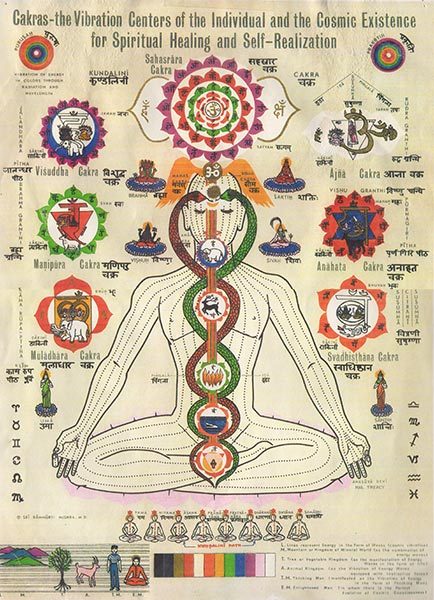
Because I am good at visualisation, I have extended the rāja yoga to “places” beyond any written account. In Toltec terms a steady pictorial visualisation is an active dream in which you imagine and hold fast an image. These dream thought forms tend to stabilize when they are “accurate” and reproducible.  For example, the Sahasrāra chakra or crown chakra is one such visualisation. Opening this chakra and going beyond it is a death practice in which one opens the exit door. In order to do this one needs to stretch the sūtrātman anchoring the life inside the body. It is a risky thing to do, control must be impeccable. I first did this in a detached house in the middle of a wood on a country estate a distance from interruption and people. During the day I was quite alone in a “cabin” in a wood.

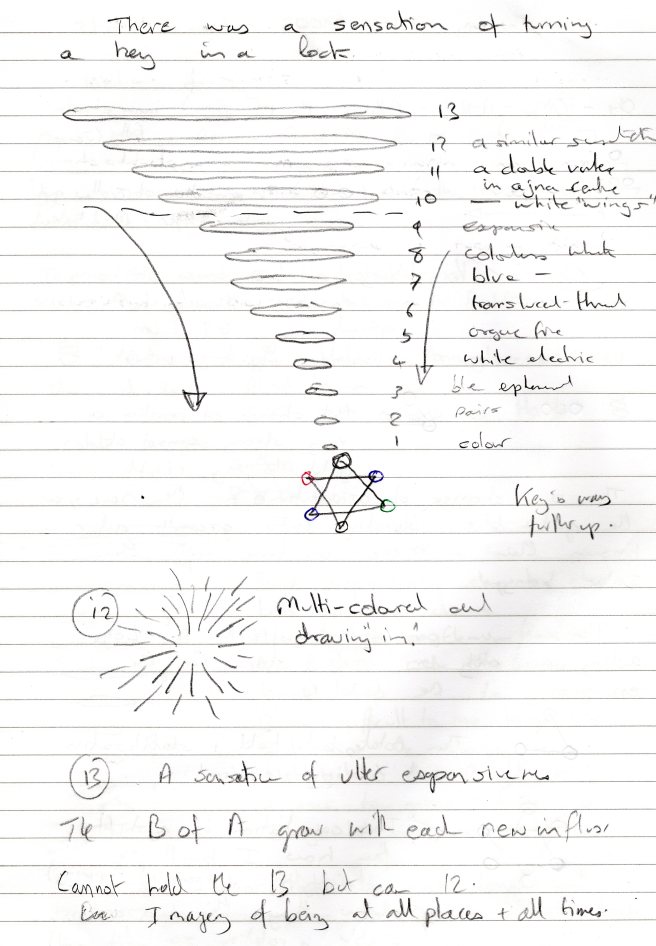
Because I am a scientist by training and I used to train smart young things in science at a top university and at high school sixth form levels. I even had postdoctoral workers. I have kept lab books or dream journals. The rāja yoga or active dream meditations were extensive with some of the thought forms taking weeks and months to build.  What one experiences in passing to a “higher” more “rarefied” state of consciousness is a kind of “membrane” which has to be transcended / popped. Each new state is difficult to hold or stabilize. Yet with practice it can be done. Here is one page from my dream journal.

In these meditations slight residual corporeal awareness remains but all sense of earth-time vanishes. There is a distant awareness of the room. One continues breathing but unconsciously so. I did record electroencephalograms {EEG} and video for a few of these. The EEG is, aside from very low frequency and amplitude theta, essentially flat despite the visualisation.

These meditations have a sensation of extensive travel to non-mundane “levels” “states” or “places”.

There is no way that I could adequately convey the experience to others. Unless you have “gone” there yourself you cannot know. Of particular assistance was the mantra associated with the Heart Sutra which one can chant in order to change between states when working upwards.

Gate gate, para gate, para sum gate bodhi svaha

Gone gone, gone beyond, gone beyond the beyond, hail the awakening

I was in conscious control doing this during daylight and without drugs or booze.

One needs to take great care to come back “down” and into body consciousness. At first the “path” downwards is as slow as the “upward”. In time one knows the way “home” and this can be done more quickly.

I guess these meditations are a form of white tantra. They are situated at anja and above and have nothing to do with basal tantra. In some later meditations three centres are active, heart, anja and sahasrāra.

In my book active visualisation and 3d {sometimes +} thought form building is active dreaming.

Of course I could be kidding myself, but I somehow doubt that.

This is what I mean by dreamyoga…

Science and Divination

My book on Mo the Tibetan System of Divination by the polymath Jamgon Mipham arrived last night and I have had a quick scan through. Like many things Tibetan when something has negative aspect they don’t hold back.

“The Demon of Death – If RA PA – the demon of death – appears, then the symbol is destruction.

I’ll speculate that if you were to ask most physical scientists if there is any merit in divination techniques, they might say it is a bit of fun but there is no reality to the predictions, divination is a superstition

I have published in Physical Review Letters, Chemical Physics and Faraday Transactions. This is evidence that at least at one time I was able to “do” modern science at a fair level.

In the early nineties I was in a bookshop in Tring and this copy of the I Ching literally fell off the shelf and onto the floor by my feet.

You could argue that this was purely coincidental or that the universe was telling me something. One could say that the I Ching wanted me, was seeking me out. I have consulted on an off for three decades. I have done consultations for myself and for others. In some cases, people’s faces have gone white with the “accuracy” of how the oracle fits life circumstance. Some of these were scientists! In the late nineties I went on my first “New Age” course with Jay Ramsay a co-author of “I Ching the Shamanic Oracle of Change”. People on the course were suspicious of me because I was a “scientist” from a hardcore science and technology university.

What is safe to say is that a consultation nearly always opens up a new approach, or a new way of thinking about a situation, dilemma or problem. It adds a perspective.

In some cases when approached with the right attitude the fit of the advice to circumstance is uncanny. If you are a dick with the oracle, it can tell you so. Of course, this perceived fit could be my confirmation bias. I am not a premature conclusion sort of person and tend to keep an open mind. I have allowed consultations to alter my actions and orientation. Just like I do with dreams.

There are many that might consider this mumbo-jumbo.

I attended a foundation course in North American Indian shamanism. As a part of that we looked a Scandinavian Runic Shamanism. I carved my own set of runes out of slate. I was accustomed to wear runes around my neck on a cord. I gave lectures on physical chemistry wearing my home made runes. There is a divination system based on runes in which one blind selects the appropriate rune from a bag to advise on a question. The selected rune is compared to a guide book and the intuition invoked to answer the query.

Astrology does not light my candle.

But I do like Tarot and Numerology. I am not drawn to typical Tarot spreads, preferring only to use the major arcana.

Maybe I should go on “Fesshole” and confess to doing Tarot whilst at Imperial College…

In my Tibetan Dice dream I throw One One or Dhi Dhi

A little later I see two dice. I see that they are carved out of a deep root of a tree and shaped and polished. It is a long process and a labour of love. These are my Tibetan dice. They are perfect cubes with sharp edges and corners. I hold them in my hand and throw the dice, and I see two faces each with a singular dark blue dot. I have thrown two. They are made of root and Tibetan. The workmanship is exquisite. I know the meaning of two and its significance.

The Jewelled Banner of Victory

If DHI DHI – the hoisted banner of victory – appears, then you are victorious and excel, like the raising of the banner of victors over every direction.  You are able to accomplish whatever activity you wish to do.”

DHI DHI is increasing and DHI transcendental wisdom, multi-coloured, mind and thoughts.

To dream an auspicious oracle is probably auspicious.

Up in the orchard there is a fallen Walnut tree, taken out by Tempest Ciaran on the first of November last year, the morning I had the dream. Some of the roots are exposed. I could fashion for myself two dice out of the root. Walnut is a very decorative wood.

I have been wondering what to do about the roots of late…

Until I have made the dice, I won’t consult the Mo.

The dream has pointed me at another method to explore…..

Impermanence and Complacency

I have had eight decent length dreams in October so far this year. I haven’t published them because recognisable individuals are in them. These are out of the blue as I haven’t spoken to/with them for well over a decade. I don’t really know what to make of them. They may be pointing at something going on in the “real” world.

In the Toltec tradition the “place” of dreams is the South. I spent quite a bit of my early life in the Southern Hemisphere and can get on well with Kiwis, Aussies and South Africans. I was a part of the itinerant barman subculture in London for a number of years. In the Toltec tradition people have a predilection for stalking of dreaming. I am the latter. Dreams can re-present possibilities in the web of life, a kind of aperture in space-time where events might manifest. These apertures do not stay open forever. They close and what once might have been possible ceases to be. Failure to act on the appropriate time scale makes things no longer possible.

I’ll make a statement, there is a tendency for arrogant people to be complacent and get caught napping.

One could argue we have seen this take place recently in the middle east, at 9/11 and Pearl Harbour. People who think themselves invulnerable, important and powerful can get surprises.

Impermanence as a concept is logical, nothing lasts forever. But people do not get it. To truly attain impermanence is to understand the eternal now. Impermanence lessens the manacles of clinging and attachment; it exemplifies the preciousness of time. Many imagine they have all the time in the world and are slow to get around to things which they prefer not to do. Timely action delayed reduces likelihood of positive outcome. Impermanence teaches appreciation and the fact we only borrow things for at most a lifetime.

People who work in universities need to be seen and heard in order to get promoted. They need to have measures of esteem; they need a web presence and various public metrics. They have a semi-permanent web footprint. Several ex-students of mine have commented to me that I am now hard to find on the internet. I was on Research Gate. They won’t give me an account now. I was on LinkedIn. I have no need to be seen, to be present. So, I can build up a profile, write a blog and then bin it. They are impermanent things. I do not cling; I have back-ups of text on the off chance I might need it again. People can imagine that one will want to remain in touch and contactable. They may be complacent about this. The nature of academia is that it is a large heavy slow moving object with momentum, it is not fluid nor are research funding mechanisms, the turn around time is quarterly at best. There are institutional and annual rhythms. If one is institutionalised life dances {slowly} to that beat. There is assumed a quasi-permanence.

It is perhaps non-standard to suggest that attainment of impermanence gives one a sense of urgency at the same time as detachment from outcome, specifically desired outcome. The land of “there is always tomorrow” runs out. The world of mañana means possibility and opportunity lost.

Carpe diem is interred in a mausoleum.

There is a saying attributed to Buddha; “The trouble is you think you have time.”

People spend their time unwisely and there is a lot of wasted time, escapism and avoidance.  Complacency about time is brought about by the illusion of permanence. “It will always be there tomorrow.”

There is vast global complacency about climate change because of the illusion of permanence. People do not get that our mode of living is subject to change and over the next decade it will become obvious. Instead of cooperating to reduce consumption the mantra of economic growth underpins jaded economic dogma. People indulge in petty vengeance games where hundreds of thousands of tonnes of high explosive munitions are detonated to get revenge by obliteration. How much energy and carbon dioxide has been released in Gaza, in Ukraine?

Has that cooled the climate?

I suspect that humanity could well be on its way to being shaken violently out of its complacency as the weather patterns get ever more extreme and chaotic. Humanity, especially in the rapacious West, has taken so very much for granted and for a long time.

Pride often comes before a fall.

Before long the aperture in space-time in which to meaningfully act on climate change will close. It has already started.

How Many Fully Enlightened People Are There?

If you type various versions of this question into Google you see that there are people discussing it on line. I have even seen articles on Buddhism which states that the goal is to achieve nirvāṇa. Buddhism does not have KPIs and personal development planning, nor does your line manager tear you off a strip if you don’t achieve your goals.

I’ll speculate whoever considers nirvāṇa a goal is a long way indeed from said goal. He is in a gaol of Western thinking.

In various school of thought nirvāṇa is when the causal vehicle {Soul or reincarnating Jiva} has been blown off. This means there is no requirement to reincarnate, a strictly human thing. Humans are “bound” to the wheel of rebirth. Someone, some being, who has done that, nirvāṇa, is strictly speaking no longer human. In the context at death the being who has attained nirvāṇa achieves the state of parinirvāṇa at the dissolution of the meaty incarnate form. Thereafter “they” remain formless.

We could get into the gender debate about pronouns. What pronouns do you use for some entity which has no body, no observable physical plane presence? What is the correct pronoun for a fully enlightened Buddha? It?

The problem I have with enlightenment as a concept is that is enlightenment an absolute or a relative term? It might be said that someone got enlightenment, does that mean that they are a fully enlightened Buddha or does it mean that they are little less heavy than before. They have attained a quantum of enlightenment, a bit, one step further up the ladder. They are lighter, less dark and thereby enlightened. To progress one gains enlightenment in a stepwise fashion, realisation by realisation. At nirvāṇa the being is lighter because it no longer has a causal vehicle or personality, notions of self have dissolved. It is enlightened, unburdened.

There is the concept of returning high attainment Bodhisattvas, who on death put off the attainment of parinirvāṇa and come back of their own free will to teach. Because they have no causal vehicle, they create a nirmāṇakāya emanation for such a purpose. If I understand it correctly there may be many of these in the Tulku tradition. Arhats can be seen as selfish because they do not come back. But that is a transference of human personality onto someone who has no self. I have seen it prejudiced that Bodhisattvas are good, and Arhats not so. Human folly, methinks.

In esoteric thinking the end of the causal vehicle comes at the fourth initiation. If one cross references, this is nirvāṇa or blowing off. If I understand it correctly this phenomenon is associated often with physical plane death {but not always}. One gets nirvāṇa and sharpish thereafter parinirvāṇa. In that school of thinking there are a few more stages of development, the other initiations, after doing what Siddartha did in getting planetary nirvāṇa.

One might rephrase the question, “how many fully enlightened beings are there?”

In the esoteric school of thought the fourth degree initiate goes on to take the fifth and become what some call masters. This happens, according to my reading, relatively soon.

I think most people would struggle to envision or envisage a “living” awareness or consciousness in the absence of a physical plane body. So, people invent worlds and dimensions or abodes where they might picture some enveloping form even if that be nebulous. The inventions are inspired by life on earth. Being superstitious people like signs and miracles as circumstantial evidence or proof of nirvāṇa or parinirvāṇa. There must be a rainbow or a comet. If it is a wholly natural part of evolution why would this happen? It is kind of no big deal. There is a desire for sanctity and holiness where they may just be a natural evolutionary process.

The question itself seeks to quantify and scale because people like to compare, to play top trumps.

“My God is better and more real than yours”, being a root of many wars.

Going a step further “are” implies existence or being. Can something exist if there is no form, no measurable lump of meat. If something is formless, is it?

Instead of quantifying we may now rephrase.  “Are there enlightened beings?” “Do they exist?”

“It’s life Jim, but not as we know it!”

Astrobiology and astrochemistry are looking for life in a chemical-biological entity with a physical existence measurable by modern instrumentation. The assumption being that life can only exist in some kind of form, or particularly a corporeal form no matter how small. Science requires a form {and perhaps reproductive urge} as a basic component of life and its definition.

A formless Buddha after paranirvāṇa would not technically be alive according to human definition.

So maybe according to science enlightened beings do not exist.

The answer is therefore zero and not 42….

Which poses the ancillary question does, zero exist or not?

Karmic Conundrums

In the context of karma, if you don’t {yet} believe in karma then it is your current karma so to do and be. It does not alter the fact of karma but your denial and disbelief thereof is karmic. Eventually karma will teach you about karma and cause & effect. In the context of karma there is an inevitability.

Do you believe in karma?

Answering this simple question has karmic consequences which may be wide ranging.

If, however, there is no such thing as karma the answer is a facile no.

To plump for an agnostic maybe suggests that karma exists, sometimes and in some circumstances. You might cherry pick the circumstances in which you give a nod to karma. Picking and choosing thus implies you want life on your own terms. You are selective.

To answer yes, implies that you acknowledge at least some responsibility for your actions.

To fully believe in karma at first might cause you to freeze and say, think and do nothing. You may not wish to cause anything.

A belief in karma has scaling to it. I have looked into its applicability and the concept of karma is for me sound and can be observed in many situations and events.

There are numerous social media, and YouTube videos entitled “instant karma”. There is a song by Lennon and Ono. People enjoy watching comeuppance. As a loose concept karma is held by many. But it is not as simple as prompt and obvious payback.  Enjoying people getting comeuppance is not in itself wise or pleasant.

It is my observation that karma can be very subtle and by way of a complex conundrum which is difficult to solve.

An obvious hurdle or bar to solving some karmic “problems” is the notion of face. People might want to resolve a situation but the only way to do that is to maybe apologise and lose some “face”. Thus, the problem never gets solved and it acts like a burr under the skin. It does not go away. Prompt action eases situations quickly, putting things off makes them worse. Boris Johnson struggled to admit he was wrong in Partygate because his sense of entitlement had it that rules did not apply to him the world king, they were for little people. Truss still refuses to accept she caused the markets to plummet. “Face” can exact a high price. And that price may come in the twilight of a life. Payment is due and with interest. Her political relevance wanes.

It is my thesis that much karma ripens and bears fruit near end of days. Challenges put off due to inconvenience re-appear just when one no longer has as much faculty to solve or face them.

In my experience karma has a lot to with attitude. Hoity toity and arrogant people can be knelt by the universe, taught a lesson of humility. To suggest to an arrogant person that this might happen is a thankless task and unlikely to succeed at first, it might sow a seed, however.

Those who believe they are able to act with impunity are the most likely not to believe in karma nor accept that they are responsible for the consequences of their actions. An example in case is the migrations from Iraq and Afghanistan. We caused this by invasion and destruction yet are unwilling to accept the consequence of immigration. We moan and complain and demand that it stops. We fail to acknowledge the lesson and are likely to repeat the same folly as a result.

 Karma can take many cycles to teach.

A typical karmic conundrum may involve wanting to resolve a situation but being unwilling to take the necessary risks or appropriate steps. In some cases, those steps which once were possible and facile have become very difficult. The longer resolution has been delayed the harder it becomes. The “problem” has grown, spread or bifurcated.

The poor attitude has acted as a growth factor for the problem. What was once simple has become highly complex and entangled. Escapism, avoidance and denial have fertilized the karma.

The saying, “what a tangled web we weave when first we practise to deceive”, is a statement of karma. With an inevitability one lie requires more to prop it up. An early stage fess-up prevents a massive web of lies, metastasising.

If is the word which most stops karmic resolution. People want to put conditions on their actions and keep apparent control. By trying to control a situation and not resolve it one can make it a lot worse. This seldom occurs to some. They can be very adamant and stubborn.

“If I do that what is in it for me?”

Is a mindset which negates the law of karma.  

Accepting responsibility for one’s actions and how they ripple out into the trajectories of the wider world is not something that most people do. Being me or egocentric they fail to appreciate the wider connectivity.

Karma ultimately teaches that we are all connected in the same world.  We are a part and not as separate as we might insist or imagine.

At the moment global karma is being initiated in the middle east violence. What will the longer term effects be? Will they be widespread or localised?

Do you believe in karma?

Place your bets…spin the wheel…

Visions or Visual Hallucinations?

If I understand it correctly the phenomena of visions plays a role in many religions. Things can be revealed by beings such as angels. Those prone to visions have been prone contextually to dreaming too.  

My general understanding is that angels are rare and play only a very important pivotal role in the religious context. They do not appear to common or garden people despite what many a new age book suggests. Helping you find the man of your dreams is probably not high on their to do list.

{I am generalising widely}.

Yet seeing something that others do not is classed as a hallucination, which can be a symptom of psychosis. Many of the figures in religious history might be diagnosed as having an episode of psychosis today.  They could be locked up and given anti-psychotic medicine.

In indigenous cultures going on a “Vision Quest” might be seen as a rite of passage. Isolated from the day to day and the tribe an individual seeks a vision of the future and his purpose. Visions can be had in caves, on high mountains. Usually, one has to step away from the mundane noise of life, maybe ease off the food.

I have participated in shamanic drumming and gone on a mini-vision quest. I can also use £250,000 femtosecond pulsed optical parametric amplifiers. It is possible that I am unique in this, there may be others. In non-linear optics world it is probably best not to talk about shamanic vision quests it could have a detrimental impact on promotion and employment prospects. So, many may have kept schtum like me.

It could be argued that I have relatively pure Welsh indigenous blood from the matrilinear line based in deepest darkest Snowdonia. As an indigenous it is not so weird for me to do indigenous things.

Anyway, I have had a number of visions over the years including when I lived in Brixton and was an academic. Needless to say, I told no colleagues nor a GP. This primarily because I always knew that I was having a vision/hallucination and was aware of my physical plane surroundings in day-to-day world at the same time. They did not overly impinge, nor were any of them frightening. If you speak to a medic about this kind of thing you could be opening a Pandora’s box and be exposed to pet theories and the latest pharma sponsored medication.

My working hypothesis concerning many of these visions is that most fall in the category of past-life recall. Some might think me whacko or that I have delusions of grandeur. People can have very closed minds.

Back in the mid seventies I used to travel by airplane from Zambia to school in Gloucestershire. There were six flights a year and by the age of 13, in the 1970s, I had 150,000 air miles. I am guilty about my childhood carbon footprint 😉. On occasion there would be a fuel stop at Malta. Each time I landed there I had a massive déjà-vu. Without knowing why, I knew that I had been there before.

This morning around 6 AM I was not sleeping so I started to do a meditation. For whatever reason, I was having difficulty and I started to have a relaxed enjoyable vision of myself in a cowled cloak and chain mail. The setting of the vision was around 800 years ago. I was aware of the vision and the bedroom. I could hear the wife breathing.

Why this is happening now I don’t know. It did point me back to a vision I had in 2003.

The vision last night may refer to “the knights of Malta”, a term used in Brittany for both Templars and the Hospitaliers, Ordre de Saint-Jean de Jérusalem.

I have had many visions associated with this putative life, a French one.

Nearby there is a hospitalier commanderie whose records do not go back past 1313 when the goods of the Templars were ceded to them.

There was also relatively nearby a Templar commanderie and the relics of a small church. The look of which is not far from one I saw in another vision.


What would you do?

Would you tell your general practice GP doctor?

Would you tell your line manager at work?

Would you imagine yourself off your trolley?

Or would you think that the sanest hypothesis was past life recall?


I am quite looking forward to seeing what may or may not happen over the next day or so…


Removal of the Ten Buddhist Fetters and Psychology

Removal of the Ten Buddhist Fetters and Psychology

I have always thought that Buddhism is pretty radical. If one removes all ten fetters one no longer reincarnates, so the theory goes.  In the context of Abhidhamma Pitaka the vast majority of humans have no experience beyond the first couple of fetters. Discussion therefore is based on scripture and not personal experience; it is by way of speculation.

The first fetter of self can be thought of as the business of psychology, one is encouraged therein to have a notion of self, an identity. If you lack many of the emotions in the second enumeration you might get a diagnosis of Aspergers’ or clinical depression. You certainly would not have a starring role in Dallas or East Enders.

The teachings of Buddha if applied take one way beyond psychology and the socio-political framing of mundane human experience. It, the fetter, could be called the limitation of and by social conditioning, complying with societal ideas and trying to fit therein. Making an image to attempt to convey to others. If you think in terms of social media Abhidhamma Pitaka’s list of ten fetters are perhaps the guidebook to social popularity, the more you express the more likes and followers you get. Does Trump exhibit any of these fetters?

I find some of the available Buddhist interpretations a bit absolutist. Complete removal of reproductive urge is probably not possible. Porn hub reinforces the first fetter kāma-rāga.   

Getting things in perspective and balanced is probably a healthier way. After all the Diamond sutra admonishes against seeking the absolute. A classic sign of depression is loss of libido. Psychologists may contest the teachings of Siddhartha.


What are the ten fetters in Buddhist tradition?

 This by Andrei Palskoi on Quora

https://www.quora.com/What-are-the-ten-fetters-in-Buddhist-tradition

The fetters are attachments to illusory ideas about how reality is built and operates. They are the rules that you believe are solid and unbreakable, whereas in fact they are nothing more than ephemeral mental contracts.

Each of them can be seen as a counterweight applied to balance the scales after they’ve been originally tipped off by the 10th fetter, culminating with the 1st fetter like a cork sealing the jinn’s bottle. They are intended to create and/or restore the illusion of stability, and the price for having that illusion is the lack of freedom – that’s why they called “fetters”. They feel important to abide by, even when they result in suffering.

There are many different interpretations of their meaning. Below is mine – by no means accurate or even orthodox, but it’s one of those things where you cannot rely on dogmas (see fetter #3).

  1. Person – thinking that there is an actual object with fixed properties called “a person”, or “self”. Once the imaginary description of “who you are” is formed, there is a strong feeling of being obligated to act in accordance with how that “you” would act. Essentially, in this fetter you are bound by the mental model of yourself. The fear of violating this fetter is that for your reputation in your own or someone else’s eyes. Also, many other stories and beliefs are predicated on the idea of “you” as an actor playing a crucial role in them.
  2. Doubt – traditionally by this it is meant doubt in Buddha’s teachings. Effectively, it is doubt that there is indeed a way back out of your existential conundrum. It binds you into arguing about everything, rather than putting sincere whole-hearted effort into looking at the facts and be willing to honestly admit what they show, even if it goes against your preconceived beliefs.

{often very specifically about the teachings of Buddha and the Dharma my addition}.

  1. Rites and rituals – this includes dogmas, habits and any other kind of mind automation. It binds you into thinking that if “things were this way before”, they are expected to continue the same way. This fetter is an inertia of mind, i.e. repeating what it was accustomed to doing. It is also a belief in magic that merely by doing some rituals that you don’t understand you can control the experiences and prevent unwanted ones from happening. Basically, relying on stale old recipes and ignoring the new realities of the moment.
  2. Desire, or lust – belief that you can want a form and when you do, you must run after it. Effectively, it is imagining some experience and feeling irresistible draw to falling into it, as well as aversion to the idea of not getting what’s desired. Together the 4th and 5th fetters are manifestations of the false belief that by mastering the art of pulling in pleasant experiences and pushing out unpleasant ones it is possible to achieve ever-lasting comfort.
  3. Aversion, or ill will – when something goes against your expectations (which is inevitable), you feel in your guts some invisible force that is presumably pushing you towards resistance in all its forms (hatred, fear, suppression, avoidance, etc.). Rather than an attachment to experiencing pleasant experiences, it is an attachment to reacting to unpleasant ones. This is where the suffering is born out of refusal to accept that ultimately there is no control of what happens.
  4. Forms – belief that reality consists of fixed objects with properties and feeling of being bound by those forms and their importance. Subject-object separation.
  5. Attachment to formless ideas – belief that apart from the pure “being”, there are other fundamental qualities of experience such as time and space, and there is witnessing of these qualities through perception. This is where the idea of “independent reality” is born.
  6. Conceit – belief that the mental idea of what is going on is more important than the actual experience. This is a belief that the experience must “make sense”, which begins with the simplest sense of pure “being” – the first fixed mental construct, the first attempt to fabricate an illusion of something reliable, predictable and lasting, something that can be grasped at.
  7. Restlessness – the outcome of the original ignorance, chaotic flow of ever-changing experiences with no fixed structure whatsoever. The first anxiety of having nothing to grasp at. The other 8 fetters are essentially failed attempts to hide this anxiety, which can be felt again at any time when they don’t work.
  8. Ignorance – The beginning of the “flame” – falling for the false appearance of experiences and ignoring the true knowledge that there can be no experience that has any substance, permanence, satisfactoriness. A “big bang” manifestation of experiential reality, i.e. samsara. Conscious emptiness that accidentally confused itself into dreaming up the realm of experiences and cannot awaken back from its dream.

This from Wikipedia:

Abhidhamma Pitaka’s list of ten fetters

The Abhidhamma Pitaka’s Dhamma Sangani (Dhs. 1113-34) provides an alternate list of ten fetters, also found in the Khuddaka Nikaya’s Culla Niddesa (Nd2 656, 1463) and in post-canonical commentaries. This enumeration is:

  1. sensual lust (Pali: kāma-rāga)
  2. anger (paṭigha)
  3. conceit (māna)
  4. views (diṭṭhi) {opinions my addition}
  5. doubt (vicikicchā)
  6. attachment to rites and rituals (sīlabbata-parāmāsa)
  7. lust for existence (bhava-rāga)
  8. jealousy (issā)
  9. greed (macchariya)
  10. ignorance (avijjā).

The commentary mentions that views, doubt, attachment to rites and rituals, jealousy and greed are thrown off at the first stage of Awakening (sotāpatti); gross sensual lust and anger by the second stage (sakadāgāmitā) and even subtle forms of the same by the third stage (anāgāmitā); and conceit, lust for existence and ignorance by the fourth and final stage (arahatta).


The Wolf of Wall Street is not close to enlightenment, “greed is good!”

If you encountered someone who had overcome to a great extent these ten fetters how would you interact?

The notion of transactional “you scratch my back…” interaction would not work. They would not have the same emotional soap-opera buttons. They may even seem very boring and dead-pan.

Are they still alive? Are they completely overcome with anhedonia?

We are seeing the first fetter of “person” or “self” as a battleground for the so-called gender “debate” or slinging match. Self-image plays a role in anorexia and bulimia. Social media has created a zombie army of influencers, self-obsessed. People forget that image is imaginary and not real.  Yet they devote a lot of time and effort to image.

Removal of the Abhidhamma Pitaka’s fetters might imply a saintly person, an impossible thing. But there again human idealisation and absolutism comes in. The passage above suggests a sequential list based removal, a tick box approach. Done that, got the t-shirt. Isn’t it more likely that one would be working at removing the dramas/fetters all at the same time? Tick box thinking is not a high level overview. Goals achieved can cause conceit and ambition.

Twitter is full of aversion, or ill will. It fills our news programmes in Israel and Gaza, in the US presidential elections.

I’ll speculate that a psychologist / psychiatrist might have trouble framing and understanding a being largely free from these fetters. Maybe they would invent a new syndrome to categorize them…

Or they could lock them up in a loony bin, especially if they were not an ordained monk or priest in robes.


.

Belief and Proof

I’ll speculate that many believe things, ideologies and religions for which there in no possibility of proof. Half of the UK “believed” that Brexit was a good idea, many were adamant even though the outcome was unknown. They professed with absolute certainty about something which had not yet happened. Some Americans chant the MAGA mantra. Exactly when was America ever a great and equal place? Bad stuff has always gone on there to some extent.

People will believe whatever it is they want to believe. The strength of belief may vary. The war in Vietnam seemed like a good idea at first. Someone thought agent orange was good.

The church had a vested interest in making people God-fearing. Bums on seats meant coins on collection plates and salaries for clergy. The gold held by the churches and all that chavvy stuff goes against my interpretation of New Testament Christianity which differs from Old Testament Torah. Yet many who name themselves Christian believe in an eye for an eye instead of turning a cheek. I personally cannot envisage any deity in human or anthropomorphic form. {With the exception of Ganesh} I was made to draw God as a white bearded white geezer at the convent school in Zambia.

People born with penises believe that they can be “women” after a few hormones and a change of clothes, a new frock.

Some of the conspiracy theories floating about are to my eyes far-fetched, yet they have their devotees. I do believe that the world is controlled loosely by rich people. The extent to which they conspire is moot. It is all about profit and the best way to get that is by being good at business and ensuring calm by means of pecuniary compliance. There is no need to do weird far-out stuff. 

Yep, some get corrupted by power and this can be expressed by abuse, sexual abuse and coercion. There are a number of ring-like groups that take advantage of those who are corruptible by promise of an easy ticket. Sometimes the cost of association to/with a powerful figure is high. Savile, Epstein, Al-Fayed. There are mini-mes of these scattered through the population, the degree of unpleasantness varies.

Between belief and proof, we might have working hypothesis. In which one tries out a framework or context to see how well it works, what the generality is like. There are “proofs” which are more circumstantial than direct.  There are things which suggest or point at an idea.

I believe in the concept of karma, there is sufficient observable causality for me to trust it as a concept, a working hypothesis. However, the subject is vast. I once did a whole blog exploring karma. The cornerstone of karma is evolution. One needs to learn from mistakes. Evolution and karma are of the same process. There is a cost associated with some actions which “the universe” wants paid. Karma not worked at in a timely fashion and with willing mood accrues karmic debt, much like a bank loan. One learns the effect of a causal action or behaviour. Sometimes people are slow learners.

The coypu no longer trouble our lotuses. Electric shock training with 0.25 Joule pulses at kilovolts works. We have a low electric fence which I installed. Cause and effect. Coypu karma.

I have had sufficient circumstantial evidence via visions and dreaming to believe in reincarnation. There is no way, on this planet, that I could ever prove reincarnation to the satisfaction of my scientific training. I could not put data into a spreadsheet and plot a graph with a fitted equation and a statistical quality of fit metric. I share the belief in reincarnation with millions. I probably believe it more strongly than most.

Karma and reincarnation as concepts are internally consistent. Karma spans lifetimes so that we can evolve. Karma is a teacher of sorts, in my world.  It takes lifetime after lifetime to learn somethings.

Is it significant that I who once was a pukka scientist at a pukka institution can remember three lives as a Buddhist monastic?

Depends upon what you think is significant. To your average common or garden UK football supporter it means nothing.  To someone who is a committed Buddhist it would not be a huge surprise, it might be tad interesting. Why not a scholar scientist and a scholar monk? It is not so different. Both have cerebral elements. To a bunch of scientists, it might be a red flag which needs disproved.

Have you noticed how science has a negation bias?

I’ll speculate that most people have a host of things which they believe which cannot be proven and moreover they do not question their beliefs or the provenance of the source from which they were obtained / picked up. Gossip and tittle tattle being a common currency which can become Gospel or God’s honest truth. “They” know and say an awful lot, do they not?

People can be very adamant about things which they have not checked or researched themselves. There is heavy reliance on hearsay. There are a lot of soap box orators both in real life and on-line. Hearsay has it that the spread of disinformation is huge and increasing.  This is consistent with what I see on Twitter. 

If you watch BBC, Sky, France 24 and Al-Jazeera the reporting on Gaza is very different. The British news is very sanitized and biased. People trust the BBC but it is reporting on a very different “war” to Al-Jazeera. Chalk and cheese. The UK right think the BBC is luvvie-socialist oriented.

People will believe whatever they want to believe. Convenience is a major factor in belief. They will believe what is the most convenient for them to believe. Inconvenient truths are generally not preferred. Coming round to an inconvenient belief takes time and is resisted, exemplified by the three individuals mention previously.  So far nobody has said a great deal about the Princess Diana – Al-Fayed relationship. That narrative is altered by recent news. Did King Charles have her bumped off? Is he still the villain or are there other factors now?

Belief is also mutable…

What you believe today is impermanent…I can’t prove it to you…I can offer it as a working hypothesis which you might see to be applicable.

———————————

How many of your beliefs are convenient?

Why did you prefer them?