
I first started looking into Tarot around 2001. At the time I was an academic in Physical Chemistry at Imperial College London. I was very busy and a part of my job involved considering the second order non linear susceptibility of surfaces and probing these with femtosecond laser pulses.
–
–
It probably wasn’t on the cards that I would share these two interests. Needless to say I did not soap box about tarot to my colleagues, lead ballons and all that.
Last night YouTube suggested a short video from the V&A about tarot and the history thereof. I watched it and found out about Minchiate and subsequently Sicilian tarot. I also found out that you can request to examine and handle some of the collection. The video was well made and interesting.
–
–
« Le minchiate est un jeu de cartes du début du XVIe siècle, originaire de Florence, en Italie, qui n’est quasiment plus joué depuis le XXe siècle. Très proche du tarot, mais plus complexe, il se caractérise par le nombre important d’atouts qu’il utilise : 40, là où le tarot n’en comprend généralement que 21, pour un total de 97 cartes. »
The V&A has a nice web page on the history of Tarot, click here.
In the past I was more often found across the road in the science museum where I, on occasion, explained various exhibits to a little person. Often I would attract a small crowd who pretended not to listen in to what I was saying. The science museum seemed more natural, home turf.
The idea of emailing the V&A collection room to ask to inspect tarot cards from my old Imperial address tickled my fancy. Would they note it and find it odd?
Anyway I have a PowerPoint slide pack course in which I relate tarot to the Kabbalah tree of life and the various paths thereupon, to the Toltec Jewels of Awareness and to the evolution of inherent and evolving awareness. If I remember correctly Théun used to say that it was the Toltecs who invented tarot as a means of communication under things like the catholic inquisition. Anyone who threatened the supremacy of the church was subject to torture and death. The church had a stake in keeping control and power and it burned others on stakes. Tarot being arcane could be hidden under a cover story from prying eyes.
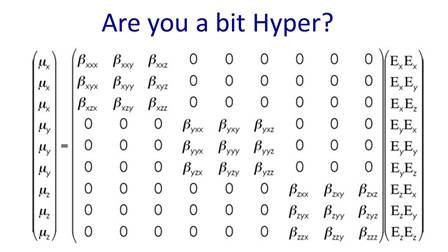
I’ll wager that more people use tarot than second order non-linear hyperpolarizability tensors. Hyperpolarizability is more arcane than tarot.
Back then I looked in detail at much so-called occult literature with the skill set of someone who can read matrices, and spot patterns. I found a lot of the published work shoddy and inconsistent.
I have a weak notion, that I am probably uniquely placed to relate so-called occultism, Toltec, Tarot and Buddhism with the critical thinking of a once pukka scientist.
In the 1990s I never knew that tarot was on the cards for me, though I had started to use I Ching for divination and shamanic journeying to request guidance from the universe. The shaman’s drum and the optical parametric oscillator do not see natural bedfellows. Seemed pretty darned normal to me.
The history of things like tarot will always be largely the overt and exoteric because the esoteric and hidden, is not in the public domain.
I personally cannot get on with the more modern tarot decks, using the tarot de Marseilles almost all of the time. I don’t do cartomancy but allow the major arcana to add pictorial clues to whichever Jewel of Awareness is in play or needs to be used.
I do dream tarot cards from time to time. This may not be common.
Let me be clear occult as I use it means difficult to see, partially hidden from view and not the bleeding obvious. It has nothing to do with Satan nor any dark ritual magic.
There are enough evil people in the world who are successful in the ordinary socio-political and pecuniary sense. They don’t need upside down pentagrams and goat heads. They are just nasty evil selfish people.
I still don’t know what is on the cards for the rest of this year / life …
 Dreamyoga