“The Secret Life of Walter Mitty” (1939) is a short story by James Thurber. The most famous of Thurber’s stories, it first appeared in The New Yorker on March 18, 1939, and was first collected in his book My World and Welcome to It (Harcourt, Brace and Company, 1942).
Plot
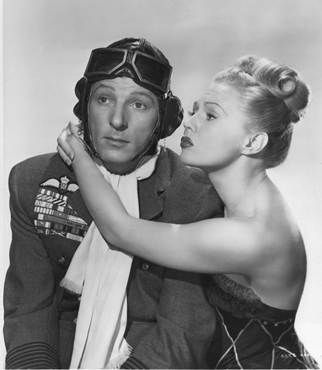
The short story deals with a vague and mild-mannered man who drives into Waterbury, Connecticut, with his wife for their regular weekly shopping and his wife’s visit to the beauty parlor. During this time, he has five heroic daydream episodes, each inspired by some detail of his mundane surroundings. The first is as a pilot of a U.S. Navy flying boat in a storm, followed by Mrs. Mitty’s complaint that Mitty is “driving too fast”. As he drives past a hospital, he imagines himself a magnificent surgeon performing a one-of-a-kind surgery. Later, a newsboy shouting about the “Waterbury Trial” begins Mitty’s third fantasy, as a deadly assassin testifying in a courtroom. While waiting for his wife, he picks up an old copy of Liberty, reading “Can Germany Conquer the World Through the Air?”, and begins his fourth daydream, as a Royal Air Force pilot volunteering for a daring suicide mission to bomb an ammunition dump. As the story ends, Mitty stands against a wall, smoking, and imagines himself facing a firing squad, “inscrutable to the last.”
Popular Culture
The character’s name has come into more general use to refer to an ineffectual dreamer and appears in several dictionaries. The American Heritage Dictionary defines a Walter Mitty as “an ordinary, often ineffectual person who indulges in fantastic daydreams of personal triumphs”. The most famous of Thurber’s inept male protagonists, the character is considered “the archetype for dreamy, hapless, Thurber Man”.
——————————–
Something struck his shoulder. “I’ve been looking all over this hotel for you,” said Mrs. Mitty. “Why do you have to hide in this old chair? How did you expect me to find you?” “Things close in,” said Walter Mitty vaguely. “What?” Mrs. Mitty said. “Did you get the what’s-its-name? The puppy biscuit? What’s in that box?” “Overshoes,” said Mitty. “Couldn’t you have put them on in the store?” “I was thinking,” said Walter Mitty. “Does it ever occur to you that I am sometimes thinking?” She looked at him. “I’m going to take your temperature when I get you home,” she said.
They went out through the revolving doors that made a faintly derisive whistling sound when you pushed them. It was two blocks to the parking lot. At the drugstore on the corner she said, “Wait here for me. I forgot something. I won’t be a minute.” She was more than a minute. Walter Mitty lighted a cigarette. It began to rain, rain with sleet in it. He stood up against the wall of the drugstore, smoking. . . . He put his shoulders back and his heels together. “To hell with the handkerchief,” said Walter Mitty scornfully. He took one last drag on his cigarette and snapped it away. Then, with that faint, fleeting smile playing about his lips, he faced the firing squad; erect and motionless, proud and disdainful, Walter Mitty the Undefeated, inscrutable to the last.
—————————–
Fantasy-prone personality (FPP) is a disposition or personality trait in which a person experiences a lifelong, extensive, and deep involvement in fantasy. This disposition is an attempt, at least in part, to better describe “overactive imagination” or “living in a dream world”. An individual with this trait (termed a fantasizer) may have difficulty differentiating between fantasy and reality and may experience hallucinations, as well as self-suggested psychosomatic symptoms. Closely related psychological constructs include daydreaming, absorption and eidetic memory.
History
American psychologists Sheryl C. Wilson and Theodore X. Barber first identified FPP in 1981, said to apply to about 4% of the population. Besides identifying this trait, Wilson and Barber reported a number of childhood antecedents that likely laid the foundation for fantasy proneness in later life, such as, “a parent, grandparent, teacher, or friend who encouraged the reading of fairy tales, reinforced the child’s … fantasies, and treated the child’s dolls and stuffed animals in ways that encouraged the child to believe that they were alive.” They suggested that this trait was almost synonymous with those who responded dramatically to hypnotic induction, that is, “high hypnotizables”.
————————————-
Fantasy (psychology)
In psychology, fantasy is a broad range of mental experiences, mediated by the faculty of imagination in the human brain, and marked by an expression of certain desires through vivid mental imagery. Fantasies are generally associated with scenarios that are impossible or unlikely to happen.
Conscious fantasy
In everyday life, individuals often find their thoughts “pursue a series of fantasies concerning things they wish they could do or wish they had done … fantasies of control or of sovereign choice … daydreams.”
George Eman Vaillant in his study of defence mechanisms took as a central example of “an immature defence … fantasy — living in a ‘Walter Mitty’ dream world where you imagine you are successful and popular, instead of making real efforts to make friends and succeed at a job.”
Other researchers and theorists find that fantasy has beneficial elements — providing “small regressions and compensatory wish fulfilments which are recuperative in effect.” Research by Deirdre Barrett reports that people differ radically in the vividness, as well as frequency of fantasy, and that those who have the most elaborately developed fantasy life are often the people who make productive use of their imaginations in art, literature, or by being especially creative and innovative in more traditional professions.
——————————————-
Narcissistic personality disorder
Two characteristics of someone with narcissistic personality disorder are:
- A pervasive pattern of grandiosity (in fantasy or behavior)
- A preoccupation with fantasies of unlimited success, power, brilliance, beauty, or ideal love.
———————————————
From Wikipedia, the free encyclopaedia



 Dreamyoga